
Recycled PET Bucket Hats Wholesale Verification Guide
“We promoted our bucket hats as ‘100% recycled polyester’ but couldn’t provide GRS certification when a customer asked. Now we’re dealing with a social media backlash and a retail partner who wants proof.” — Eco retail brand owner, California, USA
When eco retail buyers search for recycled PET bucket hats wholesale, they need more than a supplier’s sustainability claim — they need verifiable documentation. The market for sustainable headwear is growing fast, and recycled PET (RPET) bucket hats are one of the most popular eco-friendly options for retail buyers. But the gap between a supplier saying “recycled” and actually delivering verifiable sustainable products can be wide — and costly for buyers who skip the verification steps.
This guide explains exactly what documents, tests, and specifications eco retail buyers should request before marketing recycled PET bucket hats as sustainable products.
1. Why Recycled Claims Need More Than Product Page Wording
Direct answer: A supplier’s “recycled” claim without third-party certification is not legally defensible in most markets, and retail buyers risk greenwashing accusations, regulatory fines, and brand damage if the claim cannot be substantiated.
In the United States, the FTC Green Guides require that environmental marketing claims be substantiated with competent and reliable evidence. In the European Union, the Unfair Commercial Practices Directive and the Green Claims Directive (2024) impose similar requirements. For bucket hats labeled as recycled PET, this means the buyer needs:
- Traceability of the recycled content from post-consumer waste to finished fabric
- Third-party certification from an accredited body
- Mass balance documentation showing the recycled content percentage per batch
Without these documents, a “recycled” claim on product packaging or marketing materials is a regulatory risk. Several retail chains have already been required to remove sustainability claims from product lines after consumer protection investigations.
2. Which Documents Buyers Should Request Before Marketing RPET Hats
Direct answer: Request these four documents from your supplier: GRS Scope Certificate, Transaction Certificate, fiber composition test report, and dye lot traceability record. These documents form the audit trail for any sustainability claim.
| Document | What It Proves | Issued By | Validity |
|---|---|---|---|
| GRS Scope Certificate | Supplier is certified to process recycled materials | Control Union, SGS, or other accredited CB | 1 year, renewable |
| Transaction Certificate (TC) | Specific batch contains verified recycled content | Certification body | Per shipment |
| Fiber composition test (ISO 1833) | Actual fiber content matches claimed composition | Third-party lab | Per production batch |
| Dye lot traceability record | Color consistency within and between batches | Supplier internal QC | Per dye lot |
For eco retail buyers ordering 500–2000 units, the presence of GRS certification and a valid TC for your specific batch is the minimum acceptable standard. Absence of these documents should be a red flag.
3. How RPET Fabric Feel Affects Retail Acceptance
Direct answer: RPET bucket hat fabric can feel stiffer and less breathable than virgin polyester, and buyers should request hand-feel samples and breathability test data before committing to bulk production.
Not all RPET fabrics are created equal. The quality depends on:
- Recycled content percentage: 100% RPET fabric feels different from a 50/50 RPET/virgin blend. Higher recycled content can result in a stiffer hand feel.
- Fabric weight: Lighter RPET fabrics (120–150 GSM) are more breathable but less durable. Heavier RPET (180–220 GSM) holds structure better but may feel less comfortable in warm conditions.
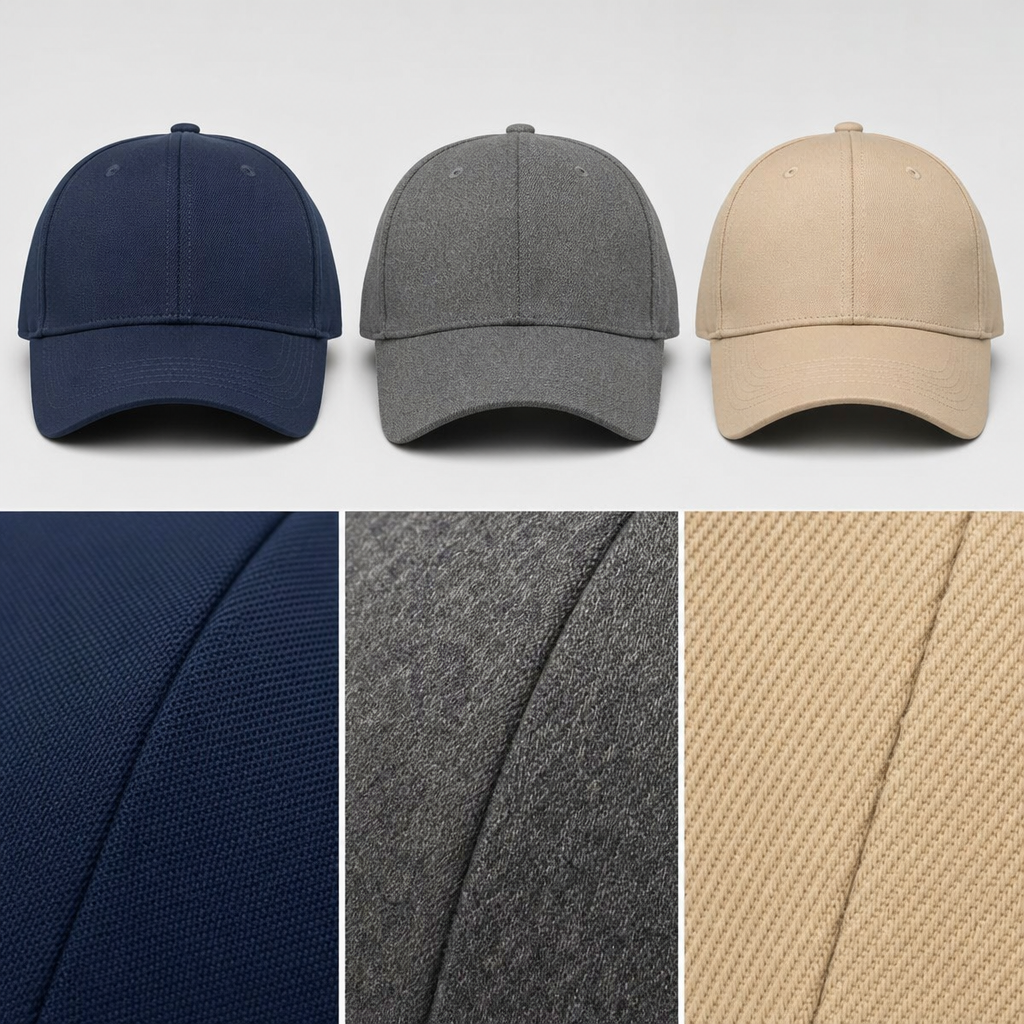
- Dye absorption: RPET fabric absorbs dye differently than virgin polyester, which can lead to color variation between dye lots. Request a color consistency commitment in your purchase agreement.
The best practice is to order a pre-production sample in the specific RPET fabric composition and weight you plan to use, and test it under retail display conditions for at least 48 hours before approving bulk production.
4. Color and Batch Consistency Risks in Recycled Bucket Hats
Direct answer: RPET fabric from different recycling batches can show visible color variation, even within the same production order. Buyers should specify a color tolerance of ΔE ≤ 1.5 (CIE Lab) and request a dye lot continuity plan.
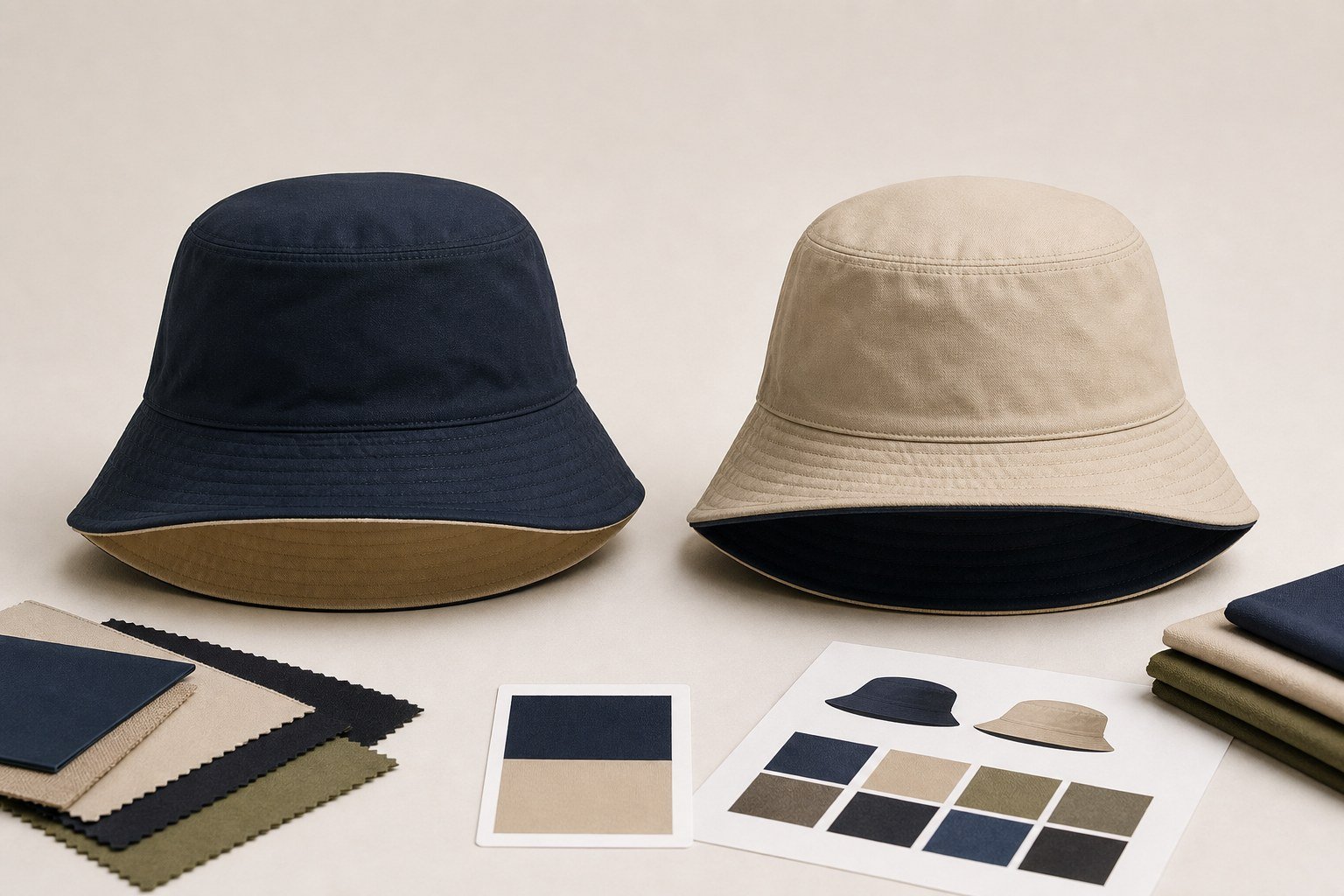
Because RPET fabric starts from post-consumer plastic bottles with varying base colors, achieving consistent dye results across production batches is more challenging than with virgin polyester. Common issues include:
- Cross-batch color shift: A reorder placed 6 months after the first order may show visible color differences, even with the same Pantone specification.
- Within-order variation: If the supplier uses RPET fabric from multiple recycling batches within a single production run, hats from different cartons may shade differently.
- UV and wash fading: Some RPET fabrics show faster fading under UV exposure compared to virgin polyester. Request UV resistance test data (ISO 105 B02) for outdoor or sun-exposed retail applications.
See our guide on recycled PET bucket hats wholesale for more details.
The solution is to include color consistency requirements in your purchase order, and ask the supplier to reserve a single dye lot for the full order quantity.
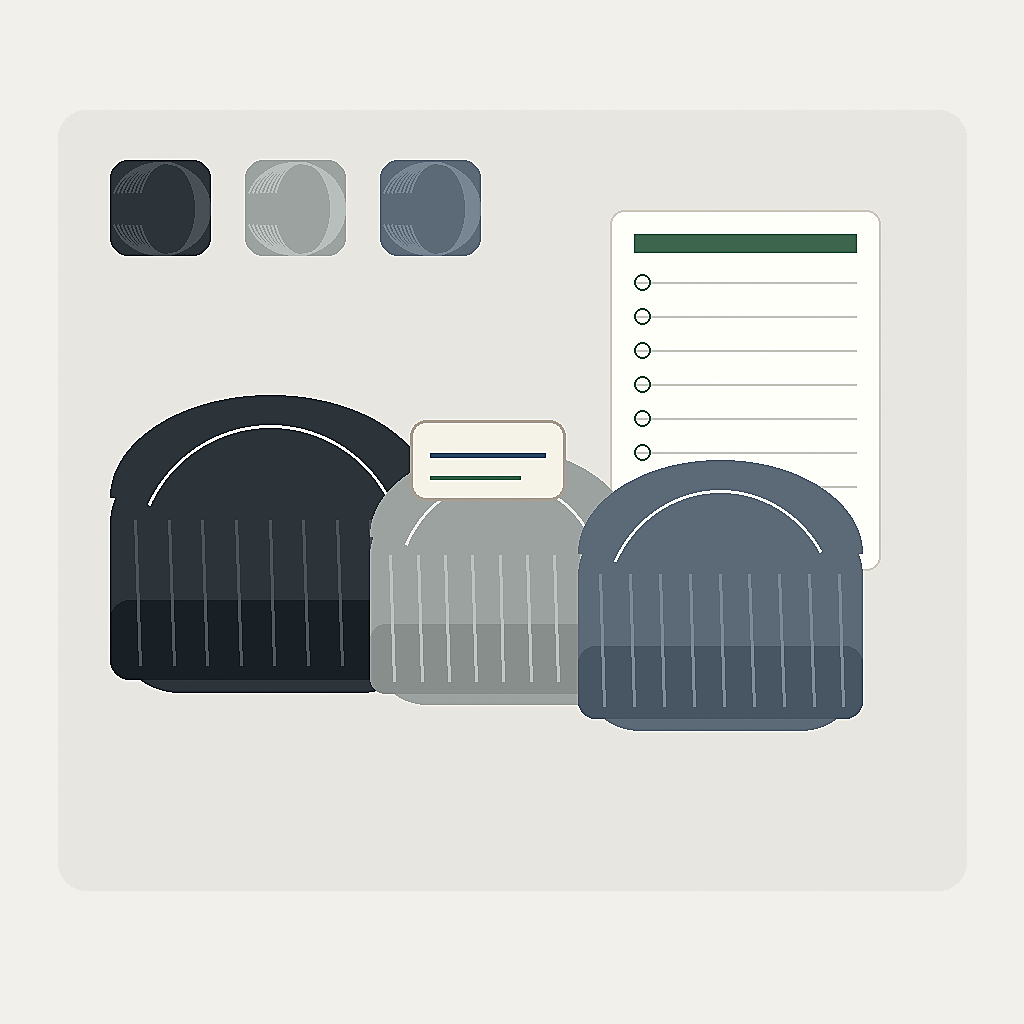
5. Buyer Checklist for Sustainable Bucket Hat Orders
Direct answer: Use this 7-point checklist when sourcing recycled PET bucket hats to ensure your sustainability claims are verifiable and your product quality meets retail expectations.
| # | Check | Method | Pass Criteria |
|---|---|---|---|
| 1 | GRS Scope Certificate | Request from supplier, verify with certifying body | Valid, within expiry date |
| 2 | Transaction Certificate for your batch | Request from supplier | Matches your order quantity and product |
| 3 | Fiber composition lab test | Third-party or supplier-provided | ≥95% recycled content as claimed |
| 4 | Hand-feel sample approval | Physical sample review | Meets retail quality expectation |
| 5 | Color consistency commitment | Written in PO | ΔE ≤ 1.5 across production |
| 6 | UV fade resistance test | ISO 105 B02 test report | Grade ≥ 4 after standard exposure |
| 7 | Dye lot continuity for full order | Supplier confirmation | Single lot for entire quantity |
Sustainable headwear is a growing and profitable category, but only for buyers who do the verification work upfront. By following this checklist, eco retail buyers can stock recycled PET bucket hats with confidence — knowing their sustainability claims are backed by real documentation and their product quality will meet customer expectations.
Additional Resources
For wholesale inquiries about GRS-certified recycled PET bucket hats from our factory in Guangdong, China, contact our team for certification documents and sample requests.
Related: Once you have selected your bucket hat fabric and style, the next step is branding. Read our custom decoration for recycled PET bucket hats to compare embroidery, screen printing, heat transfer, and leather patch options with real per-unit costs and MOQ requirements.
Related: Recycled PET Bucket Hat Sustainability Verification — GRS certification, lab testing, and documentation checkpoints for wholesale eco hat sourcing.
Related: For a complete sourcing workflow, see our bucket hat buying guide wholesale — covering materials, quality checks, MOQs, and supplier negotiation.
Written by the Hongyuecap Product Team — 10+ years in B2B custom headwear manufacturing. Last updated: May 03, 2026.