
Custom Baseball Cap Manufacturer
Hongyuecap – Cap Manufacturer – Baseball Cap
Hongyuecap is a custom baseball cap manufacturer producing OEM and ODM programs for brands, importers, distributors and promotional suppliers. We ship to 32 countries, hold a minimum order quantity of 10 pcs, and run production capacity of 500,000 pcs per month. Sampling takes 3–15 days; bulk production runs 3–50 days.
Most buyers arrive with a design brief and a target landed cost, not a technical spec. So we start from the brief: panel count, crown profile, brim shape, fabric, closure, decoration method, carton format and delivery market. That is what turns a custom baseball caps wholesale request into a production-ready spec.
Procurement snapshot
| Item | Specification |
|---|---|
| Minimum order quantity | 10 pcs |
| Sampling lead time | 3–15 days |
| In-stock styles | 3–7 days |
| Standard production | 20–30 days |
| Peak season / complex builds | 35–50 days |
| Monthly capacity | 500,000 pcs per month |
| Export markets | 32 countries |
MOQ starts at 10 pcs for stock colors and sampling runs; mass production runs up to 500,000 pcs per month.
Bulk lead time runs 3–50 days depending on construction complexity and season; the confirmed schedule is issued in writing with your sample approval. Sampling takes 3–15 days; repeat colourways on existing patterns sit at the short end.
Common Development Areas for Custom Baseball Caps
| Baseball Cap Decision | What the Buyer Should Define | What the Sample Should Confirm |
|---|---|---|
| Panel and crown | 5-panel or 6-panel layout, structured or unstructured crown, crown height, and front-panel shape | Profile, symmetry, seam alignment, and how the crown holds its intended shape |
| Brim construction | Curved or flat profile, brim length, sandwich detail, and stitch-row direction | Curve consistency, edge shape, stitch spacing, and alignment with the crown |
| Closure and fit | Snapback, buckle, hook-and-loop, fitted construction, size range, and rear opening | Adjustment range, hardware function, strap finish, and fit on the approved size basis |
| Fabric and sweatband | Cotton twill, polyester, performance fabric, mesh combination, hand feel, and color reference | Material appearance, color match, structure, comfort, and compatibility with the decoration |
| Logo execution | Flat or 3D embroidery, patch, print, placement, dimensions, and artwork detail | Position, scale, thread or print clarity, backing, and front-panel distortion |
Baseball cap development should be approved as a complete construction: crown, brim, closure, sweatband, decoration, fit, and packing must work together rather than being confirmed as isolated options.
Custom Options for Your Caps & Hats

Material
Fabric weight decides whether the cap holds its shape or collapses at the front panel. Cotton twill is the default for structured caps, brushed cotton reads softer for retail, and polyester blends suit performance and lower-cost programmes. Confirm the weight, the hand-feel and the shade on the sample before bulk, because the same material name covers very different cloths.

Color
Colour is agreed as a reference, not as a word. Confirm the reference against a physical standard in daylight, and check that fabric, thread and trim are matched to each other rather than only to the swatch. Dye lots differ between runs, so keep one approved reference on file for every repeat order.
Style
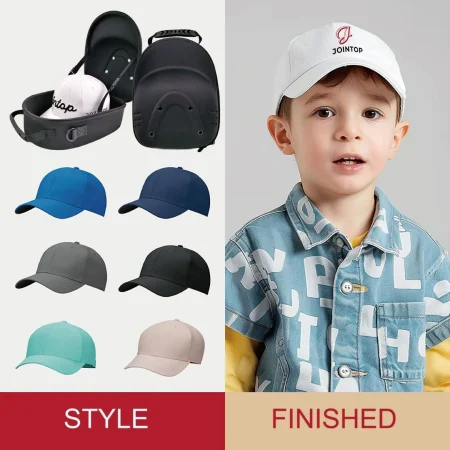
Panel count and crown structure change everything the buyer sees. A 6-panel mid-crown reads classic, a 5-panel low-profile reads closer to streetwear, and an unstructured crown sits softer on the head. Confirm panel count, crown height and front-panel support together, because changing one changes the other.
Logo
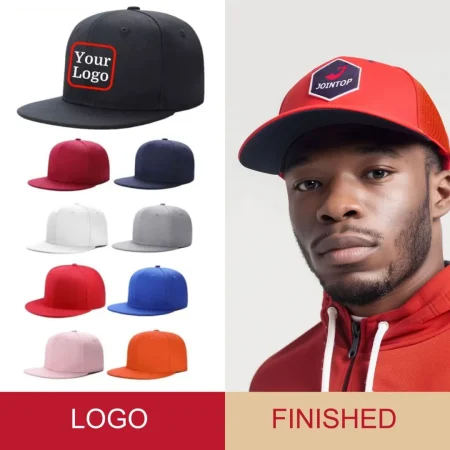
Embroidery is the usual choice for caps, and stitch density decides whether fine detail survives on a curved panel. Thin lines and small text close up, while bold shapes hold. Confirm the practical artwork size for the front panel, the thread colour against the fabric, and how the panel behaves once the cap is stretched on a head.

Patch
Patches add weight and structure to a soft panel. Woven and embroidered patches sit flat, leather adds substance, and PVC suits bold shapes and outdoor programmes. Confirm the attachment method and the edge finishing, and check that the fixing point is reinforced so the patch does not pull the panel out of shape.

Tag & Label
Labels carry the information a buyer is accountable for, so the wording matters more than the look. Confirm woven label placement, hangtag artwork, and care wording that matches the fibre actually used. Where goods ship to several markets, confirm the language and required content for each destination before production starts.
Closure
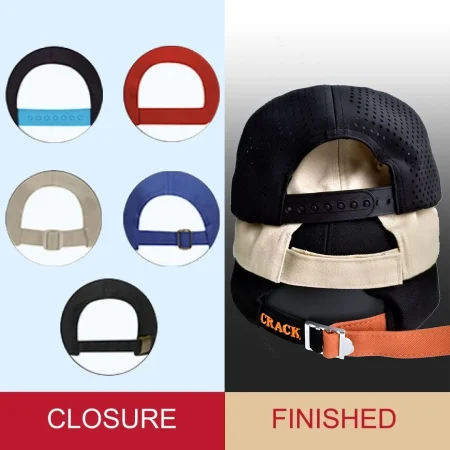
Closure choice decides the adjustment range and how the cap ages. Plastic snapbacks are the most common and the simplest to replace, metal buckles read more premium, and hook-and-loop is fast to use but wears over time. Confirm the closure type, strap length and adjustment range on the sample rather than from a photo.
Packaging
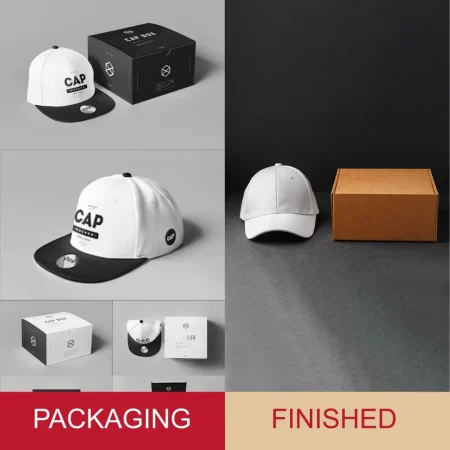
Packing decides landed cost and how the goods arrive. Confirm units per carton, carton dimensions and gross weight against your destination handling limits, and settle whether goods ship retail-ready with hangtags and poly bags applied at origin. For mixed colour assortments, agree the ratio sheet before production.
What Buyers Should Confirm Before Ordering Custom Baseball Caps
Before approving a baseball cap for bulk production, compare the sample against the agreed panel layout, crown height, brim profile, closure function, size basis, logo position, and color reference. QC checkpoints should cover crown symmetry, panel and seam alignment, brim curve and stitch rows, closure attachment, sweatband finish, embroidery or patch placement, visible thread ends, and shape protection in packing.
Baseball Cap Production Details Buyers Should Confirm
For a custom baseball cap program, the buyer brief should define the crown shape, panel construction, fabric weight and finish, visor profile, closure hardware, logo method, and target fit. These details affect the approved sample, grading consistency, and the way the cap presents in retail or promotional use.
Buyer and QC checkpoints
- Crown and fit: Confirm panel shape, crown height, seam alignment, sweatband finish, and size grading against the approved sample.
- Visor and closure: Confirm visor curve, topstitching, closure type, hardware color, adjustment range, and pull strength.
- Branding: Confirm embroidery, woven label, patch, print, or heat-transfer method, including placement and stitch or edge quality.
- Bulk QC: Review shade consistency, logo position, loose threads, seam quality, closure function, and carton identification before shipment.
- RFQ information: Share fabric direction, cap profile, logo file, target quantity, packaging request, destination market, and required delivery window.
Discuss Your Baseball Cap Specifications or contact our team with your development brief.
Baseball Cap Construction and Bulk-Order Planning
A useful baseball cap brief should define the physical profile before pricing is finalized. Share the panel count, crown height and structure, brim direction, fabric, sweatband, closure, logo artwork and placement, size basis, quantity plan, packaging request, destination market, and required delivery window.
| Control Point | Baseball Cap Buyer Confirmation |
|---|---|
| Crown and panels | Confirm 5-panel or 6-panel construction, crown height, front-panel support, seam layout, eyelets, and the intended structured or unstructured profile. |
| Brim | Confirm curved or flat direction, brim length, stitch rows, sandwich detail, edge shape, and the approved curve reference. |
| Fit and closure | Confirm the size basis, rear opening, closure type, adjustment range, strap finish, and hardware color or finish where applicable. |
| Decoration | Confirm artwork dimensions, placement, flat or 3D embroidery depth, patch construction or print method, thread colors, and acceptable front-panel shaping. |
| Sample approval | Review profile, fit, symmetry, brim shape, logo execution, closure function, internal finishing, labels, and packing presentation before bulk production. |
| Bulk QC | Inspection points should follow the approved sample and specification, including panel alignment, seam quality, brim consistency, decoration placement, closure attachment, loose threads, stains, and packing protection. |
| Commercial confirmation | MOQ, sample cost and timing, production schedule, payment stages, and export packing details are confirmed after the construction, artwork, quantity, and delivery requirements are reviewed. |
Baseball Cap Sourcing FAQ
Should a buyer choose the panel count before requesting a sample?
Yes. Panel count, crown height, front-panel structure, and seam layout change the cap profile and the available decoration area. Reference photos or an approved physical sample help align the target shape.
What should be checked when approving a curved brim?
Confirm brim length, curve depth, edge symmetry, stitch-row spacing, sandwich details, and how the brim meets the crown. The approved curve should become part of the bulk QC reference.
Can the same embroidery file be used on every baseball cap construction?
Not always. Panel seams, crown curvature, fabric stability, backing, and logo dimensions affect embroidery results. Artwork may need adjustment after the target construction and placement are confirmed.
What closure details belong in the specification?
State the closure type, strap material, hardware finish, rear opening shape, adjustment range, and attachment method. For fitted caps, provide the required size range and fit basis instead.
How should baseball caps be protected during export packing?
Packing should follow the approved crown and brim structure. Carton quantity, shape support, stacking direction, labels, carton dimensions, and gross weight are confirmed for the final specification and shipment plan.
Baseball cap sourcing guides
These guides cover the specification questions that come up most often before a bulk cap order is confirmed.
- Professional Custom Baseball Caps
- Custom Baseball Caps Wholesale Guide: 7 Selection Factors for Retail Program Buyers (2026)
- Baseball Cap vs Trucker Hat: 5 Key Differences for Wholesale Custom Order Buyers (2026)
- Baseball Cap Stitching & Seam Quality
- Cotton twill vs performance polyester baseball caps
- Are Baseball Caps in Style for 2026? Wholesale Trends and QC Checks
- Cap Material Selection Guide: 7 Fabric Factors for Wholesale Buyers
- Custom Dad Hat Manufacturer | OEM Bulk Orders
- Custom Bucket Caps: Reversible, Wide-Brim and Technical Styles