
Straw Bucket Hat
Hongyuecap – Straw Hat Manufacturer – Straw Bucket Hat
Step into summer with style and comfort with our Straw Bucket Hat. Designed for both fashion enthusiasts and those seeking practical sun protection, this versatile hat is the perfect accessory for any sunny day. Whether you’re heading to the beach, a picnic, or a casual day out, the Straw Bucket Hat combines timeless design with modern functionality. For material, brim, trim, branding, and protective packing options, review our custom straw hat manufacturing page.
Basic Specifications of Custom Straw Bucket Hats
| Specification | Details |
| Material | Natural straw or paper-straw construction (confirm for project) |
| Breathability | Breathability depends on weave density and lining |
| UV Protection | Brim width and shape to be confirmed for sun coverage |
| Adjustability | Chin cord, sweatband or lining options to be confirmed |
| Weight | Weight depends on weave and trim |
| Color Options | Various colors available |
| Size Options | Multiple sizes available |
| Ideal For | Beach, resort, outdoor lifestyle and seasonal retail programs |
| Portability | Easy to carry and store |
| Comfort Features | Sweatband for added comfort |
Straw and Paper-Straw: What the Material Decides
Two materials dominate this category, and the choice between them decides almost everything else about the hat.
Natural straw is woven from plant fibre. It breathes well, holds a shape after blocking, and carries the irregular surface that buyers associate with a genuine summer hat. It also varies between batches, can crack if it dries out completely, and is harder to clean. Colour is usually in the fibre rather than applied to it.
Paper straw is a processed fibre woven to look like straw. It is more uniform, takes dye evenly, holds a crisp edge and costs less at the same visual standard. It is also less breathable and less forgiving of moisture, so it performs differently in humid markets.
Blends and coated versions exist to close the gap: a paper straw with a coating resists moisture better, and a natural straw with a softener handles folding better. Confirm what the fibre actually is rather than relying on the product name, because both are sold as straw.
The material decision should follow the market, not the photo. A hat for a humid coastal resort and a hat for a dry inland market need different fibre behaviour.
Blocking, Brim Shape and Holding It
A straw hat gets its shape from blocking, and blocking is where a cheap hat and a correct hat separate.
Blocking. The crown is formed over a block and the brim is shaped while the fibre is workable. The shape set at this stage is the shape the hat keeps, so the block used has to match the intended silhouette rather than be adjusted afterwards.
Brim width and stiffness. A wide brim in straw is heavy at the edge and will droop unless the weave is tight or the brim is wired or bound. Confirm whether the brim carries a wire, and check the hat on a head rather than flat, because a brim that looks correct on a table can drop once worn.
Edge finishing. A bound edge protects the weave at the point where it frays first and gives a clean outline. An unbound edge is lighter and more natural-looking but shows wear sooner.
Recovery after packing. Straw has some memory but not much. Confirm how the hat is packed, whether it is nested or individually supported, and whether the brim will still be flat on arrival. A brim that arrives curved cannot be corrected at the destination without a block.
Trim, Band and Decoration on a Woven Surface
A woven surface behaves differently from a flat fabric panel, and decoration has to work with the weave rather than against it.
Bands and trims. A band is the most common decoration and the easiest to get wrong: it has to sit tight enough not to slip and loose enough not to compress the crown. Confirm the band width, the fixing method, and whether it is sewn through the weave or attached at a seam only.
Embroidery and printing. Both are difficult directly on open weave, because the surface is not solid. Where decoration is required, it is normally carried on a patch, a band or a solid panel rather than applied to the straw itself. Confirm the method before the artwork is finalised.
Metal and leather details. Eyelets, rivets and small leather tabs add weight and a premium read, but they concentrate stress on the weave. Confirm the fixing point is reinforced.
Colour. Dyed straw can shift between batches more than fabric does, because the fibre takes dye unevenly by nature. Keep one approved physical reference per colour for repeat orders.
Our minimum order quantity is 50 pcs per style and colourway; custom colours carry a higher minimum set by the dye lot.
Custom Options for Straw Bucket Hats
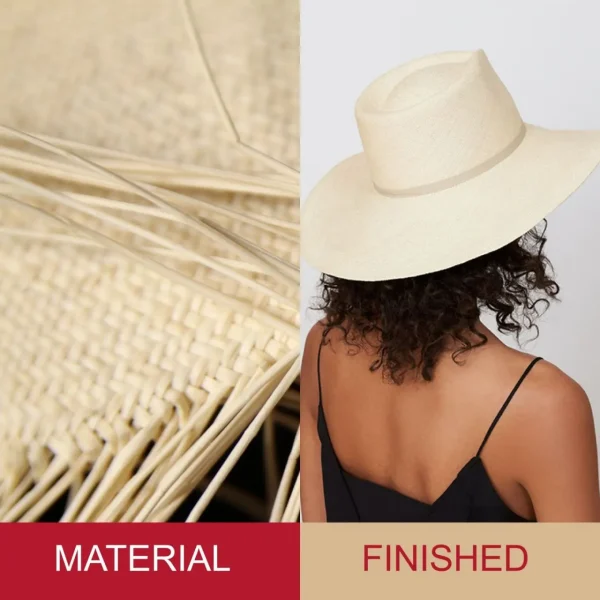
Material
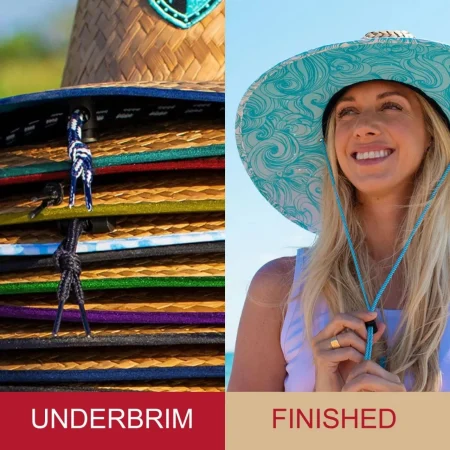
Underbrim
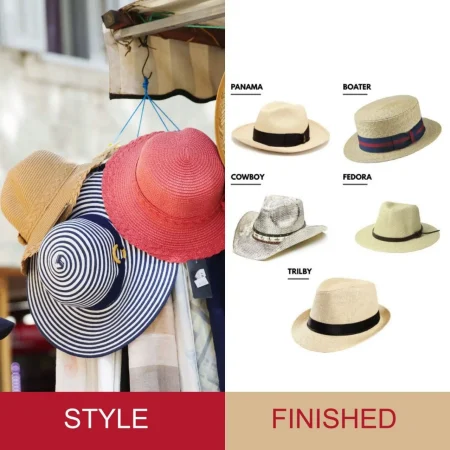
Style
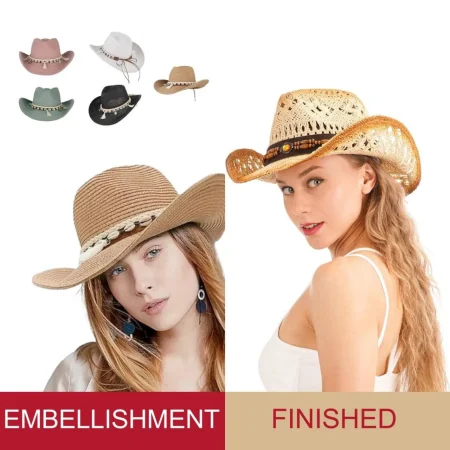
Emb
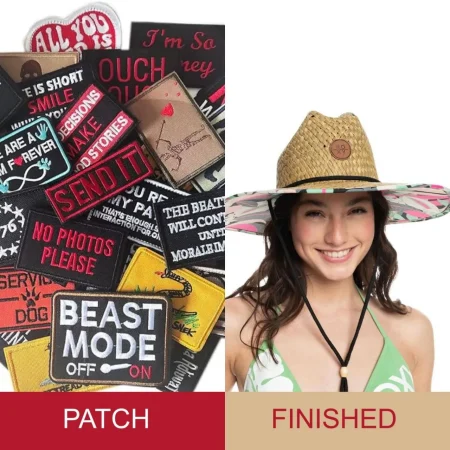
Patch
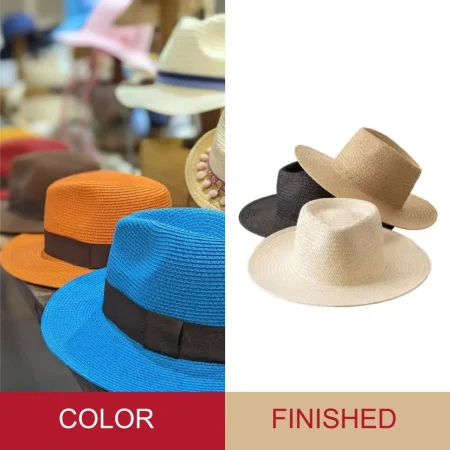
Color
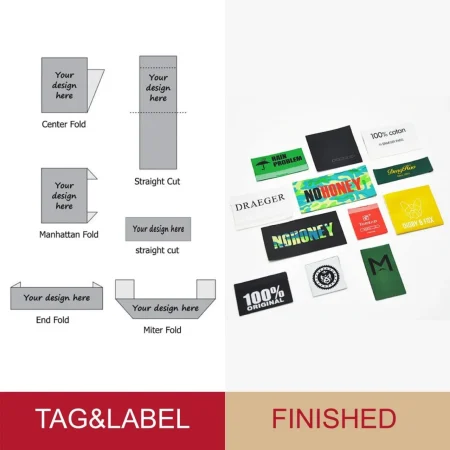
Tag & Label
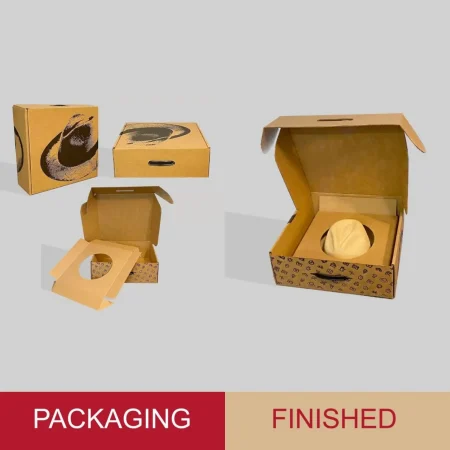
Packaging
What Should You Confirm When Purchasing Straw Bucket Hats?
Confirm weave, brim shape, trim, logo method, sizing, packing and QC requirements before sampling.
Production Capacity
Quality Assurance
Customization Options
Sustainability Practices
Cost & Pricing
MOQ
Sample Development
Payment Terms & Conditions
Lead Time & Delivery
Customer Service
Hats Highlights: Latest Insights & Trends
Questions buyers ask about straw bucket hats
Natural straw or paper straw – what does the choice decide?
Almost everything else. Natural straw breathes well and holds a shape after blocking, but varies between batches and can crack if handled dry. Paper straw is more uniform and usually cheaper, with a different hand feel and shape-holding behaviour.
Why is blocking the step that separates a cheap hat from a correct one?
A straw hat gets its shape from blocking – the crown is formed over a block and the brim shaped while the fibre is workable. Whatever shape is set at that stage is the shape the hat keeps, so the block has to match the intended silhouette.
How is decoration handled on a woven surface?
It has to work with the weave rather than against it. A band is the most common decoration and the easiest to get wrong: it must sit tight enough not to slip and loose enough not to compress the crown. Band width, fibre, and attachment are confirmed on a sample.
What should be confirmed before sampling?
Weave, brim shape, trim, logo method, sizing, packing and QC requirements. Keep one approved physical reference per colour, because straw takes dye unevenly by nature and repeat orders need something to match against.
What is the minimum order quantity, and how long does it take?
Our minimum order quantity is 50 pcs per style and colourway. On more complex builds – structured crowns, custom-developed fabric or custom colours, and multi-technique decoration – the practical minimum has ranged up to around 1,200 pcs, because the mill runs a minimum dye lot and the line needs a run long enough to hold consistency across the whole order. Tell us your target quantity and we will say straight away what is workable; recent orders we have run include 490 and 500 pcs. Sampling runs 3-15 days. Bulk production runs 20-30 days in a normal season and 35-50 days in peak season, counted from artwork and sample approval rather than from the enquiry date.