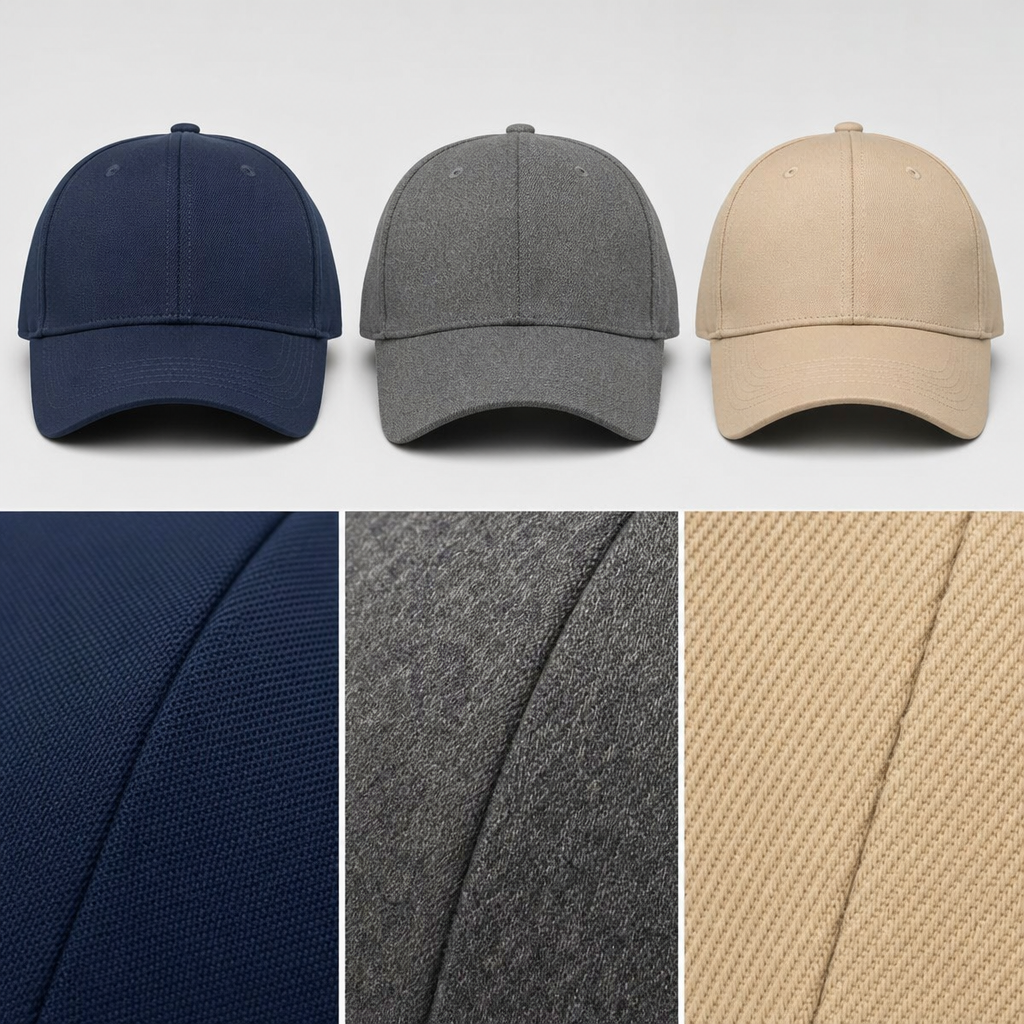
Reversible Bucket Hat Production Risks: Buyer Sourcing Guide for Wholesale Buyers
Buyers rarely lose money because a product looks bad in a photo. They lose money when a sample looks acceptable, but the bulk order turns into extra revisions, packing damage, decoration trouble, or a product that does not fit the selling channel. That is usually the real issue behind reversible bucket hat production risks buyers should check.
Reversible Bucket Hat Production Risks: Buyer Quality & OEM Sourcing Guide for Wholesale Buyers
“My team approved a reversible bucket hat sample that looked perfect. The bulk order arrived with mismatched seam tension, one side didn’t recover from packing, and we missed our retail launch window.” — Common reversible bucket hat production risk buyers discover too late
If your team is comparing options right now, keep the decision tied to the RFQ instead of treating it as a style discussion. Use the live Bucket Hat category to check the product direction, keep HongYueCap as the factory reference point, and move the final discussion back to custom inquiry and sample planning once the specs are clear.
This guide stays on the buyer side of the table. The goal is simple: help you judge risk earlier, ask cleaner questions, and avoid approving a version that creates trouble later in sampling or production.
Factory Proof Snapshot
This article uses HongYueCap's approved factory fact register rather than unsupported market claims. The current working facts are practical and should be checked again during quotation: Standard custom MOQ is usually 300 pcs per logo and cap color for most styles. Sample fee is usually RMB 500 per style and color. Sample lead time is usually 3-10 days after details are confirmed. Bulk production lead time is usually 10-20 days after details and deposit are confirmed. Bulk order payment is usually 30% deposit, with balance paid after photo or video confirmation before shipment. Normal scheduled production capacity is about 3000 pcs per day. HongYueCap does not currently claim third-party certificates.
These facts do not replace a formal quote. They give the buyer a starting point for RFQ planning, sample timing, payment discussion, and production scheduling. If the order uses unusual fabric, special packing, complex embroidery, or a tight delivery window, the quote still needs a separate production review.
For this topic, the useful proof is not a broad industry claim. It is the way the factory moves from inquiry to sample, from sample approval to packing plan, and from packing plan to bulk shipment. That is the part buyers can act on.
Main Buyer Problem
Most buyers are not really deciding between two looks. They are deciding which version is easier to sell, easier to approve, and easier to repeat in bulk. Those are not always the same thing.
A common mistake is to compare only the visible feature that triggered the discussion in the first place. The stronger comparison is commercial: which option fits the target market, the logo plan, the freight method, and the expected complaint level after delivery? That is where many sourcing decisions go wrong.
Before reviewing samples, write down the non-negotiables. Is margin the priority? Is shelf appearance the priority? Is the program sensitive to packing shape, moisture, or decoration accuracy? Once those points are fixed, the choice usually gets much clearer.
Material / Construction Risk
Material risk should be judged in the same way a buyer reviews a claim from a supplier: what changes in the real order, not just in the sample room. A softer or more premium-looking option may help the product story, but it can also make handling, packing, or logo placement less forgiving. A lower-cost option may simplify MOQ and sourcing, but it can weaken perceived value or create a finish that feels too ordinary for the target account.
This is why construction detail matters. Stitching density, panel stability, trim attachment, edge shape, and recovery after packing often decide whether the approved sample still looks right after shipment. If the order will involve embroidery, patches, inserts, liners, or branded trims, those details should be tested on the real version, not on a cleaner substitute.
For external validation, keep practical references such as Google image SEO guidance and OEKO-TEX Standard 100 and the Intertek textile testing guide in the file. They do not make the sourcing decision for you, but they help anchor material and compliance discussions in something more concrete than supplier promises alone.
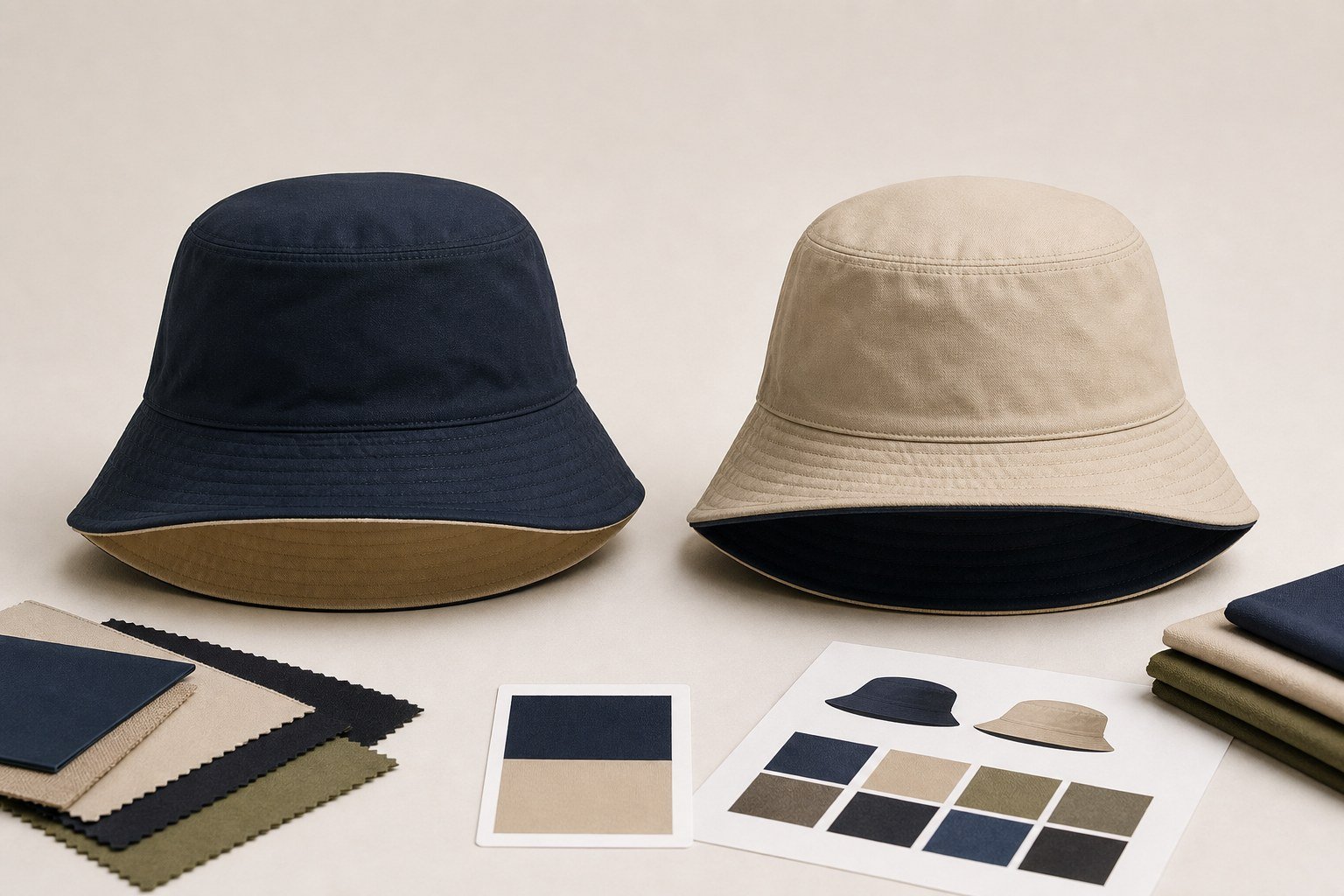
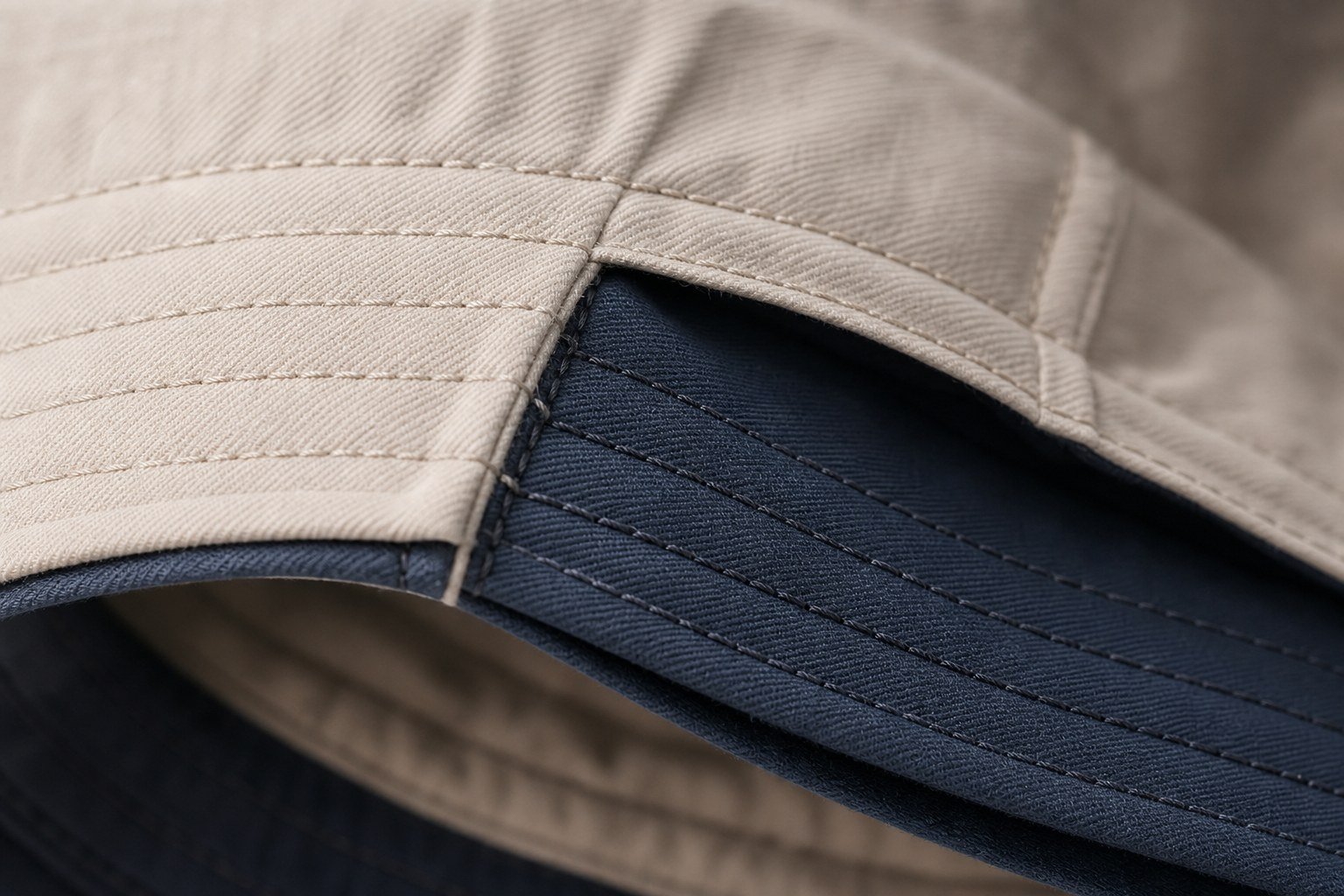
Reversible bucket hats need a more careful fabric review than a plain outer-shell style because both sides are visible to the buyer's audience. If one side uses cotton twill and the other side uses a lighter woven fabric, the two layers may not recover from folding in the same way. If the color contrast is strong, the seam edge can look sharper in photos but less forgiving in bulk handling. If the buyer wants a printed side and a solid side, the print base, fabric weight, and seam allowance should be checked together before sample approval.
The safest discussion is not only "which fabric looks better." It is "which combination can the factory repeat cleanly across the full order." A sourcing team should ask whether the sample uses final fabric, whether both sides have the same hand feel target, whether the brim edge is likely to curl, and whether the hat still looks balanced after being folded and placed in a carton. These questions are practical because they connect design preference to production behavior.
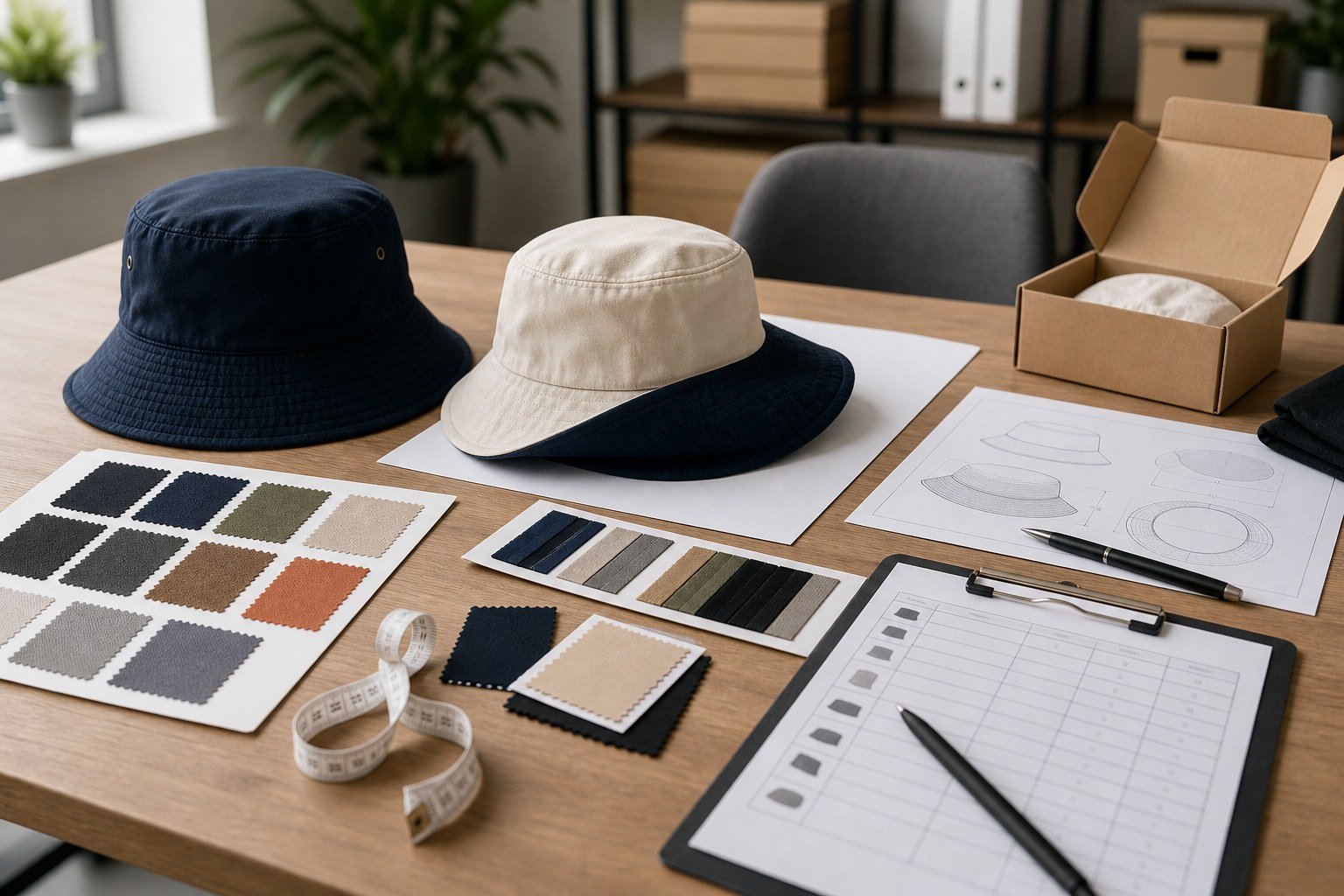
The generated concept images for this article are used only to explain that structure. They should not be read as a real HongYueCap sample or a client project. Their role is to make the buyer's review easier: two-side comparison, seam inspection, and sample approval workflow. The actual quotation still needs the buyer's logo file, target quantity, material direction, packing request, and delivery window.
Supplier / MOQ / Sampling Risk
Supplier risk usually starts before production. It starts when the brief is too loose. Two factories can quote similar pricing and still give you very different outcomes in sample speed, trim sourcing, packing consistency, and revision count.
Good buyers do not ask only for price. They ask what tends to change after the first sample, what the real MOQ is once branding details are locked, how long a corrected sample takes, and which part of the spec creates the most production variation. Those answers tell you more than the quote sheet.
Lead time deserves the same level of scrutiny. A program can look efficient on paper and still slip because the supplier treated decoration, insert structure, or packaging method as a later-stage detail. When sending the RFQ, ask for four things in plain terms: MOQ, sample lead time, bulk lead time, and the most likely reason a second sample round would be needed.
For HongYueCap custom hat work, the usual planning point is 300 pcs per logo and cap color for most styles. Smaller custom quantities can be reviewed, but they should not be treated as the standard path because the unit cost is usually much higher and the sample work can become inefficient. For a reversible bucket hat, that matters even more. The buyer is not only approving a color and a logo position. The buyer is approving two visible surfaces, a shared brim, seam behavior, fabric balance, and packing recovery.
The sample stage should therefore be used as a controlled check rather than a quick visual sign-off. A useful sample request should include the logo file, target quantity, fabric preference, color direction, label or patch idea, destination country, and expected delivery window. If the buyer already knows that the hat will be folded, packed tightly, or used for an outdoor campaign, that detail should be stated before the sample is made. It changes how the factory reviews brim softness, stitching density, and packing method.
The usual sample fee is RMB 500 per style and color, and the normal sample time is 3-10 days after details are confirmed. That timing is useful only when the input is clean. If the logo file is unclear, the color reference changes, or the buyer asks to compare multiple fabric directions after sampling starts, the decision cycle can become longer even when the factory responds quickly. A better RFQ saves time because it reduces avoidable revisions.
Production / Packing Evidence
A useful production discussion should describe what gets checked, not just what gets promised. Start with the sample approval path. The buyer sends the logo file, target quantity, destination country, target delivery window, material preference, and any packing requirement. The factory reviews whether the requested decoration method fits the actual surface and whether the structure can hold the required shape after packing.
For baseball caps, this may mean checking crown support, visor shape, embroidery load, closure choice, and carton pressure. For bucket hats, it may mean checking brim softness, seam control, lining, print registration, and folding behavior. For knitted beanies, it may mean checking yarn stretch, cuff height, patch comfort, embroidery backing, and size recovery. For straw hats, it may mean checking crown support, brim deformation, band attachment, humidity risk, and carton protection.
The packing step matters because a sample can look correct on the table and still fail after transport. A buyer should ask how the product will be placed in the carton, what quantity goes into one carton, whether the shape needs extra support, and which part of the hat is most likely to deform during storage. This is where a factory-side article earns its place: it turns a general sourcing topic into a concrete inspection list.
For reversible bucket hats, packing review should include both appearance and recovery. The buyer should not only ask whether the hat can fit into the carton. The better question is whether the brim, crown, and two-side structure still look presentable after normal packing pressure. A reversible hat may be softer than a structured cap, but softness should not turn into uneven shape, wrinkled edge lines, or visible fabric stress after unpacking.
Photo or video confirmation before shipment is useful because it gives the buyer a final checkpoint after bulk production. Under the current HongYueCap payment workflow, the balance is normally paid after photo or video confirmation before shipment. That step should be used carefully. The buyer should request clear views of the front, brim edge, reverse side, logo area, packing arrangement, and carton preparation. If the order includes multiple colors, the confirmation should show enough color coverage to avoid confusion.
This is also where generated blog images need strict wording discipline. A generated image can help a buyer understand what to inspect, but it cannot replace order evidence. The published article should use the generated images as concept and technical illustrations only. The real order proof still comes from the confirmed sample, production photo or video, packing confirmation, and final communication record.
QC Checklist
- Check that the approved sample and the production version use the same material, structure, and finish.
- Review how the logo method behaves on the real surface, not on a cleaner test panel.
- Inspect seam, edge, panel, brim, cuff, or body stability after normal handling.
- Test how the item looks after folding, boxing, unboxing, or short-term storage.
- Confirm trim placement, symmetry, attachment strength, and visible finishing quality.
- Decide which failure would hurt the order most: shape loss, decoration error, packing damage, or mismatch with the target market.
- Compare both sides of a reversible hat under the same lighting, not only from a front-facing product image.
- Check whether dark and light fabric combinations create visible seam shadow or uneven edge appearance.
- Confirm whether embroidery, printing, patch, or woven label work will affect the reverse side.
- Ask how the sample will be packed for review, because folding and table presentation can make the same hat look different.
- Record the agreed sample details before bulk production starts, including fabric, color, logo method, trim, packing, and carton expectation.
Buyer Decision Framework
A practical buyer framework is usually enough.
1. Start with the selling context. A distributor order, a corporate merchandise run, and a private-label launch do not tolerate the same level of risk. 2. Match the product choice to the branding method. If the order depends on embroidery, patches, transfers, or custom trims, test that exact combination early. 3. Decide which problem would be hardest to fix after approval. That is often the point that should drive the choice. 4. Compare supplier control, not sample charm. Ask which version is easier to repeat cleanly over the full bulk quantity. 5. Keep the next step ready. Once the comparison is settled, move directly to contact and sample planning with quantity, logo file, country, and delivery window.
A good B2B article should shorten that path. It should help a buyer move from comparison to a cleaner RFQ, not just leave them with more generic information.
For a reversible bucket hat, the strongest decision is usually the option with the clearest production path, not the option with the most attractive first mockup. A clean sourcing path has a defined MOQ, confirmed sample fee, realistic sample timing, suitable logo method, visible fabric pairing, and a packing plan that does not damage the product story. If any of those points is missing, the buyer should slow down before approving the order.
The buyer can also use a simple risk ranking before sending the final RFQ. Put the biggest risk first: fabric mismatch, logo effect, brim shape, packing recovery, delivery timing, or final cost control. Then ask the factory to comment on that first risk directly. This gives the supplier a chance to respond with production logic rather than a broad reassurance.
If the buyer is still comparing several factories, the questions should stay consistent. Send the same logo file, same quantity, same material direction, same destination, and same delivery expectation. Different answers will then be easier to compare. If every supplier receives a different brief, the buyer may think the quotes are different because of factory capability, when the real reason is that the inputs were not equal.
The final decision should lead back to action. If the order is realistic, send the RFQ through the HongYueCap contact page with the target quantity, logo method, fabric preference, destination country, deadline, and sample expectation. If the order is not ready, use the same checklist to clarify the missing details before asking for a firm quotation.
There is also a communication test that many buyers overlook. The supplier should be able to explain why a fabric pairing, logo method, or packing method is safe enough for the order. If the answer stays vague, the buyer should ask for a clearer sample review path before moving forward. Good communication does not mean long messages. It means the supplier can connect the request to the actual production step that controls the risk.
A practical RFQ can be short but complete. It might say: reversible bucket hat, target quantity, outside color, inside color, preferred fabric, logo file attached, logo position, destination country, requested sample timing, bulk timing target, and packing concern. With that information, the factory can review whether the requested logo method works, whether the fabric pairing is reasonable, and whether the buyer should expect a special packing discussion.
If the buyer only asks for a broad quotation, the first answer may look faster, but the real project can slow down later. If the buyer sends a cleaner RFQ, the first answer may take slightly more review, but it can reduce sample corrections and avoid unclear expectations. That is why a production-risk article should not push buyers toward a quick form fill only. It should help them send the right details so the first response is useful.
For HongYueCap, the best next step is not a loose request such as "quote bucket hats." A stronger request includes the buyer's order context and decision stage. Is the buyer comparing suppliers, checking a new reversible idea, preparing a promotional order, or replacing a previous supplier issue? The clearer the starting point, the easier it is to recommend the right sample path, logo method, and packing review.
The goal of this article is therefore not to make reversible bucket hats sound difficult. The goal is to make the risk visible before money and time are committed. When fabric, logo method, sample timing, packing, and final confirmation are discussed early, reversible bucket hats can be handled as a controlled OEM project rather than an uncertain style experiment.
Before the buyer sends the final message, one last check is useful: remove anything that is only a style preference and keep the details that affect production. Quantity, logo method, material, deadline, destination, sample expectation, and packing concern are the details that help a factory respond with a practical plan for the next review stage.
FAQ
What is the safest way to compare options for a wholesale order?
Choose the version that best fits the selling channel and the production reality at the same time. The safer option is usually the one that the supplier can repeat consistently without forcing extra compromises later in decoration, packing, or quality control.
What should buyers include in the sample brief during comparison?
Keep both samples under the same conditions: same logo method, same trim expectation, same packing logic, and the same target market. That is the fastest way to see the real sourcing difference instead of just a visual difference.
Why do material-comparison decisions still fail after a good-looking sample?
Many decisions fail because the buyer approved a sample before locking MOQ, revision rules, decoration behavior, and packing response. A good-looking sample is not enough if it does not represent the real bulk scenario.
Can generated concept images be used in a sourcing guide?
Yes, if they are used honestly. Generated images can explain construction, fabric pairing, seam risk, and sample approval workflow when real images are not available. They should not be described as factory photos, client projects, shipment proof, inspection proof, or product evidence from a finished order.
What should a buyer send before asking for a firm quote?
Send the target quantity, logo file, color direction, fabric preference, destination country, delivery window, sample requirement, and packing expectation. For reversible bucket hats, also state whether both sides need decoration and whether one side is intended to be the main visual side.
CTA
If you are reviewing reversible bucket hat production risks buyers should check for a wholesale or custom program, send HongYueCap your logo file, target quantity, destination country, delivery date, sample needs, and core product requirements through our contact page. We can help you narrow the safer route before the order moves into production.