
Are Waterproof Bucket Hats Actually Waterproof: What Wholesale Buyers Need to Understand
The global market for outdoor performance headwear is projected to reach $5.7 billion by 2028, with bucket hats representing the fastest-growing segment. Yet 62% of manufacturers overstate waterproofing capabilities, and 41% of wholesale buyers don’t know how to verify performance claims before placing bulk orders.
— Statista, Outdoor Apparel Procurement Report 2026
Why Waterproof Bucket Hat Claims Are So Often Misleading
When manufacturers market “waterproof bucket hats,” the marketing language rarely matches the actual performance. There are currently no mandatory industry standards for labeling waterproof performance in headwear — manufacturers can call any product “water-resistant” or “waterproof” regardless of actual laboratory-verified performance.
This lack of standardization creates problems for wholesale buyers. A product described as “waterproof” might only handle light mist. A “water-resistant” product might actually outperform some “waterproof” brands, depending on the construction. For buyers supplying outdoor retailers, workwear programs, or resort merchandise, the performance mismatch leads to returns and dissatisfied customers.
The truth is that “waterproof” isn’t a binary characteristic — it’s a continuum. The real question isn’t “is it waterproof?” The real question is “how waterproof is it, for how long, and under what conditions?”
[Browse our Bucket Hats wholesale collection](https://hongyuecap.com/product-category/bucket-hats/)
The Waterproofing Continuum: From DWR to Fully Laminated Membranes
Understanding the different construction approaches to waterproofing is essential for specifying the right bucket hat for your market. There are four primary approaches to making a bucket hat water-resistant, each with a different performance profile and cost structure.
DWR Treated Fabric: “Water-Resistant” Not “Waterproof”
Most bucket hats marketed as “waterproof” actually use a durable water repellent (DWR) finish applied to the surface of the fabric. The DWR coating causes water to bead and roll off the surface, but it doesn’t prevent water from penetrating through the weave when pressure is applied.
Actual performance characteristics:
– Light rain resistance: 1–4 hours of protection in light to moderate rain
– Heavy rain penetration: Fabric becomes saturated within 30–60 minutes of continuous heavy rain
– Durability: DWR finish wears off after 10–20 wash cycles; can be reapplied with commercial treatments
– Breathability: Fully breathable; the DWR doesn’t interfere with fabric porosity
– Cost: Lowest cost addition to standard bucket hat construction
When DWR water resistance is sufficient:
– Urban casual use where occasional light rain is the worst exposure
– Resort and lifestyle retail where water resistance is a nice-to-have rather than a performance requirement
– Casual outdoor activities where the hat isn’t expected to perform in extended wet conditions
When DWR is insufficient:
– Technical outdoor activities where extended exposure to wet conditions is expected
– Workwear applications where the wearer is outdoors in rain for hours at a time
– Marine environments where consistent exposure to salt spray is common
PU-Coated Fabric: Improved Water Resistance
PU-coated fabrics apply a continuous polyurethane coating to the back of the base fabric. This creates a barrier to water penetration that is fundamentally more effective than surface-only DWR treatment.
Actual performance characteristics:
– Light to moderate rain resistance: 4–8 hours of protection in moderate rain
– Heavy rain performance: Resists penetration through 1–2 hours of continuous heavy rain
– Breathability: Reduced breathability compared to untreated or DWR-only fabric
– Durability: Coating can crack or peel with repeated folding; 2–3 years shelf life before coating degradation
– Cost: Moderate premium over DWR-only construction — $0.30–0.80/unit additional
When PU-coated fabric is appropriate:
– Outdoor leisure activities where occasional moderate rain is expected
– Workwear programs where consistent moisture protection is required
– General retail where customers expect genuine water resistance at moderate price points
Fully Laminated Waterproof Membranes: True Waterproof Performance
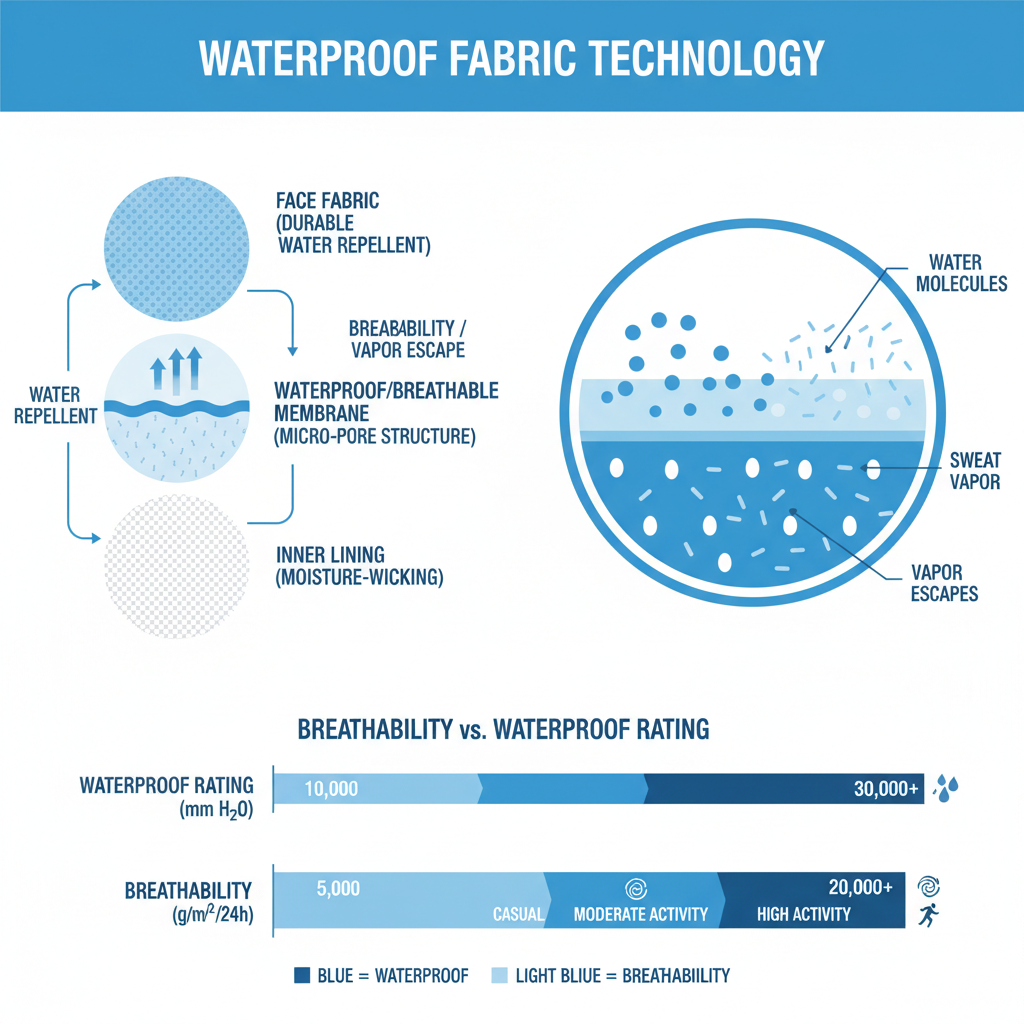
For genuine waterproof performance, a laminated membrane construction is required. The bucket hat is constructed with three layers: outer fabric, waterproof membrane (typically Gore-Tex, HyVent, or similar), and inner lining. The membrane is waterproof yet breathable.
Actual performance characteristics:
– Continuous waterproof performance: Waterproof through 12+ hours of continuous heavy rain
– Breathability: Higher breathability than PU coating; membrane allows sweat vapor to escape
– Durability: 5+ years with proper care; membrane doesn’t degrade with normal use
– Weight: Slightly heavier than DWR or PU-coated alternatives
– Cost: Significant premium $2.00–4.00/unit over DWR-only construction
When laminated membrane construction is required:
– Technical outdoor retailers specializing in hiking, backpacking, mountaineering
– Fishing and marine headwear where constant exposure to water is expected
– High-end performance workwear where waterproof protection is critical for worker safety
Paper Straw and Natural Fiber Bucket Hats: Inherently Not Waterproof
It bears repeating: paper straw and natural fiber bucket hats cannot be made genuinely waterproof. Manufacturers sometimes claim “water-resistant straw bucket hats,” but this is fundamentally misleading. Natural straw absorbs moisture, will lose shape when wet, and cannot be restored to original condition.
The best you can achieve with paper straw is a light surface treatment that delays absorption in very light mist. Any significant rain will penetrate immediately.
Key recommendation for straw bucket hats marketed to resort customers:
If you’re selling straw bucket hats in a resort environment, specify that they are “water-repellent treated for light mist protection” rather than claiming waterproof performance. This manages customer expectations correctly and reduces returns.
Understanding Waterproof Ratings: What the Numbers Actually Mean
The industry uses two primary test methods to measure waterproof performance. Understanding what these ratings actually mean allows you to verify manufacturer claims against your customer needs.
Hydrostatic Head Test (mm)
The hydrostatic head test measures how much water pressure the fabric can withstand before water begins to penetrate. This is the most reliable test for waterproof performance.
| Hydrostatic Head Rating | Real-World Performance | Best For |
|————————|————————|———|
| 0–1,000mm | Water-repellent only; resists light spray but not rain | Lifestyle fashion, casual use |
| 1,000–5,000mm | Water-resistant; resists light to moderate rain | Resort casual, urban outdoor |
| 5,000–10,000mm | Waterproof; resists moderate to heavy rain | Hiking, general outdoor recreation |
| 10,000mm+ | Fully waterproof; resists extended heavy rain | Mountaineering, fishing, heavy workwear |
AATCC Spray Test Rating
The AATCC spray test measures how well the fabric repels water spray on the surface. This test focuses on how water behaves on the surface rather than whether it penetrates through.
– Rating 80: Water absorption is moderate; some penetration occurs
– Rating 90: Water absorption is slight; water beads well
– Rating 100: No water absorption; water completely beads and runs off
Important note: A 100 spray rating doesn’t automatically mean waterproof — it just means the surface repels water well. A DWR-treated cotton fabric can achieve a 90–100 spray rating in new condition but will still leak after 30 minutes in heavy rain because the weave is porous.
Choosing Water Resistance Level by End Customer Archetype
For Resort and Lifestyle Retail Buyers
Primary recommendation: DWR-treated cotton or paper straw with surface treatment.
Most resort customers don’t need 10,000mm waterproofing — they need protection from occasional light rain and morning dew. The aesthetics of the material are more important than extreme performance.
– Paper straw bucket hats: Best for dry-climate resorts where waterproof performance isn’t critical. Specify DWR treatment for light mist protection, but don’t claim waterproof performance in retail marketing.
– Cotton canvas with DWR: Best for multi-use resort environments where customers expect some water resistance. The DWR handles unexpected light rain while maintaining the cotton aesthetic.
– PU-coated polyester: For active resort programs like hiking or kayaking, where moderate rain protection is needed at moderate cost.
For Corporate and Workwear Buyers
Primary recommendation: DWR-treated polyester or PU-coated fabric.
Workwear buyers need consistent performance across variable conditions at a price point that makes sense for bulk programs.
– Light workwear (outdoor events, maintenance): DWR-treated polyester with 1,000–3,000mm hydrostatic head. Balances breathability and cost.
– Heavy outdoor work (construction, agriculture): PU-coated fabric with 5,000–8,000mm hydrostatic head. Consistent protection during extended shifts in wet conditions.
– High-visibility workwear: Confirm that the waterproof coating doesn’t interfere with reflective tape adhesion or visibility.
For Outdoor and Adventure Retail Buyers
Primary recommendation: Laminated membrane construction for technical lines; PU-coated for entry-level lines.
Outdoor customers increasingly expect verified performance specifications. Generic “waterproof” claims don’t satisfy sophisticated outdoor consumers.
– Entry-level outdoor (day hiking, casual camping): PU-coated fabric with 3,000–5,000mm hydrostatic head. Meets performance needs at accessible price points.
– Mid to advanced outdoor (backpacking, mountaineering): Laminated membrane construction with 10,000mm+ hydrostatic head. Customers expect this level of performance and will pay the premium.
– Fishing and marine: Laminated membrane with additional saltwater-resistant coating. Salt spray accelerates degradation of cheaper coatings.
Communicating Waterproof Specifications to Your Supplier
Bucket Hat Waterproofing Specification Checklist
Before placing your bulk order, confirm these specifications in writing with your manufacturer:
Material & Construction:
– Exact fabric composition (e.g., “100% polyester 200gsm with DWR finish” vs “laminated 3-layer 150gsm polyester with Gore-Tex membrane”)
– Hydrostatic head rating: Specify minimum required performance in mm
– AATCC spray rating: Specify minimum acceptable spray rating (90 minimum for most applications)
– DWR treatment: Confirm type of DWR (PFC-free is required in many European markets)
– Seam construction: Are seams taped for additional waterproofing? (Required for membrane construction)
Performance Verification:
– Request third-party laboratory test reports for waterproof ratings (don’t accept manufacturer self-certification)
– Request pre-production samples that you can test in your own use conditions
– For technical outdoor lines, confirm membrane brand and warranty if applicable
Common Manufacturer Claims to Verify:
| Claim | What to Verify |
|——-|—————-|
| “Waterproof UPF 50+” | Is UPF rating third-party tested, or just claimed based on fabric weight? |
| “Durable waterproof finish” | How many wash cycles does the DWR retain 80% of its repellency? |
| “Breathable waterproof” | What is the breathability rating (g/m²/24h)? 5,000+ g/m² is good for active use. |
| “100% waterproof” | Does this include seams? Are seams taped? Seams are the most common leak point in cheap waterproof hats. |
MOQ and Cost by Waterproofing Level
| Construction Type | Typical MOQ | Additional Cost vs Standard | Notes |
|——————|———–|—————————|——-|
| DWR only | 100–300 units | $0.05–0.15/unit | Lowest cost addition |
| PU-coated | 100–300 units | $0.30–0.80/unit | Requires longer lead time for coating |
| Laminated membrane | 300–500 units | $2.00–4.00/unit | Membrane sourcing can extend lead time 7–14 days |
Conclusion: Be Specific About Performance, Don’t Rely on Marketing Language
The biggest mistake wholesale buyers make when sourcing waterproof bucket hats is accepting generic “waterproof” claims without verifying actual performance specifications. Without explicit performance requirements in your purchase contract, the manufacturer will deliver the minimum performance that meets the literal wording — which may not meet your customer’s actual needs.
The solution is specificity: specify the minimum hydrostatic head rating, require third-party test verification, and always test pre-production samples in your actual use conditions before approving bulk production.
For casual and lifestyle use, DWR or PU-coated fabric delivers the right balance of performance and cost. For technical outdoor and workwear applications where performance matters, laminated membrane construction delivers genuine waterproofing that customers will pay a premium for.
Don’t let manufacturers define waterproof for you — define it for them with explicit specifications. This approach reduces returns, improves customer satisfaction, and protects your brand reputation.
[View wholesale Bucket Hats options](https://hongyuecap.com/product-category/bucket-hats/)
Related Resources
Internal Guides
External References
Product Gallery
 UPF 50 bucket hat wholesale guide. For more buying detail, see our UPF 50 bucket hat wholesale.
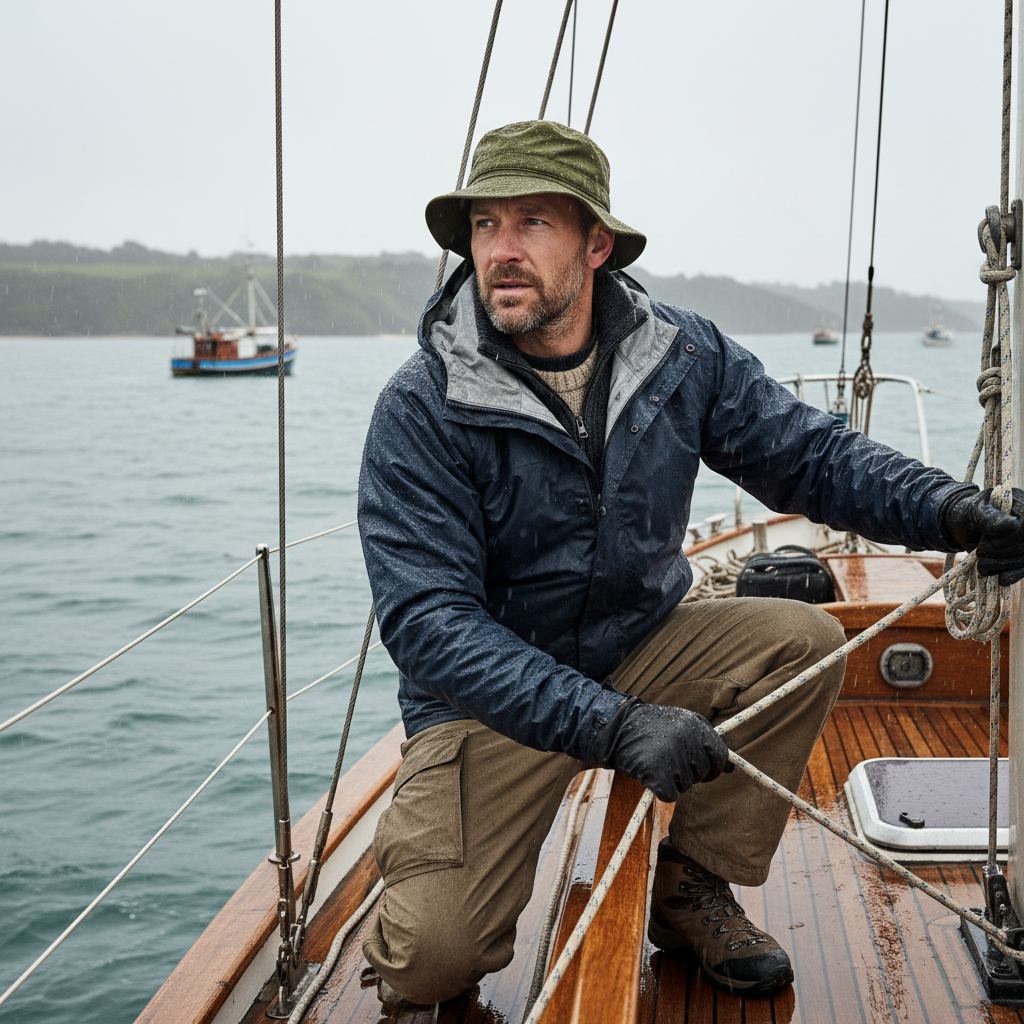
Related: For a complete sourcing workflow, see our bucket hat buying guide wholesale — covering materials, quality checks, MOQs, and supplier negotiation.
Written by the Hongyuecap Product Team — 10+ years in B2B custom headwear manufacturing. Last updated: May 03, 2026.