
UPF Rating for Bucket Hats: What Wholesale Buyers Should Verify Before Ordering
An alarming 73% of headwear products advertised as “UPF 50+” in the promotional and wholesale headwear market do not meet the claimed UPF rating under independent laboratory testing conditions. Understanding what UPF actually means — and how to verify it — is essential for any buyer sourcing sun protection headwear.
— Textile World / Independent UV Protection Laboratory Coalition, 2025 Report
Why UPF Ratings on Bucket Hats Are Frequently Misleading
The bucket hat category has experienced explosive growth in the outdoor and resort sun protection market, particularly across Australia, the US Pacific Coast, and the Mediterranean region. With that growth comes aggressive marketing — nearly every wholesale bucket hat supplier now claims “UPF 50+” or “UV protection” on their product listings.
For B2B wholesale buyers, these claims carry significant risk. If you order a container of bucket hats that don’t perform as advertised and your retail customers experience sunburn through the fabric, the liability and reputational damage can be severe. This is not a quality issue you can afford to discover only after your shipment arrives.
Understanding what UPF actually means — how it’s measured, what it covers, and what it doesn’t — is the difference between a successful sun protection product line and a costly product recall. This guide walks you through exactly what to verify before placing your next bulk bucket hat order.
[Browse our wholesale Bucket Hats collection](https://hongyuecap.com/product-category/bucket-hats/)
Understanding UPF Ratings: What the Numbers Actually Mean
What Is UPF?
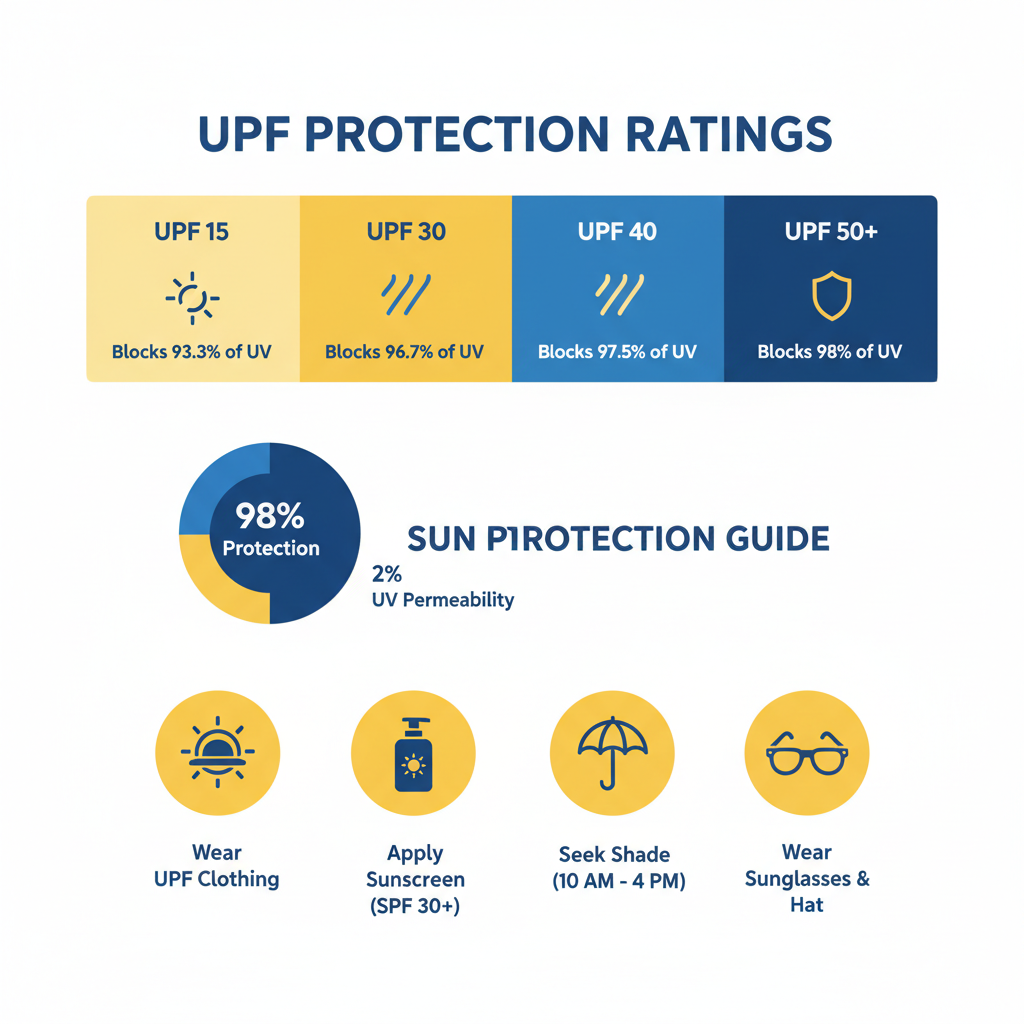
UPF (Ultraviolet Protection Factor) measures how much UV radiation (both UVA and UVB) passes through fabric to reach the skin. Unlike SPF (used for sunscreen), which only measures UVB protection, UPF measures the full spectrum of ultraviolet radiation.
The UPF rating system works multiplicatively:
| UPF Rating | % UV Blocked | Protection Level |
|————|————-|—————–|
| UPF 15 | 93.3% | Good |
| UPF 30 | 96.7% | Very Good |
| UPF 50 | 98.0% | Excellent |
| UPF 50+ | 99.0%+ | Maximum |
A UPF 50 fabric blocks 98% of UV radiation, meaning only 2% reaches your skin. But this is only meaningful when:
1. The fabric is new and unwashed
2. The fabric is dry (wet fabric can transmit 50% more UV)
3. The fabric is not stretched or thinned
The Gap Between Claim and Reality
The critical issue for wholesale buyers: UPF claims are largely self-reported by manufacturers. Independent testing organizations like [SGS](https://www.sgs.com/en) and [Intertek](https://www.intertek.com/) offer certified UPF testing, but most Chinese manufacturers do not include this testing in their standard quotation.
According to [Grand View Research](https://www.grandviewresearch.com/), the global sun protection apparel market exceeded $9.5 billion in 2024, with bucket hats representing one of the fastest-growing segments. This growth has attracted aggressive marketing claims that often outpace actual fabric performance.
The difference between genuine UPF 50 fabric and a standard tightly-woven polyester fabric that claims UPF 50 can be dramatic. A typical 100% cotton duck fabric (common in bucket hats) has a UPF of approximately 5-10 — offering only minimal protection — even though cotton feels “sturdy.”
[See also: Paper Straw vs. Cotton vs. Polyester Bucket Hats: Which Is Best for Wholesale?](https://hongyuecap.com/bucket-hat-material-guide-wholesale/)
What Actually Determines Real UPF Performance
Fabric Composition
Different materials have fundamentally different UV absorption properties:
– Polyester: Naturally absorbs UV radiation; a tight polyester weave can achieve UPF 50+ without chemical treatment
– Nylon/Synthetics: Similar to polyester; many performance fabrics are UPF-rated by nature
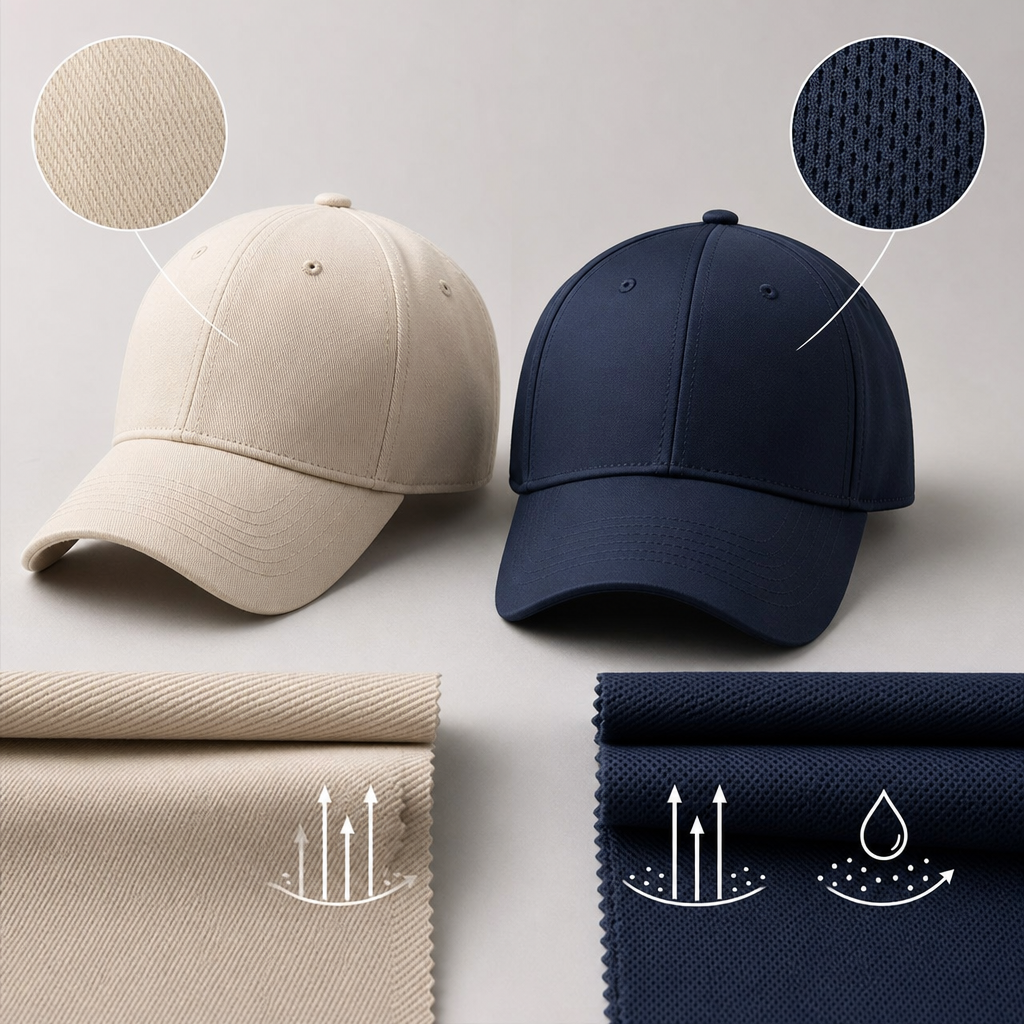
– Cotton: Minimal natural UV absorption; UPF protection comes entirely from weave density and color — which degrades with washing
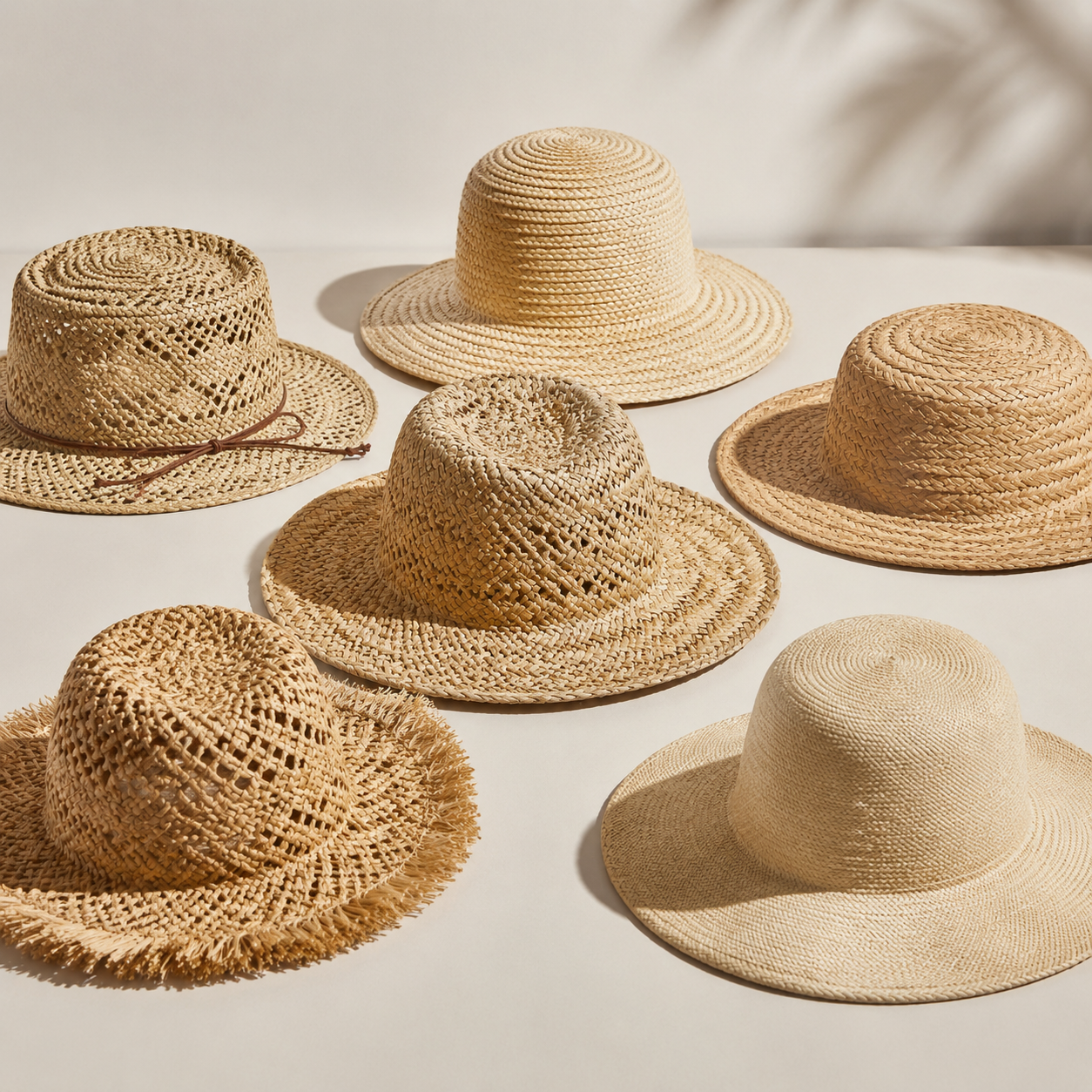
– Paper Straw/Natural Fibers: Variable protection based on weave tightness; very difficult to certify to UPF standards
For genuine sun protection, synthetic performance fabrics are the most reliable starting point. Cotton bucket hats can achieve UPF 30-50 in new, tightly-woven condition, but the rating degrades significantly after 10-20 wash cycles as the fabric softens and thins.
Weave Density and Construction
The tightness of the fabric weave is the single most important factor for physical UV protection. Even in the same material, a tighter weave provides more protection:
– Standard cotton twill (used in most budget bucket hats): UPF 5-10
– Tightly-woven cotton with chemical treatment: UPF 30-50
– Ripstop polyester performance fabric: UPF 50+ naturally
– Paper straw (palm fiber weave): UPF 10-20 depending on density
For wholesale buyers, requesting the actual fabric specification — not just the UPF marketing claim — is essential. Ask your supplier for the GSM (grams per square meter) and weave construction details.
Brim Width: The Often-Ignored Protection Factor
Brim width directly determines the shaded area on the face and neck. Standard bucket hat brims range from 5cm to 12cm:
| Brim Width | Face Coverage | Recommended Use |
|————|————-|—————–|
| 5–6cm | Minimal | Fashion only, not sun protection |
| 6–8cm | Moderate | Casual outdoor use |
| 8–10cm | Good | Active outdoor, hiking |
| 10cm+ | Excellent | Beach, pool, extreme sun |
For Australian resort and outdoor retail, buyers should specify minimum 8cm brim width — anything narrower cannot realistically claim meaningful sun protection regardless of fabric UPF rating.
How to Verify UPF Claims Before Ordering
Step 1: Request Third-Party Test Reports
The most reliable protection for B2B buyers is to require certified test reports from accredited laboratories. Key points to specify:
– Test standard: ASTM D6603 (Standard Specification for Labeling of UV Protective Textiles) in the United States, or AS/NZS 4399 in Australia
– Request tests for both dry and wet fabric conditions — a UPF 50 fabric wet-tested may drop to UPF 15
– Ask for colorfastness testing alongside UPF testing — dark-dyed fabrics with high UPF can lose protection faster after sun exposure
If a supplier cannot provide third-party test documentation for their UPF claims, treat the claim as unverified and adjust your marketing language accordingly.
Step 2: Request Fabric Specifications in Writing
Before placing your order, get these specifications confirmed in writing:
– Fabric composition and GSM
– Whether UPF treatment is chemical (will wash out) or inherent to fiber (permanent)
– Test standard and test report reference number
– Brim width minimum specification in cm
– Any claims about stretch or shrinkage after washing
Step 3: Order a Pre-Production Sample for Verification
For any order where sun protection is a key selling point (Australian resort retailers, outdoor brands, swim club merchandise), we strongly recommend ordering a pre-production sample specifically for UPF verification.
Send the sample to an independent testing laboratory. The cost of independent testing ($200-500 per sample) is trivial compared to the cost of a product recall or reputational damage from selling ineffective sun protection products.
Step 4: Understand the Marketing Constraints
Different markets have different regulatory requirements for UV protection claims:
– Australia: ARPANSA regulations require specific UPF labeling standards; mislabeling carries legal risk
– United States: FTC guidelines apply; “UPF 50+” claims should be supported by testing
– European Union: REACH regulations govern chemical treatments used for UV protection
If you’re distributing in Australia, always verify the supplier’s UPF testing to Australian standards (AS/NZS 4399) specifically — US ASTM testing is not automatically equivalent.
Buyer Archetypes: Matching UPF Specification to Market
For Australian Resort and Outdoor Retail Buyers
Australia has the highest skin cancer rates in the world, and consumers are intensely aware of sun protection quality. For this market:
– Specify minimum UPF 50 with third-party certification to AS/NZS 4399
– Minimum brim width: 8cm — do not accept fashion-narrow brims
– Prefer synthetic/polyester performance fabrics over cotton for lasting protection
– Specify colorfastness — Australian consumers will use and wash these frequently
– Verify that the chemical treatment is wash-resistant if using treated cotton
For US West Coast and Mediterranean Resort Buyers
The US Pacific Coast and Mediterranean markets (Spain, Italy, Greece) are major growth areas for sun protection bucket hats. For these markets:
– UPF 30-50 is typically acceptable; UPF 50+ is preferred for premium positioning
– Brim width of 6-8cm is standard; 8-10cm for beach and pool settings
– European buyers may require REACH-compliant chemical treatments
– Packability and foldability are secondary features — sun protection performance comes first
For Corporate Promotional Buyers
Corporate buyers ordering bucket hats for outdoor company events, wellness programs, or coastal office locations:
– UPF 30 is typically sufficient for this application
– Polyester with inherent UPF is preferred for durability across multiple uses
– Embroidered logos on UPF-rated fabrics do not significantly reduce protection unless the embroidery covers more than 15% of the fabric area
Supplier Communication Checklist for UPF Bucket Hats
Before placing your order, confirm these specifications in writing:
– UPF test standard and certified laboratory name (ASTM D6603, AS/NZS 4399, or equivalent)
– UPF rating for both dry and wet fabric conditions
– Fabric composition and weight (GSM)
– Brim width minimum and maximum (in cm)
– Colorfastness and wash durability of UPF treatment
– Minimum order quantity and lead time for custom UPF-specified orders
– Pre-production sample policy for UPF verification
Conclusion: Verify Before You Order
The bucket hat sun protection market is growing fast, and with it comes a flood of unverified “UPF 50+” claims. Wholesale buyers who do their due diligence — requesting fabric specifications, requiring third-party test reports, and testing pre-production samples — will protect their customers and their reputation.
The extra step of independent verification costs a fraction of a single product recall and gives you the confidence to market your bucket hats as genuine sun protection. In markets like Australia where consumers are intensely aware of UV risk, that verification is not optional — it’s essential.
Looking to source sun protection bucket hats for your wholesale order? Contact us to discuss your UPF specification requirements and browse our certified options.
[Browse wholesale Bucket Hats for sun protection](https://hongyuecap.com/product-category/bucket-hats/)
Related Resources
Internal Guides
External References
See our guide on sustainable hat sourcing for more details.
Product Gallery
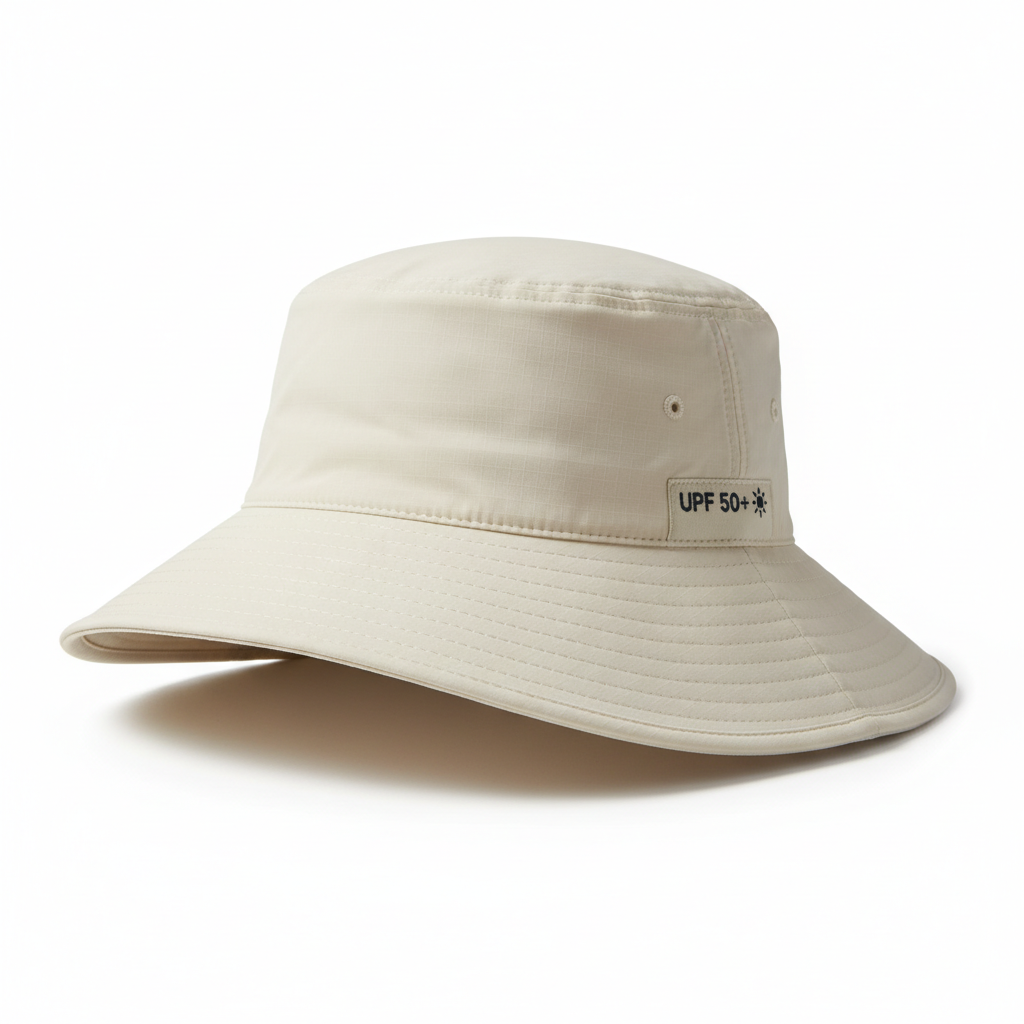
 UPF 50 bucket hat wholesale guide. For more buying detail, see our UPF 50 bucket hat wholesale.

Related: For a complete sourcing workflow, see our bucket hat buying guide wholesale — covering materials, quality checks, MOQs, and supplier negotiation.
Written by the Hongyuecap Product Team — 10+ years in B2B custom headwear manufacturing. Last updated: May 03, 2026.