Beanie stretch recovery and size tolerance inspection
Beanie stretch recovery and size tolerance inspection matters because bulk knitted-beanie orders often pass sample review but still fail after handling, packing, or repeated try-on. For B2B buyers, poor stretch recovery can make one size feel inconsistent across cartons, while weak size-tolerance control can trigger retailer complaints about fit, cuff height, and shelf presentation. That is why buyers need a practical inspection method before bulk approval, not just a good-looking showroom sample.
The issue usually appears when a factory confirms yarn count, gauge, and artwork placement, but the buyer does not lock a measurable recovery standard. A beanie can look acceptable flat on the table and still relax too much after wear, return too slowly after extension, or vary from piece to piece beyond what the target market will tolerate. Keep the broader HongYueCap path, the live Knitted Beanie category, and the sampling route at custom beanie planning in view so the inspection checklist stays connected to a real RFQ workflow.
This guide focuses on buyer-side QC decisions for wholesale and custom orders: how to define stretch recovery, where size drift usually starts, which inspection points belong in the sample stage, and how to approve a beanie program with fewer surprises in bulk production.
Main Buyer Problem
The main buyer problem is not simply whether the beanie feels soft or looks on-trend. It is whether the approved sample can keep a stable circumference, cuff depth, and rebound behavior once the order moves into repeat knitting, decoration, and export packing. If recovery is too loose, the beanie can feel oversized after a short try-on. If recovery is too tight or uneven, fit complaints rise and private-label customers may treat the whole run as inconsistent.
This gets more serious in one-size programs, gift campaigns, school merchandise, and winter retail packs where the buyer expects a broad fit range without visible distortion. A sourcing team may accept a pre-production sample that was hand-blocked or freshly steamed, then discover that bulk goods relax differently after folding, polybag packing, warehousing, or cold-weather transit.
The buyer action is to convert “fit looks okay” into measurable checkpoints. Define the relaxed width, extended width, recovery wait time, cuff height, body height, and acceptable tolerance before the factory starts bulk knitting. That is the practical value of a beanie stretch recovery and size tolerance inspection guide in B2B buying.
Material / Construction Risk
Material and construction risk need to be reviewed together because stretch recovery is not just a yarn issue. Yarn blend, rib structure, knitting gauge, spandex content, washing finish, cuff fold method, and decoration load can all change how a beanie returns after extension. A buyer who checks only fabric hand feel can miss the fact that the structure itself is too unstable for repeated wear.
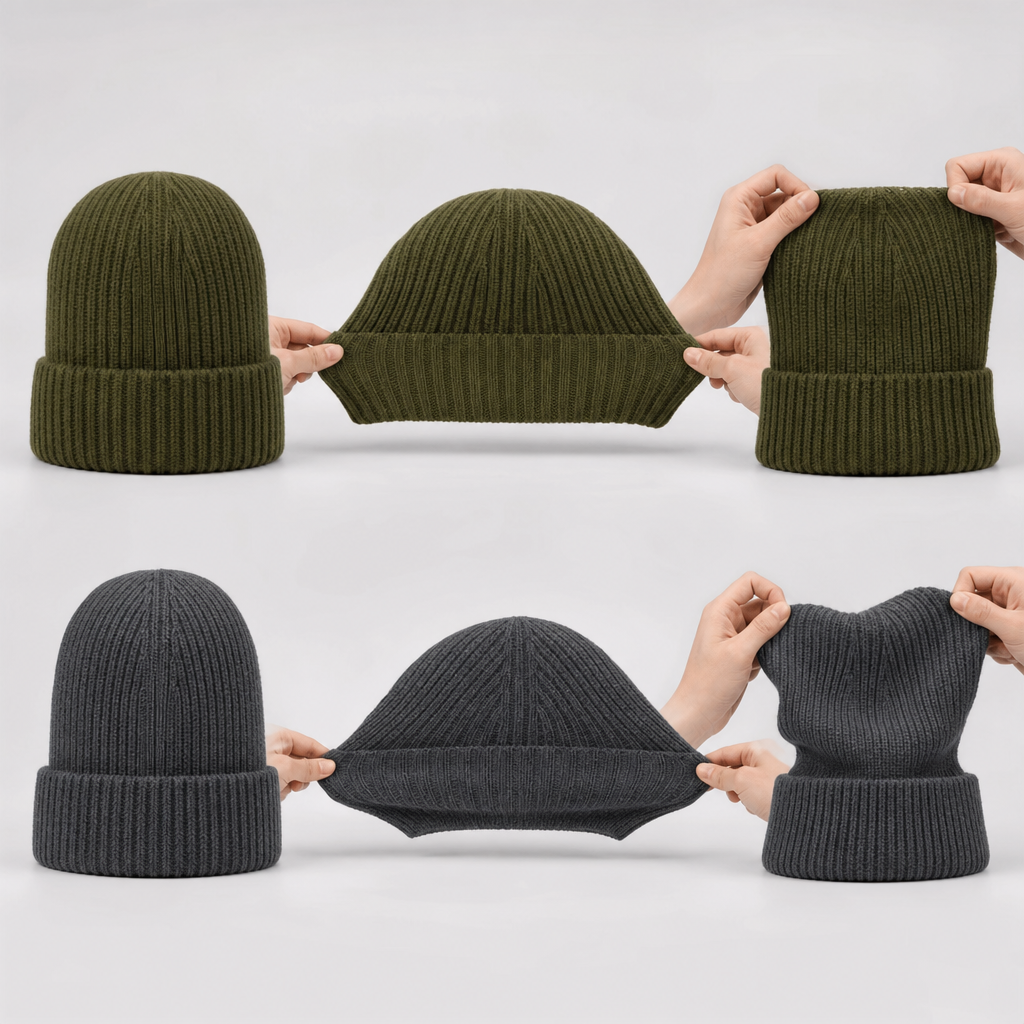
The first inspection question is whether the sample rebounds consistently after a controlled pull test. For example, if the cuff opening is extended to an agreed width and released, does it return close to the approved relaxed measurement within the allowed wait time, or does it stay visibly loose? That result can shift depending on acrylic percentage, wool blend, stitch density, or whether the beanie uses a folded cuff with embroidery that adds localized weight.
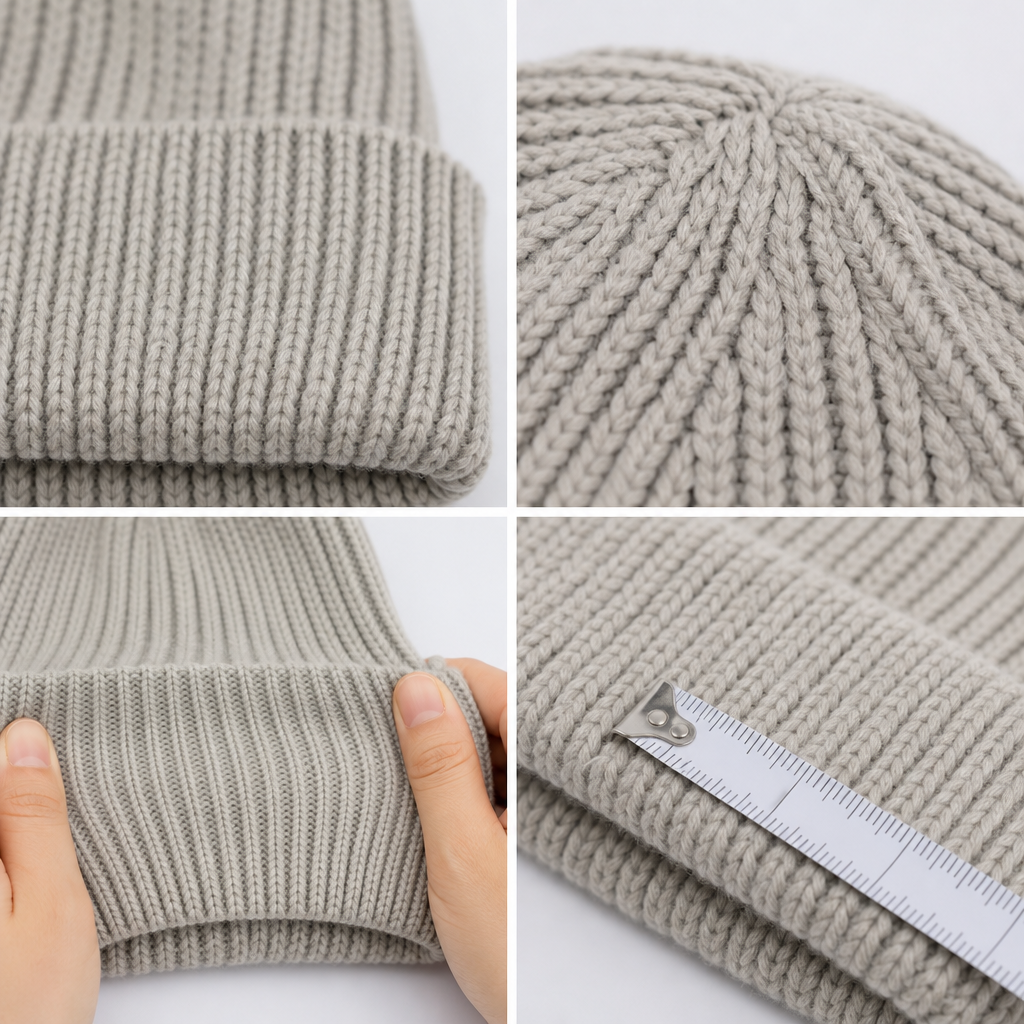
Construction risk then shows up in places buyers can measure directly: opening width, body height, cuff height, top shape symmetry, seam closure, label placement, and post-packing deformation. If your team needs outside reference points, keep OEKO-TEX Standard 100 for material-compliance discussion and moisture / packing guidance in the file when reviewing how compression or humidity may affect the finished beanie.
Supplier / MOQ / Sampling Risk
Supplier, MOQ, and sampling risk usually appear when the buyer approves a beanie without locking how recovery and tolerance will be checked in production. A factory can hit the target look on a hand-finished sample but still struggle to keep the same rebound behavior when knitting runs are split across machines, shifts, or yarn lots. That is why the sample stage should include the exact measuring method and tolerance sheet, not just artwork approval.
At sample review, buyers should ask the factory to confirm five things in writing: the relaxed measurement points, the extension distance used for recovery testing, the wait time before re-measurement, the acceptable tolerance range, and whether embroidery, patches, or washing will happen before or after the test. If those details are vague, the supplier can still say the sample is “approved” while using a different interpretation on the bulk floor.
Lead time also affects QC reliability. A supplier rushing winter programs may substitute yarn lot, reduce blocking time, or compress more pieces per carton, all of which can change size stability by arrival. When you send the RFQ, ask for realistic MOQ, sample lead time, bulk lead time, measurement method, and the factory step most likely to cause recovery drift after sample approval.
QC Checklist
- Measure relaxed opening width, body height, and cuff height against the approved spec before stretch testing.
- Extend the beanie opening to the agreed test width, release it, and record recovery after the defined wait time.
- Check whether left and right side measurements stay within tolerance after recovery, not just before the pull test.
- Review seam closure, rib alignment, top shape, cuff fold consistency, and label placement on multiple pieces from the sample set.
- Confirm embroidery, patch, or woven-label attachment does not distort rebound or create localized drag on the cuff.
- Compare fit and recovery again after the beanie is folded, polybagged, unpacked, and left to rest.
- Record the commercial risk clearly: oversized fit, slow rebound, uneven tolerance, decoration drag, or packing-stage deformation.

Buyer Decision Framework
Buyers can approve faster when they use a simple QC decision framework instead of relying on a single sample impression.
1. Start with the fit promise. Decide what “one size” must cover for your target market, then convert that into measurable relaxed and extended dimensions. 2. Test the decorated sample, not a blank control sample. Recovery can change once embroidery, patches, or labels add weight and tension. 3. Look for repeatability across pieces. One good sample is not enough if the second and third pieces rebound differently. 4. Include packing in the approval path. If the beanie will ship folded or compressed, the post-packing recovery check belongs in the QC sheet. 5. Keep the RFQ path open. Once the inspection standard is clear, move directly to contact and sample planning with target quantity, country, logo file, and delivery window.
For most B2B buyers, the best decision is not the softest hand feel or the lowest quote in isolation. It is the beanie program that can hold fit, rebound, and shelf consistency across bulk production. That is the point of a practical article on beanie stretch recovery and size tolerance inspection: it should shorten the route from sample uncertainty to confident factory approval.
FAQ
What is the safest way to compare options for a wholesale order?
Use a written measurement method with relaxed size, extension distance, recovery wait time, and tolerance range. The safer B2B choice is the sample that can repeat those numbers consistently across more than one piece.
What should buyers include in the sample brief during comparison?
Ask for the exact measurement points, the pull-test method, the recovery timing, and a multi-piece sample check after decoration and packing. That gives you evidence for whether the beanie can stay inside fit tolerance in bulk.
Why do material-comparison decisions still fail after a good-looking sample?
The biggest mistake is approving a single dressed sample without locking the recovery test and tolerance sheet. A beanie can look fine flat on the table but still fail after wear, folding, or decoration weight in the real shipment.
CTA
If you are reviewing beanie stretch recovery and size tolerance inspection for a wholesale or custom order, send HongYueCap your logo file, target quantity, destination country, required delivery date, target measurements, and sample requirements through our contact page. We can help you define the measurement sheet and approval checkpoints before bulk production starts.