How to Evaluate Straw Hat Suppliers for Summer Retail Programs
A straw hat can look acceptable in a sample room and still fail after bulk production. The crown may soften, the brim may arrive distorted, decoration may shift, or the material shade may vary across cartons. For retail buyers, brands, and importers, these problems are rarely caused by one dramatic mistake. They usually come from an incomplete specification, unclear sample approval, weak process control, or packing decisions made too late.
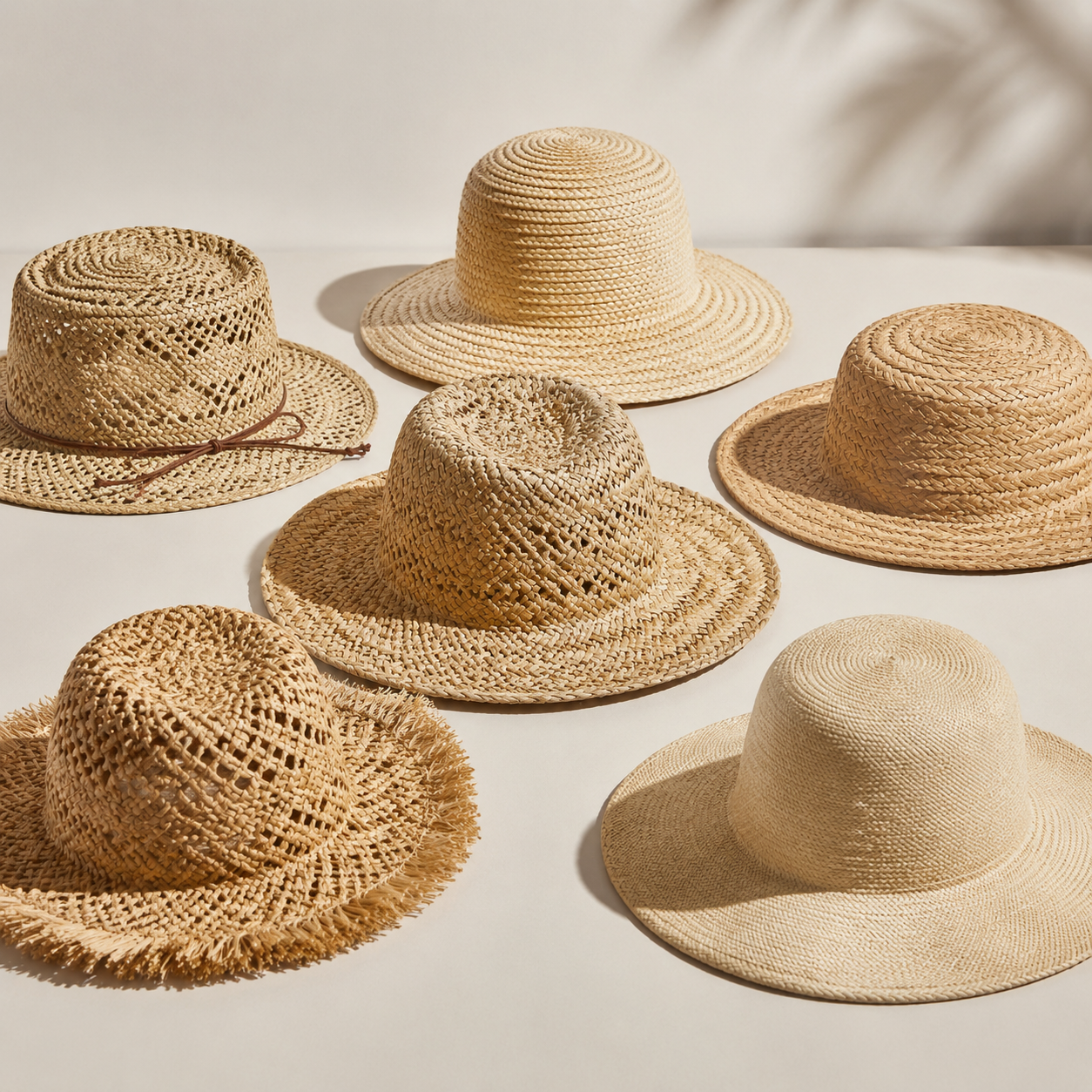
The right supplier evaluation therefore goes beyond price and product photos. It should show whether a factory can translate a retail requirement into a repeatable material, shape, logo, quality standard, packing method, and delivery plan. The following framework helps sourcing teams compare suppliers on the factors that affect sell-through, claims, launch timing, and total landed risk.
Start With the Retail Program, Not the Hat Photo
Begin by defining where and how the hat will be sold. A resort boutique, a supermarket seasonal program, an outdoor lifestyle brand, and a promotional distributor may all select a similar silhouette, but they do not share the same margin target, packaging, durability expectation, or brand presentation. A supplier cannot recommend the right construction until the commercial use is clear.
Your first brief should state the destination market, target retail price, expected order quantity, sales season, required delivery date, customer profile, and preferred packaging. Add the intended use, such as beach retail, travel, gardening, hospitality uniforms, events, or fashion accessories. These details help the factory judge whether an existing style can be adapted or whether a new development is required.
Ask each shortlisted supplier to identify the two or three risks they see in the program. A capable factory should discuss trade-offs instead of simply agreeing to every request. For example, a wide brim may need stronger support for export packing, a dense logo may affect the crown, and a natural material may require a broader tolerance than a highly standardized retail program allows.
Check Whether the Supplier Controls the Critical Production Steps
A useful factory audit follows the product through production. Ask who sources and checks the body material, who forms the crown and brim, where sewing and decoration are completed, and who performs final inspection and packing. Outsourcing is not automatically a problem, but the supplier must control approved samples, specifications, incoming materials, subcontractor quality, and corrective action.
Request recent production photos or a video walkthrough showing forming equipment, sewing stations, logo application, inspection areas, and packing. Compare what you see with the product being quoted. A generic factory presentation does not prove control of your straw-hat construction. For a clearer view of the production scope HongYueCap supports, review our custom straw hat manufacturing capabilities.
Confirm who your technical contact will be after the salesperson receives the order. The supplier should be able to explain which measurements are checked, how color and shape references are stored, how nonconforming pieces are separated, and what happens when bulk output does not match the approved sample.
Lock MOQ and Sampling Rules Before Comparing Prices
MOQ is not one universal number. It may be driven by the hat body, material color, custom weave, sweatband, printed trim, embroidery setup, packaging, or carton quantity. Ask suppliers to separate the MOQ for the base style from the MOQ for each custom component. This reveals where flexibility is real and where it depends on stock materials.
Sampling terms should be written before price comparison. Confirm the sample fee, courier cost, number of revisions included, sample lead time, refund policy, and whether the final approved sample becomes the sealed production reference. Also ask whether the sample uses production-grade materials and processes. A fast handmade sample made with substitute material can create false confidence.
Compare quotations on the same specification and Incoterm. State whether the price includes labels, hangtags, individual bags, shape supports, master cartons, testing, and inspection. Otherwise a lower unit price may only reflect missing components that appear later as additional charges or quality compromises.
Write a Material Specification the Factory Can Repeat
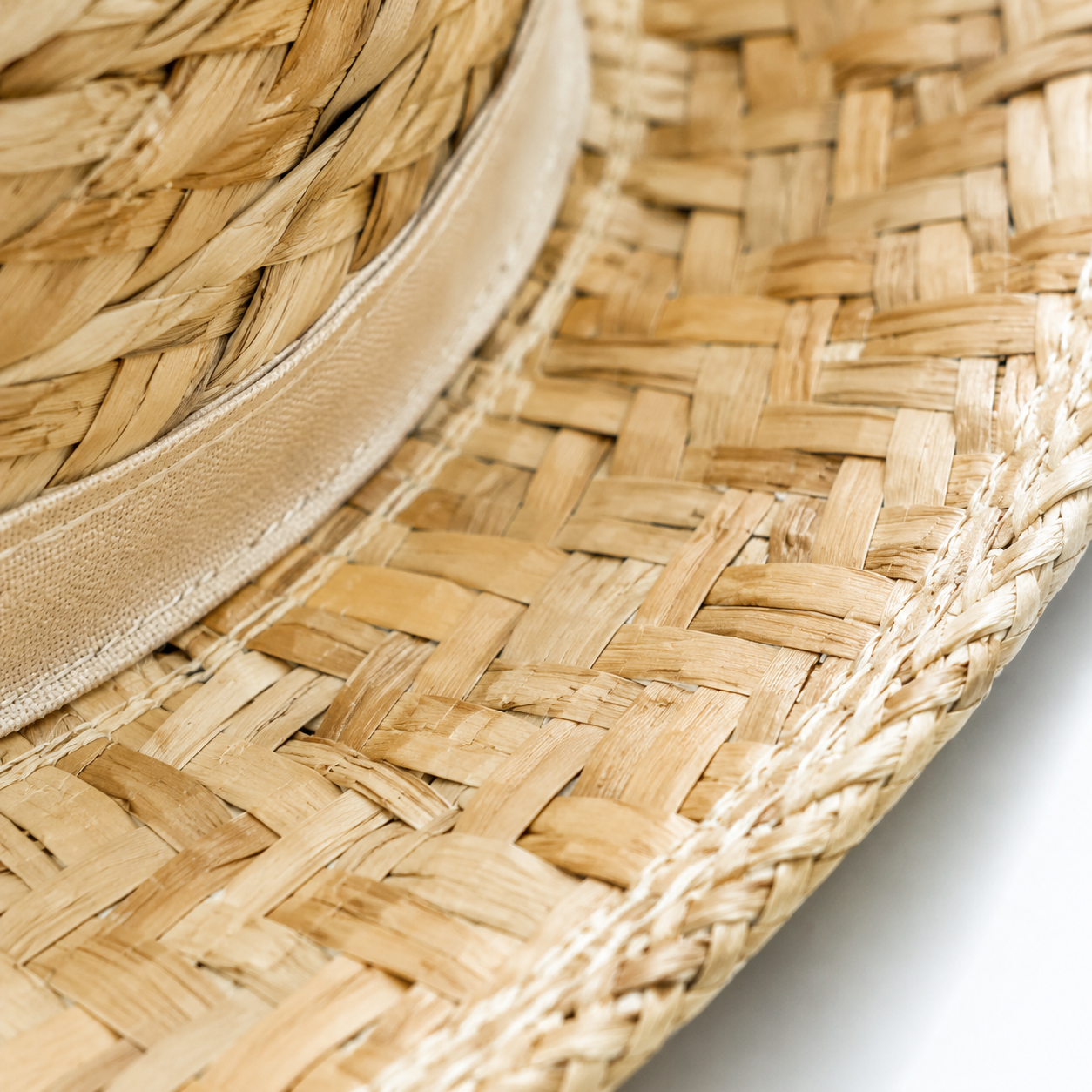
A material name alone is not enough. “Paper straw,” “raffia,” or “natural straw” can cover different fibers, widths, weights, finishes, colors, and constructions. The approved specification should include the exact material reference, color standard or physical swatch, weave appearance, hand feel, crown stiffness, brim stiffness, edge finish, sweatband, lining if used, and any allowed variation.
Use clear photographs and measured details, but keep a physical approval sample when appearance and hand feel matter. Record tolerances for shade, visible knots, weave spacing, and natural variation. The goal is not to demand impossible uniformity; it is to agree on what the retail customer will accept before the factory starts bulk production.
Decoration must be tested on the actual hat material. Specify logo size, placement from fixed reference points, thread or print color, patch construction, backing, and attachment method. Heavy embroidery, metal badges, and thick patches can change the shape or comfort of a light crown, so approve the complete product rather than a logo sample in isolation.
Use a Practical Straw Hat QC Checklist
A QC checklist should convert the approved sample into measurable checks. It should be short enough to use on the production floor and specific enough to prevent subjective arguments. Define the inspection stage, sampling method, defect categories, acceptance rules, and the person authorized to approve corrective action.
- Material and color match the approved swatch and sealed sample within agreed tolerances.
- Crown height, opening, brim width, and overall circumference meet the measurement chart.
- Shape is symmetrical, with no crushed crown, wavy brim, sharp crease, or weak edge.
- Weave or braid is secure, with no unacceptable gaps, loose ends, stains, or broken sections.
- Sweatband, lining, labels, and trims are correctly positioned and securely attached.
- Logo size, color, orientation, placement, and workmanship match the approval reference.
- Metal parts, adhesives, stitches, and cut edges do not create sharp points or discomfort.
- Each hat recovers to the approved shape after the agreed packing and unpacking test.
- Barcode, hangtag, polybag, assortment, carton marks, and carton quantity are correct.
Ask for an inspection report with photos from bulk production, not only from the sample. For higher-risk programs, arrange a pre-production check, an inline inspection, or a final random inspection according to the buyer’s own quality system.
Prevent Crown and Brim Deformation During Packing and Transit
Packing is part of product engineering for straw hats. A good hat can become unsellable when crowns are nested too tightly, brims are bent against the carton wall, or cartons are compressed during a long route. The supplier should propose packing based on the hat structure, shipment method, carton dimensions, and expected handling.
Approve a packing sample that shows how many hats are nested, which protective inserts are used, whether the brim is supported, and how the product is bagged. Request carton dimensions, gross and net weight, and pieces per carton before confirming freight. A small saving in carton volume is not worthwhile if store staff must reshape hats or reject damaged stock.
For sensitive shapes, run a practical transit simulation: pack the hats as planned, keep the carton closed under agreed conditions, then unpack and evaluate recovery. Photograph the result from the front, side, and top. Put the approved method into the purchase order so it cannot be changed without written consent.
Build a Realistic Sampling and Production Timeline
A credible timeline includes more than “sample days” and “production days.” Allow time for material confirmation, artwork review, first sample, buyer feedback, revision, pre-production approval, material booking, bulk production, inspection, packing, export documentation, and transport. Add decision deadlines for the buyer so delayed feedback does not silently consume the production window.
Ask what starts the lead-time clock. Some suppliers count from deposit, others from final sample approval or receipt of custom material. Confirm which materials are stock and which must be made to order. During peak summer sourcing, capacity and material availability can change quickly, so request an updated schedule when the purchase order is ready.
Build a buffer around the retail launch rather than planning delivery on the last possible day. If a delay would cause missed shelf dates, agree on progress updates and escalation points. A supplier should be able to report material readiness, production start, inline status, inspection date, and shipping handover without vague promises.
Compare OEM, ODM, and Existing-Style Options
An existing style with stock material is often the fastest route for a small test order. ODM development can adapt a proven factory style with changes to color, trim, logo, or packaging. OEM development is more suitable when the buyer provides a tech pack, reference sample, proprietary shape, or detailed construction requirements.
Ask suppliers to quote the practical route for your program rather than forcing every project into full custom development. Compare ownership of molds or patterns, sample cost, development time, MOQ, material restrictions, and the risk of future changes. HongYueCap’s OEM and ODM customization options show the types of product details that should be discussed before sampling.
Whichever route you choose, the final specification must identify what is fixed and what may vary. Existing styles still require approval of material, color, branding, measurements, and packing. “Same as catalog photo” is not a production specification.
Send a Complete RFQ to Shortlisted Straw Hat Suppliers
A complete RFQ produces comparable quotations and shows the supplier that the buyer is ready to make a decision. Include product reference photos or drawings, target quantity by color and size, destination country, delivery deadline, material preference, measurements, logo artwork, trim details, packaging, testing requirements, and Incoterm.
Ask the supplier to return unit price, sample cost, sample timing, MOQ, bulk lead time, payment terms, packing data, quotation validity, and identified risks. Request separate costs for optional features so your team can manage the target price without weakening critical quality points.
Give every supplier the same question list and a response deadline. A clear, technically relevant response is evidence of execution ability. Repeatedly missing details, changing assumptions, or avoiding questions about tolerances and packing are warning signs even when the quoted price is attractive.
Straw Hat Supplier Comparison Checklist
- Commercial fit: Can the supplier meet the target quantity, price structure, market requirements, and launch date?
- Production control: Are material, forming, decoration, QC, and packing responsibilities clear?
- Sample reliability: Does the sample use the intended bulk material and process, with written approval records?
- Specification quality: Are measurements, tolerances, color, shape, logo, trims, and packing documented?
- Quality system: Can the supplier show incoming, inline, final, and corrective-action controls?
- Communication: Are answers specific, consistent, timely, and supported by photos or records?
- Logistics readiness: Are carton data, shape protection, inspection timing, and export handover planned?
- Total risk: Does the quotation include the items needed to deliver saleable hats, not only a low factory price?
Request a Straw Hat Sample and Bulk Quote

If you are comparing factories for an upcoming summer program, send your reference style, logo file, target quantity, destination, packaging request, and required delivery date. Our team can review the specification, identify likely production and packing risks, and recommend an appropriate sampling route.
Use the contact form to submit a straw hat technical RFQ. Including your target retail channel and quality priorities will help us respond with more useful MOQ, sample, lead-time, and cost guidance.
Frequently Asked Questions
What should I ask a straw hat supplier before ordering?
Ask about material specifications, production control, MOQ by custom component, sample rules, measurement tolerances, decoration methods, QC records, packing protection, bulk lead time, and export experience for your destination market.
How can I compare quotations from different straw hat factories?
Send the same RFQ and specification to every supplier. Compare the included material, logo, labels, packaging, testing, inspection, Incoterm, carton data, and lead time. Do not compare unit prices until the assumptions are aligned.
Why can bulk straw hats differ from the approved sample?
Differences often come from substitute materials, undefined tolerances, unapproved process changes, weak bulk inspection, or a sample made outside the normal production process. A sealed sample and written specification reduce this risk.
How should straw hats be packed for export?
The method depends on crown strength, brim width, material, and shipment route. Approve nesting, inserts, brim supports, bags, carton size, and quantity through a packing sample and recovery test before bulk packing.
Should I choose OEM, ODM, or an existing straw hat style?
Choose an existing style for speed and lower development risk, ODM for controlled changes to a proven base, and OEM when a proprietary design or detailed tech pack is central to the program. The supplier should explain the MOQ and timing differences.
Written by the HongYueCap Product Team, drawing on 15 years of custom headwear production experience. Last updated: July 24, 2026.