Pain Point: Sourcing consistent-quality straw hats at wholesale quantities is a recurring headache for boutique owners and retail buyers. Inconsistent weave density, mismatched brim widths, unpredictable sizing, and suppliers who disappear after the first shipment — these are the hidden costs that erode your margins before a single hat reaches the shelf. This straw hat wholesale buying guide cuts through the noise and gives you the exact checklist to protect your investment.
Straw Hat Wholesale Buying Guide for B2B Buyers
Straw Hat Wholesale Buying Guide for Wholesale Buyers
Straw hats represent one of the fastest-growing segments in the global headwear market, driven by rising demand for sustainable fashion and resort-season retail cycles. For wholesale buyers — whether you operate a coastal boutique chain, a resort gift shop, or an e-commerce store targeting summer travelers — understanding straw hat wholesale procurement is not optional. It is the difference between a season of glowing reviews and a warehouse full of returns.
At Hongyuecap, our product team has spent over a decade manufacturing and exporting straw hats to more than 40 countries. We have seen every quality issue, every sizing dispute, and every logistics bottleneck. This guide distills that experience into actionable steps you can apply to your next bulk order — whether your first or your fiftieth.
1. Understanding Straw Hat Materials: Natural vs Synthetic Fibers
The single most important decision in straw hat wholesale purchasing is the fiber. The material determines not just the look but the durability, breathability, UPF rating, price point, and even the markets you can legally sell into.
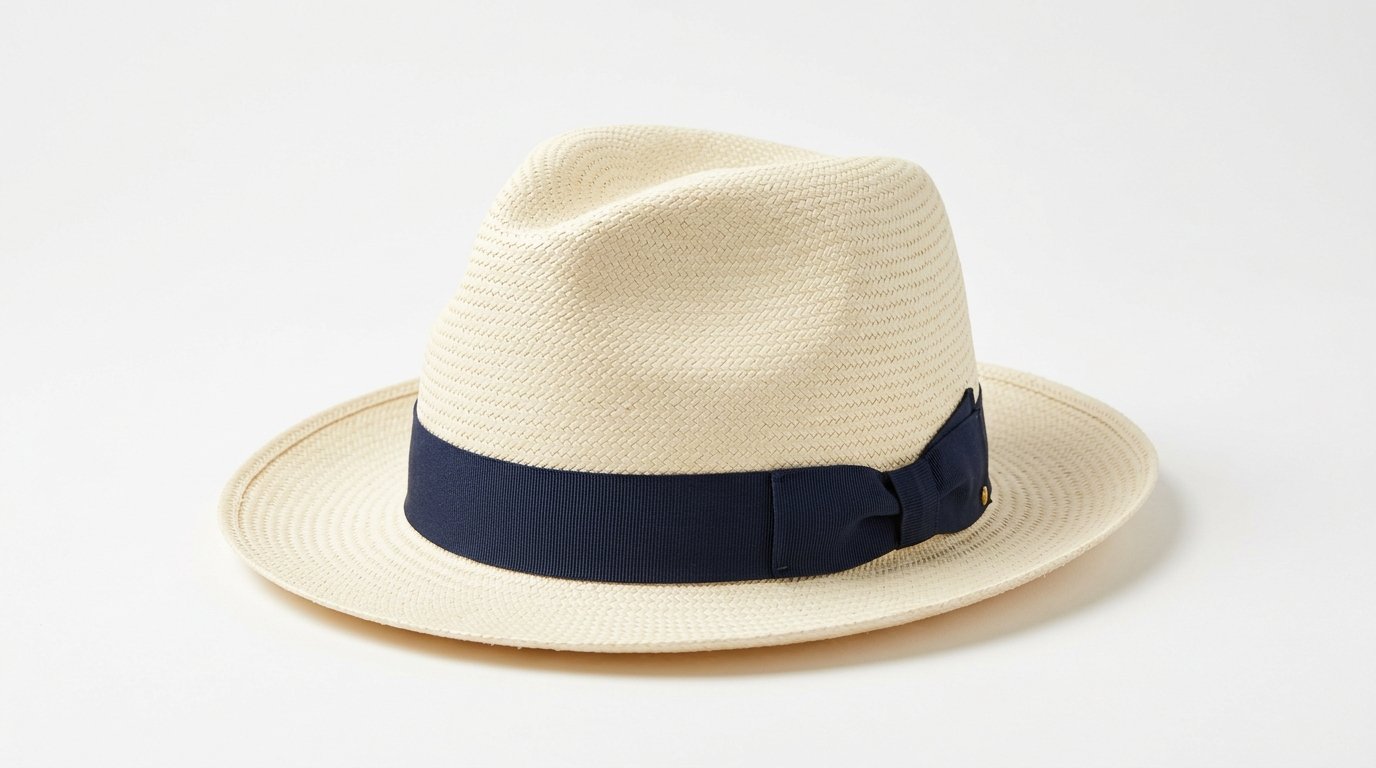
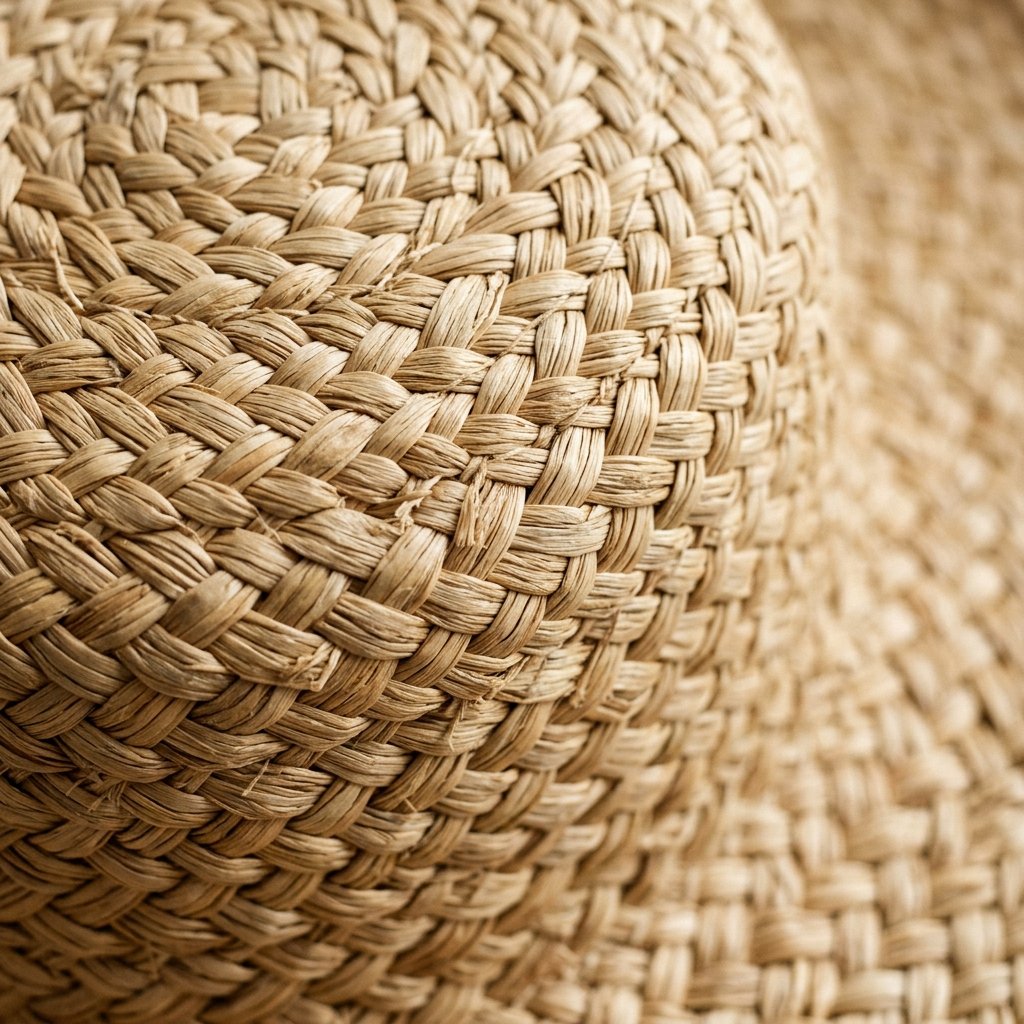
Natural straw fibers dominate the premium segment. Toquilla straw — the authentic Panama hat material — is hand-woven in Ecuador and commands wholesale prices from $15 to $80 per unit depending on weave count (measured in vueltas, or concentric rings per inch). A genuine Montecristi with 30+ vueltas is fine enough to hold water. Paper braid (toyo) straw, predominantly manufactured in China and Japan, offers an accessible mid-range option at $3 to $12 wholesale, with consistent color and good shape retention. Raffia, derived from the raffia palm primarily in Madagascar, brings a rustic, eco-luxury aesthetic at $5 to $18 per unit. Seagrass and wheat straw occupy the economy tier at $1.50 to $5, ideal for promotional giveaways and beach-wedding bulk orders.
Synthetic straw alternatives — primarily polypropylene (PP) paper braid and polyester straw-look fibers — have surged in popularity since 2023. These materials offer 100% color consistency batch-to-batch, complete water resistance, and crush-recovery properties that natural fibers cannot match. Wholesale pricing ranges from $2 to $8 per unit. The trade-off is breathability: synthetics trap heat, making them less suitable for tropical resort markets where wearers expect natural ventilation. Hongyuecap’s sourcing team recommends synthetic blends (30% polyester / 70% paper) for buyers targeting the outdoor-event and promotional-merchandise channels where durability trumps luxury feel.
According to Textile Exchange, natural fiber certification has become a purchasing criterion for 67% of European boutique buyers, making material traceability a competitive advantage in the straw hat wholesale market. Always request a material composition certificate from your supplier before placing a deposit.
2. Quality Control Standards Every Wholesale Buyer Must Check
Quality failures in straw hats cascade fast. A single shipment with 15% defects can wipe out the margin on the entire order once you factor in return shipping, customer service hours, and brand damage. Our Hongyuecap quality team has distilled inspection into five non-negotiable checkpoints.
Weave Density Check: Use a 10x jeweler’s loupe to count stitches per square centimeter. For premium toquilla hats, expect ≥4 stitches/cm². Paper braid should show ≥6 rows per inch. Inconsistent weave density across the crown, brim and pinch point is a key inspection risk for wholesale buyers.
Brim Flatness Test: Lay the hat brim-down on a glass surface. Gaps larger than 3mm indicate warping — usually from improper drying during manufacture. For fedora-style straw hats, the brim must sit perfectly flat within a 2mm tolerance. A warped brim is non-recoverable and renders the unit unsellable for retail display purposes.
Color Consistency: Natural straw shows tonal variation — that is expected and often marketed as “organic character.” However, batch-to-batch color shift exceeding 2 Delta E units (measurable with a $50 colorimeter) signals poor raw-material sourcing. For dyed straw hats, demand a Pantone match certificate with ±1 shade tolerance. If color tolerance is critical, include the measurement method, sampling frequency and acceptance range in the order QC plan.
Sweatband Attachment: The interior sweatband is the most-stressed component. Pull-test at 5kg force for 10 seconds — no detachment at any point. Cotton twill sweatbands outperform polyester in absorption tests by a factor of 3x, according to OEKO-TEX certified laboratory data. For premium lines (MSRP above $40), specify leather sweatbands with reinforced stitching at the seam join.
Crown Symmetry: Measure crown height at four cardinal points (front, back, left, right). Deviation exceeding 3mm indicates a deformed blocking mold. This is especially critical for structured styles like the fedora and gambler shapes, where asymmetry is immediately visible on a retail display shelf.

3. Sizing and Fit: Meeting International Market Requirements
Sizing returns are the silent margin-killer in straw hat wholesale. Unlike baseball caps with adjustable snapbacks, most straw hats are fixed-size — and a size mismatch means a complete loss on that unit. Understanding international sizing conventions is non-negotiable.
The global standard for hat sizing uses head circumference in centimeters. A Medium (M) typically fits 57cm, Large (L) 59cm, and XL 61cm. However, regional preferences create significant variance. North American markets skew larger (58-61cm dominant), while Asian markets center on 55-58cm. European buyers split the difference at 56-60cm. A 2024 survey by industry trade data indicates that the single most common wholesale buying mistake is ordering uniform sizing across all destination markets — resulting in 25% to 35% return rates in markets with differing anthropometric profiles.
Brim width is the second dimension that varies by market. Australian and South African buyers favor wide brims (≥10cm / 4 inches) for sun protection — these markets also have the strictest UPF labeling regulations. European resort buyers prefer medium brims (7-8cm) for aesthetic balance. American fashion buyers gravitate toward shorter brims (5-6cm) for the trilby and porkpie styles that trend in urban markets. Hongyuecap maintains separate production lines for narrow, medium, and wide-brim configurations, allowing mixed-size orders within a single container.
Crown depth is often overlooked but critical for comfort. A crown depth below 10cm creates pressure on the wearer’s scalp, generating negative reviews. Our baseline specification is 11cm crown depth with a ±0.5cm tolerance. For the Western market, we recommend 11.5cm minimum. For Asian markets, 10.5cm suffices. Every Hongyuecap production run includes a crown-depth gauge check on 10% of units selected at random from the packing line.
For buyers unsure about sizing distribution, our team recommends the 40-40-20 rule: 40% Medium, 40% Large, 20% Extra Large for North American orders. This distribution has produced the lowest return rate (under 5%) across 500+ wholesale shipments documented by our logistics department in 2025.
4. MOQ and Pricing: How to Negotiate the Best Wholesale Deals
Minimum Order Quantity (MOQ) is where wholesale economics become real. The straw hat wholesale market operates on a spectrum: promotional-grade hats at 500-unit MOQ, mid-range paper braid at 200 units, and premium toquilla at 50-100 units. Understanding the cost structure behind these numbers will make you a more effective negotiator.
Raw material cost typically accounts for 35-45% of the ex-factory price for natural straw hats. Labor accounts for 30-40% — straw hat weaving remains a predominantly manual process even in factory settings. Overhead (facility, utilities, packaging) consumes 10-15%. The remaining 10-15% is supplier margin. When a supplier quotes $5 per unit at 200-piece MOQ, approximately $1.75-2.25 is fiber cost, $1.50-2.00 is weaver labor, and $0.50-0.75 is overhead. A well-informed buyer can negotiate 8-12% off the initial quote by demonstrating understanding of this cost breakdown.
Price breaks follow a predictable curve. Doubling quantity typically yields a 12-18% per-unit discount up to approximately 2,000 units. Beyond 5,000 units, marginal savings diminish to 3-5% per doubling. The sweet spot for most boutique buyers is 300-500 units, where the per-unit price is 20-25% below the base MOQ price while still being manageable for a single-season inventory cycle. For more insights on MOQ strategy across different hat types, see our Baseball Cap MOQ Guide which covers similar negotiation frameworks.
Hidden costs that inflate the landed price include mold-prevention treatment ($0.15-0.30/unit, essential for ocean freight), individual polybag packaging ($0.08-0.15/unit), hangtag attachment ($0.05-0.10/unit), and barcode/UPC sticker application ($0.03-0.08/unit). Always request an all-in FOB quotation that includes these ancillary charges — suppliers who quote “bare hat” prices typically add these back during the proforma invoice stage, erasing your negotiated savings.
Custom shape blocks (wooden molds used to form the hat crown and brim) carry a one-time tooling cost of $80-200 per shape, amortized across the order quantity. At 300 units, this adds $0.27-0.67 per hat — negligible. At 50 units, it adds $1.60-4.00 per hat — significant. Existing block availability, tooling cost and sampling timing should be confirmed for the selected shape.
5. Custom Branding Options for Straw Hat Wholesale Orders
Private labeling transforms a generic $5 straw hat into a $35 boutique product. The straw hat wholesale market supports six primary customization methods, each with distinct cost, durability, and aesthetic profiles.
Heat-Transfer Labeling: The most economical option at $0.15-0.40 per hat. A brand logo is printed onto a transfer film and heat-pressed onto the interior sweatband or the underside of the brim. Durability is moderate — expect 6-12 months of regular wear before fading becomes noticeable. Suitable for promotional and event-merchandise buyers where the hat serves a 1-season purpose.
Woven Label Sew-In: The industry standard for boutique brands, costing $0.25-0.70 per hat depending on thread count and label dimensions. A 30x15mm damask-woven label with your brand name in 3 colors achieves a premium tactile feel. Sew-in placement on the sweatband interior is standard; exterior sew-in on the hatband is available for brands wanting visible branding. Our Cap Material Selection Guide covers similar branding considerations across hat categories.
Custom Hatband: Replacing the standard hatband with a custom-printed ribbon ($0.30-0.90 per hat) is the single highest-impact branding technique for straw hats. A 25mm grosgrain ribbon printed with a repeating brand pattern creates a recognizable silhouette even from a distance. For resort and destination brands, we recommend sublimation-printed polyester ribbon that resists saltwater fading — a common failure point for standard cotton bands in coastal retail environments.
Embroidery: Direct embroidery on the brim underside ($0.40-1.20 per hat) is durable and upscale but limited to simpler logo designs — straw construction does not support high-stitch-density embroidery the way cotton caps do. A maximum of 5,000 stitches per design is our recommended ceiling. For complex logo requirements, we guide buyers toward the woven label or custom hatband options.
Hangtag & Packaging Customization: Custom-printed hangtags ($0.08-0.25 each) and branded dust bags ($0.50-1.50 each) complete the unboxing experience. A straw hat arriving in a branded cotton dust bag with a kraft-paper hangtag carrying your brand story creates a perceived value 3-4x higher than the same hat in clear polybag — a conversion tactic used by every successful DTC hat brand. See our Bucket Hat Material Comparison for additional packaging strategies applicable across hat types.
MOQ for Customization: Most custom options require a minimum of 100-200 units per design. Combining multiple branding methods on the same order (e.g., woven label + custom hatband + branded hangtag) typically incurs no additional MOQ beyond the base order quantity. Digital mockup and physical sample timing should be confirmed after the artwork, material and construction are reviewed. For long-term retail partnerships, our Knitted Beanie Wholesale Solutions case study demonstrates how consistent branding across hat categories builds buyer loyalty.
Frequently Asked Questions About Straw Hat Wholesale
What is the minimum order quantity for custom straw hats?
MOQ for custom straw hats typically ranges from 100 to 500 units, depending on the customization complexity. Simple branding like heat-transfer labels or woven sew-in tags can start at 100 units per design. Full custom shapes with unique blocking molds may require 300+ units to amortize tooling costs. MOQ depends on the straw material, shape, decoration and packaging requirements. Contact our team for a tailored quotation based on your specific requirements.
How long does straw hat wholesale production and shipping take?
Production timing depends on the approved material, shape, decoration, quantity and factory schedule. Custom shape development, freight and delivery timing should be confirmed after the destination, quantity, packaging and production plan are reviewed.
What certifications should I look for in a straw hat supplier?
At minimum, request OEKO-TEX Standard 100 certification confirming the hat materials are free from harmful substances — this is a legal requirement for EU market entry. For buyers targeting eco-conscious consumers, GOTS (Global Organic Textile Standard) or GRS (Global Recycled Standard) certification adds marketing value. ISO 9001 certification indicates the factory follows standardized quality management processes. Request and verify any required factory, material or social-compliance documents before order confirmation. Always verify certification validity directly on the issuing organization’s website — counterfeit certificates are unfortunately common in the industry.
How do I prevent mold and damage during international shipping?
Straw hats are hygroscopic — they absorb ambient moisture during ocean transit. Mold prevention requires three steps: (1) factory-applied anti-mold treatment ($0.15-0.30/unit), (2) individual silica gel desiccant packets inside each polybag (minimum 5g per hat), and (3) container desiccants (minimum 1kg total) placed at multiple points inside the shipping container. Hongyuecap’s standard export packaging includes all three measures. Additionally, we recommend avoiding shipment during the rainy season at the destination port (June-September for Southeast Asia, November-March for Northern Europe) when portside humidity is highest.
Can I mix different straw hat styles in one wholesale order?
Yes — mixed-style orders are standard practice in straw hat wholesale. You can combine fedoras, gamblers, boaters, and visors within a single purchase order. The key constraint is that each style must meet the individual MOQ (typically 50-100 units per style for mixed orders). Color and size variations within each style generally do not require separate MOQs. Mixed orders from Hongyuecap ship in a single container with clearly labeled sub-cartons, and our packing list includes a per-style breakdown for your warehouse receiving team.
Ready to Source Premium Straw Hats at Wholesale Prices?
Hongyuecap supports factory-direct straw-hat development with project-specific material, MOQ and branding review. Project feasibility and delivery timing are reviewed against the approved specification and current production schedule.
Request a project quotation covering materials, artwork, sampling, packaging and shipping requirements.
Written by the Hongyuecap Product Team. For specific sourcing inquiries, reach out to our team at hongyuecap.com/contact.