
Chapter 1: The Invisible Cost of Poor Quality Beanies (Background/Problem)
In the high-stakes world of winter apparel, the humble knitted beanie is a cornerstone of seasonal revenue. For retailers and brand managers, it represents a high-turnover item that balances utility with style. However, many wholesale buyers fall into a common trap: prioritizing the lowest unit price at the expense of product integrity. While a $1.50 per-unit saving might look impressive on a spreadsheet, the invisible costs of poor quality can be devastating to a brand’s bottom line and long-term reputation.
Consider the “itch factor.” A consumer walks into a retail store, attracted by a stylish cuff beanie. They purchase it, but within minutes of wearing it, the material begins to irritate their skin. It’s itchy, scratchy, and uncomfortable. This isn’t just a minor annoyance; it’s a direct hit to your brand’s credibility. According to industry insights from [External Link: Headwear.org], material comfort is the number one driver of repeat purchases in the headwear segment. If your product causes physical discomfort, that customer is not only returning the item but is also unlikely to buy from you again.
Furthermore, the “shrinking syndrome” remains a persistent pain point. We’ve all seen it: a beautiful slouchy beanie that fits perfectly out of the box but transforms into a child-sized cap after a single wash. This occurs when manufacturers skip the critical pre-shrinking and heat-setting phases of production to save time and energy costs. For the wholesale buyer, this results in high return rates and a flood of negative online reviews. In an era where a 1-star rating can significantly impact your search visibility, selling a beanie that shrinks is a gamble no professional retailer should take.
Then there is the issue of “pilling”—those unsightly little balls of fuzz that appear on the surface of the knit after just a few wears. Pilling makes a new garment look old and cheap almost instantly. It’s a sign of short-staple fibers and low-quality spinning. When you source [Internal Link: wholesale winter hats] that pill prematurely, you are essentially telling your customers that your brand doesn’t value longevity.
For B2B buyers, these aren’t just quality control issues; they are financial liabilities. The cost of processing a return, the loss of customer lifetime value (LTV), and the damage to brand equity far outweigh the marginal savings gained from a substandard supplier. In this guide, we will explore how to identify and source knitted beanies that solve these pain points—products that are truly itch-free, non-shrink, and built to last.
Chapter 2: The Science of High-Quality Knitwear (Core Content Part 1)
Achieving a premium knitted beanie starts at the molecular level—with the yarn. To provide an itch-free experience, the choice of fiber is paramount. While traditional wool is prized for warmth, it often contains coarse fibers that prick the skin. This is why many high-end brands are moving toward “Cashmere-like Acrylic” or fine Merino wool blends.
Material Selection: The Itch-Free Secret
Soft acrylic has become the industry standard for wholesale beanies because it mimics the softness of wool without the irritation. However, not all acrylic is created equal. Premium “soft-touch” acrylic undergoes a specific spinning process that aligns the fibers to minimize stray ends that cause scratching. When evaluating samples, you should look for “Ring-Spun” yarn, which is smoother and stronger than the cheaper “Open-End” alternatives.
For those targeting the luxury or outdoor performance market, Merino wool is the gold standard. Merino fibers are much finer than standard wool (typically under 18.5 microns), allowing them to bend when they touch the skin rather than poking it. As noted in recent textile market reports on [External Link: Statista], the demand for high-performance natural fibers in headwear is projected to grow by 6% annually, driven by consumers’ desire for both comfort and sustainability.
The Non-Shrink Engineering
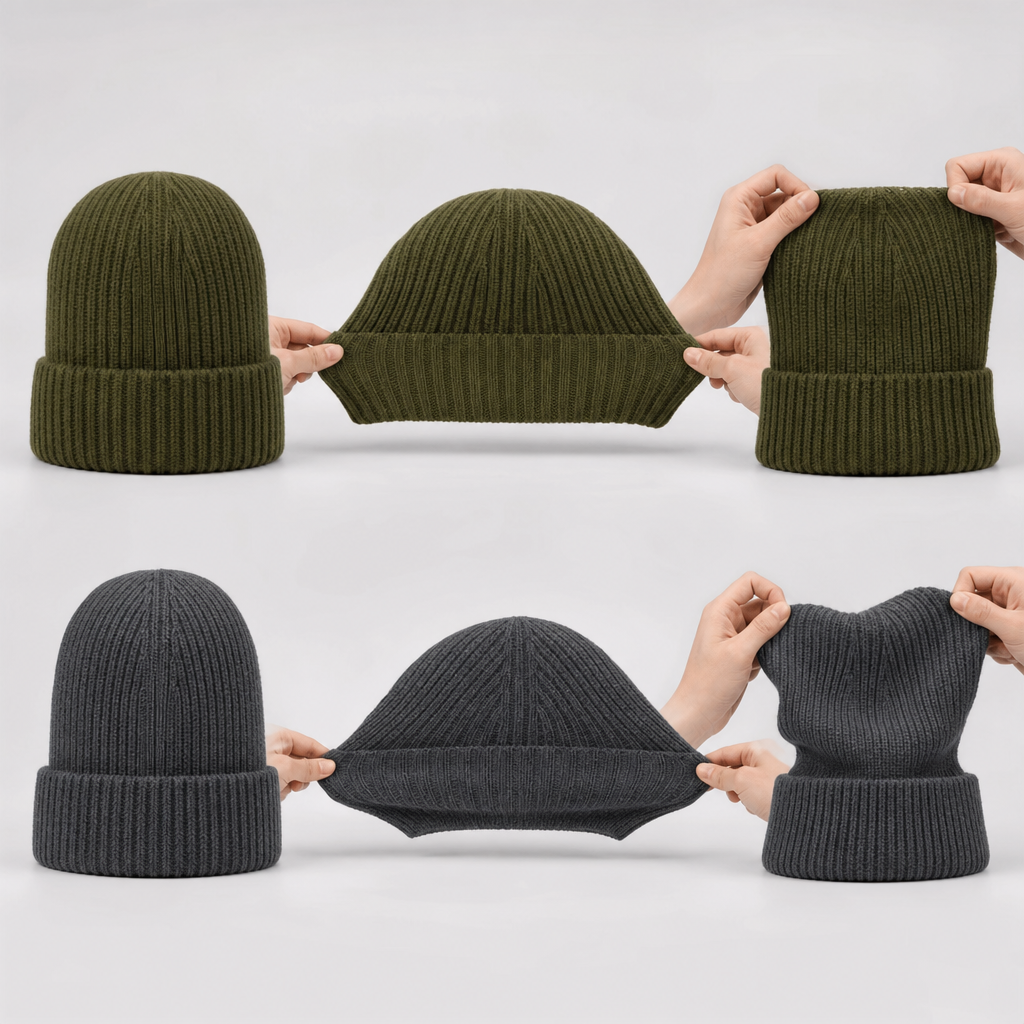
Why do beanies shrink? It comes down to “residual tension” in the fibers. During the knitting process, the yarn is under significant stress. If the finished hat is not properly “relaxed” or heat-set, the fibers will snap back to their original state the moment they hit warm water or a dryer.
A reputable manufacturer will implement a “Pre-Shrunk” protocol. This involves washing and drying the fabric in industrial machines before it is cut and sewn, or using steam-setting frames for finished beanies. This ensures that the dimensions you see in the showroom are the dimensions your customer keeps after laundry day. When discussing [Internal Link: custom beanie manufacturing] with your supplier, always ask for their “Dimensional Stability” test results. A high-quality beanie should have a shrinkage rate of less than 3%.
Anti-Pilling Technology
Pilling occurs when friction causes loose fibers to migrate to the surface and tangle together. To prevent this, manufacturers use “High-Tenacity” fibers and specific knitting tensions. A tighter knit structure keeps the fibers locked in place. Additionally, a “Singeing” process—where a gas flame is used to burn off the microscopic fuzz on the yarn surface—can significantly reduce pilling. If you’re looking for [Internal Link: bulk pom pom beanies] that maintain their “new” look, ensure your supplier is using anti-pilling treated yarns.
Chapter 3: Manufacturing Excellence and Quality Control (Core Content Part 2)
Beyond the material, the way a beanie is constructed determines its longevity and fit. In the B2B headwear space, manufacturing excellence is what separates a “throwaway” promotional item from a “wardrobe staple” product.
The “Goldilocks” Fit: Stretch without Stress
A common complaint among consumers is that beanies are “too tight,” leading to headaches or red marks on the forehead. This is usually the result of using an incorrect “Gauge” (the number of stitches per inch) or poor elasticity in the ribbing. A quality beanie must have “Recoverable Stretch.” This means it can expand to fit a wide range of head sizes but returns to its original shape without becoming “baggy” or “blown out.”
High-quality manufacturers use a blend of yarns including a small percentage of Spandex or Lycra in the cuff area to ensure the hat stays snug but comfortable. This is particularly important for [Internal Link: skull caps and beanies] designed for active use, where a secure yet gentle fit is required.
Colorfastness: Vibrant Colors that Don’t Bleed
Nothing ruins a brand’s reputation faster than a red beanie that turns the rest of the customer’s laundry pink. Color bleeding is caused by poor dye penetration or inadequate rinsing after the dyeing process. For wholesale orders, you must insist on “Level 4” colorfastness (on a scale of 1-5).
We recommend using Azo-free dyes, which are not only safer for the skin but also tend to have better light-fastness (resistance to fading in the sun). When you are sourcing from a [Beanie factory], ask for their REACH or OEKO-TEX certification to ensure the dyes used are both high-quality and environmentally compliant.
Stitching and Seams: The Invisible Foundation
Turn the beanie inside out. This is where you find the true quality. Are the seams “Overlocked” and clean? Is there a “Linking” seam at the crown? Cheaper beanies often have “Raw” edges inside that can unravel over time. A “Fully Fashioned” knitted beanie—where the pieces are knitted to shape rather than cut from a larger sheet of fabric—offers the best durability and fit, though it comes at a slightly higher production cost.
Chapter 4: Procurement Strategy: Beyond the Unit Price (Procurement Decision)
For the modern B2B buyer, the goal is not just to buy a product, but to manage a supply chain. According to the [External Link: Harvard Business Review (HBR)], companies that prioritize “Total Cost of Ownership” (TCO) over simple purchase price are 25% more profitable in the long run. In the headwear industry, TCO includes the cost of quality control, shipping delays, and customer returns.
Evaluating Your Wholesale Supplier
When searching for a “Knitted Beanie Wholesale” partner, you need to look beyond the digital catalog. Here are three strategic pillars for your procurement decision:
- Lead Time and Seasonal Agility: Winter headwear is a seasonal business. If your supplier has a 90-day lead time, you might miss the peak selling window. Look for manufacturers that offer “Buffer Stock” or have agile production lines that can turn around re-orders in 30-45 days.
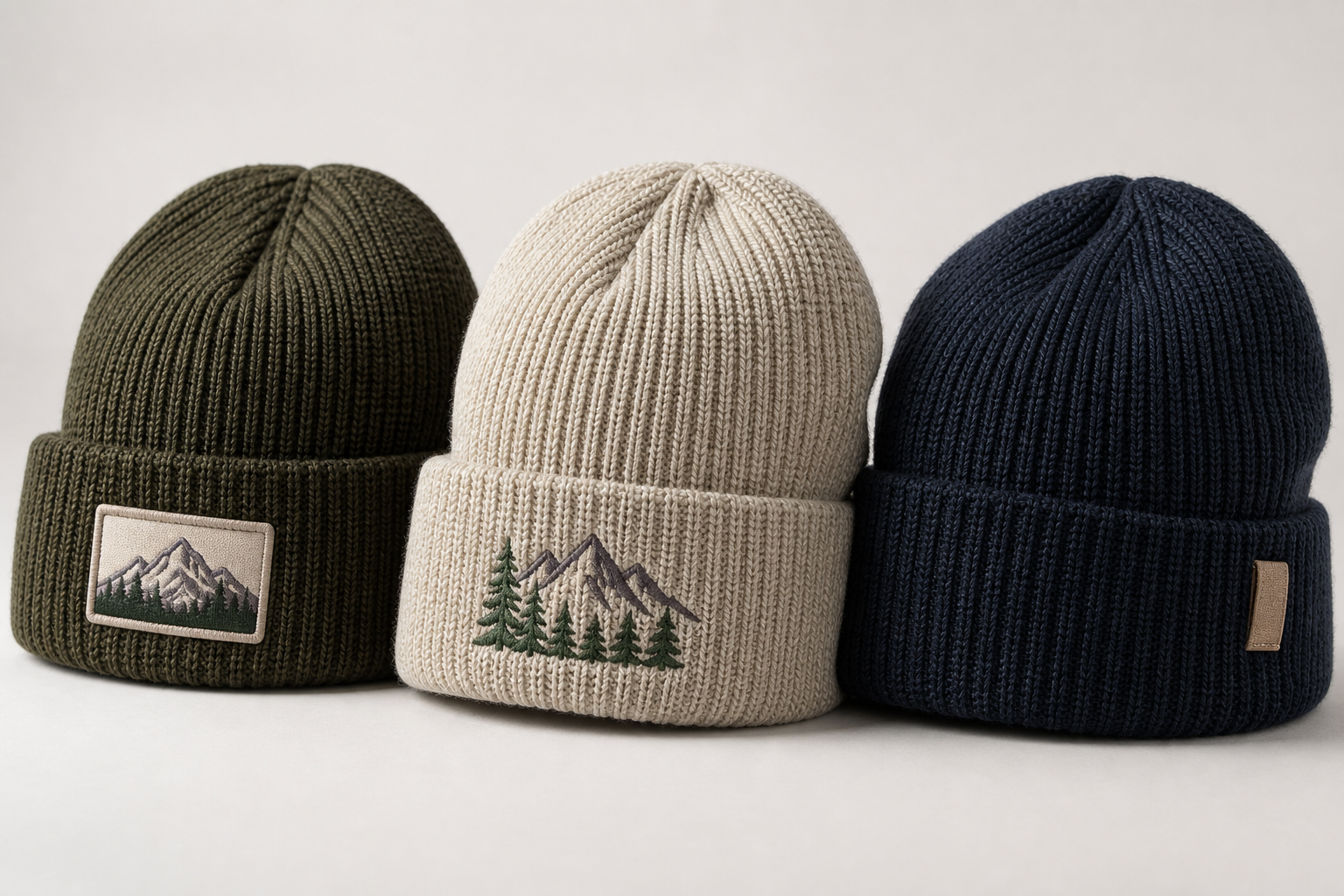
- MOQ vs. Customization: While large MOQs (Minimum Order Quantities) lower the unit price, they increase your inventory risk. A smart procurement strategy often involves a mix: high-volume “staple” colors (Black, Navy, Grey) at high MOQs, and “trend” colors (Neon, Pastels) at lower MOQs with customization like embroidery or woven patches.
- Transparency and Compliance: Ensure your supplier can provide clear documentation on their labor practices and material sources. In today’s market, “Social Compliance” is as much a quality metric as stitch count.
Strategic Sourcing for Growth
If you are scaling a brand, consider a “Tiered Sourcing” model. Use one primary factory for your high-volume, cost-sensitive items, and a boutique manufacturer for your “Premium” or “Limited Edition” lines. This diversification protects your supply chain from local disruptions and allows you to test new, high-quality materials (like recycled polyester or bamboo knits) without committing your entire budget.
Chapter 5: Communicating with Your Manufacturer & Conclusion (Supplier Communication + CTA)
Successful wholesale relationships are built on clear communication. When you approach a manufacturer for your next order of knitted beanies, don’t just ask “how much?”. Ask the right questions to smoke out potential quality issues before they reach your warehouse.
5 Questions to Ask Your Beanie Manufacturer:
- “What is the micron count of the yarn used in this specific sample?” (Lower is better for itch-free performance).
- “Do you use a ‘Steam-Setting’ or ‘Heat-Relaxing’ process to prevent shrinkage?”
- “Can you provide an Anti-Pilling test report (ISO 12945-2) for this yarn blend?”
- “What is the maximum ‘Stretch Recovery’ percentage of the cuff ribbing?”
- “Are the dyes used compliant with REACH or OEKO-TEX Standard 100?”
See our guide on winter beanie wholesale guide for more details.
Red Flags to Watch Out For
If a supplier cannot answer these questions or provides vague responses like “it’s standard quality,” it’s time to look elsewhere. A factory that understands the science of knitwear will be happy to share their technical specs. Another red flag is a sample that feels “waxy” or “oily”—this often indicates that the yarn has been treated with chemical softeners to hide its low quality, a coating that will wash off after the first wear, leaving the customer with an itchy hat.
Conclusion: Quality as Your Best Marketing Strategy
In the competitive landscape of B2B headwear, the most effective marketing strategy is a product that doesn’t come back, but a customer who does. By investing in itch-free, non-shrink, and anti-pilling knitted beanies, you are building a foundation of trust with your clients. You are moving from being a “commodity seller” to a “quality partner.”
At Hongyuecap, we specialize in high-performance headwear that solves the real-world problems of retailers and brands. Our “Pre-Shrunk” and “Soft-Touch” protocols ensure that every beanie we manufacture meets the highest standards of the global market.
Ready to upgrade your inventory?
[Contact us today for a custom sample kit] or browse our full range of [Knitted Beanie Wholesale] options to see the difference that manufacturing excellence makes.
About the Author: With over 15 years of experience in the global headwear supply chain, our team provides technical insights to help B2B buyers navigate the complexities of textile manufacturing and international trade.
Written by the Hongyuecap Product Team — 10+ years in B2B custom headwear manufacturing. Last updated: May 03, 2026.
Related Resources for Wholesale Buyers: