How to Choose a Structured Baseball Cap Supplier for Custom Bulk Orders
Choosing a structured baseball cap supplier is not only a price comparison. For a custom bulk order, the supplier has to control crown shape, front-panel symmetry, fabric behavior, embroidery tension, closure quality, packing pressure, and sample approval timing. If those details are not fixed before deposit, the problem usually appears late: the sample looks slightly soft, the bulk crown collapses, the logo sits off center, or the carton packing bends the brim before delivery.

For B2B buyers, the practical goal is simple: turn a style idea into a repeatable production spec. That means asking the supplier to prove how the cap will hold shape, how decoration will be tested, what MOQ is realistic, how long sampling takes, and which QC points will be checked before shipment.
Before the RFQ is finalized, buyers should compare this supplier-choice article with HongyueCap's live baseball cap manufacturer page and the broader blog archive so the sample request matches the exact product direction. It is also sensible to anchor any textile-safety discussion to the published OEKO-TEX explanation at OEKO-TEX STANDARD 100 instead of using a vague "safe material" claim in the brief.
Main Buyer Problem
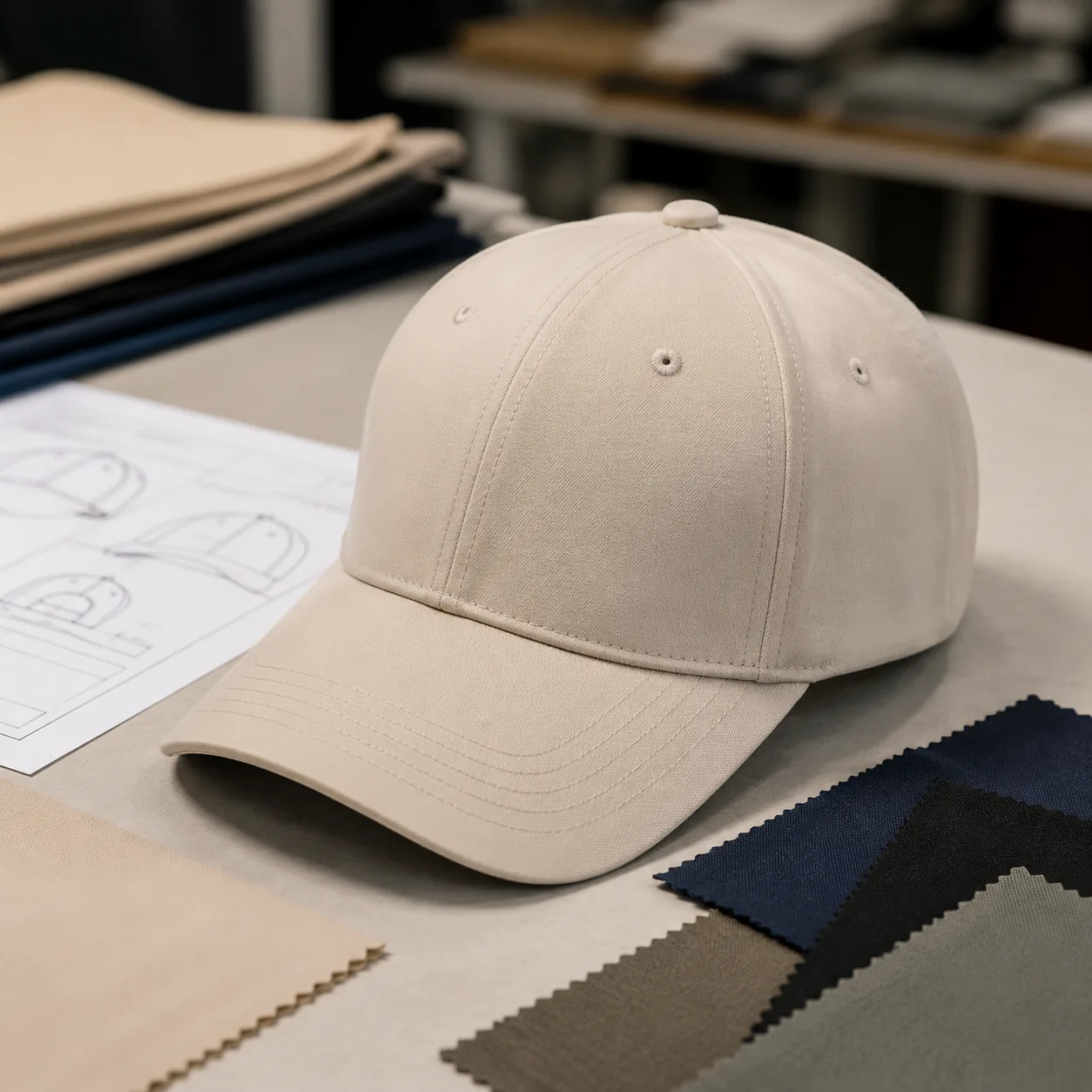
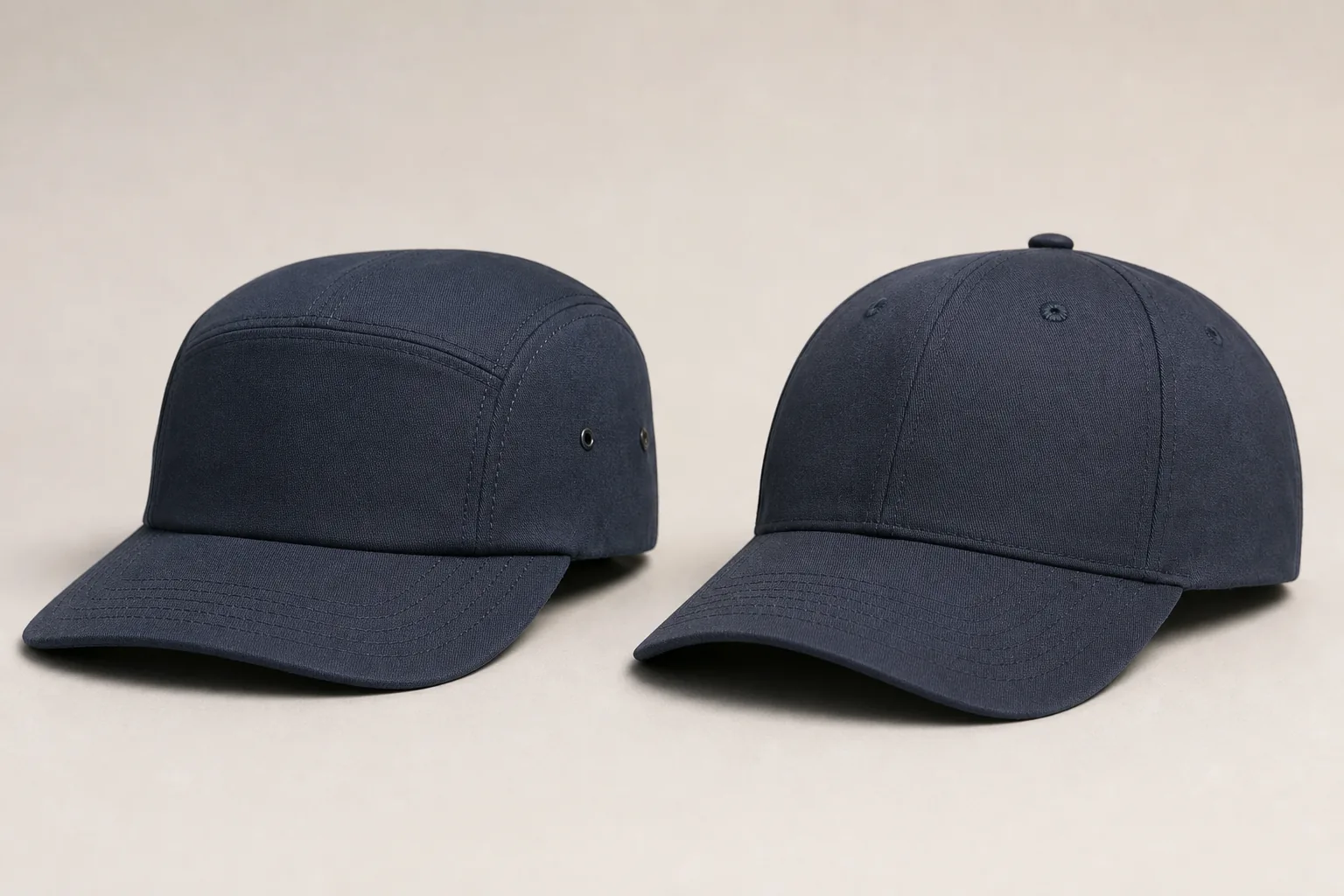
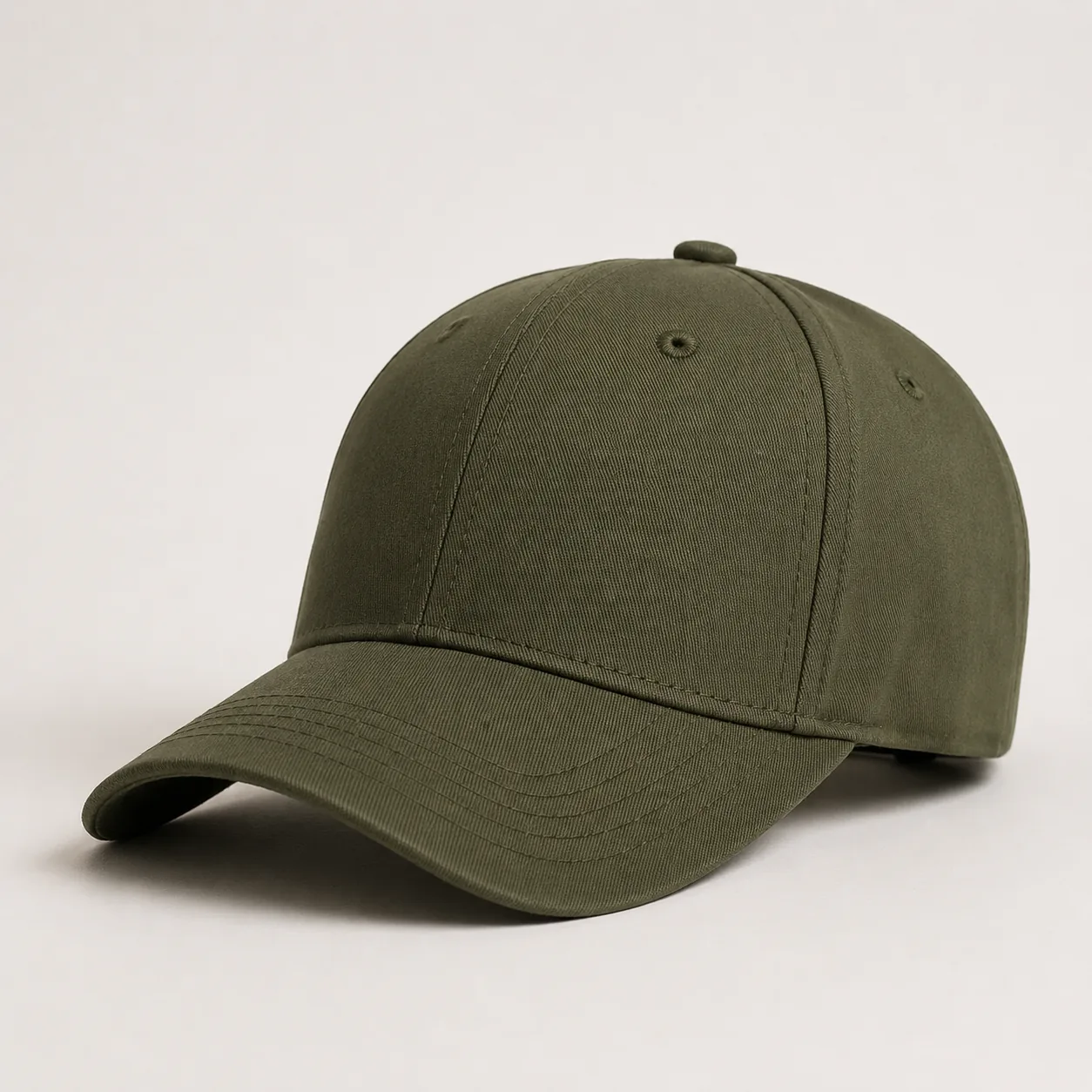
A structured cap can look similar across suppliers in photos, but the final bulk result can vary sharply because the hidden construction is different. The front crown depends on buckram or other support material, panel cutting accuracy, seam alignment, pressing, and packing control.
The buyer problem usually starts with an underspecified inquiry. A request like "quote 6-panel baseball cap with embroidery" is too loose for reliable sourcing. One factory may quote a soft front with light support. Another may use a firmer front panel, heavier cotton twill, and better pressing. Both may call the item a structured cap, but the sample and bulk appearance will not match.
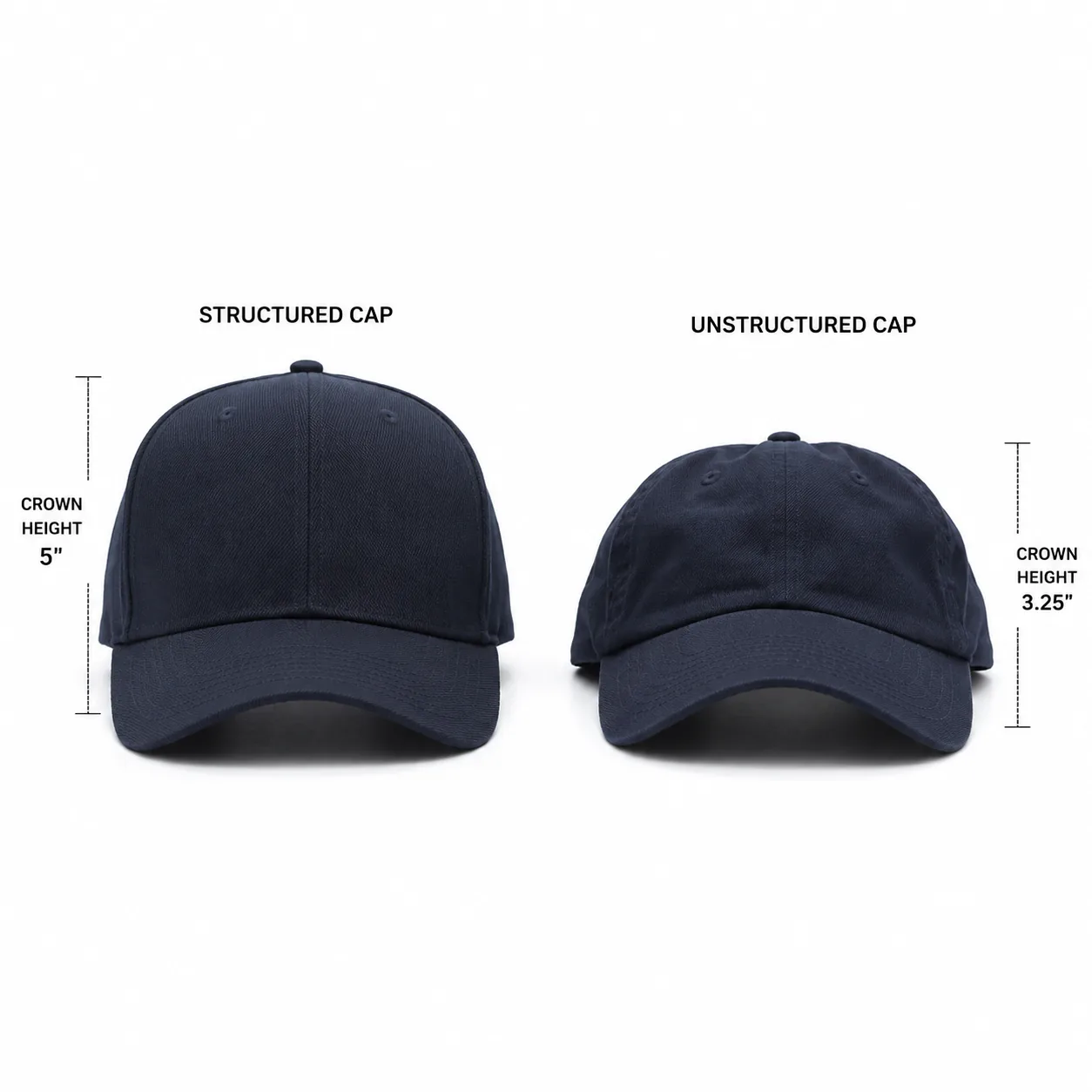
The buyer action is to define the structure before asking for a final quote. Specify whether the cap should be medium-profile or high-profile, how firm the crown should feel, whether the front panels need buckram, what brim curve is expected, and whether the logo area must stay flat for embroidery. A good supplier should answer these questions clearly and show a sample or reference photo before bulk production.
Material / Construction Risk
The safest supplier is the one that can explain how fabric, buckram, panels, and decoration work together. A structured baseball cap is not just a fabric choice; it is a construction system.
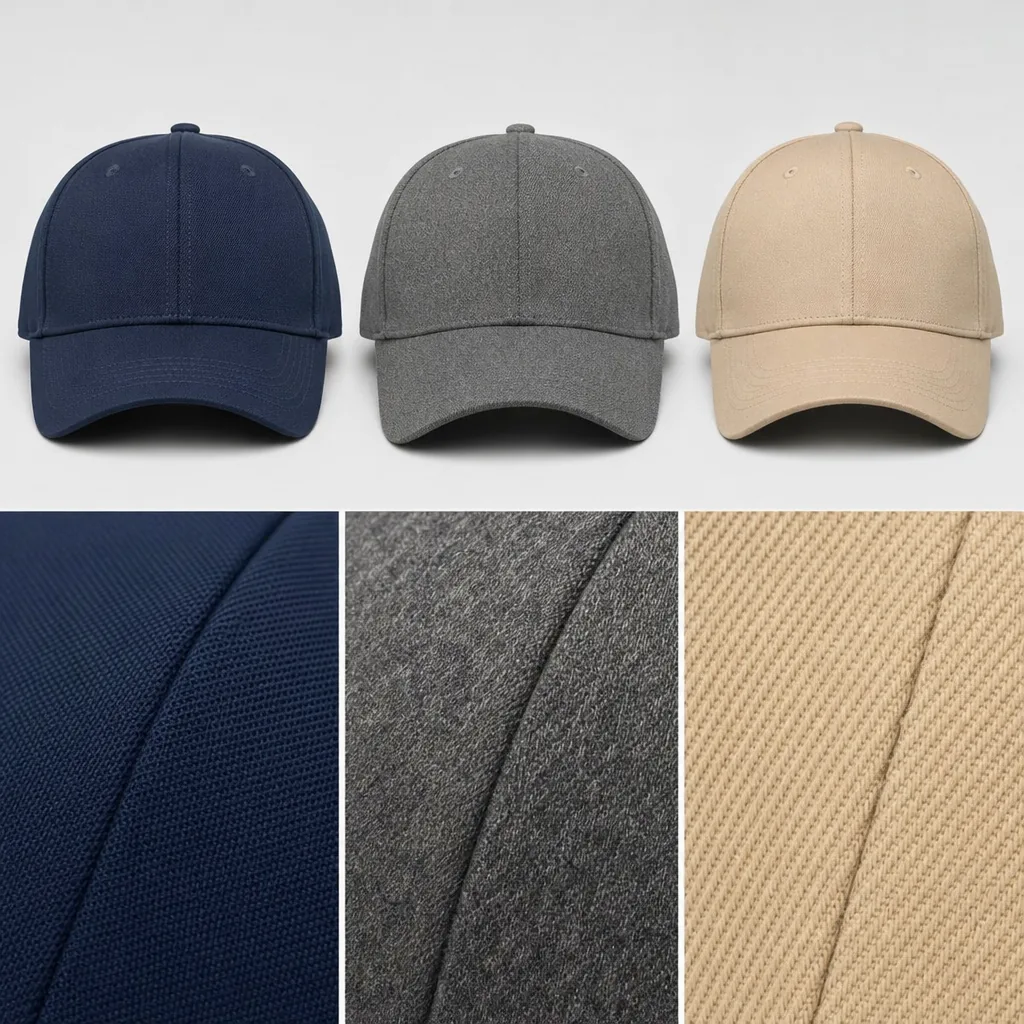
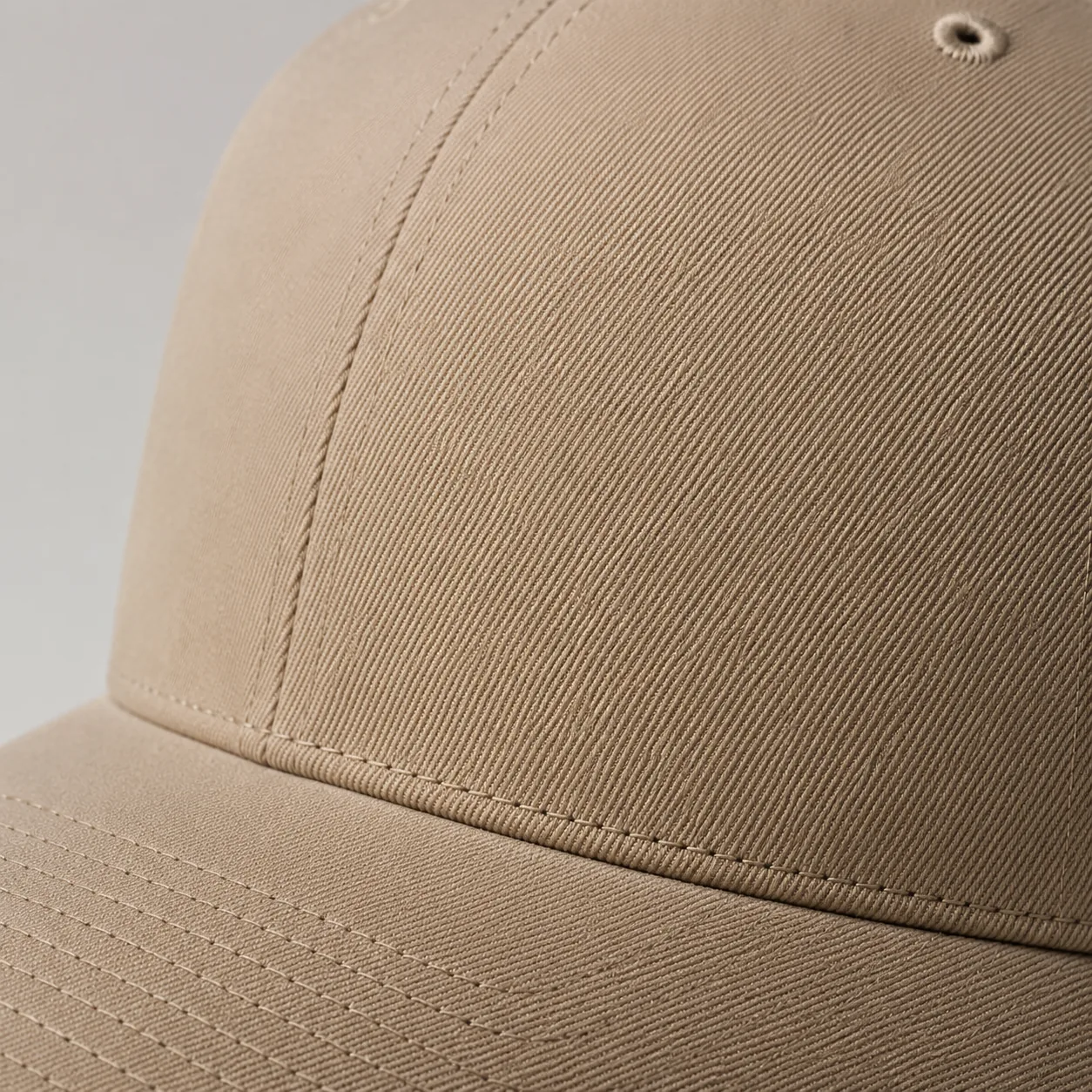
Cotton twill is common for custom structured baseball caps because it gives a clean retail look and works well with embroidery. Polyester or performance fabrics can be better for outdoor, sports, or moisture-control programs, but they may need different needle settings and backing for embroidery. Poly-cotton blends can balance cost, durability, and color stability. If the buyer needs textile safety claims, request the relevant certificate instead of relying on a generic "eco-friendly" label. For example, some buyers may ask whether materials or trims can align with recognized textile safety programs such as OEKO-TEX STANDARD 100.
Construction risk is highest around the front panels, brim, eyelets, sweatband, and closure. The supplier should be able to confirm:
- front crown support material and firmness
- 5-panel or 6-panel construction
- brim material and curve standard
- sweatband fabric and stitching
- closure type, such as metal buckle, plastic snap, hook-and-loop, or fitted size
- top button and eyelet consistency
- embroidery area limitations
The root cause of many quality problems is that the buyer approves only the outside look, not the build standard. Ask for a pre-production sample that matches the final fabric, support, closure, and decoration method. Do not approve a blank sample if the final order will use raised embroidery or a dense front logo.
Supplier / MOQ / Sampling Risk
A reliable supplier should make MOQ, sample timing, artwork requirements, and bulk lead time visible before the buyer commits. Hidden terms are a bigger risk than a slightly higher unit price.
For custom embroidered baseball caps, buyers should ask three questions early. First, what is the MOQ for the exact structure and decoration method? Second, does the sample use the same fabric, support, closure, and embroidery backing as bulk production? Third, what happens if the first sample fails crown shape or logo placement?
MOQ can vary by fabric stock, color, decoration, and trim requirements. Stock-color caps with logo decoration usually move faster than fully custom fabric, dyed-to-match color, custom labels, or special closures. A supplier may accept a smaller order, but the unit price may rise because fabric cutting, machine setup, and embroidery programming are spread across fewer pieces.
Sampling risk often comes from artwork and approval delays. Buyers should send vector logo files, Pantone or color references, stitch type expectations, cap profile preference, target quantity, delivery country, and packing requirements in the first inquiry. If the supplier asks useful follow-up questions, that is a good sign. If the supplier quotes immediately without asking about crown firmness, fabric, logo size, or decoration method, review the quote carefully.
For a structured baseball cap supplier, the sample approval should include at least one finished decorated sample. A photo is useful for a fast first review, but the physical sample is still important because the buyer needs to feel crown firmness, inspect stitching, check brim curve, and evaluate how the cap sits on the head.
QC Checklist
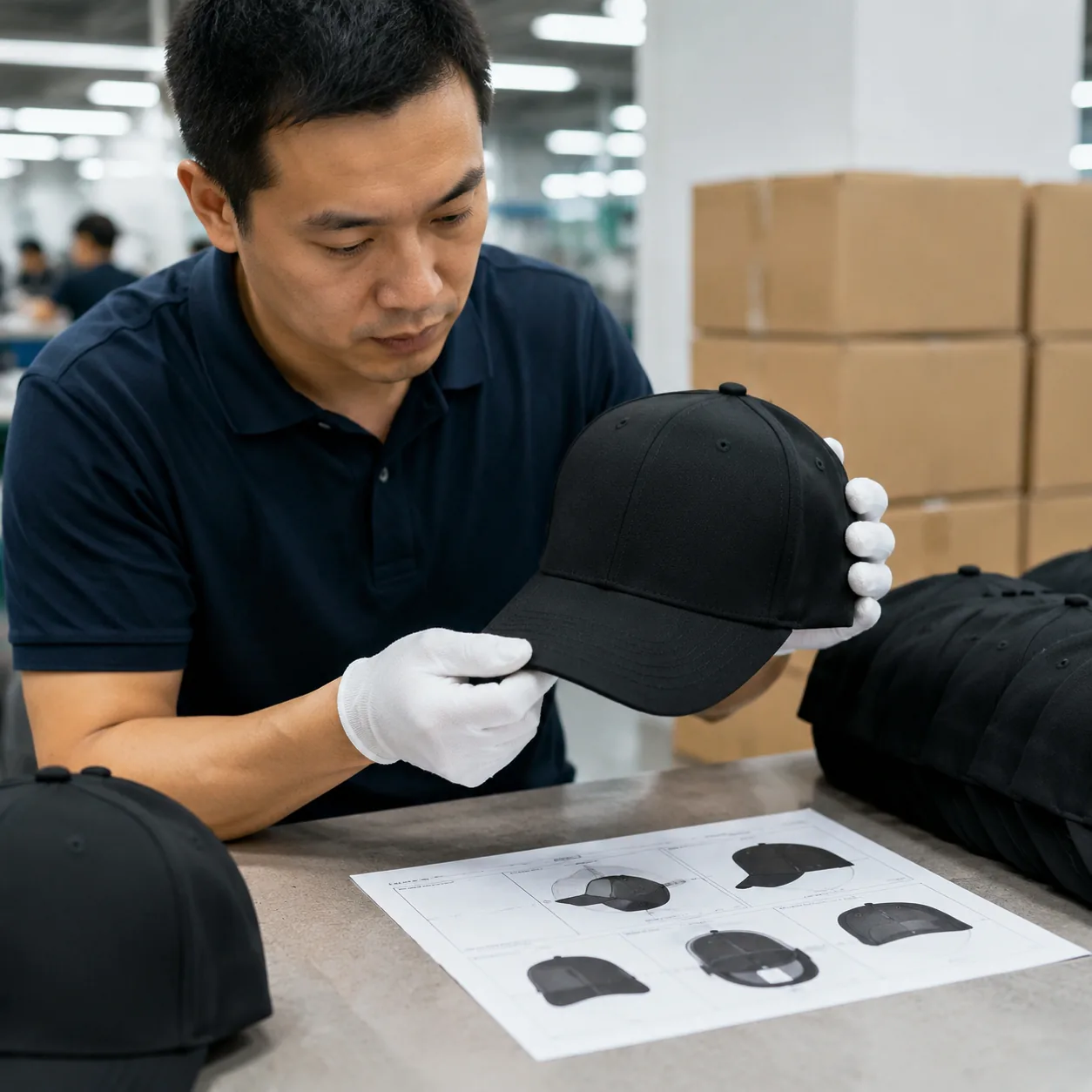
- Crown shape: confirm the front panels hold the approved structure and do not collapse after light handling.
- Panel symmetry: check front seam alignment, left-right balance, and top button placement.
- Brim quality: inspect curve consistency, stitch rows, edge smoothness, and pressure marks.
- Decoration: check logo position, thread color, stitch density, puckering, loose threads, and inside backing comfort.
- Sweatband and closure: inspect sweatband stitching, buckle/snap strength, adjustment range, and metal or plastic finish.
- Fabric and color: compare bulk pieces against the approved sample under consistent lighting.
- Packing: confirm caps are not compressed in a way that bends brims or crushes the structured crown.
For bulk orders, the buyer should ask the supplier how many pieces are inspected and at which stages. In-process inspection is useful because it catches panel or decoration problems before all pieces are finished. Final inspection should compare bulk goods against the approved sample, not against a vague product description.
Branding control belongs inside the QC gate, not outside it. Before production, the buyer should confirm the embroidery file, thread colors, logo size, position, stitch density, and whether the design uses flat embroidery, 3D puff embroidery, patch, woven label, print, or heat transfer. Each option brings a different defect risk. A small detailed logo may lose clarity in embroidery, a large 3D puff design may distort on a curved crown, and a patch adds sewing-alignment plus edge-durability checks. The supplier should provide an embroidery swatch or decorated sample before bulk production so the buyer can inspect logo centering, thread cleanliness, crown puckering, and inside-backing comfort.
Buyer Decision Framework
Choose the supplier that reduces production uncertainty, not the one that only gives the lowest first quote. A practical scoring framework can keep the decision clean.
| Decision point | What to ask | Why it matters | | — | — | — | | Crown structure | What support material and firmness are used? | Prevents soft or collapsed front panels | | Fabric | Is the fabric stock, custom dyed, cotton twill, polyester, or blend? | Affects price, lead time, hand feel, and decoration | | Decoration | Can you provide a decorated sample before bulk? | Reduces logo placement and stitch defects | | MOQ | What MOQ applies to this exact spec? | Avoids surprise price changes | | Lead time | What is sample time and bulk production time after approval? | Protects campaign and retail launch dates | | QC | What inspection points are checked before shipment? | Makes acceptance criteria clear |
The final supplier should be able to provide a sample plan, a quote tied to a written spec, and clear revision steps if the sample misses the mark. For repeat orders, ask the supplier to keep the approved cap spec, embroidery file, thread colors, carton dimensions, and packing method on record. That reduces variation when you reorder months later.
Request a quote or sample review after sharing your logo, target quantity, destination country, delivery date, and material preference.
Related internal resources: HongYueCap, Blog, Contact, Baseball Cap, Faqs.
Reference sources: oeko-tex.com, developers.google.com.
FAQ
What is a structured baseball cap?
A structured baseball cap has support in the front crown so it keeps its shape when worn or displayed. For custom bulk orders, buyers should confirm the crown support material, profile, and panel construction before approving the quote.
How do I choose a structured baseball cap supplier?
Choose a supplier that can explain crown support, fabric options, decoration limits, MOQ, sample timing, and QC steps. Ask for a finished decorated sample before bulk production, especially if the order uses embroidery, patches, or custom trims.
Is a 6-panel baseball cap better for custom branding?
A 6-panel cap is often a strong choice for classic retail and corporate branding because it has a familiar fit and stable structure. The best option still depends on logo size, front seam position, cap profile, and whether the buyer wants a sport, streetwear, or uniform look.
What should buyers inspect before approving a baseball cap sample?
Inspect crown firmness, panel symmetry, brim curve, fabric color, sweatband stitching, closure function, logo position, thread quality, and inside comfort. The sample should match the final production spec, not just the general style.
How can buyers reduce bulk order defects?
Use a written spec sheet, approve a decorated pre-production sample, define QC points, and confirm packing. The most preventable defects are usually caused by unclear structure requirements, rushed artwork approval, and weak final inspection standards.
CTA
If you are comparing suppliers for custom structured baseball caps, send HongyueCap your logo file, target quantity, preferred fabric, crown profile, closure type, destination country, and sample deadline. We can help turn the request into a clear production spec and quotation before you move into bulk ordering.
Written by the Hongyuecap Product Team — 15 years in B2B custom headwear manufacturing. Last updated: June 25, 2026.