
Panama Hat Weave Density Guide for Wholesale Buyers
"Weave density is the single most important quality indicator in Panama hat manufacturing — yet it is also the most misunderstood specification in wholesale procurement. A genuine Montecristi fino can take up to six months to weave and command prices exceeding $1,000 per hat."
— Andean Textile Research Institute, 2025 Quality Standards Report
Why Weave Density Is the Critical Specification in Wholesale Straw Hat Procurement
For wholesale buyers sourcing straw hats from Asia and Latin America, weave density is the specification that separates premium inventory from commodity-grade products that will disappoint end customers. Unlike baseball caps or knitted beanies where GSM or stitch count provides clear metrics, straw hat quality assessment requires understanding a centuries-old grading system that manufacturers often manipulate.
The problem is twofold. First, there is no universal standard for weave density grading — what one Ecuadorian supplier calls "Grade A" may be equivalent to another's "Grade B." Second, many wholesale buyers evaluate straw hats by appearance alone, missing the structural indicators that predict durability, shape retention, and long-term value.
This guide explains how to read weave density specifications, evaluate actual quality, and communicate requirements to suppliers in terms they cannot misinterpret. Whether you are ordering 500 units for a resort gift shop or 5,000 units for a promotional campaign, understanding weave density will directly impact your customer satisfaction rates and reorder business.
Browse our wholesale Straw Hats collection
Understanding Panama Hat Weave Density: The Technical Foundation
What Weave Density Actually Measures
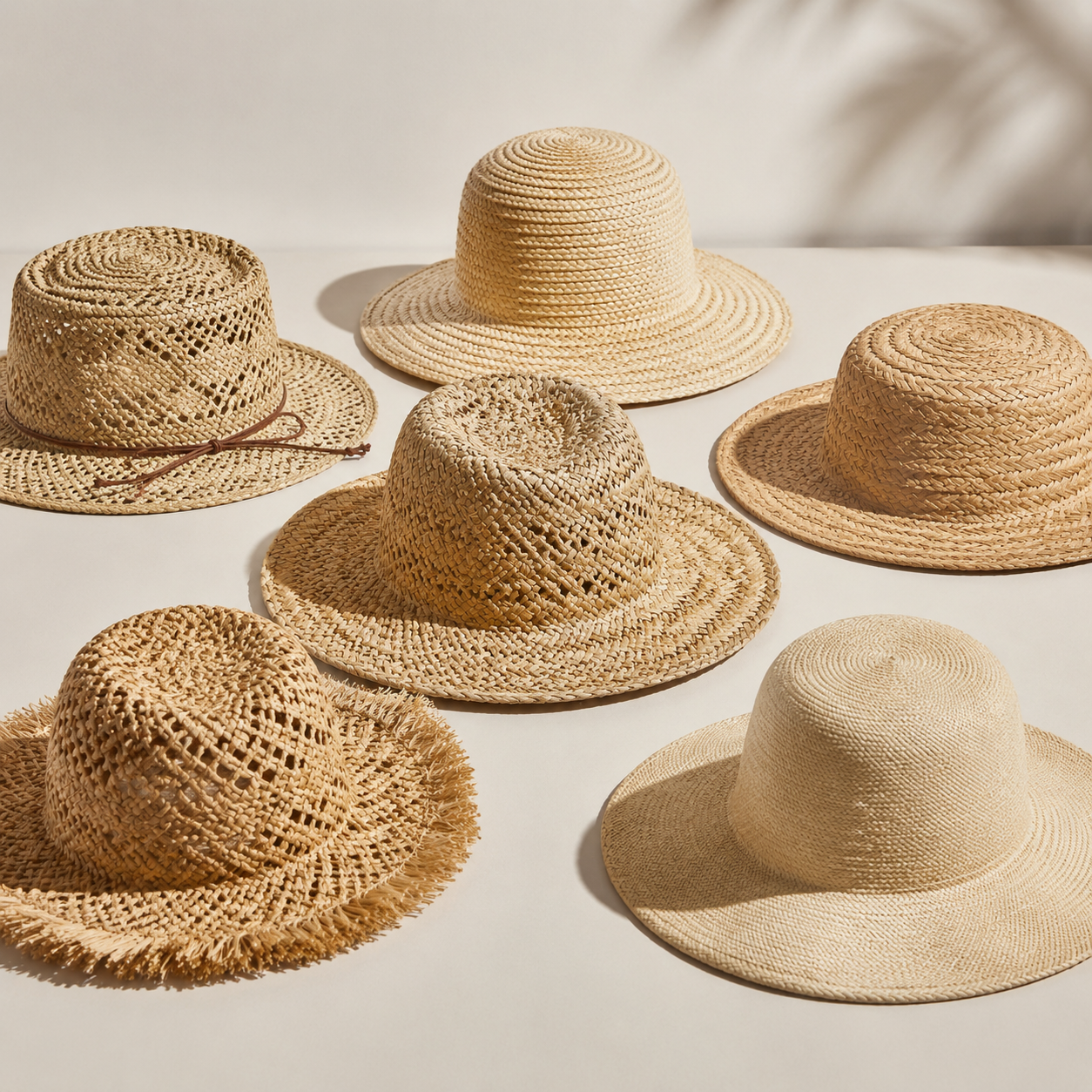
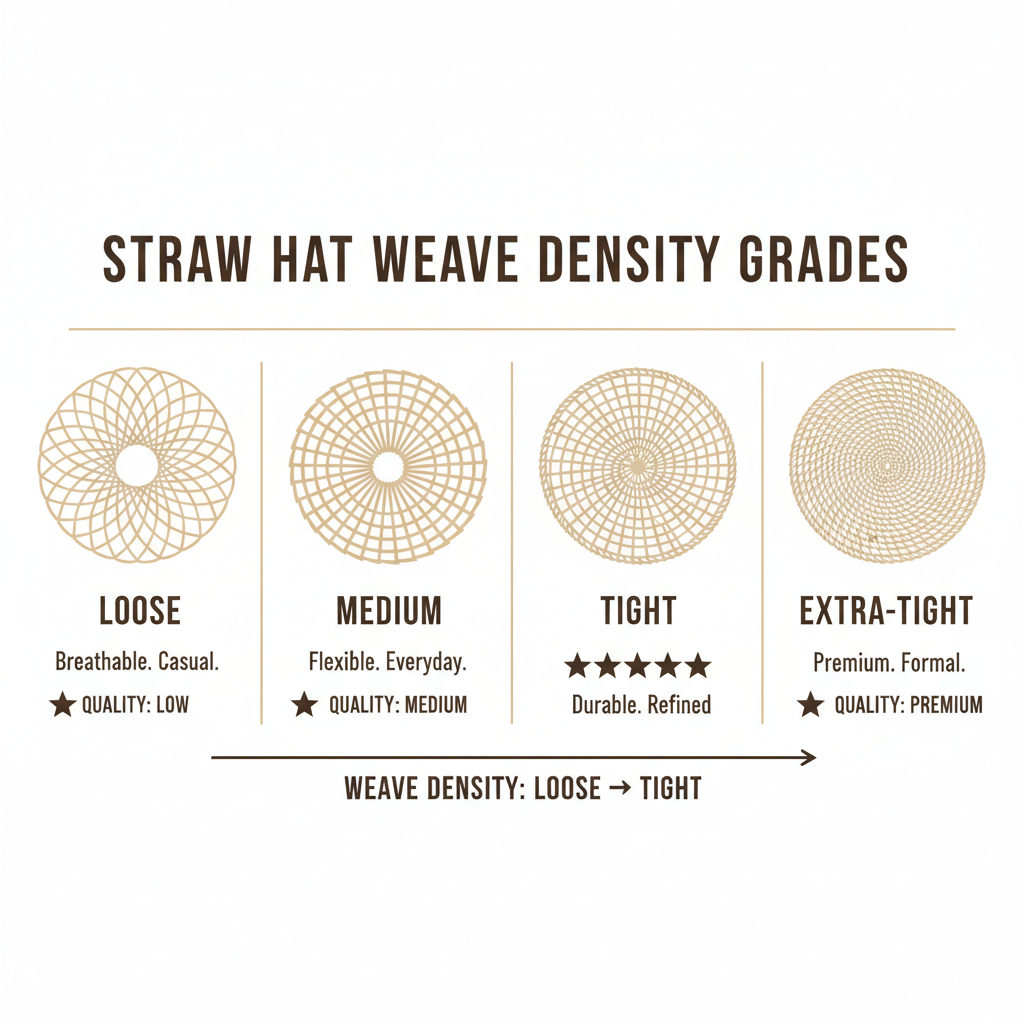
Weave density in Panama hats refers to the number of weave "points" or "rows" per square inch (or square centimeter) of the crown surface. Higher density means more straw fibers woven together, creating a finer, lighter, and more durable hat.
The traditional measurement system used in Ecuador — the authentic source of genuine Panama hats — categorizes hats by grade:
| Grade | Weave Density (per sq. inch) | Weave Time | Typical Wholesale Price | End Use |
|---|---|---|---|---|
| Standard | 80-150 points | 1-3 days | $3-8 | Mass retail, promotional |
| Fine | 150-250 points | 1-2 weeks | $8-15 | Specialty retail, resorts |
| Extra Fine | 250-400 points | 2-4 weeks | $15-35 | Boutique retail, gifts |
| Super Fine | 400-600 points | 1-3 months | $35-100 | Luxury retail, collectors |
| Montecristi Fino | 600+ points | 3-6+ months | $100-1,000+ | High-end collectors, museums |
Related: Toquilla vs. Seagrass vs. Raffia Straw Hats: Complete Wholesale Guide
Why Higher Density Commands Premium Prices
The relationship between weave density and wholesale value is not arbitrary. Higher density hats require more skilled artisans, finer straw preparation, longer production time, and greater material efficiency per finished hat.
According to Global headwear market report, the global straw hat market is projected to reach $2.8 billion by 2027, with premium woven hats (Grade Fine and above) representing the fastest-growing segment at 6.2% CAGR. This growth is driven primarily by increased demand in luxury resort markets and wedding destination tourism.
The key insight for wholesale buyers: the premium for higher weave density reflects genuine differences in production time, material yield, and artisan skill. A 200-point Fine grade hat takes approximately 14 times longer to weave than an 80-point Standard grade hat.
The Weave Density Grading Problem
The central challenge for wholesale buyers is that "Grade A" has no standardized meaning. We have encountered suppliers who label 100-point hats as "Grade A" while others reserve that designation for 250+ point hats.
Instead of accepting grade letters, specify weave density in measurable terms:
- Minimum weave points per square inch: State a number (e.g., "minimum 180 points per square inch")
- Maximum straw fiber width: Specify in millimeters (e.g., "straw fiber width not exceeding 2mm")
- Visual inspection criteria: Require photos of weave pattern at 5x magnification
This approach, endorsed by Sustainable fashion industry trends as best practice for imported headwear procurement, eliminates ambiguity and provides objective criteria for quality verification.
Straw Types and Their Weave Density Characteristics
Toquilla Straw (Carludovica Palmata)
The authentic material for genuine Panama hats, grown primarily in Ecuador's coastal lowlands. Toquilla straw has the finest fiber structure of any hat-making material, enabling the highest weave densities.
Density characteristics:
- Standard grade: 80-150 points per sq. inch
- Can achieve 600+ points for Montecristi fino quality
- Natural color ranges from cream to honey gold
- Becomes more flexible and comfortable with wear
According to Fashion industry supply chain analysis, genuine Ecuadorian toquilla straw hats represent only 3% of global straw hat production but account for over 15% of retail value, demonstrating the quality premium that genuine materials command.
For wholesale buyers targeting Caribbean resorts, Hawaiian wedding markets, or Australian luxury retail, toquilla straw at Fine grade (150-250 points) represents the optimal balance of quality and price.
Seagrass
A marine grass harvested from coastal areas in China and Southeast Asia. Seagrass is coarser than toquilla and cannot achieve the same weave densities.
Density characteristics:
- Typical range: 60-120 points per sq. inch
- Limited by fiber thickness and rigidity
- More durable but less refined appearance
- Lower cost, suitable for mass market retail
Seagrass hats are appropriate for buyers targeting budget-conscious resort markets or promotional applications where price sensitivity outweighs quality perception.
Raffia
Derived from the raffia palm, primarily sourced from Madagascar and East Africa. Raffia offers a middle ground between toquilla and seagrass.
Density characteristics:
- Typical range: 100-200 points per sq. inch
- Good balance of durability and refinement
- Natural color variations from cream to light brown
- Popular for fashion-forward wholesale orders
See also: How to Pack Straw Hats for International Shipping
Choosing Weave Density by End Customer Archetype
For Resort and Hospitality Buyers (Caribbean, Hawaii, Mediterranean)
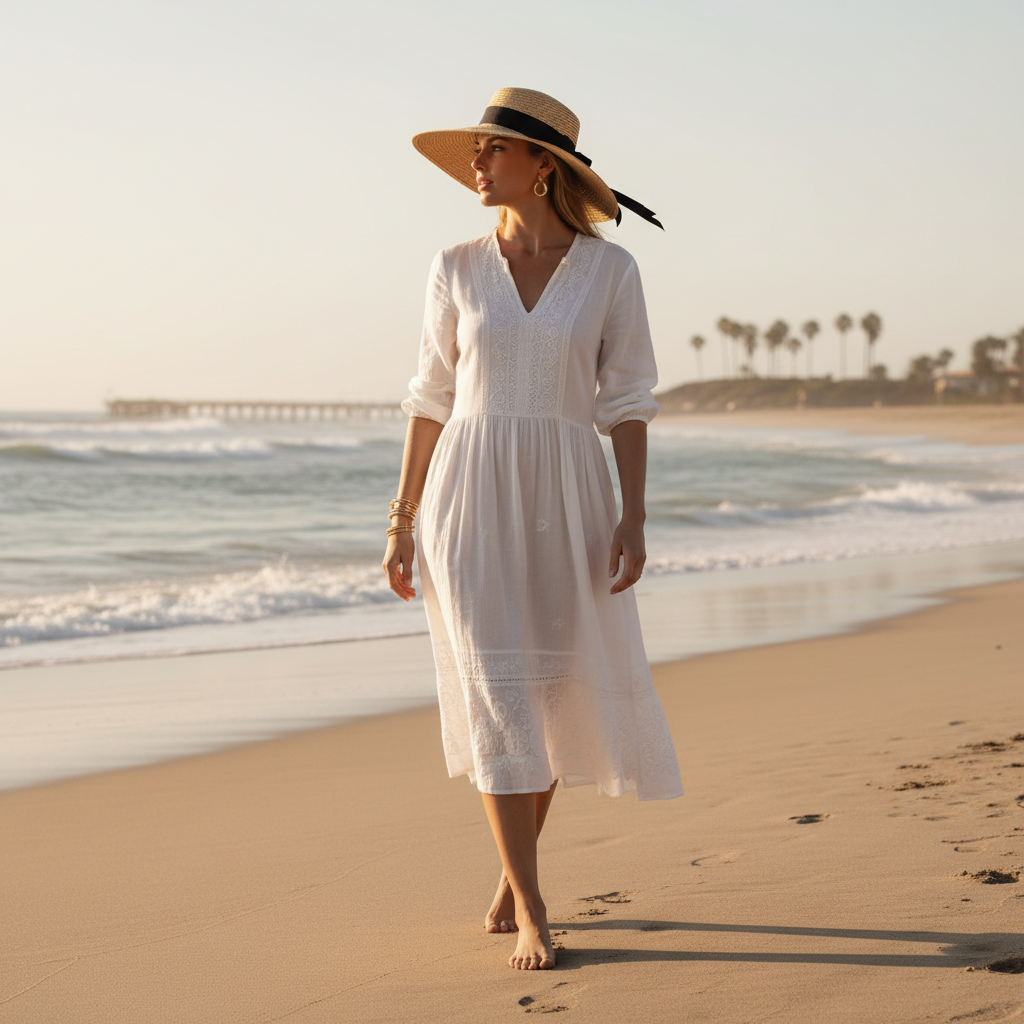
Specify Fine grade (150-250 points) in toquilla straw. These customers expect genuine Panama hat quality. The premium over Standard grade ($8-15 vs. $3-8) is justified by longer product lifespan (3-5 years vs. 1-2 seasons), better shape retention after packing, superior breathability in hot climates, and perceived value that supports retail pricing of $40-80.
The Caribbean resort market alone represents over $400 million annually in headwear sales, with Panama-style straw hats accounting for approximately 25% of that total, according to Statista.
For Wedding and Event Planners
Specify Extra Fine grade (250-400 points) for premium wedding favors and bridal party gifts. The visual refinement at this density level photographs beautifully and creates lasting impressions. Budget $15-35 per hat wholesale. Destination weddings in Hawaii, the Caribbean, and Mediterranean coastal regions drive significant demand for premium straw hats as bridal party accessories.
For Corporate Promotional Buyers
Standard grade (80-150 points) in seagrass or paper straw is appropriate for single-season promotional use. Cost per unit is the primary consideration. Target wholesale pricing of $3-6 per hat. The key specification is UV protection rating (UPF 30+ minimum) rather than weave density for this application.
For Australian and New Zealand Retailers
Specify Fine grade (150-250 points) with UPF 50+ certification. Australia has the highest per-capita skin cancer rates globally, driving consumer demand for UPF-certified accessories. Retailers report customers specifically request UPF certification, making it a required specification.
Supplier Communication Checklist for Weave Density
Before placing your wholesale straw hat order, confirm these specifications in writing:
Weave Density Specifications:
- Minimum weave points per square inch (specify number, not grade letter)
- Maximum straw fiber width in millimeters
- Acceptable density variation range (±10% typical)
Material Specifications:
- Straw type: toquilla / seagrass / raffia / paper straw
- Origin certification for toquilla (if claiming genuine Panama hat)
- Natural vs. dyed color (specify Pantone if dyed)
Quality Control:
- Pre-production sample required with weave density verification
- Photo documentation at 5x magnification of weave pattern
- Third-party inspection acceptable (specify inspector if required)
Packaging and Shipping:
- Individual hat boxes or protective inserts
- Master carton maximum weight and dimensions
- Humidity-controlled shipping for natural straw (recommended for toquilla)
Common Weave Density Mistakes in Wholesale Procurement
Mistake 1: Accepting Grade Letters Without Definition
Never accept "Grade A" without a written definition of what that means in weave points per square inch. We have seen "Grade A" hats ranging from 80 to 300 points from different suppliers. The solution is to always request a physical sample before bulk production and verify that sample's weave density using a jeweler's loupe or magnifying glass.
Mistake 2: Evaluating by Appearance Alone
A hat can look attractive while having loose weave that will unravel within one season. Always verify density through magnification or third-party inspection. Visual appearance correlates imperfectly with weave density because finishing techniques can create a polished look even on loosely woven hats.
Mistake 3: Ignoring Straw Type in Density Assessment
A 150-point seagrass hat and a 150-point toquilla hat are not equivalent. The finer fiber of toquilla creates a more refined product at the same density measurement. Always specify both the minimum weave density AND the straw type.
Mistake 4: Not Specifying Pre-Production Samples
For orders exceeding 500 units, always require a pre-production sample woven to your exact specifications. The cost of a pre-production sample (typically $15-30 per unit) is trivial compared to the cost of a 5,000-unit order that fails to meet specifications.
Conclusion: Specify Weave Density in Measurable Terms
Weave density is the specification that determines whether your wholesale straw hat order will delight customers or generate returns. The buyers who specify in measurable terms — points per square inch, fiber width, magnification photos — receive consistent quality.
For Caribbean resorts, Hawaiian wedding markets, and Australian luxury retail, invest in Fine grade (150-250 points) toquilla straw. The premium is modest; the difference in customer satisfaction is substantial. For budget-conscious promotional applications, Standard grade (80-150 points) in seagrass delivers acceptable quality at price points that make sense for single-use events.
The most important action you can take is to require pre-production samples and verify those samples against measurable specifications. Your customers will notice the difference.
View wholesale Straw Hats options
Related Resources
Internal Guides
External References
See our guide on straw hats wholesale for boutiques for more details.
Product Gallery
Also read: Straw Hat Weave Types and Material Guide for Wholesale Buyers — our complete straw hat weave types guide for wholesale buyers.
Written by the Hongyuecap Product Team — 10+ years in B2B custom headwear manufacturing. Last updated: May 03, 2026.