
Panama Hat Weave Density Guide for Wholesale Buyers
No headwear category is more routinely mis-specified by wholesale buyers than straw hats. The word "Panama" has become a generic descriptor for any light-coloured, woven, wide-brim hat — regardless of fibre, weave, or country of origin. The result is a market where the same invoice description can describe products ranging from a USD 4 factory reject to a USD 80 artisan weave.
— Hat Quarterly, 2024
Why Weave Density Is the Most Important Panama Hat Specification
When a supplier describes a hat as "genuine Panama hat," the description contains almost no useful information. "Panama" is a market name, not a fibre specification, weave standard, or quality grade. The actual fibre in an authentic Panama hat is Toquilla palm (Carludovica palmata), harvested primarily in Ecuador. But Toquilla straw hats are manufactured across a wide range of quality tiers.
Research from the Journal of Consumer Protection found that approximately 35% of hats labelled as "genuine Ecuadorian Toquilla" in international wholesale markets contained less than 40% actual Toquilla fibre by weight.
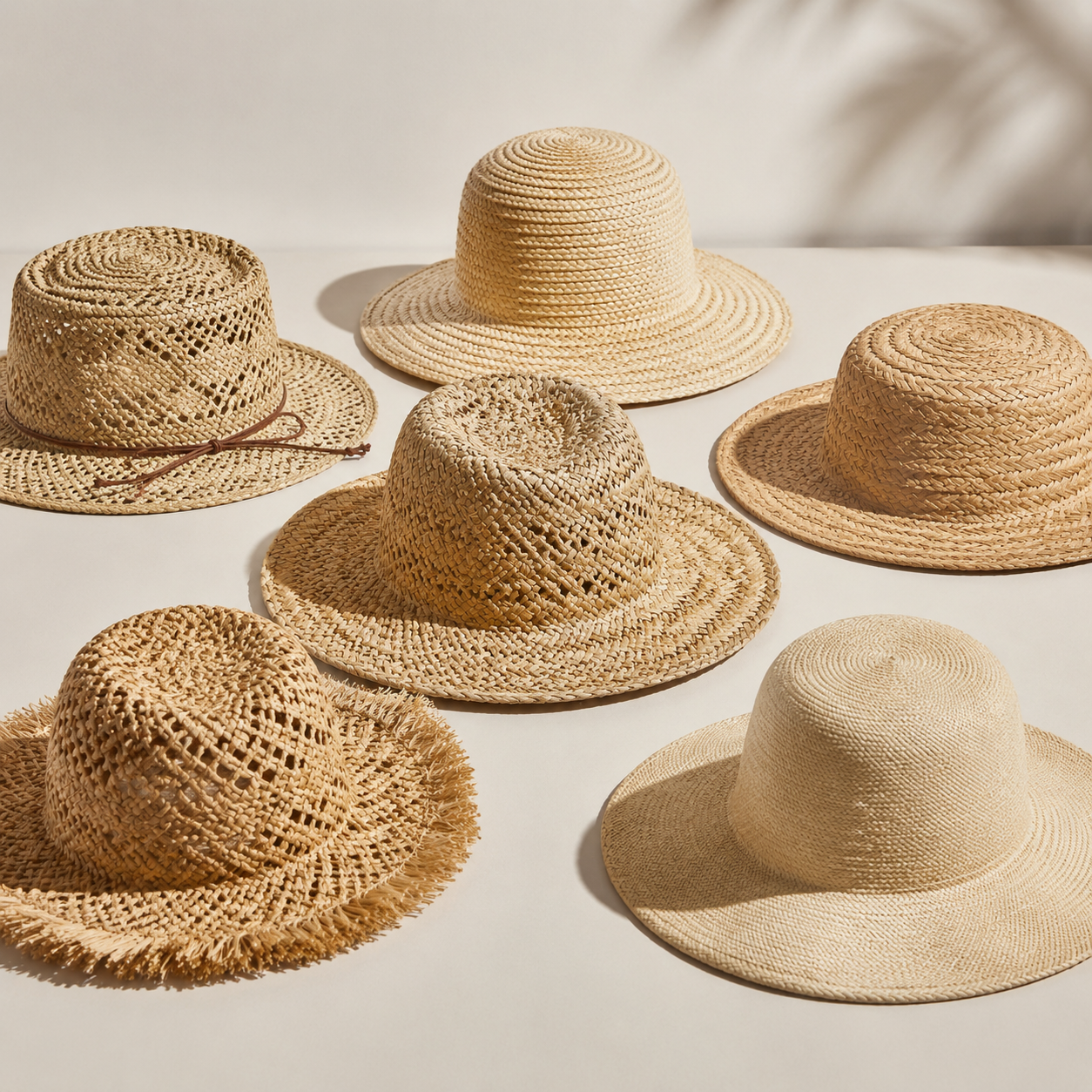
The critical specification that separates quality tiers is weave density: the number of straw strands per square centimetre in the crown and brim. Weave density determines breathability, water resistance, durability, and — most importantly for wholesale buyers — the retail price point the hat can command.
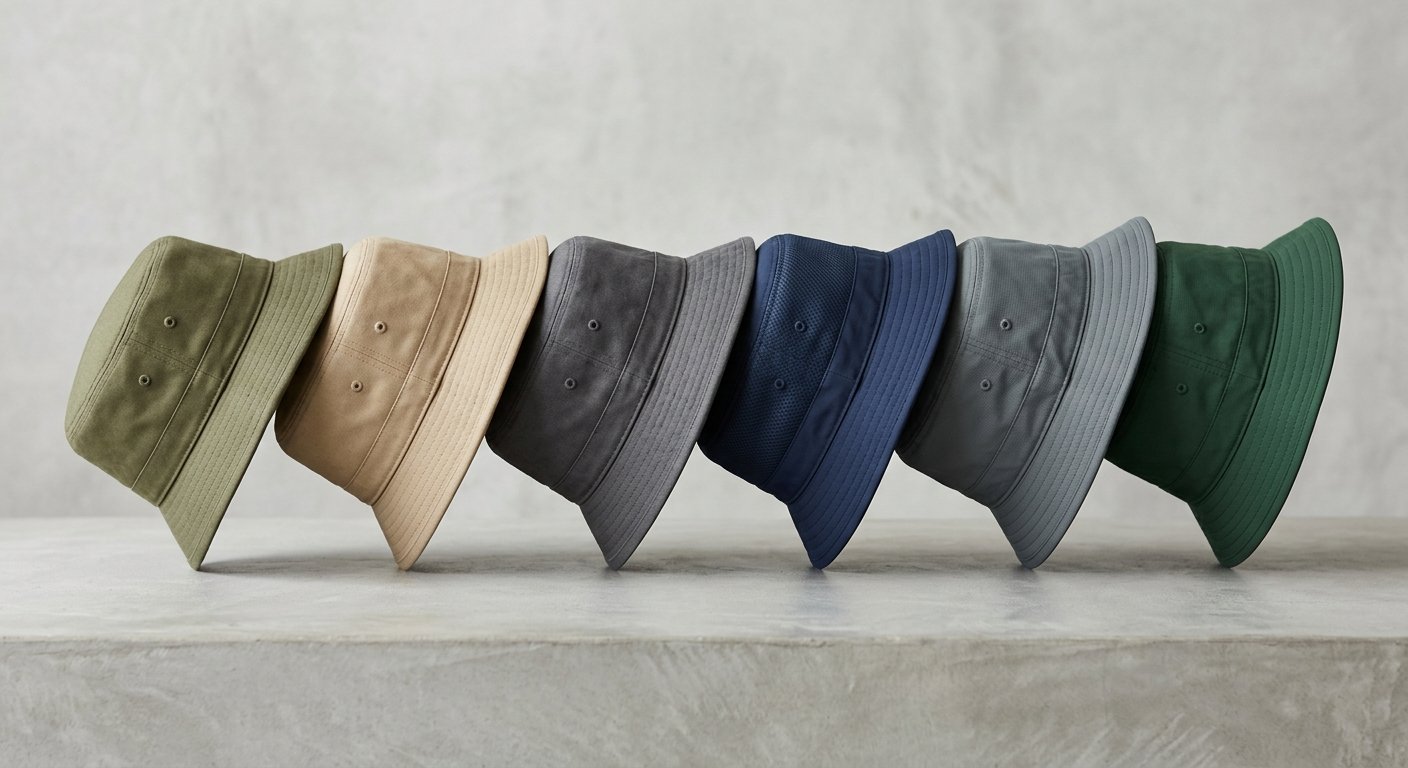
For related material comparisons, see the Bucket Hat Material Guide.
Reading Weave Density: The Count System and Its Commercial Meaning
The Count Standard: From Field to Finished Hat
In traditional Montecristi production, the count system is applied to the woven toquilla straw before it leaves the weaver's home. A skilled weaver produces a toquilla strip (called a "pita") approximately 2–3mm wide. These strips are woven together in a concentric pattern, with the count referring to the number of pita visible per centimetre of horizontal weave.
| Weave Grade | Count (strands/cm) | Brim Width | Rolled Storage | Primary Market |
|---|---|---|---|---|
| Fino Extra | 50–70+ counts | 15–20cm | Rolls to 5cm diameter | Luxury retail, USD 80–200+ |
| Fino | 35–50 counts | 13–17cm | Rolls to 8cm diameter | Upper-mid retail, USD 30–80 |
| Standard | 20–35 counts | 12–15cm | Limited roll capability | Mid-market retail, USD 12–30 |
| Comun | 12–20 counts | 10–14cm | Cannot be rolled | Tourism, commodity, USD 4–12 |
The wholesale buyer who specifies "Panama hat" without a count range is purchasing at the Comun or Standard tier by default — because those tiers represent the volume majority and therefore the supplier's default specification.
Breathability Index: How Weave Density Determines Wearability
Air permeability is measured in cubic centimetres of air per square centimetre of fabric per second (cm³/cm²/s) at a pressure differential of 100 pascals, per ISO 9237.
- Comun grade (12–20 counts): approximately 150–250 cm³/cm²/s air permeability
- Standard grade (20–35 counts): approximately 80–150 cm³/cm²/s
- Fino grade (35–50 counts): approximately 30–80 cm³/cm²/s
- Fino Extra (50+ counts): approximately 10–30 cm³/cm²/s
For outdoor workwear and agricultural markets, Comun and Standard grades provide genuine functional benefit. For luxury resort and travel retail, Fino and Fino Extra grades are non-negotiable.
Comparing Straw Materials: Seagrass, Raffia, and Toquilla
Seagrass (Sisal Variant)
Seagrass is not a marine plant — it is a commercial term for processed agave or sisal fibres that have been bleached and woven. Seagrass hats are typically manufactured in China and Vietnam from imported agave fibre. They serve a legitimate market: affordable, functional headwear for casual outdoor use.
Key specifications for seagrass wholesale:
- Check fibre origin (agave sisalana is the standard; Manila hemp is a lower-grade substitute)
- Request the GSM of the woven material
- Confirm whether the brim is stiffened (stiffened brims maintain shape but have reduced roll capability)
- Standard price range: USD 2.50–6.00 per unit FOB
Raffia (Raphia Palms)
Raffia (Raphia farinifera) is a natural palm fibre harvested primarily in Madagascar. Raffia hats have a distinctive textured, almost woolly appearance and are valued for their natural aesthetic. They are significantly less durable than Toquilla.
Key specifications for raffia wholesale:
- Raffia fibre is coarse and relatively brittle — do not specify for outdoor workwear applications
- Look for raffia that has been hand-selected for consistent strand thickness
- Confirm colourfastness to perspiration if the hat will be worn in hot climates
- Standard price range: USD 3.00–8.00 per unit FOB
Toquilla (Authentic Panama)
Toquilla remains the premium straw material for woven headwear. Its commercial advantage is its combination of fineness (individual strands can be spun to 1–2mm width) and tensile strength higher than cotton of equivalent diameter.
The critical issue for wholesale buyers is origin fraud. Request certificates of origin and fibre composition analysis from your supplier. According to Hat Quarterly, approximately 35% of hats labelled "genuine Ecuadorian Toquilla" in wholesale markets contained less than 40% actual Toquilla fibre by weight.
Browse our Straw Hats wholesale collection
Grade Matching: Weave Density and Target Retail Price
The wholesale buyer's most important task is matching weave grade to target retail price.
| Grade | Wholesale Cost (FOB) | Target Retail | Suitable For |
|---|---|---|---|
| Fino Extra | USD 20–40 per unit | USD 80–200 | Luxury resort, boutique, gifting |
| Fino | USD 10–20 per unit | USD 35–80 | Premium retail, department stores |
| Standard | USD 5–10 per unit | USD 15–35 | Mid-market, resort gift shops |
| Comun | USD 2.50–5 per unit | USD 8–20 | Tourism, fast fashion, promotions |
The buyer who purchases Comun grade at Standard grade pricing — a common occurrence when weave density is not specified — has destroyed their margin before the first unit ships.
For a detailed material comparison, see Bucket Hat Material Guide.
Sourcing and Supplier Communication: The Specifications You Must Provide in Writing
Before confirming any Panama hat or straw hat order:
Weave specification:
- Minimum count grade (e.g., "minimum Fino grade, 35 counts per centimetre at crown centre")
- Method of verification — reference your own measurement procedure
- Acceptance criteria: count below specified minimum = grounds for rejection
- Sampling procedure: minimum 3 sample hats from each production batch for verification
Material specification:
- Fibre type (Toquilla/Ecuadorian, seagrass/agave, raffia/Madagascar — exact species)
- Country of origin of the raw fibre
- Certificate of origin requirement
- Fibre composition test (if "genuine" or specific blend is claimed)
Functional specification:
- Air permeability target (if relevant for intended use market)
- Brim stiffness requirement (stiff / semi-stiff / flexible)
- Roll test requirement (for Fino and Fino Extra grades)
Label and packaging:
- Country of origin marking (required for US retail under 19 CFR 134)
- Care label requirements for destination market
Failure to provide written specifications on weave grade and fibre content means you are purchasing on trust — and trust is not a quality control mechanism.
Conclusion
Weave density is the single most important quality indicator in the Panama hat and straw hat wholesale market. It is measurable, verifiable, and directly correlated with cost, retail price, and end-customer satisfaction.
The buyer who knows their count grades, can verify them on a sample, and communicates them in writing has taken the single most important step toward predictable quality in straw hat sourcing.
Specify the count. Verify the sample. Then proceed.
Browse our Straw Hats wholesale collection
Field Verification: How to Measure Weave Density on a Production Sample
Before committing to a bulk order, you must physically verify the weave density of the supplier's sample. This cannot be done from photographs or from a description alone.
Equipment Required
You need only two pieces of equipment:
- A 10× magnification loupe or jeweller's eyeglass (USD 5–20 from any optical supplier)
- A ruler graduated in millimetres
That is all. No laboratory equipment is required for standard weave density verification.
Measurement Procedure
- Select the measurement location: the crown centre, at least 3cm from any seam or edge
- Place the hat under bright, even lighting (a daylight-balanced LED lamp is ideal)
- Hold the loupe against the fabric surface
- Using the ruler, measure a 10mm × 10mm square on the fabric surface
- Count the number of visible straw strands running horizontally within that square
- Count the number of visible straw strands running vertically within that square
- Record both numbers and calculate the average
- Repeat at three different locations on the crown
- Calculate the overall average
See our guide on hat trim customization for more details.
Acceptable Tolerances
For Fino grade (35+ counts per cm): minimum 35 strands horizontally, 35 strands vertically, measured at crown centre. If the sample measures below 32 strands, reject the claim of Fino grade.
For Fino Extra grade (50+ counts per cm): minimum 50 strands per cm in both directions. At this density, the weave should be virtually opaque when held up to bright light.
For Standard grade (20–35 counts per cm): minimum 20 strands per cm in both directions.
Document your measurement results and include them in your supplier agreement as a reference standard for pre-shipment inspection.
Care, Storage, and Shelf Life
Storage Requirements
Panama hats, particularly Fino and Fino Extra grades, require specific storage conditions to maintain their shape and appearance:
- Store flat or on a wide-brim hat stand to prevent the brim from deforming
- Do not stack heavy items on top of loosely woven Panama hats — the weight will compress and deform the weave
- Keep in a dry environment: toquilla straw is susceptible to mould in high-humidity conditions
- Avoid direct sunlight during extended storage: UV exposure causes gradual bleaching and fibre degradation
- For Comun and Standard grade hats: store flat in breathable cotton bags to prevent dust accumulation without trapping moisture
Cleaning Guidance for Wholesale Buyers
Communicate these cleaning requirements to your retail customers:
- Surface dust: brush gently with a soft-bristled brush in the direction of the weave
- Light staining: dampen a cloth with lukewarm water and mild soap; blot rather than scrub
- Mould spots: wipe with a cloth dampened with a dilute vinegar solution (one part white vinegar to three parts water); test on an inconspicuous area first
- Professional cleaning: dry cleaning is not recommended for toquilla straw; specialist hat cleaning services exist in most major markets
- Do not machine wash, tumble dry, or iron Panama hats under any circumstances
Shelf Life and Degradation Indicators
A well-made Panama hat (Fino grade or above) has a natural shelf life of 5–10 years when stored correctly. Comun and Standard grade hats typically have a functional lifespan of 2–4 years before visible weave degradation occurs.
Signs of degradation to advise your customers to watch for:
- Loose or raised straw strands at the crown edge (indicates inadequate finishing)
- Colour fading in discrete patches (indicates uneven dyeing or UV damage)
- Visible separation between straw strands at stress points (indicates poor initial weave density)
Conclusion
Weave density is the single most important quality indicator in the Panama hat and straw hat wholesale market. It is measurable, verifiable, and directly correlated with cost, retail price, and end-customer satisfaction.
The buyer who knows their count grades, can verify them on a sample, and communicates them in writing has taken the single most important step toward predictable quality in straw hat sourcing.
Specify the count. Verify the sample. Then proceed.
Also read: Straw Hat Weave Types and Material Guide for Wholesale Buyers — our complete straw hat weave types guide for wholesale buyers.
Browse our Straw Hats wholesale collection
View wholesale Straw Hat options
Written by the Hongyuecap Product Team — 10+ years in B2B custom headwear manufacturing. Last updated: May 03, 2026.