
Custom Cap Manufacturing Process: An 8-Step Guide for Wholesale Buyers
Last updated: April 30, 2026
You found a cap factory on Alibaba with a $0.65 unit price. You placed a 500-piece order. Six weeks later, the caps arrived with crooked embroidery, mismatched sizing, and the wrong sweatband material. Your client rejected the entire shipment. The factory says “this is normal manufacturing tolerance.” You lost $3,200 and a retail buyer. Here is the truth: a custom cap manufacturing process is not a black box. When wholesale buyers understand the actual production steps, material choices, and quality checkpoints, they can write enforceable specs and hold factories accountable before money changes hands.
1. Design & Tech Pack Creation
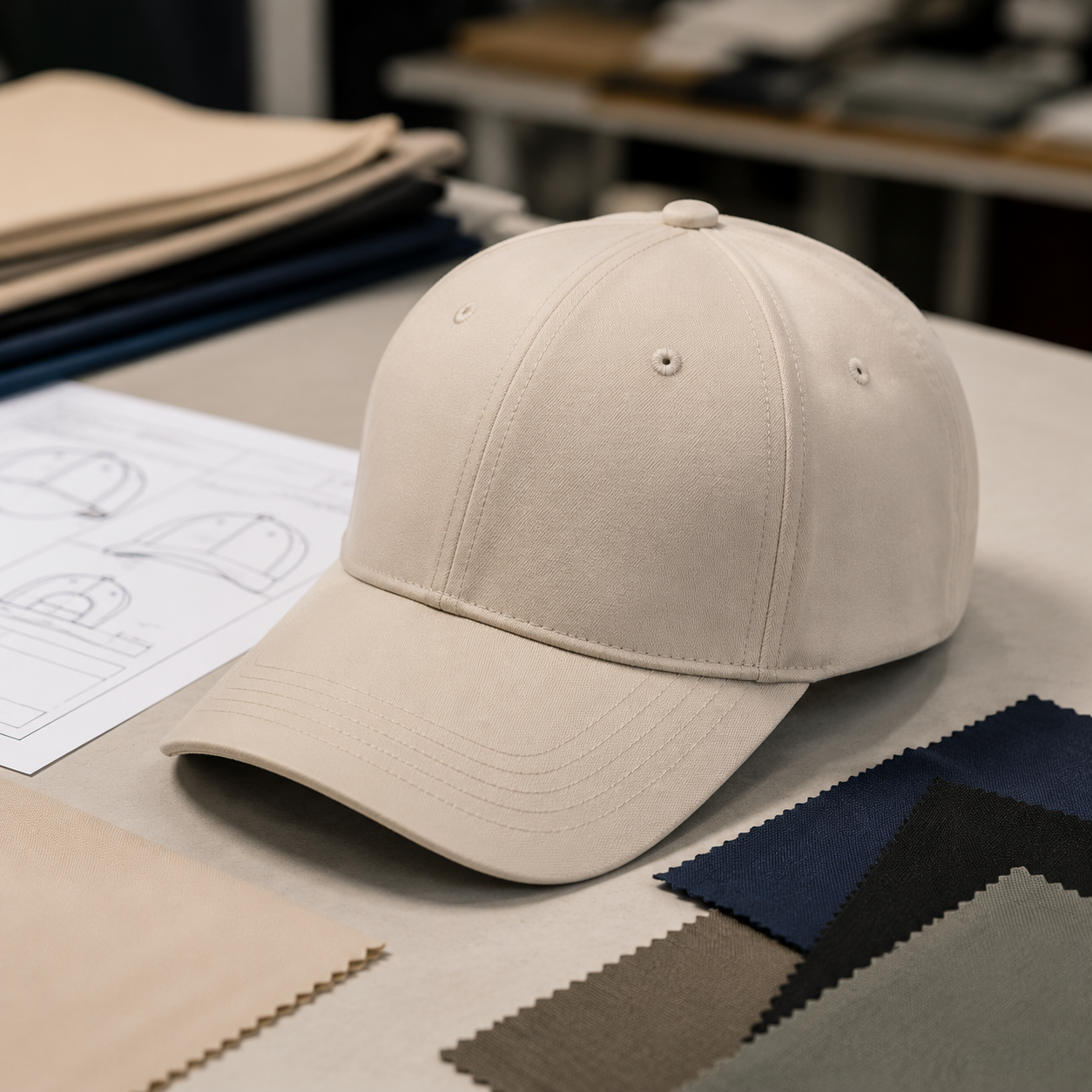
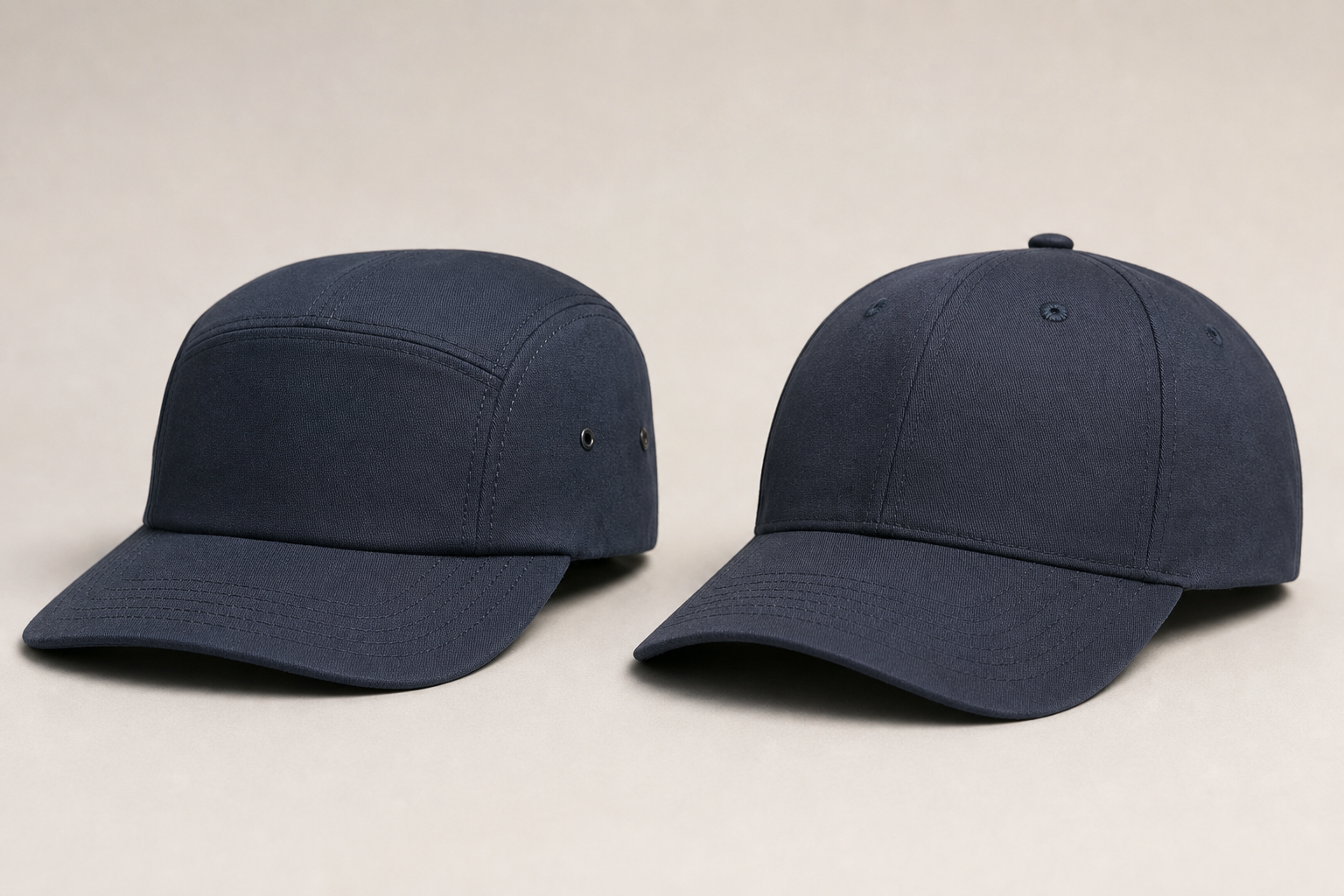
Every custom cap starts with a tech pack — a detailed specification document that translates your design idea into measurable, factory-readable instructions. A complete tech pack for a custom baseball cap includes: front and side view sketches with stitch lines marked, panel dimensions in centimeters, fabric composition and GSM weight, sweatband material and width, visor curve degree and internal board type, closure type and hardware finish, embroidery digitized file with stitch count and thread color Pantone codes, and label/tag placement diagrams.
Without a tech pack, the factory fills in the blanks — and their assumptions rarely match your buyer’s expectations. Hongyuecap requires a tech pack before any pre-production sample is cut. We have seen wholesale buyers skip this step and discover only at bulk delivery that the visor was 2mm too thick or the closure color did not match the crown fabric. Fixing these after production costs 3x more than catching them at the design stage.
Pro tip for wholesale buyers: send your tech pack as a layered PDF with both imperial and metric measurements. Factories in China, Vietnam, and Bangladesh work in metric. A 7-inch crown height is 17.78 cm — round to 18 cm to avoid confusion. The ISO 8559-1 body measurement standards provide reference points for garment specifications.
2. Pattern Making & Sample Approval
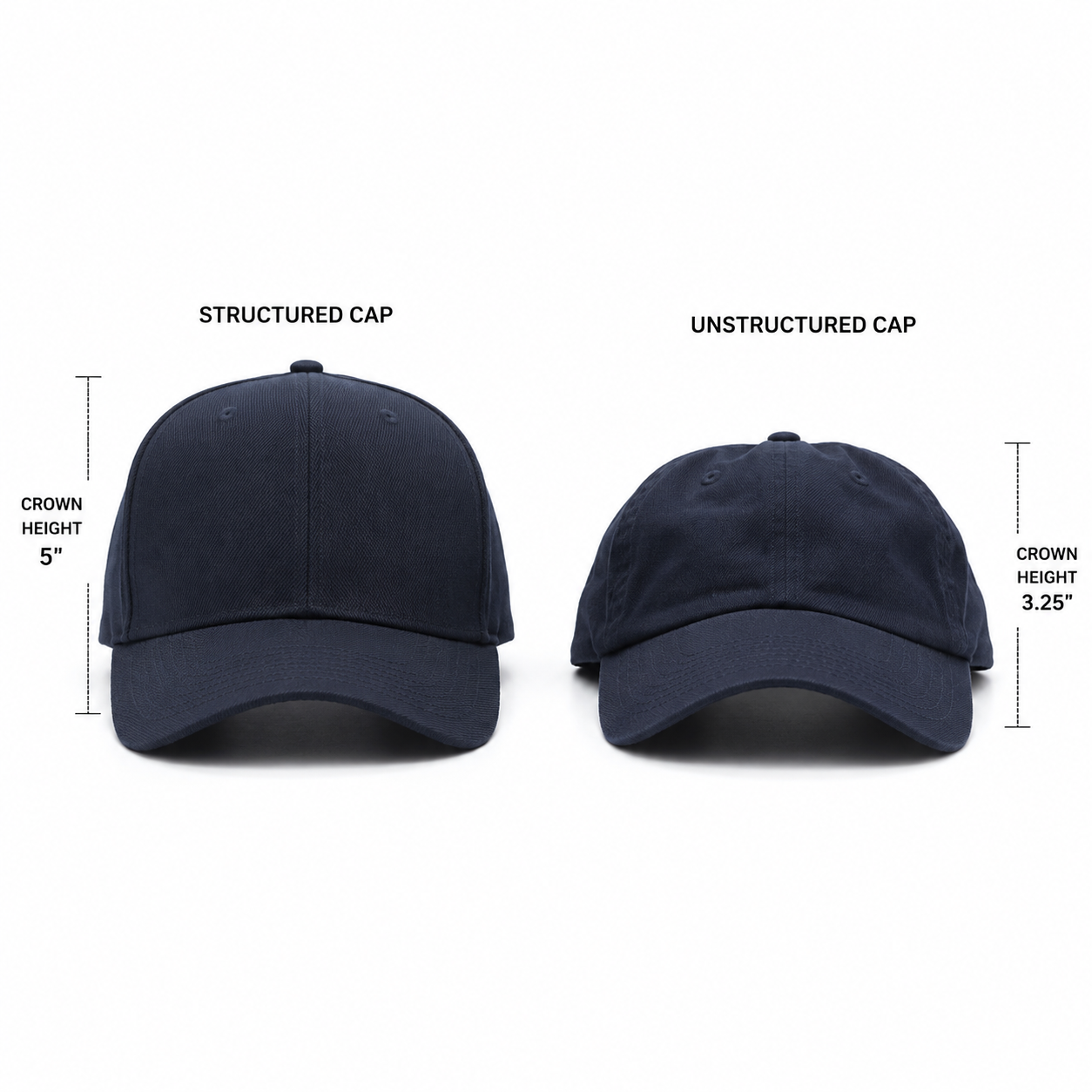
Once the tech pack is approved, the factory creates paper or digital patterns for each cap panel — typically 6 panels for a structured baseball cap, with separate patterns for the visor, sweatband, and closure. The pattern maker calculates seam allowances (usually 1 cm for structured caps, 0.7 cm for unstructured) and grain line direction, which determines how the fabric drapes across the crown.
The first physical sample — called a proto sample or development sample — is cut from these patterns using your specified fabric. This sample is not production-ready; it exists to validate silhouette, fit, and proportion. Expect 7–10 days for pattern making and proto sample assembly. Approve the proto sample before the factory starts bulk cutting. Factory vetting during the sampling stage is critical — visit the factory or request a live video walkthrough of their pattern room.
- Proto sample turnaround: 7–10 days
- Fit sample (after proto approval): 7–10 additional days
- Pre-production sample (gold seal sample): 5–7 days
- Total sampling timeline: 19–27 days before bulk production begins
3. Fabric Cutting & Material Preparation
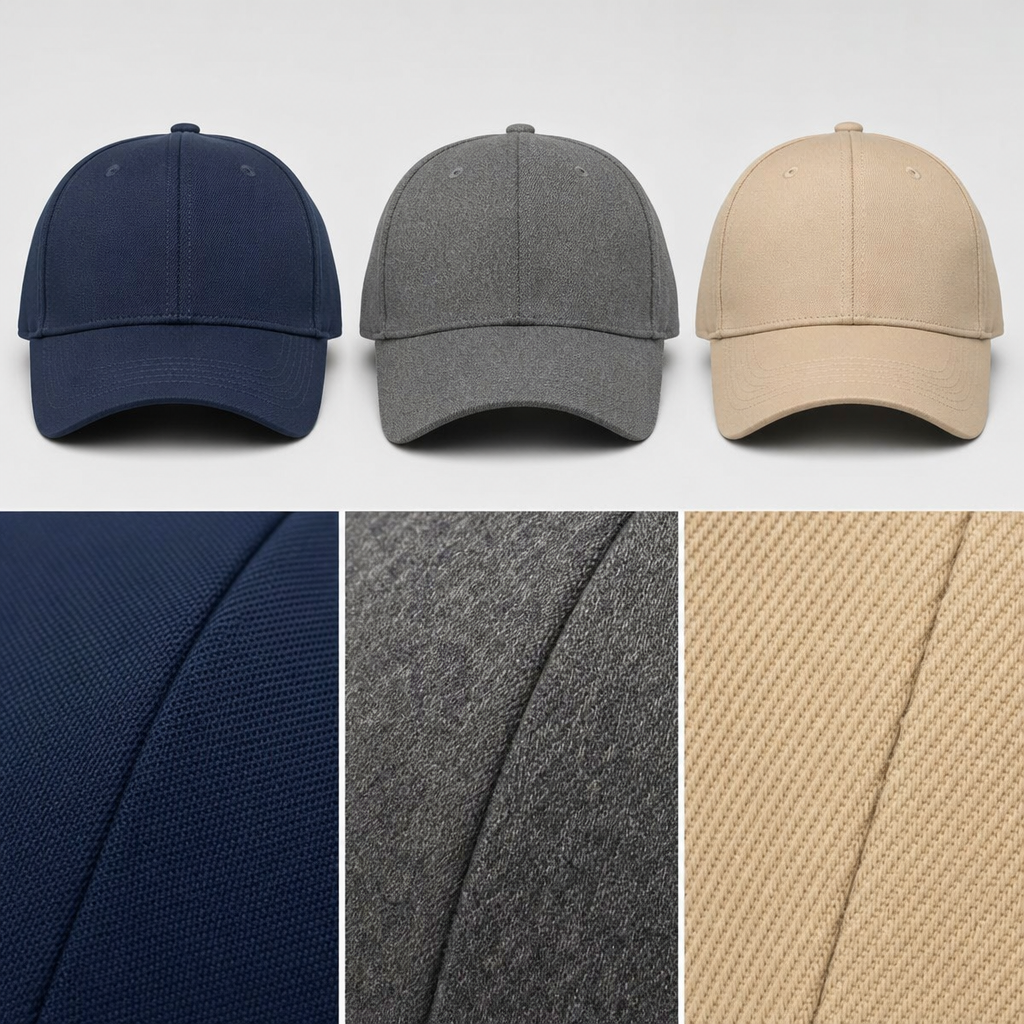
After sample approval, bulk fabric cutting begins. This is where material yield and waste directly impact your unit cost. The factory lays fabric in multiple plies (layers) — typically 20–40 layers for cotton twill — and uses a band knife or automated laser cutter to follow the approved patterns. Laser cutting is faster but leaves a slight burnt edge on synthetic blends; die cutting is preferred for natural fibers like cotton and wool.
Fabric yield is the metric wholesale buyers should track. A standard 6-panel baseball cap consumes approximately 0.35–0.45 square meters of fabric per unit, depending on panel shape and pattern matching. If your cap uses a patterned fabric (stripes, camo, plaid), pattern matching adds 8–12% material waste. Request the cutting yield report from your factory — Hongyuecap provides this as standard documentation with every bulk order.
Simultaneously, the factory prepares the buckram (the stiff inner layer that gives structured caps their shape), the sweatband material (cotton, polyester, or moisture-wicking mesh), and the visor insert (plastic, cardboard, or PE board). Moisture-wicking sweatbands cost $0.12–0.18 more per unit than standard cotton but can be the differentiation point that wins a retail buyer’s reorder.
4. Sewing & Assembly
Sewing is the longest and most labor-intensive step in custom cap manufacturing. Each cap passes through 8–12 sewing stations, with each operator handling a specific seam. The sequence typically runs: join front two panels → attach side panels → insert buckram → sew crown seam → attach visor → insert sweatband → attach closure → top button finishing.
Stitch density matters. A standard baseball cap uses 8–10 stitches per inch (SPI). Higher SPI (10–12) creates a tighter, more durable seam but increases sewing time by approximately 15%. For wholesale buyers ordering caps destined for outdoor or workwear use, specify 10–12 SPI in your tech pack. For fashion caps worn occasionally, 8–9 SPI is acceptable. The ASTM D6193 standard for stitch types and seams provides industry-accepted testing protocols for seam strength.
| Sewing Quality Metric | Budget Tier | Standard Tier | Premium Tier (Hongyuecap) |
|---|---|---|---|
| Stitches Per Inch (SPI) | 6–7 | 8–9 | 10–12 |
| Thread Type | Polyester 40/2 | Polyester 60/2 | Polyester core-spun 60/3 |
| Seam Allowance | 0.5 cm | 0.8 cm | 1.0 cm |
| Needle Gauge | #16–18 | #14 | #11–12 |
| Visor Stitch Rows | 4 rows | 6 rows | 8 rows |
The visor attachment is particularly sensitive. Eight rows of stitching on the visor (vs. four) nearly doubles the visor’s resistance to peeling and curling after repeated wear and washing. If your retail buyer sells to customers who wear caps daily, the 8-row specification pays for itself in reduced returns.
5. Embroidery & Decoration Application
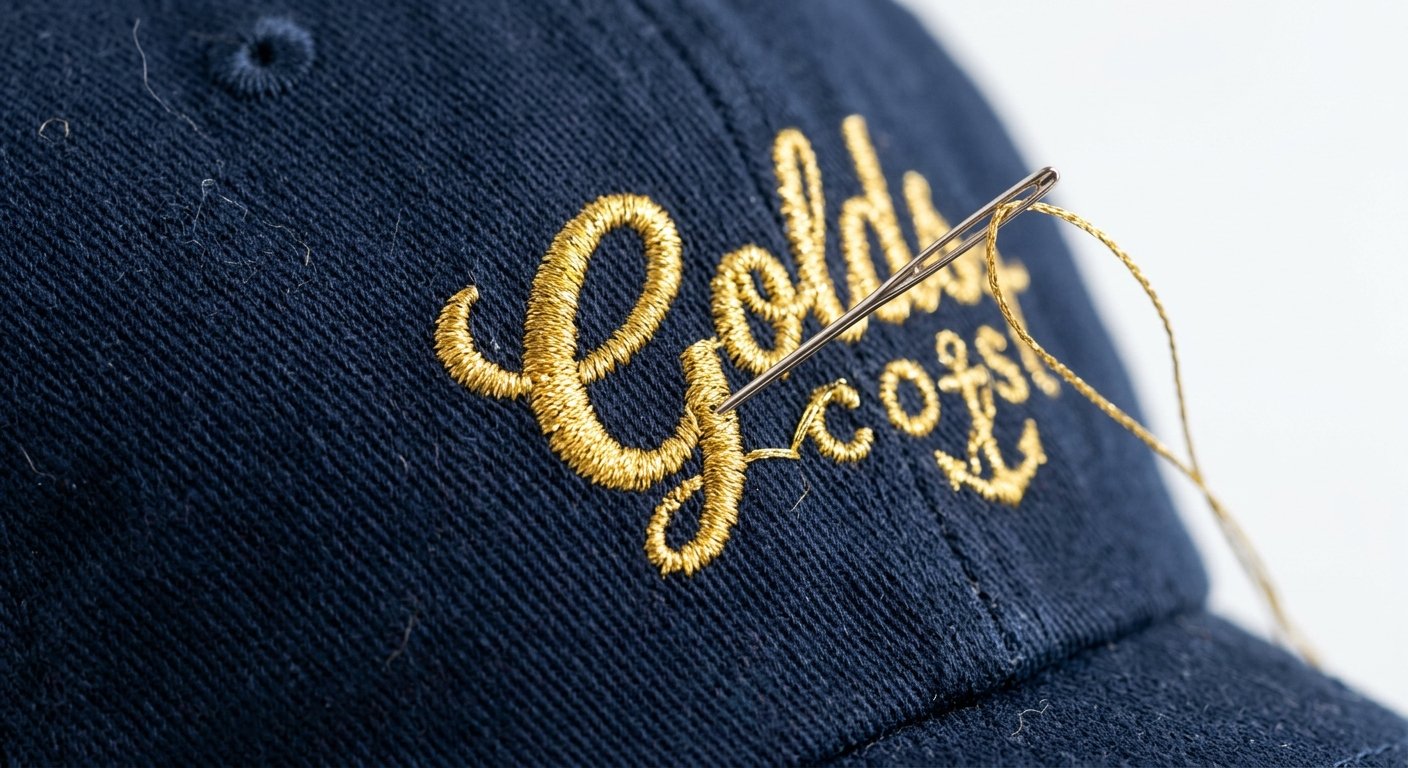
Decoration happens after assembly for most methods, though embroidery on front panels can be done before the crown is fully constructed if the design spans across seams. Embroidery is the most common decoration method for custom caps — it creates a raised, durable logo that outlasts screen printing by years — but stitch count, thread type, and digitizing quality determine whether the final result looks premium or cheap.
A typical front-panel embroidered logo uses 8,000–12,000 stitches for a 5 cm × 3 cm design. Below 6,000 stitches, the embroidery looks sparse with visible fabric gaps. Above 15,000 stitches, the design becomes heavy, distorting the fabric and creating puckering. The sweet spot is 8,000–12,000 stitches for a clean, dimensional result. Embroidery thread should be polyester (not rayon) for caps that will be worn outdoors — polyester resists UV fading and machine washing better than rayon. Refer to our guide on embroidery quality and artwork approval for detailed digitizing requirements.
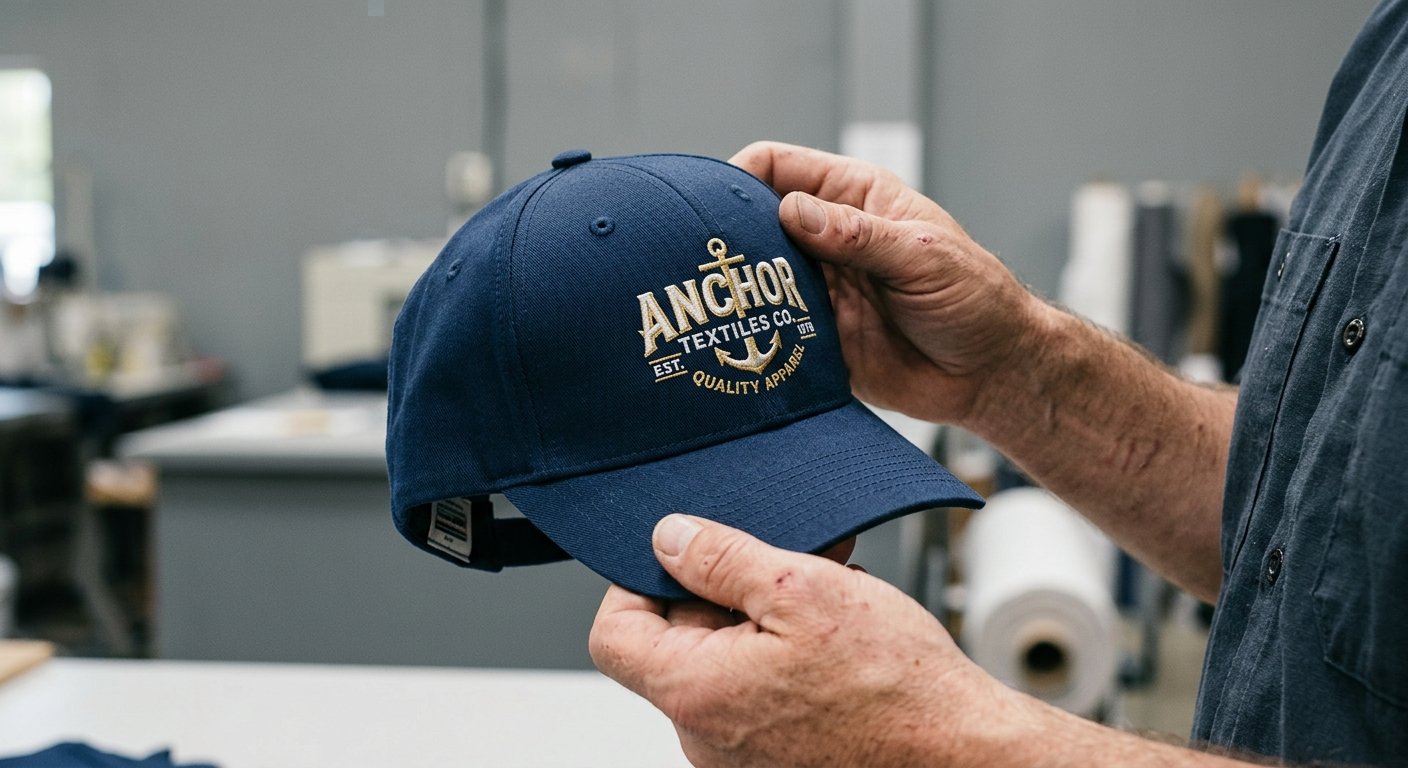
Other decoration methods include puff embroidery (3D foam-backed thread for a raised effect), silicone patches (molded 3D logos sewn or heat-pressed onto the crown), woven labels (flat, fine-detail labels sewn onto the panel), and full-color sublimation (dye-printed directly into polyester fabric). Each method has different minimum order quantities (MOQs): embroidery has no minimum, silicone patches typically require 200+ units for custom mold creation, and full sublimation needs 100+ units to amortize setup costs. For a comparison of all techniques, see our guide on baseball cap decoration methods for wholesale buyers.
6. Quality Control & Inspection
Quality control in custom cap manufacturing operates at three levels: in-line inspection (QC checks at each sewing station), end-of-line inspection (100% check of finished caps), and AQL sampling (statistical random sampling per ANSI/ASQ Z1.4 standards). A wholesale buyer should require AQL 2.5 for major defects and AQL 4.0 for minor defects as a contractual minimum.
| Defect Category | Examples | Acceptable Level |
|---|---|---|
| Critical | Sharp object inside cap, exposed needle, toxic material | AQL 0 (zero tolerance) |
| Major | Crooked embroidery > 2mm off-center, skipped stitches > 3 consecutive, visor delamination, size mismatch > 1cm | AQL 2.5 |
| Minor | Loose thread end < 1cm, slight color variation within Pantone tolerance, label slightly off-position < 3mm | AQL 4.0 |
The most common major defects we see at Hongyuecap during third-party inspections are: embroidery off-center by more than 2mm (accounts for 38% of QC failures), sweatband not fully stitched to crown (22%), visor curvature inconsistent across the same batch (18%), and closure hardware failing the pull test (12%). Knowing these numbers helps wholesale buyers anticipate and prevent the disputes that arise from quality issues.
Insist on a pre-shipment inspection (PSI) by a third-party agency (SGS, Bureau Veritas, or Intertek) before the factory ships. A PSI typically costs $280–350 per day in China and catches defects that the factory’s internal QC missed. For a 5,000-piece order, this adds $0.06 per unit — a fraction of the cost of processing returns from an unhappy retail buyer. The ANSI/ASQ Z1.4 sampling standard is the global reference for acceptable quality level inspections.
7. Packaging & Labeling
Packaging is not just logistics — it is the first physical touchpoint your retail buyer’s customer has with the product. The standard packaging for wholesale caps includes: individual polybag (0.04mm thickness minimum for structure), hangtag with barcode and care instructions, and inner carton (typically 25 caps per carton for baseball caps, 50 for beanies). Custom packaging — branded boxes, tissue paper, or thank-you cards — adds $0.15–0.40 per unit and is worth the investment for boutique retail channels.
Labeling requirements vary by destination market. Caps shipped to the EU require CE marking and fiber composition labels per EU Regulation 1007/2011. Caps shipped to the US require country of origin labeling per 19 CFR 134 and care labels per FTC Care Labeling Rule. California Proposition 65 warnings apply if your cap contains materials on the Prop 65 list (common in some synthetic dyes and metal hardware). Hongyuecap maintains a compliance database for all major destination markets and includes compliant labeling as standard.
8. Shipping, Logistics & Lead Time Management
A custom cap order’s total lead time breaks down into: sampling (2–3 weeks), bulk production (3–5 weeks for 1,000–5,000 units), and shipping (1–6 weeks depending on method). Sea freight from Shanghai to Los Angeles takes 14–18 days port-to-port plus 3–5 days for customs clearance and drayage. Air freight takes 3–5 days door-to-door but costs 4–6x more per kilogram. For a 5,000-cap order weighing approximately 350 kg, sea freight costs roughly $450–650 while air freight costs $2,200–3,800.
Wholesale buyers should build a 2-week buffer into lead time estimates. Chinese New Year adds 3–4 weeks of downtime. Golden Week (early October) adds 1 week. Factory relocation, power rationing, and raw material shortages can add 1–3 weeks unpredictably. The safest strategy: order seasonal caps 12 weeks before your retail buyer needs them on shelves. Rush orders are possible (premium factories like Hongyuecap can deliver in 4–6 weeks with air freight) but cost 15–25% more.
Custom Cap Manufacturing Cost Breakdown
| Cost Component | Budget ($) | Standard ($) | Premium ($) |
|---|---|---|---|
| Fabric (cotton twill, per cap) | 0.25–0.35 | 0.40–0.55 | 0.60–0.80 |
| Buckram + interfacing | 0.08–0.10 | 0.12–0.15 | 0.18–0.22 |
| Sweatband | 0.06–0.08 | 0.10–0.14 | 0.18–0.25 |
| Visor insert | 0.04–0.06 | 0.08–0.10 | 0.12–0.15 |
| Closure hardware | 0.08–0.12 | 0.15–0.20 | 0.25–0.35 |
| Sewing labor | 0.30–0.40 | 0.50–0.65 | 0.70–0.90 |
| Embroidery (8k stitches) | 0.20–0.30 | 0.35–0.45 | 0.50–0.65 |
| Packaging + labeling | 0.05–0.08 | 0.10–0.15 | 0.20–0.40 |
| Total FOB per cap (1,000 pcs) | $1.06–1.49 | $1.80–2.39 | $2.73–3.72 |
These prices reflect factory-direct FOB rates from major manufacturing hubs in China, Vietnam, and Bangladesh. Prices are inclusive of factory profit and export packaging but exclude freight, duties, and customs brokerage. MOQs typically start at 300–500 pieces for standard designs; custom designs with new tooling (silicone patch molds, custom hardware dies) may require 1,000+ pieces to amortize setup costs.
FAQ
What is the minimum order quantity (MOQ) for custom caps?
Standard MOQ is 300–500 pieces per design. However, per-color MOQ within a single design is typically 100–150 pieces. If you want 3 colorways of the same cap design at 150 pieces each (450 total), that is acceptable for most mid-tier factories. High-end factories may require 1,000+ for first-time buyers.
How long does the custom cap manufacturing process take from design to delivery?
Standard timeline: 8–10 weeks (2 weeks sampling + 4 weeks production + 3–4 weeks shipping). Rush timeline: 4–6 weeks (1 week sampling + 2 weeks production + 1 week air freight) at a 15–25% surcharge. Add 3–4 weeks during Chinese New Year (January–February).
What file format should I send for my cap embroidery logo?
Vector files (.ai, .eps, .cdr, or .pdf with embedded vectors) are required for digitizing. PNG or JPG files are acceptable for reference but cannot be used for embroidery digitizing — the digitizer needs clean line paths to calculate stitch sequences. Always include Pantone TPX color codes alongside your artwork file.
Can I get a sample before placing a bulk order?
Yes. Proto samples cost $50–80 per design (refundable against the bulk order at most factories). Expect 7–10 days for the first proto sample. Pre-production (gold seal) samples are free with confirmed orders. Always request and approve the gold seal sample — it is the contractual reference standard for the bulk shipment.
Get Your Custom Cap Manufacturing Quote
At Hongyuecap, we manage the entire custom cap manufacturing process under one roof — from tech pack review to pre-shipment inspection — so wholesale buyers get exactly what they specified, on time, every time. We serve retail buyers, promotional product distributors, and corporate uniform programs with MOQs starting at 300 pieces and standard lead times of 6–8 weeks.
Contact us today for a free quote: Send your design brief or tech pack to info@hongyuecap.com or visit our contact page to schedule a consultation. We respond to all inquiries within 24 hours with a detailed specification sheet and pricing breakdown.
Written by the Hongyuecap Product Team — 10+ years in B2B custom headwear manufacturing. Last updated: May 03, 2026.