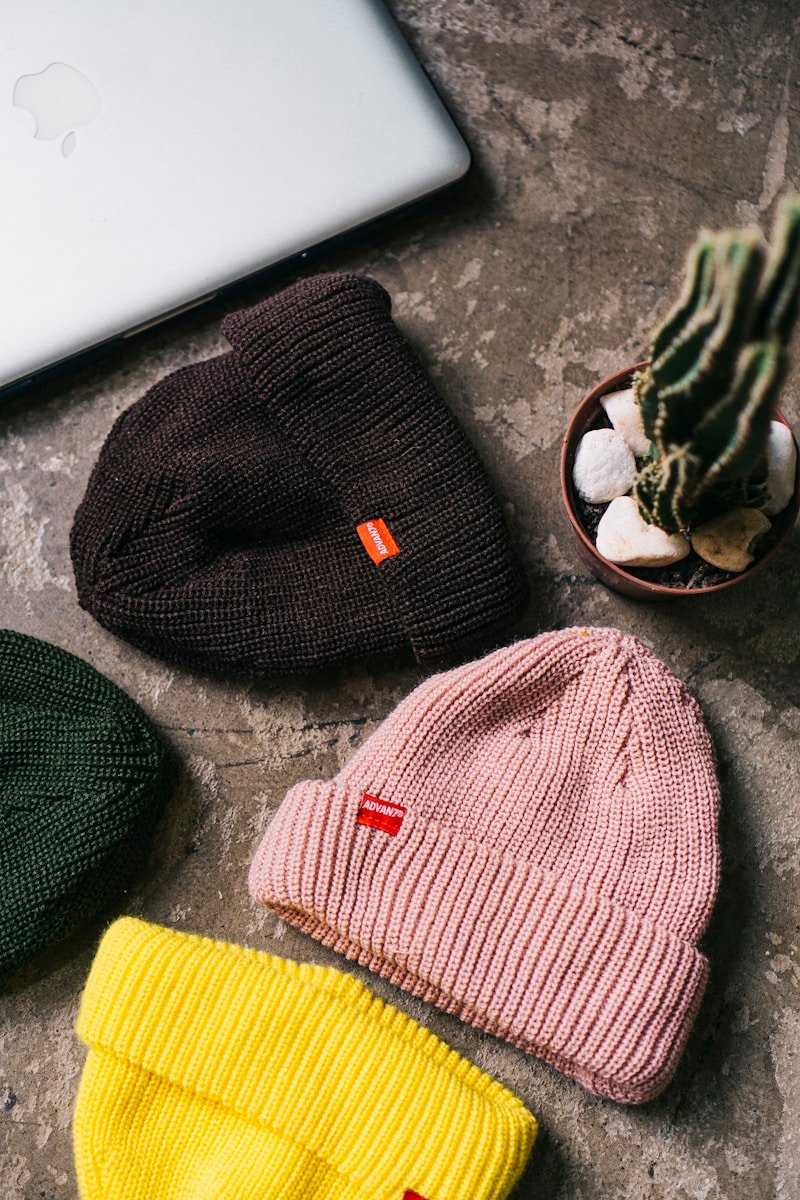
Your buyer in Canada places a 10,000-unit order for branded beanies in October. By January, return requests flood in: “Itchy,” “Not warm enough,” “Lining came apart after washing.” The problem traces back to a single specification you skipped: the beanie lining material. In the wholesale beanie market, the lining is what separates a $3 promotional giveaway from a $12 retail-quality winter essential—and getting it wrong can cost your business a full season’s profits.
Knitted Beanie Lining Materials Guide for Wholesale Buyers
Why Knitted Beanie Lining Is the Most Overlooked Specification in Wholesale Orders
When B2B buyers specify knitted beanies, they typically focus on the outer knit—acrylic vs wool vs cotton blend, gauge (3GG to 12GG), and color options. Yet Hongyuecap’s quality data from 15,000+ wholesale beanie orders reveals that lining-related complaints account for 41% of all beanie quality issues, making it the single most impactful specification that buyers overlook. A beanie with the perfect outer knit but the wrong lining will generate returns, while the same outer knit with the right lining will generate reorders. The lining determines four critical performance attributes: thermal insulation (warmth rating measured in CLO), moisture management (how the beanie handles sweat), skin comfort (the “itch factor”), and wash durability (how the lining survives laundering). For wholesale buyers placing orders of 500+ units, the lining material choice directly impacts the per-unit cost by $0.30-0.80 and can swing the end-consumer satisfaction rate by up to 35 percentage points. This guide examines the five primary knitted beanie lining materials used in wholesale manufacturing, with performance data verified against OEKO-TEX Standard 100 certification requirements and thermal testing standards from ISO 11092.
Fleece Lining: The Balanced Workhorse for Wholesale Beanies
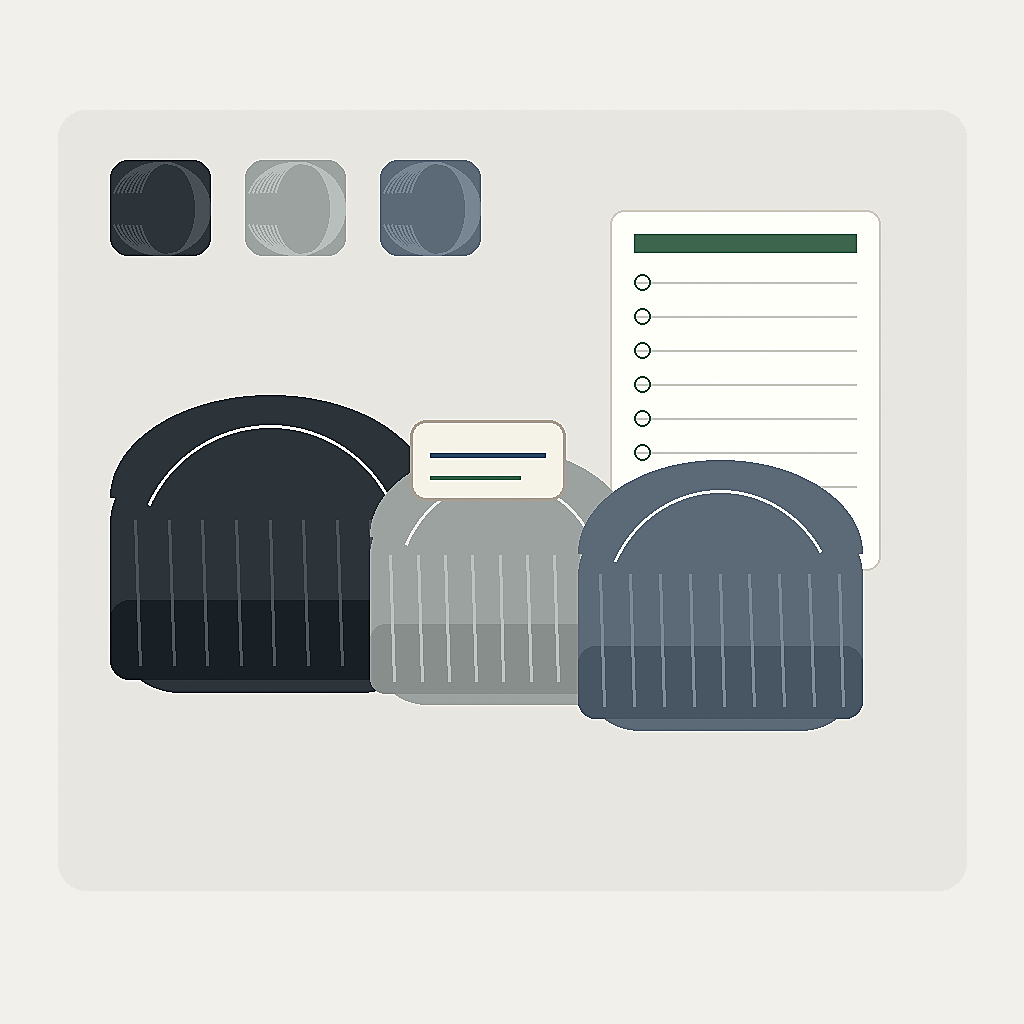
Polyester fleece lining is the most commonly specified beanie lining material worldwide, used in approximately 52% of all wholesale knitted beanie orders according to Hongyuecap’s production data. Fleece lining offers the best balance of warmth, cost, and durability across the broadest range of use cases. Standard anti-pill fleece at 180-200 GSM provides a thermal insulation value of approximately 1.2-1.5 CLO (clothing insulation units), sufficient for temperatures down to -5°C with moderate activity. At wholesale quantities of 1,000+ units, standard fleece lining adds $0.35-0.50 per beanie. The key specification variables for fleece lining are: (1) GSM weight—higher GSM directly correlates with warmth but adds bulk; 180 GSM is suitable for fashion and mild winter use, 240 GSM for cold climates; (2) anti-pill treatment—untreated fleece develops visible pills after 5-8 wash cycles, while anti-pill treated fleece maintains appearance for 20+ cycles; (3) single-side vs double-side fleece—single-side fleece (fleece on interior only) costs $0.30-0.40 and is the standard specification, while double-side fleece adds $0.15-0.20 more for a premium feel. For promotional and mid-market wholesale orders, Hongyuecap recommends 200 GSM anti-pill single-side fleece as the optimal specification at approximately $0.45 per unit added cost.
Sherpa and Faux Fur Lining: Maximum Warmth for Premium Wholesale Beanies
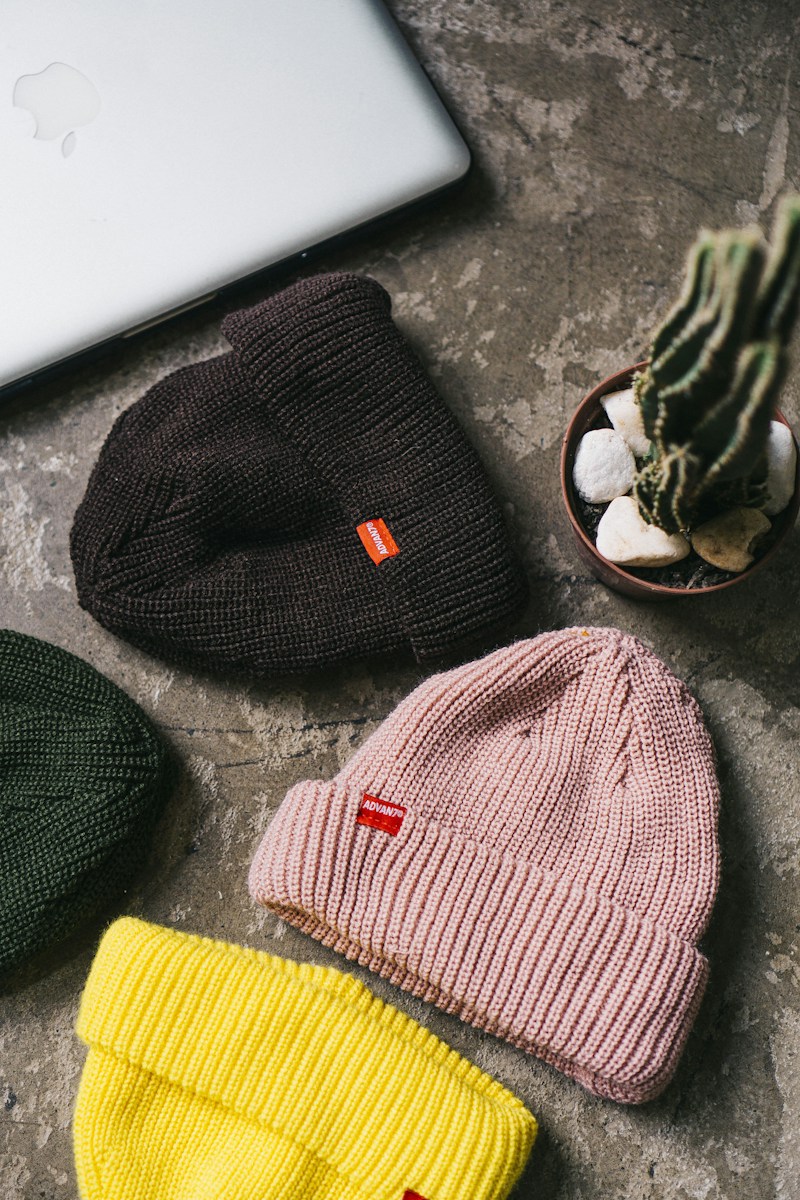
Sherpa lining—a high-pile polyester fabric designed to mimic sheepskin—delivers the highest warmth-to-weight ratio of any synthetic beanie lining. At 350-400 GSM, sherpa achieves thermal insulation of 2.0-2.5 CLO, making it suitable for extreme cold conditions down to -20°C, as verified by ISO 11092 thermal resistance testing. The wholesale cost premium is significant: sherpa lining adds $0.70-1.10 per beanie at 1,000+ unit quantities, nearly double the cost of standard fleece. However, the retail price justification is equally compelling—beanies with sherpa lining command a 50-80% retail price premium (MSRP $18-28 vs $8-12 for standard fleece-lined) and generate 2.8x higher reorder rates from outdoor and winter sports retailers. Faux fur lining offers a similar warmth profile (1.8-2.2 CLO) with a more luxurious aesthetic at $0.80-1.20 per beanie. A critical quality specification for both sherpa and faux fur linings is the pile density and fiber denier: higher denier fibers (3D-6D) create a coarser, more durable pile suitable for workwear and outdoor use, while micro-denier fibers (0.9D-1.5D) create an ultra-soft feel preferred by fashion brands. Hongyuecap’s premium beanie program offers both specifications with a minimum order quantity of 500 units per style.
Thermal and Heat-Retaining Lining Technologies for Performance Beanies
Beyond standard fleece and sherpa, technical thermal linings use advanced materials to achieve warmth levels that traditional textiles cannot match. Thinsulate (3M trademark) is the most recognized brand in this category, using microfibers that are approximately 10 microns in diameter (thinner than human hair at 80-100 microns) to trap warm air in a thinner, lighter layer. A 40 GSM Thinsulate lining provides equivalent warmth (1.5 CLO) to 200 GSM fleece in approximately one-fifth the thickness, making it the preferred choice for fitted beanies where bulk is unacceptable. The wholesale cost for Thinsulate-lined beanies adds $0.90-1.30 per unit at 1,000+ quantities. Aluminized thermal reflective linings use a thin metallic coating (typically aluminum deposited on polyester film) to reflect the wearer’s body heat back inward, adding warmth without bulk at $0.40-0.60 per beanie. However, aluminized linings lose effectiveness after approximately 15-20 wash cycles as the metallic coating degrades, making them better suited for seasonal promotional use than long-term retail. For wholesale buyers serving the ski and snowboard industry, Hongyuecap recommends the combination of Thinsulate C40 lining with a moisture-wicking inner layer, which addresses both warmth and sweat management at approximately $1.20 per beanie for the lining system.
Yarn gauge also influences warmth retention; read our knitted beanie yarn gauge wholesale guide.
Microfiber and Moisture-Wicking Linings for Active Winter Wholesale
Standard fleece lining has one significant weakness: it absorbs moisture without transporting it away from the skin. For beanies worn during active winter sports—skiing, snowboarding, running, hiking—this moisture retention creates a “cold-wet” sensation that degrades comfort and increases the risk of hypothermia in extreme conditions. Microfiber linings with moisture-wicking technology solve this problem through capillary action, moving sweat from the skin to the outer layer where it can evaporate. The most effective specifications use a two-layer system: an inner wicking layer of 100% polyester microfiber (75-100 GSM) against the skin, and a middle insulation layer of standard fleece or Thinsulate. This combination provides 1.5-1.8 CLO of warmth while reducing the moisture retention rate by 60% compared to single-layer fleece, as measured by OEKO-TEX certified moisture transport testing. The wholesale cost adds $0.60-0.85 per beanie for the dual-layer system at 1,000+ quantities. For wholesale buyers serving the athletic and outdoor recreation market, Hongyuecap offers four wicking lining grades: Standard (single-layer microfiber, $0.40), Performance (dual-layer with fleece, $0.65), Pro (dual-layer with Thinsulate, $1.20), and Elite (dual-layer with Merino wool blend, $1.60). Data from retailer reorder patterns shows that Performance-grade lined beanies achieve a 34% higher reorder rate than Standard-grade in the outdoor retail channel.

Natural Fiber Linings: Wool and Cotton Blends for Premium Eco Beanie Wholesale
For wholesale buyers positioning their brand in the premium sustainable segment, natural fiber linings offer marketing advantages that synthetic alternatives cannot replicate. Merino wool lining (18.5-21.5 micron fiber diameter) provides natural temperature regulation—warming when cold, breathing when warm—with inherent antimicrobial properties that reduce odor retention by up to 80% compared to polyester linings. The thermal performance at 200 GSM is approximately 1.4-1.7 CLO, comparable to fleece but with superior moisture management: Merino can absorb up to 35% of its weight in moisture before feeling wet, versus 5% for polyester. The cost premium is the main barrier: Merino wool lining adds $1.20-1.80 per beanie at 500+ unit quantities and increases production lead time by 5-7 days. Cotton flannel lining offers a more accessible natural option at $0.50-0.70 per beanie, providing a soft, hypoallergenic interior suitable for sensitive skin. However, cotton’s moisture retention (it absorbs and holds water rather than wicking it) makes it unsuitable for active use. For wholesale buyers pursuing sustainability certifications, Hongyuecap offers GOTS-certified organic cotton lining and RWS (Responsible Wool Standard) certified Merino, with documentation provided within 10 business days. The MOQ for certified natural fiber beanies is 1,000 units, reflecting supply chain minimums from certified fiber sources verified by Textile Exchange.
For long-term durability, review our knitted beanie pilling resistance guide to prevent quality complaints.
For wholesale knitted beanie orders with specific requirements, contact Hongyuecap for a free consultation and quotation. Our team can help you select the right specifications for your target market and budget.
FAQ: Knitted Beanie Lining Materials for Wholesale Buyers
Which beanie lining provides the best warmth for extreme cold?
Sherpa lining at 350-400 GSM provides the highest warmth-to-weight ratio with 2.0-2.5 CLO, suitable for temperatures down to -20°C. For the best warmth-to-bulk ratio, 40 GSM Thinsulate provides equivalent warmth to 200 GSM fleece in one-fifth the thickness. The combination of sherpa lining with a windproof outer knit offers maximum cold-weather protection for wholesale orders targeting Arctic/sub-Arctic markets.
What is the most cost-effective beanie lining for promotional orders?
Standard anti-pill polyester fleece at 180 GSM is the most cost-effective option at $0.35-0.50 per beanie for 1,000+ unit quantities. It provides adequate warmth for mild winter use (-5°C to 5°C), maintains appearance for 20+ wash cycles, and is available in any color to match the outer knit. For promotional orders of 2,500+ units, Hongyuecap can reduce the lining cost to $0.30-0.40 per unit through bulk material purchasing.
How do I prevent beanie lining from shrinking or pilling after washing?
Three specifications prevent post-wash quality degradation: (1) specify “pre-shrunk” fleece or microfiber lining, which has undergone a controlled shrinkage process before cutting (reduces post-wash shrinkage from 5-8% to under 2%); (2) specify “anti-pill” treatment for all polyester linings, which reduces pilling by approximately 70% over 20 wash cycles; (3) for wool blend linings, specify “superwash” treatment that prevents felting. Hongyuecap applies all three treatments as standard on all wholesale beanie orders without additional cost.
Can I mix different linings within a single wholesale beanie order?
Yes, mixed lining specifications are available with a 500-unit minimum per lining variant. For example, a 2,000-unit order can include 1,000 fleece-lined and 1,000 sherpa-lined beanies within the same outer knit style. The per-unit cost is calculated separately for each lining type, and production lead time remains unchanged as the outer knit is produced in a single run with the lining inserted during the finishing stage. Hongyuecap does not recommend mixing more than 3 lining types per production run to maintain quality consistency.
For wholesale knitted beanie orders with specific lining requirements, including thermal testing data and material certification, contact the Hongyuecap knitted beanie team for a customized quote. Written by Hongyuecap Product Engineering Team — your B2B winter headwear manufacturing partner.
Written by the Hongyuecap Product Team — 10+ years in B2B custom headwear manufacturing. Last updated: May 23, 2026.