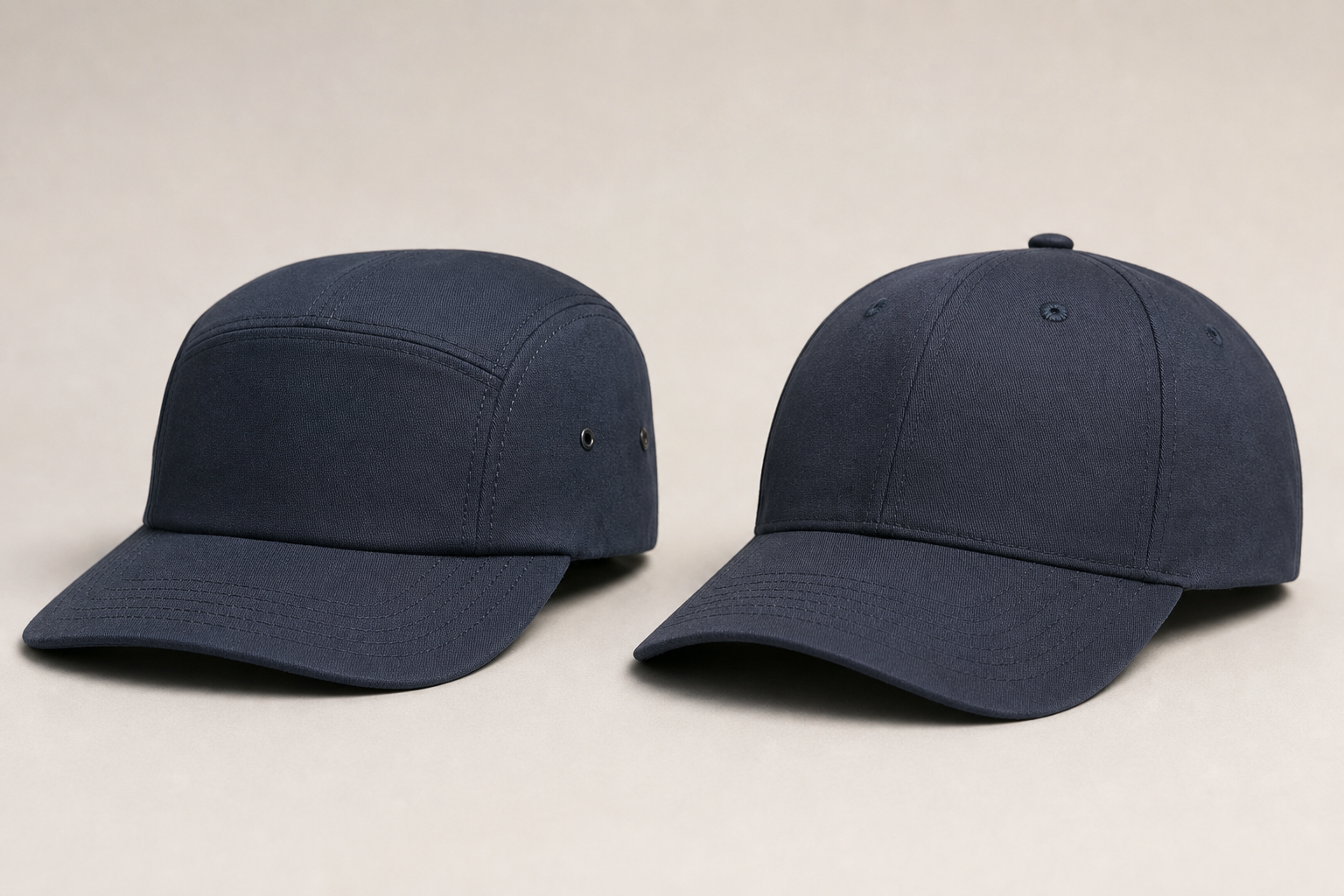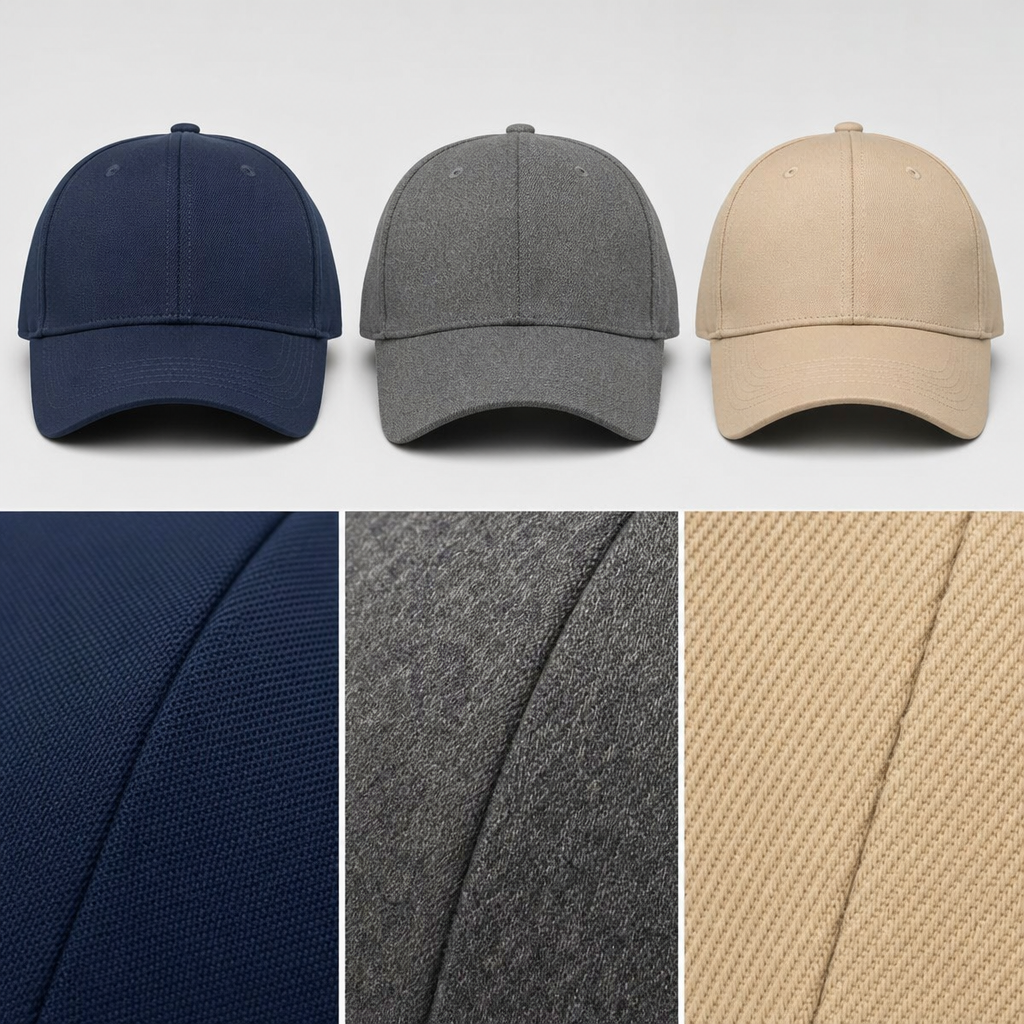

Bucket Hat Buying Guide for Wholesale Buyers: Material, MOQ & Pricing Checklist (7 Factors)
Note: This is a B2B wholesale buying guide for bucket hats. Hongyuecap does not sell directly to retail consumers.
You sourced 500 bucket hats for your summer promotion, but half arrived with uneven brim stitching and the sizing was 2cm smaller than the spec sheet. Now your client is demanding a refund, and the factory says “that’s within tolerance.” This isn’t a rare story — it’s the reality of buying bucket hats wholesale without a structured buying guide. A 2025 industry survey found 37% of first-time bulk buyers experience at least one major quality or compliance issue because they didn’t have a checklist before placing the PO. This bucket hat buying guide for wholesale buyers closes that gap.
1. Why Wholesale Bucket Hat Sourcing Is Different From Retail Shopping
When you walk into a store and buy one bucket hat, your only concern is whether it fits and looks good. When you’re sourcing 500, 5,000, or 50,000 bucket hats for resale or corporate distribution, the list of variables explodes: fabric GSM tolerance, brim stitch density, colorfastness rating, labeling compliance, and moisture regain percentage all become part of your daily vocabulary.
The fundamental shift is from product evaluation to supply chain management. A retail buyer checks one hat. A wholesale buyer like you needs to verify that all 5,000 hats consistently match the pre-production sample — a challenge that requires documented specifications, AQL-based inspection protocols, and clear penalty clauses in your purchase agreement. According to Hongyuecap’s production data, the top three causes of bulk order rejection are: inconsistent brim width (±5mm tolerance exceeded in 22% of rejected batches), color variation between dye lots (18%), and sweatband adhesive failure after 48-hour wear testing (14%).
This guide addresses each of these failure points systematically, giving you a repeatable framework — not just for one order, but for every bucket hat purchase you’ll make. If you’re exploring specific material options, our Bucket Hat Materials and UPF Buying Guide complements this article with deep-dive fabric analysis.
2. Material Selection: Cotton vs Polyester vs Nylon vs Canvas by End Use
The fabric you choose determines not just the look of the bucket hat, but its cost, minimum order quantity, production lead time, and target retail price. Choosing the wrong material is the single most expensive mistake a wholesale buyer can make — because you can’t fix fabric after production starts.
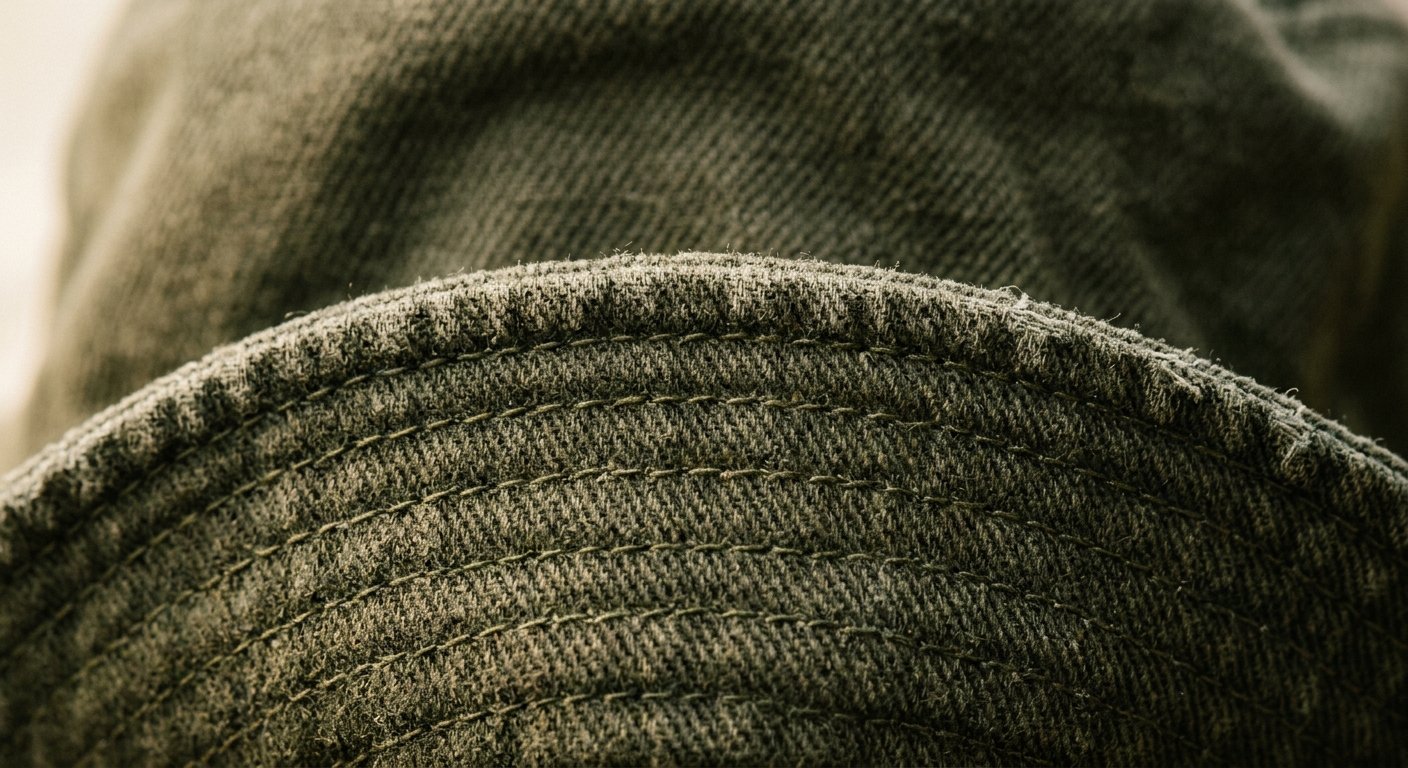
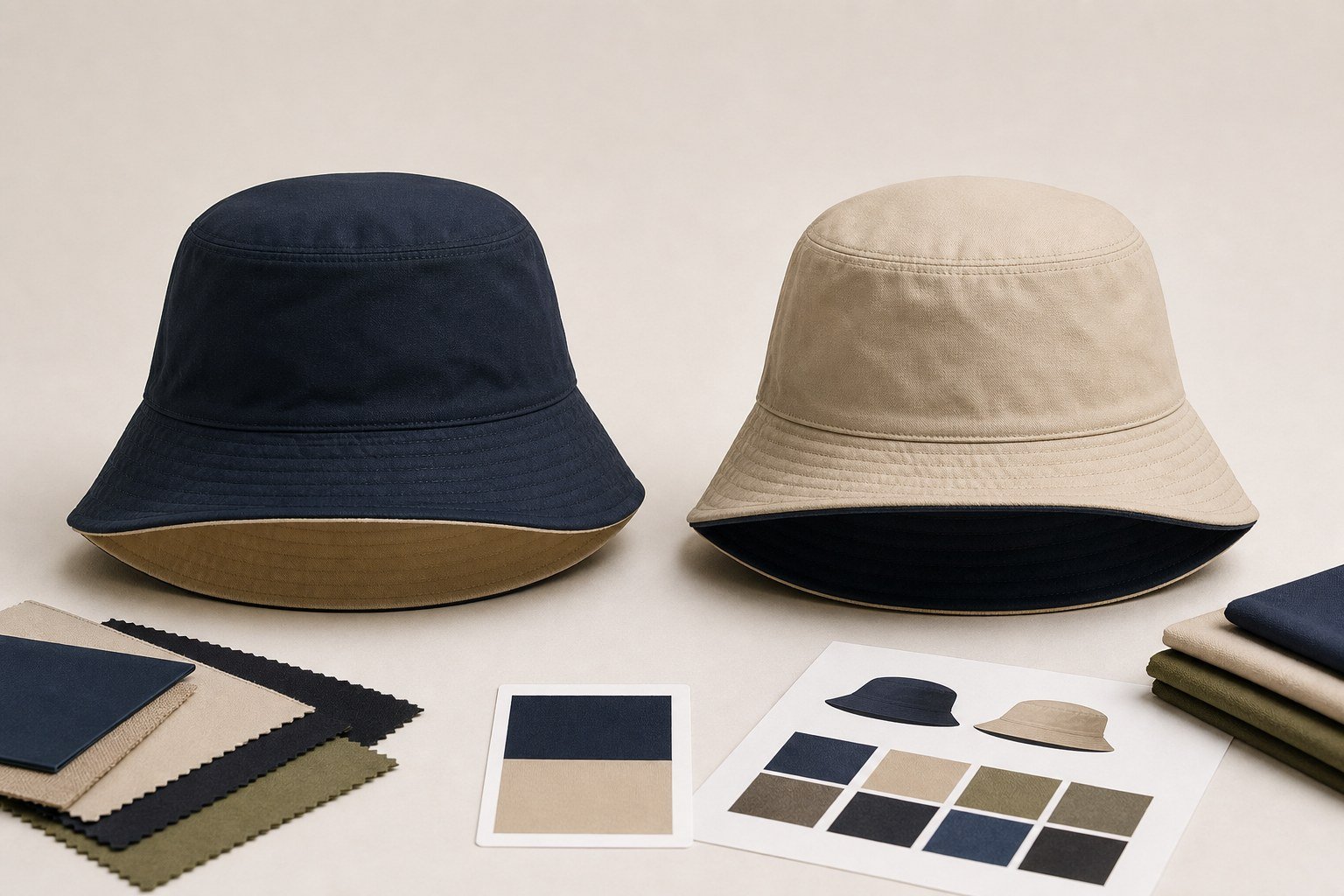
Here is how each core material performs against the five factors that matter most to wholesale buyers:
| Material | Unit Cost Range | MOQ (Typical) | Best For | Production Time | Durability |
|---|---|---|---|---|---|
| 100% Cotton | $0.80–$1.50 | 100–300 pcs | Promotional giveaways, casual retail, festival merch | 15–25 days | ★★★☆☆ (fades with washing) |
| Cotton-Poly Blend | $0.90–$1.70 | 100–300 pcs | Fashion retail, boutique brands, streetwear | 18–25 days | ★★★★☆ (good color retention) |
| 100% Polyester | $0.70–$1.30 | 200–500 pcs | Sports events, corporate uniforms, sublimation print | 12–20 days | ★★★★★ (colorfast, quick-dry) |
| Nylon Ripstop | $1.20–$2.50 | 300–500 pcs | Outdoor gear, fishing brands, hiking retailers | 20–30 days | ★★★★★ (tear-resistant, water-repellent available) |
| Canvas (Cotton Twill) | $1.50–$3.00 | 100–200 pcs | Premium streetwear, artisan brands, workwear | 20–30 days | ★★★★★ (stiff structure, ages well) |
| Recycled PET (rPET) | $1.80–$4.50 | 500–1,000 pcs | Eco-conscious brands, sustainability-focused retail | 25–40 days | ★★★★☆ (requires GRS certification) |
Critical specification to lock in writing: Fabric GSM (grams per square meter). A “standard” cotton bucket hat is typically 180–220 GSM. Anything below 160 GSM will feel thin and cheap — the kind of hat that gets thrown away after one wear. For premium retail, specify 220+ GSM and demand a pre-production GSM test report. Our Bucket Hat Wholesale Fabric Choice Guide (Cotton vs Nylon vs Canvas) goes deeper into GSM specifications and dye lot management.
For eco-focused buyers, recycled PET bucket hats represent the fastest-growing material segment, with global demand up 28% YoY according to Textile Exchange’s 2025 Materials Market Report. However, verification is mandatory: always request a GRS (Global Recycled Standard) certificate from your supplier. A 2025 investigation by the Changing Markets Foundation found that 42% of “recycled” claims in fashion accessories lacked third-party certification. Our Recycled PET Bucket Hats for Wholesale Buyers guide covers the full verification protocol.
3. MOQ Reality Check: What 100, 500, and 1,000 Pieces Actually Means for Your Business
MOQ (Minimum Order Quantity) is the first number buyers look at — and the one they’re most likely to misunderstand. A factory quoting “MOQ 100 pieces” doesn’t mean you can order 100 hats in any configuration you want.
Here’s what the numbers actually mean in practice, based on Hongyuecap’s factory floor data:
- MOQ 100 pcs: Usually means 100 pieces per color per style. If you want 4 colors, that’s 400 pieces total. You get basic customization (woven label, hang tag) included. No significant design alterations — you’re working with stock patterns.
- MOQ 300 pcs: The sweet spot for small-to-medium retail brands. You can split across 2–3 colors (100 pcs each) and request minor design modifications (brim width adjustment, sweatband material change). Custom embroidery or screen printing becomes available, usually at $0.15–$0.40 per piece surcharge.
- MOQ 500–1,000 pcs: Full customization unlocks: custom patterns, custom fabric dyeing (2–4 week additional lead time), any logo placement, custom packaging (box, polybag with header card), and access to premium materials like organic cotton or GRS-certified rPET.
- MOQ 3,000+ pcs: Factory-level pricing kicks in. Per-unit cost drops 15–30% compared to 1,000 pcs. You can negotiate exclusive designs, priority production slots during peak season (Jan–April for summer delivery), and dedicated QC inspectors.
The hidden MOQ trap: Many buyers budget for 500 hats at $1.50 each ($750 total), but forget that customization, shipping, import duties, and warehousing add 40–70% to the landed cost. A $750 factory order typically lands at $1,100–$1,300 after all costs. Build this into your margin calculation before placing the PO, not after.
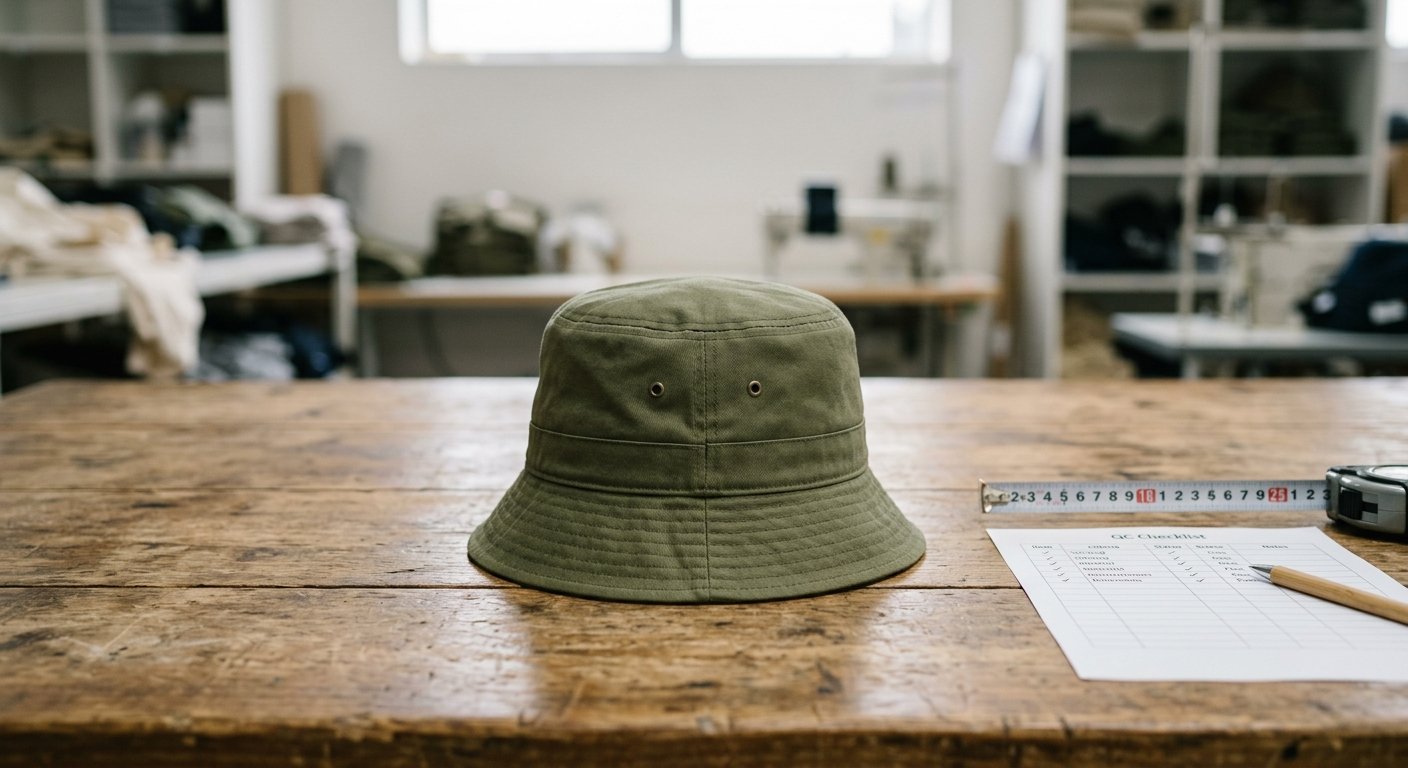
4. Pricing Breakdown: From $0.80 to $4.50 Per Hat — What Drives Cost
Bucket hat wholesale pricing follows a predictable formula, but most suppliers won’t share it openly. Understanding the cost drivers lets you negotiate intelligently and spot quotes that are suspiciously cheap — a red flag for quality shortcuts.
| Cost Component | Basic Hat ($0.80–$1.30) | Mid-Range ($1.50–$2.50) | Premium ($2.80–$4.50) |
|---|---|---|---|
| Fabric (per hat) | $0.20–$0.35 | $0.40–$0.70 | $0.80–$1.50 |
| Cutting & Sewing | $0.25–$0.40 | $0.40–$0.60 | $0.50–$0.80 |
| Trims (sweatband, eyelets) | $0.08–$0.12 | $0.12–$0.20 | $0.20–$0.40 |
| Customization per hat | $0.05 (basic label) | $0.25 (embroidery/print) | $0.60 (multi-location logo) |
| Quality Control (per batch) | Included | AQL 2.5 inspection | AQL 1.5 + lab test |
| Packaging | Bulk polybag | Individual polybag | Custom box + hang tag |
Three pricing traps that cost wholesale buyers money:
- “Tooling fee” add-ons: Some factories quote a low per-unit price but charge $80–$150 separately for embroidery digitization, mold setup, or screen creation. Always ask: “Is tooling included in the unit price?”
- Sample pricing vs bulk pricing: Sample hats often cost $8–$15 each because they’re hand-cut. Don’t multiply sample cost by your target quantity and assume that’s your budget — production pricing is typically 80–90% lower.
- Color surcharges: Dark colors (black, navy) are standard pricing. Specialty colors like neon, metallic, or custom Pantone-matched dyes can add $0.10–$0.30 per hat and extend lead time by 7–10 days due to separate dye lot runs.
For resort, outdoor, and event-focused brands, we’ve published a detailed checklist covering ventilation requirements and all-day wear testing — read it at Bucket Hats for Resort Staff and Outdoor Events.
5. Customization Checklist: Logo, Label, Packaging & Hang Tags — 6 Items to Specify Before Production
Customization is where wholesale orders become your product, not a generic commodity. But it’s also where the most miscommunication happens between buyers and factories. Every customization element you add increases both cost and lead time — but also increases your retail markup potential by 50–150%.
Here is the complete checklist of customization elements every wholesale buyer should specify before signing a PO:
| Element | Specify | Cost Impact | Lead Time + |
|---|---|---|---|
| 1. Embroidery/Print | Location (front panel, side, back, brim), stitch count (embroidery), color count (screen print), DTF film specification | $0.15–$0.50/hat | 2–5 days |
| 2. Woven Label | Size (standard 30×15mm or custom), fold type (center-fold, end-fold, flat), material (damask, satin, taffeta) | $0.03–$0.08/hat | 5–10 days |
| 3. Hang Tag | Size, paper stock (350–400gsm recommended), hole placement, string/plastic attachment, single or double-sided print | $0.04–$0.12/hat | 5–7 days |
| 4. Inner Sweatband | Material (cotton twill, polyester mesh, Terry cloth), color, printed or plain, width (standard 3cm) | $0.05–$0.15/hat | Included in production |
| 5. Eyelets | Quantity (2, 4, or 6), material (metal vs embroidered), finish (matte, shiny, antique), color matching | $0.02–$0.08/hat | Included in production |
| 6. Packaging | Level 1: Bulk polybag │ Level 2: Individual polybag + size sticker │ Level 3: Custom box, tissue paper, brand insert card | $0.05–$0.80/hat | 7–14 days (custom box) |
Pro tip from Hongyuecap’s production team: Request a digital mockup first (free, 1–2 days), then a physical pre-production sample (PP sample, typically $25–$40 including shipping). The PP sample is your binding reference — any deviation in the bulk order is grounds for rejection. Never skip the PP sample step, even if it adds 5–7 days to your timeline. A $30 sample is cheaper than $3,000 worth of unusable hats.
6. Quality Control: 7 Points to Inspect Before Accepting Shipment
You’ve placed your order, the factory says production is complete, and the shipping agent is waiting for your green light. This is the moment that determines whether you receive sellable inventory or a warehouse full of regrets. A structured quality control checklist is your last line of defense.
Based on Hongyuecap’s AQL (Acceptable Quality Limit) 2.5 inspection standard for bucket hats, here are the seven critical checkpoints:
- Brim symmetry and width: Measure the brim at 4 points (front, back, left, right). All measurements should be within ±3mm of specification. Wider brims (7cm+) are more prone to production inconsistency — tighten tolerance to ±2mm for brims over 6cm.
- Stitch density: Count stitches per inch (SPI) on both the brim stitching and crown seams. Standard is 8–10 SPI. Below 7 SPI, the seams will gap under tension. Check at least 10 hats per carton — stitch density is the most common point of variance across production batches.
- Sweatband adhesion: Pull the sweatband gently away from the hat body at 3 points. It should resist separation. If the adhesive fails with less than 500g of pulling force, reject the batch. Adhesive failure after the 48-hour wear test is the #3 cause of bulk rejection.
- Colorfastness: Rub a white cloth firmly against the fabric for 10 seconds. Any visible color transfer = failure. For dark colors, request a formal colorfastness test report (AATCC 61 or ISO 105-C06 standard).
- Size consistency: Measure crown circumference on at least 5% of hats per size (minimum 20 hats). Adult size should be 58–60cm with ±0.5cm tolerance. If more than 10% of measured hats are out of spec, reject the batch.
- Logo placement accuracy: For embroidered logos, verify position relative to center seam (±2mm tolerance). Check embroidery density — loose threads, skipped stitches, or incorrect stitch count vs. the approved digitized file = rejection.
- Packaging integrity: Open at least 3 cartons from different pallets. Check for moisture damage, crushing, and correct labeling (size, color, PO number on outer carton). Each carton should contain a moisture-absorbing silica gel packet.
Inspection timing: The most effective QC occurs in three phases: (1) In-line inspection at 10–20% of production complete (catch systemic issues early), (2) Pre-shipment inspection at 80%+ complete (random sampling per AQL tables), and (3) Container loading supervision (verify carton counts, prevent substitution). Phase 2 is non-negotiable; phases 1 and 3 are recommended for orders above 2,000 pieces.
7. Shipping & Lead Time: Sea vs Air vs Rail for Bulk Bucket Hat Orders
Production lead time is only half the timeline. Shipping can add 2–6 weeks depending on your chosen method, destination, and port congestion — and it’s often where first-time buyers underestimate costs by 50% or more.
| Shipping Method | Transit Time | Cost per Hat (5,000 pcs to US West Coast) | Best For |
|---|---|---|---|
| Sea Freight (FCL 20ft container) | 18–30 days | $0.10–$0.20 | Orders 3,000+ pcs, non-urgent |
| Sea Freight (LCL) | 20–35 days | $0.25–$0.50 | Orders 500–3,000 pcs |
| Air Freight | 5–10 days | $0.80–$1.50 | Urgent restock, promotions |
| Rail Freight (China-Europe Railway Express) | 15–20 days | $0.30–$0.60 | European destinations, mid-range urgency |
| Express Courier (DHL/FedEx/UPS) | 3–7 days | $2.00–$4.00 | Samples only (not bulk) |
The import duty reality: Bucket hats imported to the US typically fall under HTS code 6505.00. The duty rate ranges from 0% (certain trade agreement countries) to 7.5% + potential Section 301 tariffs on Chinese-origin goods (an additional 7.5% as of 2026, depending on classification). Always confirm your HTS code with a customs broker before placing the order — a $2,000 duty surprise on a $10,000 order destroys your margin.
Lead time planning calendar: For summer product (delivery needed by May), place your PO by January (sea freight) or March (air freight). For holiday/end-of-year promotions (delivery by October), order by June. The worst situation — and the most common mistake — is placing a rush order in April and discovering your target factory is booked solid through July. Hongyuecap’s typical bucket hat production capacity is 15,000–25,000 pcs/month per production line, and April–July are peak months across the industry.
bucket hat customization options to compare embroidery, screen printing, heat transfer, and leather patch options with real per-unit costs and MOQ requirements.
faq”>8. Frequently Asked Questions About Wholesale Bucket Hat Sourcing
What is the minimum MOQ for custom bucket hats?
Most factories quote 100–300 pieces per style per color as the minimum. However, at 100 pcs, customization options are limited to basic labels and hang tags. For embroidery, custom fabric, or custom packaging, plan for 500–1,000 pcs minimum to access full customization at reasonable per-unit costs.
How much does a custom bucket hat cost in bulk?
Basic unbranded cotton bucket hats start at $0.70–$1.30 EXW factory at 500+ pcs. Mid-range customized hats with embroidery and individual packaging run $1.50–$2.50. Premium eco-friendly options (organic cotton, rPET with GRS certification) range $2.80–$4.50. Add 15–30% for landed cost after shipping and duties.
How long does bucket hat production take?
Standard production lead time is 15–25 days for stock fabrics, plus 5–10 days for customization setup (embroidery digitization, label production). Custom-dyed fabrics add 2–4 weeks. Total timeline from PO to shipment: 3–6 weeks. Add shipping time (2–5 weeks for sea freight) for total door-to-door timeline.
What certifications should I check before importing bucket hats?
For general apparel safety, request a CPSIA compliance certificate (US) or REACH compliance (EU). For UPF/sun protection claims, demand a UPF 50+ test report (AS/NZS 4399 or AATCC 183 standard). For “eco-friendly” or “recycled” claims, require a GRS (Global Recycled Standard) certificate. For children’s products (youth-sized bucket hats), CPSIA tracking labels and third-party lead/phthalate testing are mandatory in the US market.
Ready to Source Bucket Hats? Next Steps for Wholesale Buyers
You now have a complete framework covering materials, MOQ, pricing, customization, quality control, and shipping — the six pillars of a successful bulk bucket hat purchase. Here’s your action plan:
- Define your spec sheet: Material, GSM, color(s), size(s), brim width, and customization elements — written in a single document.
- Request quotes from 3–5 suppliers: Include your spec sheet so all quotes are comparable. Hongyuecap and our network of partner factories in Guangdong produce 50,000+ bucket hats monthly for brands in 18 countries.
- Order and approve a PP sample: $25–$40 investment that saves thousands. Use the 7-point QC checklist from Section 6 of this guide to evaluate the sample.
- Place your PO with QC terms: Include AQL 2.5 inspection standard, required certifications, and penalty clauses for late delivery or quality deviation in your purchase agreement.
Hongyuecap specializes in mid-to-premium bucket hat manufacturing for wholesale buyers. We work with retail chains, promotional product distributors, resort operators, and boutique fashion brands across North America, Europe, and Australia. Our typical client orders range from 300 pcs (boutique trial order) to 15,000 pcs (national retail chain seasonal buy), and we maintain dedicated QC inspectors at every production stage — not just final inspection.
Ready to start sourcing? Contact Hongyuecap for a quote today. Include your target quantity, material preference, and any customization requirements — we’ll return a detailed quotation within 24 hours.
Disclaimer: Pricing and lead times cited in this guide are based on Hongyuecap’s production data and Guangdong/Hangzhou factory benchmarks as of Q1 2026. Actual costs vary by order specifications, material market fluctuations, and shipping conditions. All figures are EXW (Ex Works) unless otherwise noted. This guide does not constitute a binding quotation.
Related: For a complete sourcing workflow, see our bucket hat buying guide wholesale — covering materials, quality checks, MOQs, and supplier negotiation.
Related: Hat Seasonality Planning: When to Order Each Style — complete ordering calendar for wholesale buyers.
Related: Hat Material Comparison Guide: Cotton vs Polyester vs Nylon — complete fabric properties table for wholesale buyers.
Written by the Hongyuecap Product Team — 10+ years in B2B custom headwear manufacturing. Last updated: May 03, 2026.