
Baseball Cap MOQ Guide: Minimum Order for Custom Caps
"The average minimum order quantity for custom baseball caps from Chinese manufacturers ranges from 100 to 500 pieces per design â�but 34% of small brands report abandoning their headwear line because they couldn't meet these thresholds."
â�Headwear Association of America, 2025 Wholesale Sourcing Report
Why MOQ Is the Hidden Barrier in Custom Baseball Cap Procurement
Minimum order quantity (MOQ) is the specification that wholesale buyers encounter first â�and the one that kills more custom baseball cap projects than any quality issue. A buyer can find the perfect fabric, the ideal closure type, and a supplier with excellent reviews. But if the MOQ is 500 pieces and the buyer needs 50, the project ends before it begins.
Understanding how MOQs are calculated, why they vary dramatically between suppliers, and what strategies can reduce them is essential for any wholesale buyer sourcing custom baseball caps from overseas manufacturers.
This guide explains the real MOQ landscape for custom baseball caps in 2026, including the factors that drive minimums up or down, and practical strategies for buyers who need smaller quantities without sacrificing quality or supplier reliability.
Browse our Baseball Caps wholesale collection
How Baseball Cap MOQ Is Actually Calculated: Three Core Components
The Three Components of Baseball Cap MOQ
Manufacturers don't arbitrarily set MOQs. Every minimum order quantity reflects underlying costs that don't scale linearly with unit count. For custom baseball caps, MOQ is typically determined by three factors:
1. Fabric and Material Minimums
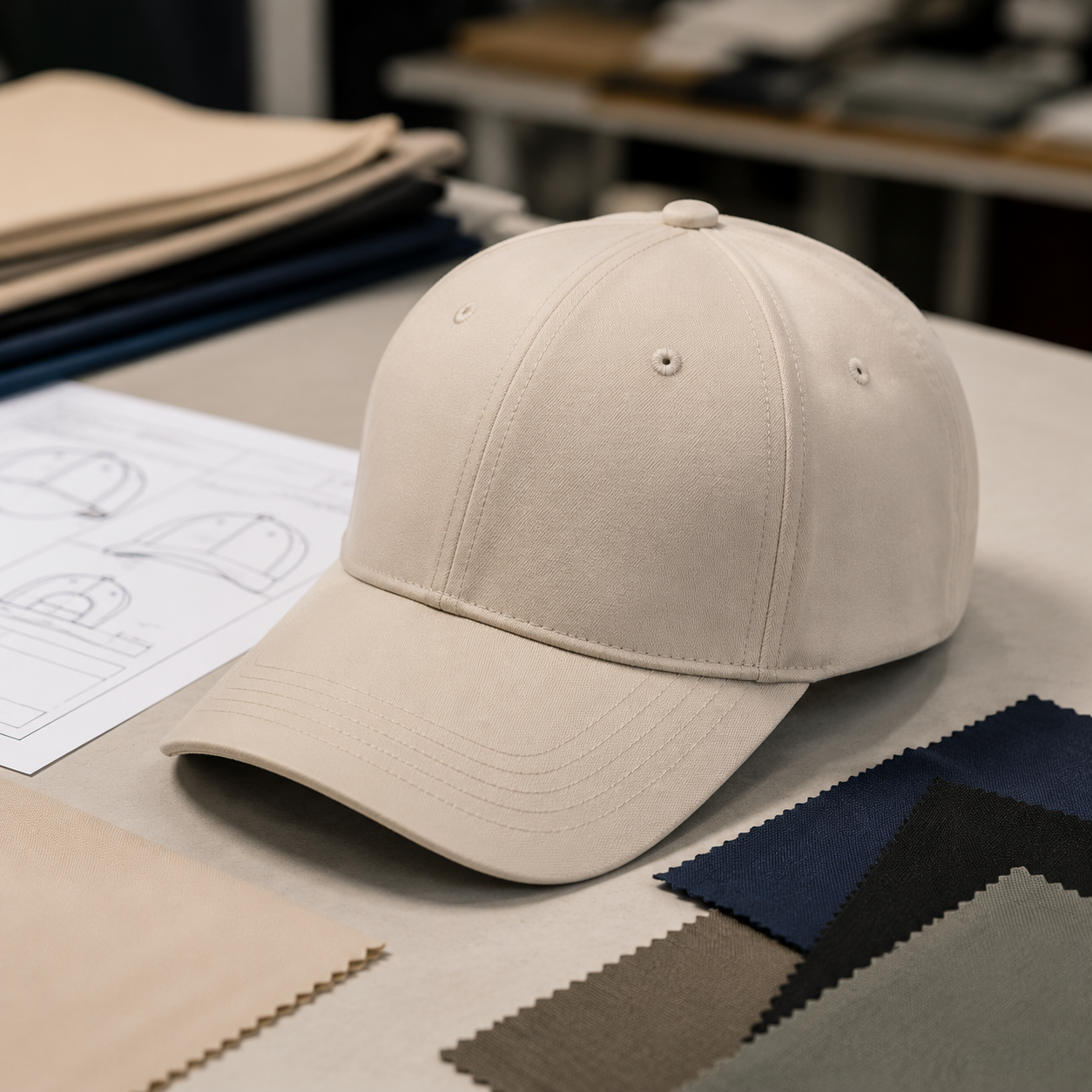
Cap fabric is purchased in rolls, typically 50â�00 meters per roll depending on width and weight. A single baseball cap requires approximately 0.15â�.20 square meters of fabric (accounting for cutting waste). One fabric roll can produce roughly 300â�00 caps.
If your custom design requires a specific Pantone-matched color, the supplier must purchase an entire roll of that dyed fabric. They cannot buy 10 meters for your 50-cap order. This is why color-specific MOQs are often higher than stock-color MOQs.
| Fabric Type | Roll Size (meters) | Caps per Roll | Typical Color MOQ |
|---|---|---|---|
| Cotton Twill (standard) | 50â�0m | 300â�00 | 300 pieces |
| Cotton Twill (custom dye) | 50m minimum | 250â�00 | 300â�00 pieces |
| Polyester Mesh | 60â�0m | 350â�50 | 300 pieces |
| Performance/Wicking Fabric | 40â�0m | 200â�50 | 250â�00 pieces |
2. Decoration Setup Costs
Custom decoration â�embroidery, screen printing, or heat transfer â�requires machine setup. For embroidery, this means programming the digitized design file, hooping the cap, and running test samples. For screen printing, this means creating screens for each color.
These setup costs are fixed regardless of order size. A supplier charging $150 for embroidery setup will charge the same whether you order 50 caps or 500. To amortize this cost reasonably, suppliers require minimums that make the per-unit decoration cost acceptable.
| Decoration Method | Setup Cost | Typical MOQ | Per-Unit Cost at MOQ |
|---|---|---|---|
| Embroidery (1 location) | $80â�150 | 100â�00 | $0.80â�1.50 |
| Screen Print (1 color) | $50â�100 | 100â�00 | $0.50â�1.00 |
| Heat Transfer | $30â�60 | 50â�00 | $1.00â�2.00 |
| Woven Patch Sew-On | $100â�200 | 200â�00 | $1.50â�3.00 |
3. Production Line Efficiency
Cap manufacturing involves multiple stations: cutting, embroidery/printing, sewing, finishing, and quality control. Switching between designs requires line reconfiguration, worker retraining, and quality verification. Small orders disrupt production flow and reduce overall factory output.
Most efficient cap production lines run at 300â�00 pieces per day for a single design. An order of 50 caps occupies the line for just a few hours â�the same line that could produce 500 units of another design. This opportunity cost is built into MOQ calculations.
Why Baseball Cap MOQs Vary by 200% or More Between Suppliers
According to Statista, the global headwear market is valued at over $30 billion annually, with custom branded caps representing the fastest-growing segment. This market size drives enormous variance in supplier business models.
A buyer requesting quotes for 100 custom baseball caps might receive responses ranging from "minimum 50" to "minimum 500." This variance reflects different business models, not different product quality:
- Large OEM factories (MOQ 300â�00): Focus on volume, efficiency, and major brand accounts. Lower per-unit costs but rigid minimums.
- Mid-tier manufacturers (MOQ 100â�00): Balance volume with flexibility. Slightly higher per-unit costs but more accommodating to smaller brands.
- Small batch specialists (MOQ 50â�00): Focus on startups, limited editions, and custom orders. Highest per-unit costs but lowest barriers to entry.
- Trading companies (MOQ 50â�00): Aggregate orders from multiple buyers to meet factory minimums. Add margin but reduce direct factory relationships.
See also: Baseball Cap Closure Types Compared for Wholesale Buyers
Strategies for Reducing MOQ Without Sacrificing Quality
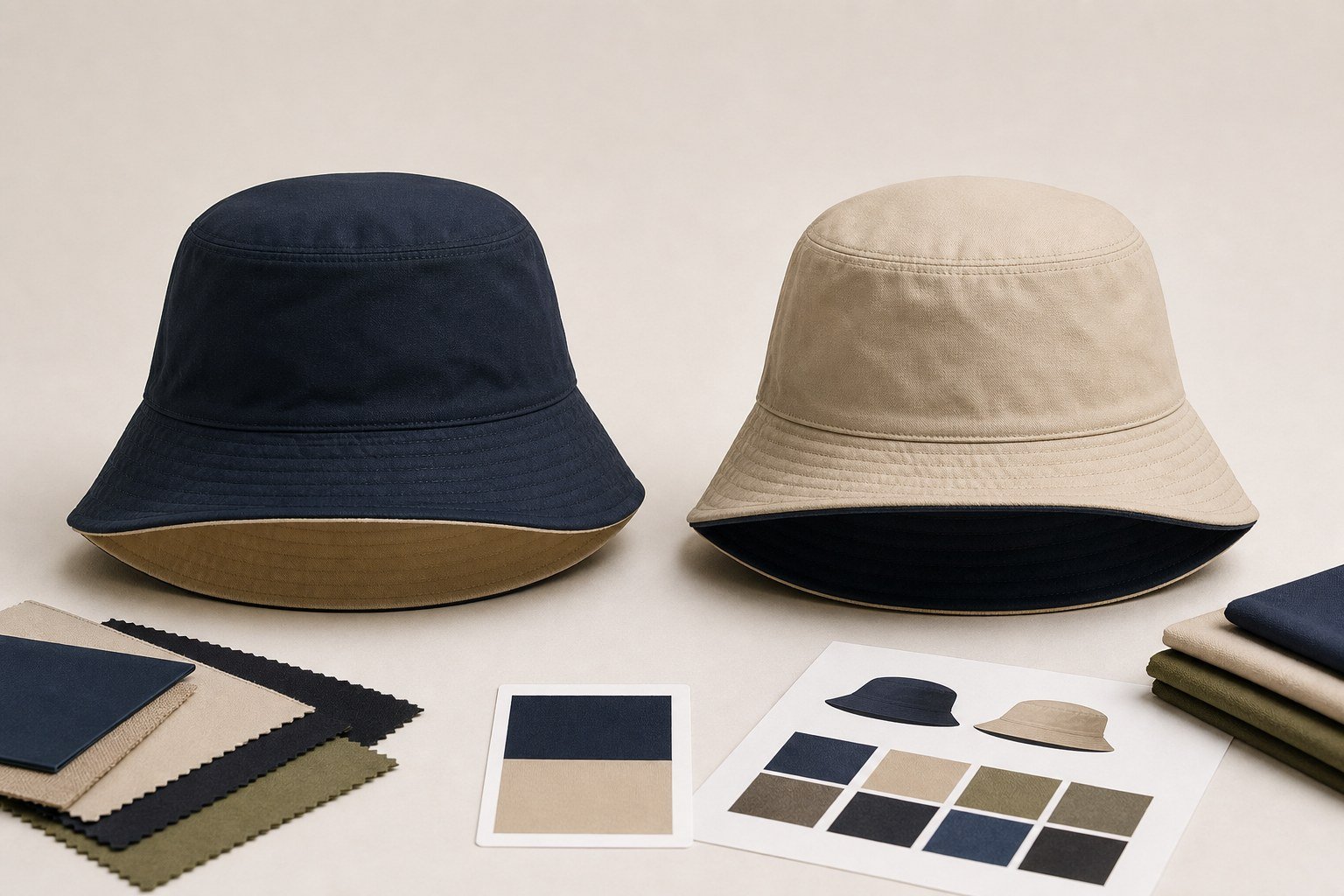
Strategy 1: Use Stock Colors Instead of Custom Dye
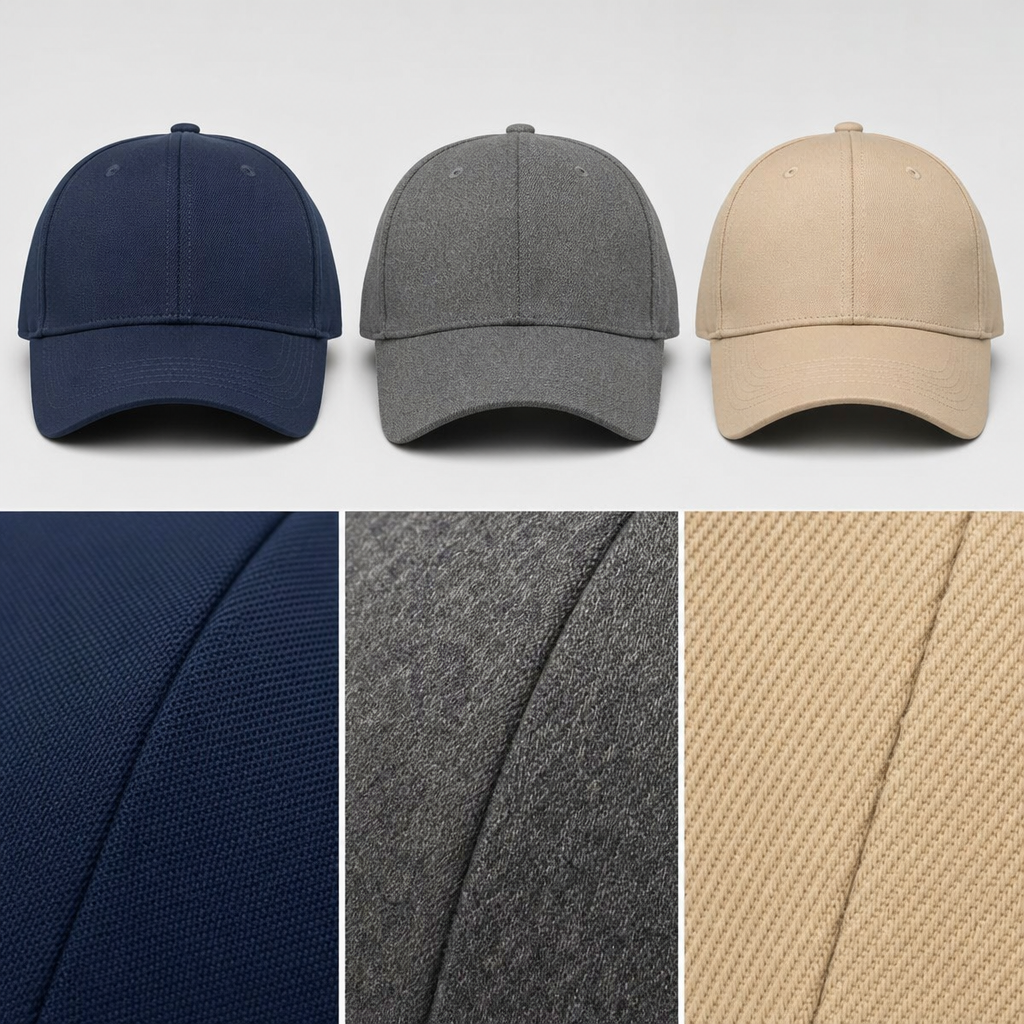
The single most effective MOQ reduction strategy is selecting stock colors rather than Pantone-matched custom dyes. Stock colors are fabrics the factory already holds in inventory. They can cut and sew immediately without fabric minimums.
| Approach | Typical MOQ | Cost Impact |
|---|---|---|
| Custom Pantone dye | 300â�00 pieces | Base price |
| Stock color selection | 50â�00 pieces | Base price or +5% |
| Stock color + stock blank | 24â�0 pieces | +15â�5% per unit |
Most established cap manufacturers maintain stock in black, navy, white, red, and khaki. Some carry 15â�0 stock colors. Requesting a color outside this range typically triggers the full fabric roll minimum.
Strategy 2: Simplify Decoration Specifications
Complex decoration drives MOQ up. A 6-color screen print requires 6 screens, 6 setups, and precise registration â�all of which favor larger orders. Simplifying decoration can reduce minimums significantly:
- Reduce color count: A 1-color print has lower setup costs and can run on smaller orders than a 4-color print.
- Choose embroidery over print for small orders: Embroidery setup is digitization-based; once the file is programmed, the per-unit cost is consistent regardless of color count (within reason).
- Limit decoration locations: A cap with front logo only has lower MOQ than front + side + back decoration.
- Use stock designs: Some suppliers offer pre-digitized embroidery designs or stock woven patches at lower minimums than fully custom artwork.
Strategy 3: Consolidate Styles Under One Order
If you need 50 caps in 5 different colors (10 each), you won't meet most MOQs. But if you can use the same base cap style across all colors, some suppliers will accept the combined 50-piece minimum as a single order.
This approach requires:
- Same cap construction (panel count, closure type, crown shape)
- Same fabric type (even if different colors)
- Same decoration specifications
The supplier produces all colors on the same line, reducing setup overhead per color variation.
Strategy 4: Negotiate Sampling and Pre-Production Orders
For buyers who genuinely cannot meet standard MOQs, some suppliers offer:
- Sampling orders (10â�5 pieces): Highest per-unit cost ($15â�30 per cap) but allows market testing before committing to bulk.
- Pre-production pilot runs (50â�00 pieces): Moderate per-unit cost ($8â�15 per cap) with the understanding that a larger order will follow if quality is acceptable.
- Shared production slots: Some factories aggregate multiple small orders to fill a production line. Your caps are produced alongside other buyers' caps, reducing your effective minimum.
Related: 6-Panel vs. 5-Panel Baseball Caps: Which Construction for Wholesale Orders?
MOQ Expectations by Buyer Type
For Startup Brands and Limited Editions
Typical need: 50â�00 pieces across 2â� colorways
Realistic approach:
- Target small-batch specialists or trading companies
- Use stock colors exclusively
- Simplify to 1-location embroidery
- Budget $8â�15 per unit (vs. $3â�6 at 500+ MOQ)
Critical specification: Request pre-production samples (3â� pieces) before committing to the full small-batch order. The higher per-unit cost of small orders makes quality verification essential.
For Corporate and Promotional Buyers
Typical need: 100â�00 pieces for events or uniform programs
Realistic approach:
- Mid-tier manufacturers are the sweet spot
- Custom colors become feasible at 200+ pieces
- 2â� color decoration is manageable
- Budget $4â�8 per unit
Critical specification: Confirm delivery timeline before ordering. Corporate events have fixed dates; missing them because of production delays is worse than paying slightly more for reliable delivery.
For Retail and E-commerce Brands
Typical need: 300â�00+ pieces per SKU
Realistic approach:
- Large OEM factories offer best pricing at this volume
- Full customization (custom dye, multi-location decoration) becomes cost-effective
- Consider 500+ MOQ for core colors, 100â�00 for test colors
- Budget $2.50â�5.00 per unit at volume
Critical specification: Establish quality control protocols. At volume, even a 2% defect rate means 10 problematic caps per 500. Specify acceptable quality levels (AQL) in your purchase order.
Communicating MOQ Requirements to Suppliers
Before requesting quotes, prepare the following specifications to receive accurate MOQ information:
Cap Specifications:
- Panel count (5-panel or 6-panel)
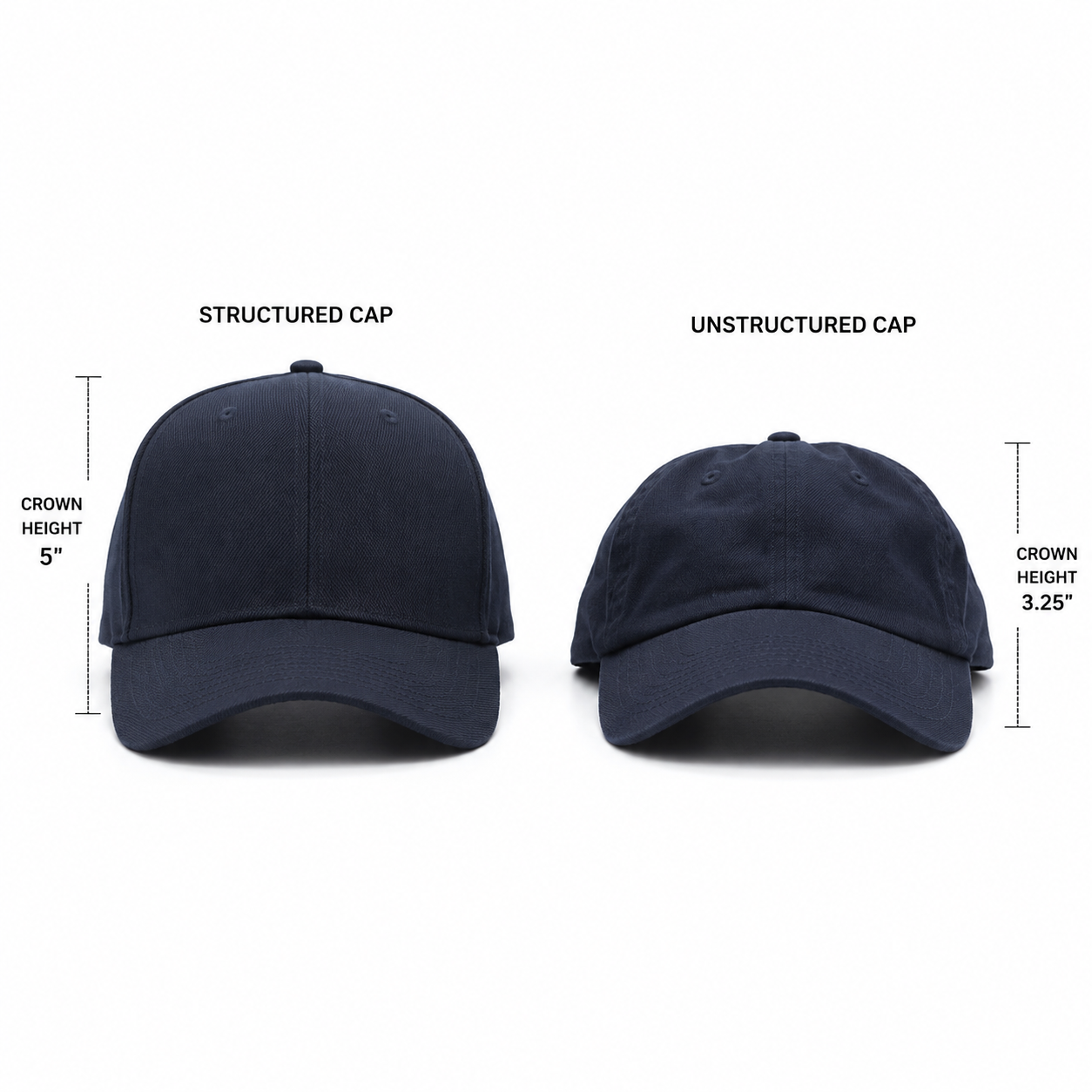
- Crown shape (structured or unstructured)
- Closure type (snapback, strapback, fitted, or flexfit)
- Fabric preference (cotton twill, polyester mesh, performance blend)
- Color (stock or custom Pantone)
Decoration Specifications:
- Method (embroidery, screen print, heat transfer, patch)
- Number of colors
- Number of locations (front, side, back)
- Approximate stitch count or print size
Order Specifications:
- Target quantity
- Number of colorways
- Delivery timeline
- Quality standard requirements
Sample Request:
- Pre-production sample requirement (yes/no)
- Sample cost acceptance
- Sample lead time tolerance
Failure to specify these details results in quotes that may not reflect actual MOQ once details are finalized.
Conclusion: MOQ Is Negotiable, But Not Arbitrary
Minimum order quantities for custom baseball caps are not arbitrary barriers designed to exclude small buyers. They reflect real costs in fabric procurement, decoration setup, and production efficiency. Understanding these underlying factors allows buyers to make strategic decisions that reduce effective MOQ without simply demanding exceptions.
The buyers who successfully navigate MOQ constraints are those who:
- Use stock colors when possible
- Simplify decoration specifications
- Consolidate styles to maximize production efficiency
- Build relationships with appropriately-sized suppliers
- Accept that lower MOQ typically means higher per-unit cost
For buyers who cannot meet any supplier's minimums, sampling orders and pre-production pilots provide a path to test the market before committing to larger quantities. For a deeper breakdown, see our baseball cap wholesale sourcing guide. For a factory-evaluation checklist, see our custom baseball cap manufacturer guide.
View wholesale Baseball Caps options and request custom MOQ quotes
Related: Read our baseball cap logo placement guide to prevent embroidery distortion and artwork approval delays.
Related: For artwork specs and placement standards, see our baseball cap logo placement wholesale guide with pre-production approval workflow.
Written by the Hongyuecap Product Team — 10+ years in B2B custom headwear manufacturing. Last updated: May 03, 2026.