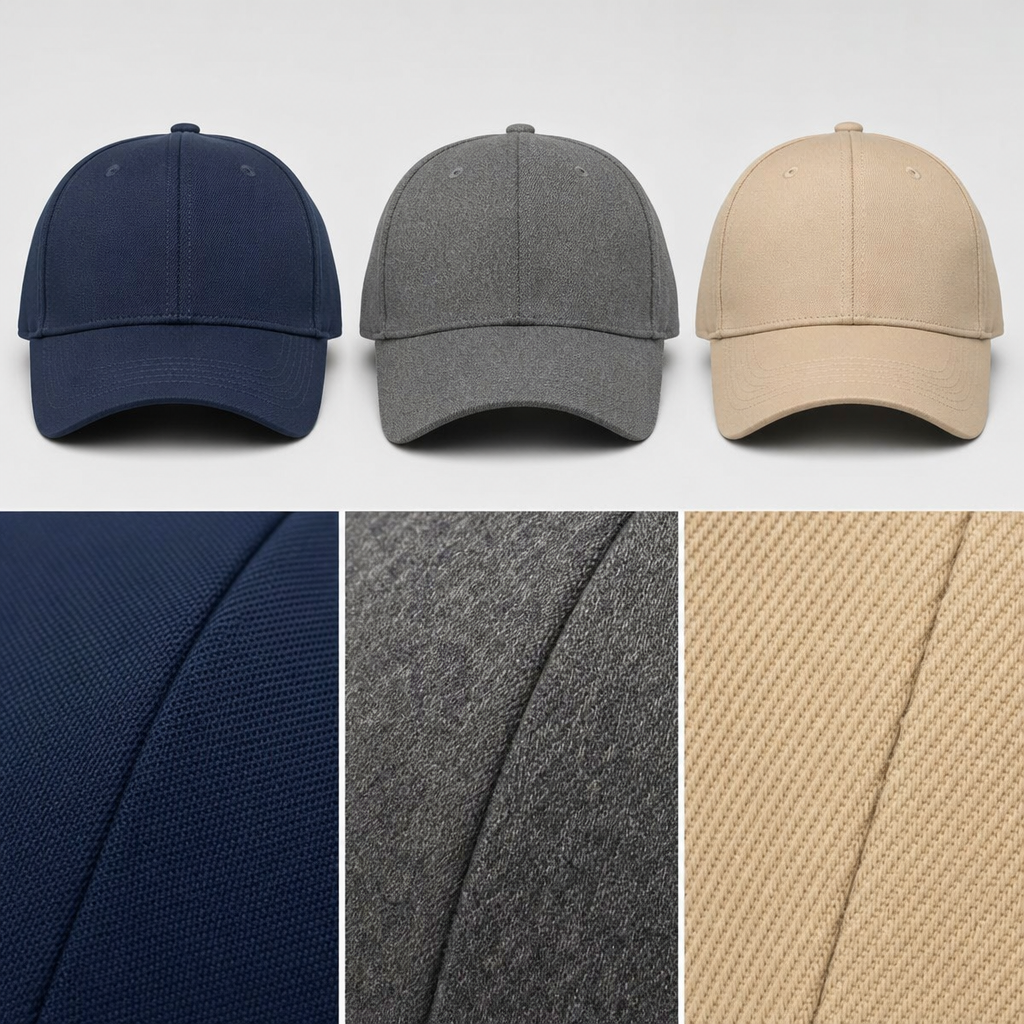
Brand buyers do not evaluate a custom baseball cap manufacturer only by asking whether the supplier can make a cap. They need to know whether the supplier can turn a sourcing brief into a repeatable bulk OEM or ODM order with clear MOQ, controlled sampling, stable logo execution, realistic production timing, and packaging that protects the goods during export.
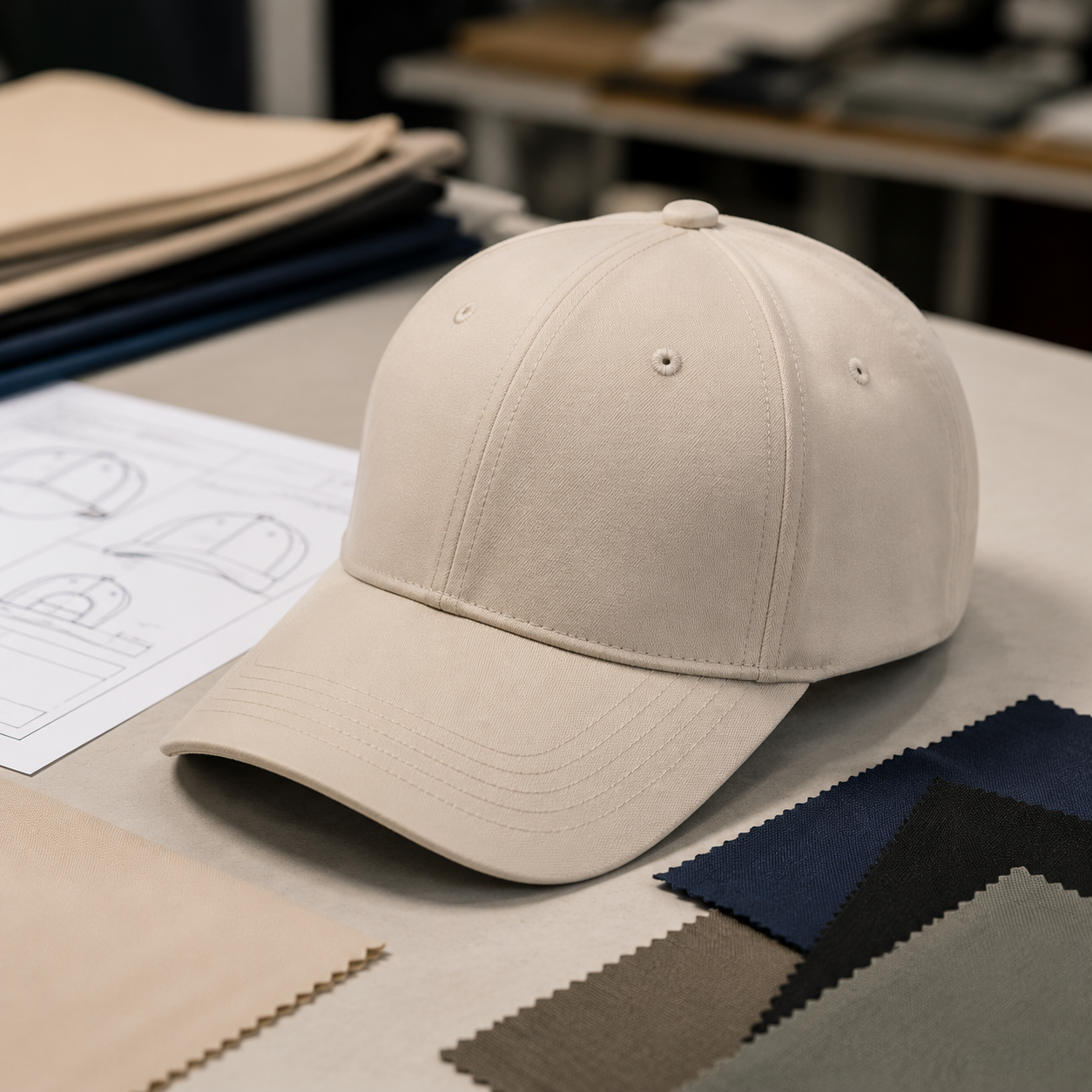
This is especially important when the buyer is working under a launch date, campaign calendar, distributor order, school program, corporate promotion, or wholesale replenishment plan. A baseball cap is a familiar product, but the order can still fail when the sampling details are loose, the logo method is not tested on the chosen cap structure, or the packing plan is left until the end.
The evaluation should start with the buyer's actual order goal. If the goal is a branded promotional program, the buyer needs clean logo placement, predictable color control, and fast approval steps. If the goal is a private label collection, the buyer needs material consistency, closure choice, branded trims, packing control, and a supplier who can support repeat orders. If the goal is a distributor or wholesaler program, the buyer needs a practical MOQ, stable carton data, and a clear contact path for quotation.
For product direction, use the live Baseball Cap Manufacturer page as the main category reference. For logo and cap customization options, use Customization as the working route. For repeated sourcing questions, route buyers to FAQ. When the specification is clear, the final action should be a quote request through Contact.
This article is written from the factory side for B2B buyers. It avoids unsupported document claims and avoids turning a sourcing decision into public shopping language. The goal is practical: help buyers judge a custom baseball cap manufacturer before committing to a bulk order.
Factory Proof Snapshot
This guide uses the approved HongYueCap fact register and current baseball cap operating facts. These are planning references for quotation, not a replacement for a formal order confirmation.
For most custom baseball cap styles, the standard MOQ is usually 300 pcs per logo and cap color. Small trial quantity can be reviewed, but the cost will be higher because the custom setup work still has to be handled. The usual sample fee is RMB 500 per style and color. Sample lead time is usually 3-10 days after details are confirmed. Bulk production lead time is usually 10-20 days after details and deposit are confirmed.
The usual payment arrangement for bulk orders is 30% deposit, with the balance paid after photo or video confirmation before shipment. Under normal scheduling, daily production capacity is about 3000 pcs. HongYueCap does not currently claim third-party certificates. For baseball caps, the usual packing reference is about 300 pcs per carton, with carton size around 70 x 40 x 50 cm and gross weight around 23 kg.
These details matter because a serious buyer is not only asking for a product. The buyer is asking whether the factory can support sourcing control. MOQ affects buying plan. Sample time affects campaign calendar. Packing data affects freight planning. Payment terms affect risk control. Production capacity affects whether the supplier can handle the order window.
The practical evaluation path is:
- RFQ intake with product type, logo file, quantity, destination, and delivery window.
- Cap structure review, including crown, brim, closure, material, and decoration method.
- Sample quotation and sample approval.
- Production confirmation after deposit.
- Photo or video confirmation before balance payment.
- Shipment arrangement after the balance is settled.
That path is more useful than a general supplier promise because it gives the buyer a checklist for action.
Main Buyer Problem
The main buyer problem is not finding a factory that says yes. The real problem is finding a custom baseball cap manufacturer that can protect the order from unclear specifications, avoidable sample revisions, and weak communication during production.
Many sourcing problems start at the RFQ stage. A buyer may send a logo, ask for a baseball cap quote, and expect an accurate answer. The factory may respond quickly, but the quote can still be incomplete if the cap structure, material, closure, logo method, packing request, and target quantity are not fixed. A quote without these details may look efficient in the inbox, but it can create disagreements after sampling starts.
A better RFQ gives the factory enough information to judge production risk. The buyer should include the product type, target quantity, cap color, logo artwork, logo size, logo position, preferred logo method, closure type, destination country, target delivery date, and any packaging expectation. If the buyer is not sure about the logo method, the factory should explain whether embroidery, print, patch, or another method fits the cap surface.
For baseball caps, structure is part of the commercial decision. A structured crown gives a different front-panel behavior than an unstructured cap. A curved brim behaves differently from a flat brim during packing and display. A snapback closure, metal buckle, hook-and-loop closure, or fabric strap can change buyer perception and cost planning. A small logo on the front panel is not the same production task as a large embroidery design crossing seams.
The buyer should also ask how the factory handles sample feedback. A good sample is not only a product photo. It is a decision point. The buyer should confirm whether the sample uses the intended fabric, whether the logo method is the one planned for bulk production, and whether the cap shape represents the target order. If the sample is only a rough reference, that should be clearly stated.
The root cause behind many weak orders is that buyers treat sampling as a visual step only. Sampling should be a control step. It should confirm structure, fabric, color direction, logo placement, decoration quality, closure choice, packing expectation, and timing. If these details are not confirmed before bulk production, the order may still be made, but the buyer may not receive the version that the sales team, distributor, or event manager expected.
The buyer action is straightforward: evaluate the manufacturer by the clarity of the process, not by the speed of the first reply. A serious factory should be able to ask follow-up questions, explain MOQ and sample timing, describe production lead time, and guide the buyer toward a cleaner quotation. Fast replies are helpful. Controlled replies are better.
Material / Construction Risk
Material and construction risk decides whether a baseball cap can be repeated in bulk with stable appearance. A buyer may focus on the logo because the logo is visible, but the cap itself carries the logo. If the crown, brim, stitching, fabric, and closure are not suitable for the program, the logo cannot solve the order problem.
For a baseball cap order, the first construction question is crown shape. A structured front panel supports embroidery differently from a soft unstructured cap. If the logo is dense, heavy, or uses several colors, the buyer should confirm whether the front panel can support the decoration without distortion. If the cap is meant for a relaxed fashion look, the buyer may prefer a softer cap, but that changes the logo execution and packing behavior.
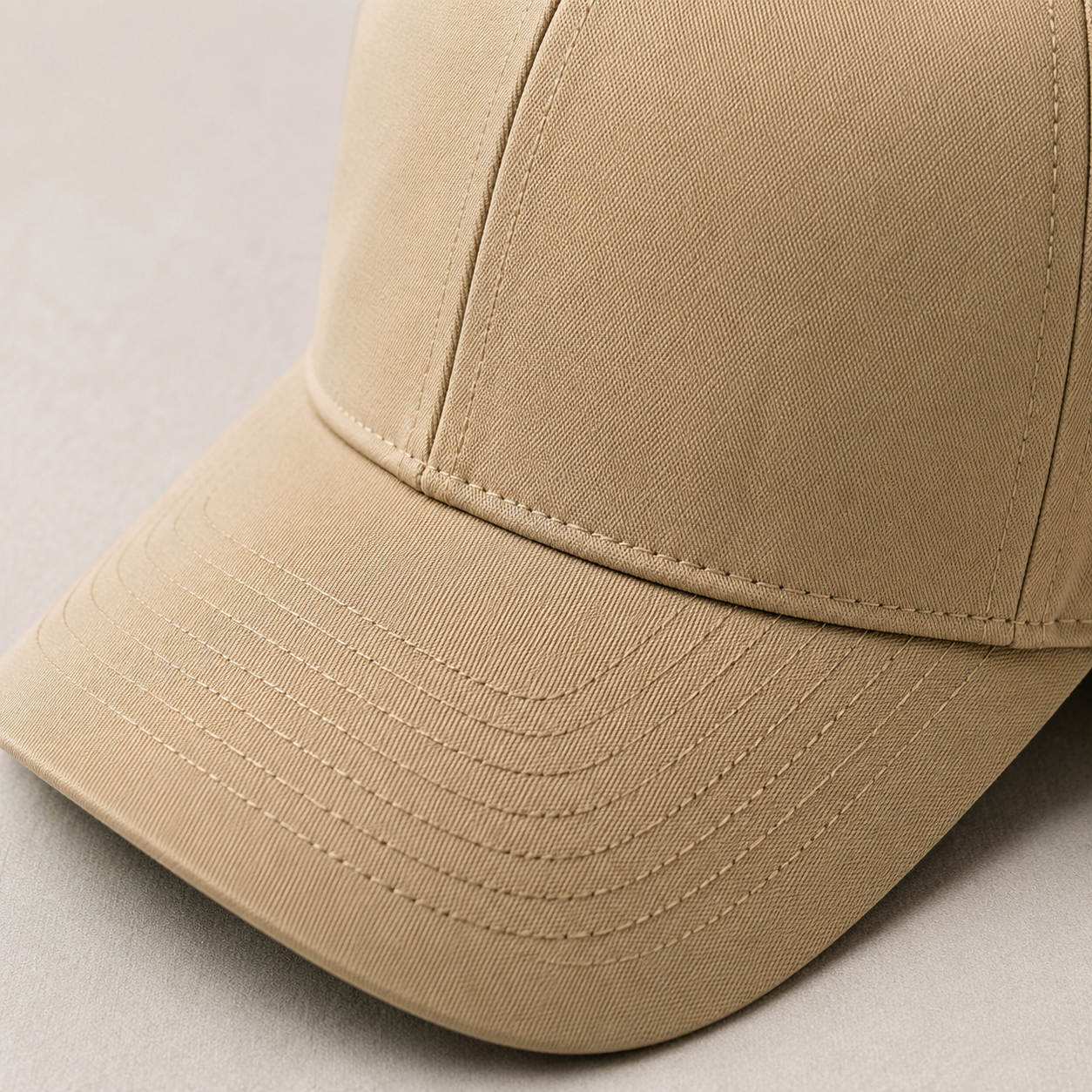
The second question is brim behavior. The brim affects appearance, comfort, and carton packing. A curved brim needs stable shape control. A flat brim needs edge and panel alignment. If the buyer wants a premium branded look, the brim should not be treated as a minor part. The buyer should ask whether the brim style matches the target market and whether the packing method protects the shape.
The third question is fabric. Cotton twill, polyester, blended fabric, washed fabric, and performance-style materials can support different programs. A promotional buyer may care about stable color and efficient production. A brand buyer may care more about hand feel, stitching, and repeatable presentation. A wholesaler may care about packing, reorder consistency, and predictable delivery. The material decision should match the business use, not only the product photo.
The fourth question is closure. A closure is small, but it affects user fit, perceived value, and production planning. Snapback, metal buckle, fabric strap, and hook-and-loop options all create different positioning. The buyer should not select closure only by habit. The closure should fit the brand story, the target market, and the cost plan.
The fifth question is logo method. Embroidery and print can both work, but they solve different problems. Embroidery often supports a more dimensional branded look. Print can support certain artwork types, color effects, or smoother surfaces. The buyer should provide the artwork file early so the factory can judge whether the logo method fits the cap panel and target quantity.
Good construction evaluation uses a simple logic: product structure first, logo method second, sample approval third. If the logo method is chosen before the cap structure is fixed, the buyer may approve an idea that does not behave well in production. If the cap structure is fixed before the logo artwork is reviewed, the buyer may miss a decoration risk. The manufacturer should help connect these decisions.
For image planning, article images should support this construction logic. A clean hero image can show the baseball cap as the order subject. A detail image should show crown panel, brim stitching, embroidery area, or closure review. A scenario image should show sample approval, packing review, or QC checklist. Generated images can be used as illustrative assets when real photos are unavailable, but they must not be described as real factory proof. Google's own guidance on helpful content and image context supports the idea that content should be useful, clear, and supported by relevant visual material rather than decorative filler: helpful content guidance and image best practices.
Supplier / MOQ / Sampling Risk
Supplier risk becomes visible when the buyer asks specific questions. A weak supplier may give a fast quote but avoid discussing the order conditions. A stronger custom baseball cap manufacturer should be able to explain MOQ, sample fee, sample time, production lead time, logo method, packing reference, and payment flow before the buyer sends payment.
MOQ is one of the most important signals. For most custom baseball cap styles, HongYueCap's standard custom MOQ is usually 300 pcs per logo and cap color. This does not mean every buyer must start with a large program before discussion. Small trial quantity can be reviewed, but the buyer should understand that custom setup cost does not disappear just because the quantity is smaller. Pattern review, logo setup, material preparation, sample handling, production coordination, and packing still take time.
That distinction matters for B2B buyers. A brand buyer may need a smaller validation run before a larger seasonal program. A promotional buyer may need the order to match a fixed event budget. A wholesaler may prefer a clean 300 pcs starting point to protect unit economics and carton planning. The factory should explain the tradeoff honestly instead of pushing a vague low-MOQ promise.
Sampling risk is the next issue. The usual sample fee is RMB 500 per style and color, and sample lead time is usually 3-10 days after details are confirmed. The phrase "after details are confirmed" is important. Sample time cannot be judged correctly if the buyer has not provided logo file, color reference, cap structure, decoration method, and quantity direction. If those inputs keep changing, the sample process will stretch.
The buyer should treat the sample as the contract language of the product. The sample should confirm crown shape, brim curve, fabric, logo size, logo placement, decoration method, closure, stitching, color direction, and packing assumption. If the sample is approved with vague notes, the production team has to interpret the buyer's intent later. That is not a strong B2B control process.
Production timing should also be checked before the buyer commits. Bulk production lead time is usually 10-20 days after details and deposit are confirmed. If the order requires special material, special trim, a complex embroidery design, special carton labeling, or strict delivery timing, the buyer should ask whether that changes the production schedule. A serious manufacturer should not promise a fixed timeline without reviewing the order.
Payment terms should support both sides. The usual arrangement is 30% deposit, with balance paid after photo or video confirmation before shipment. This gives the factory a production commitment and gives the buyer a confirmation step before shipment. The buyer should ask what photo or video confirmation will include. Useful confirmation may show product overview, logo placement, packing condition, carton labels, or other agreed points.
The buyer action is to compare suppliers by controllability. Ask:
- Can the factory explain standard MOQ and the tradeoff for smaller custom quantity?
- Can the factory state sample fee and sample timing clearly?
- Can the factory explain which details must be confirmed before sampling?
- Can the factory describe bulk lead time after deposit and final detail confirmation?
- Can the factory confirm payment and pre-shipment photo or video flow?
- Can the factory connect logo method to cap structure rather than treating them separately?
These questions help buyers filter out vague suppliers before money, time, and brand risk are involved.
Production / Packing Evidence
Production evidence should be practical. Buyers do not need a long story about the factory. They need to know what will happen after approval.
For a baseball cap order, the process should begin with order confirmation. The buyer sends final artwork, cap style, material direction, cap color, logo method, quantity, packing requirement, destination, and delivery timing. The factory confirms the production version, deposit, and schedule. If the sample has already been approved, production should follow the approved sample and agreed notes.
During production, the key control points are cap structure, fabric consistency, panel alignment, brim shape, logo placement, stitching, closure, thread color, and finishing. If the order uses embroidery, the buyer should pay attention to logo density, backing, edge cleanliness, and whether the design sits correctly on the front panel. If the order uses print, the buyer should pay attention to artwork clarity, color behavior, surface match, and durability expectation.
Packing should not be left as an afterthought. For baseball caps, the usual packing reference is about 300 pcs per carton, carton size around 70 x 40 x 50 cm, and gross weight around 23 kg. This helps buyers estimate logistics discussion, warehouse planning, and receiving expectations. If the buyer needs special packing, the factory should review that before production closes because packing can affect carton quantity, freight space, and product shape.
Photo or video confirmation before shipment should be treated as a quality checkpoint, not just a courtesy. The buyer can ask the factory to show the finished cap, logo area, carton packing, and any agreed label or packing detail. This step does not replace a full third-party inspection when one is required by the buyer, but it helps reduce misunderstandings before the balance payment and shipment arrangement.
HongYueCap does not currently claim third-party certificates. This should be stated clearly rather than hidden. For many B2B buyers, transparency is more useful than unsupported claims. If a buyer needs specific program documents, that requirement should be raised before quotation and treated as a separate qualification question.
Production evidence also includes communication behavior. A reliable manufacturer should not disappear after deposit. The buyer should expect clear confirmation points: sample approval, production start, production status when needed, photo or video confirmation, payment balance, and shipment arrangement. The workflow is part of the product.
QC Checklist
- Crown and panel check: Confirm structured or unstructured crown behavior, front-panel stability, panel alignment, and whether the logo area supports the planned decoration method.
- Brim check: Confirm brim curve or flat shape, edge finish, stitch line consistency, and whether packing pressure can affect the final shape.
- Logo method check: Confirm embroidery or print method, logo size, placement, thread or color direction, and whether the sample reflects the bulk production plan.
- Closure and fit check: Confirm closure type, strap or buckle quality, size range expectation, and whether the closure matches the target buyer program.
- Packing and shipment check: Confirm carton quantity, carton size, carton weight, packing method, label requirement, and photo or video confirmation before shipment.
This checklist should be used before sample approval and again before bulk shipment confirmation. The goal is not to create extra paperwork. The goal is to prevent a buyer from discovering a production issue only after the goods arrive.
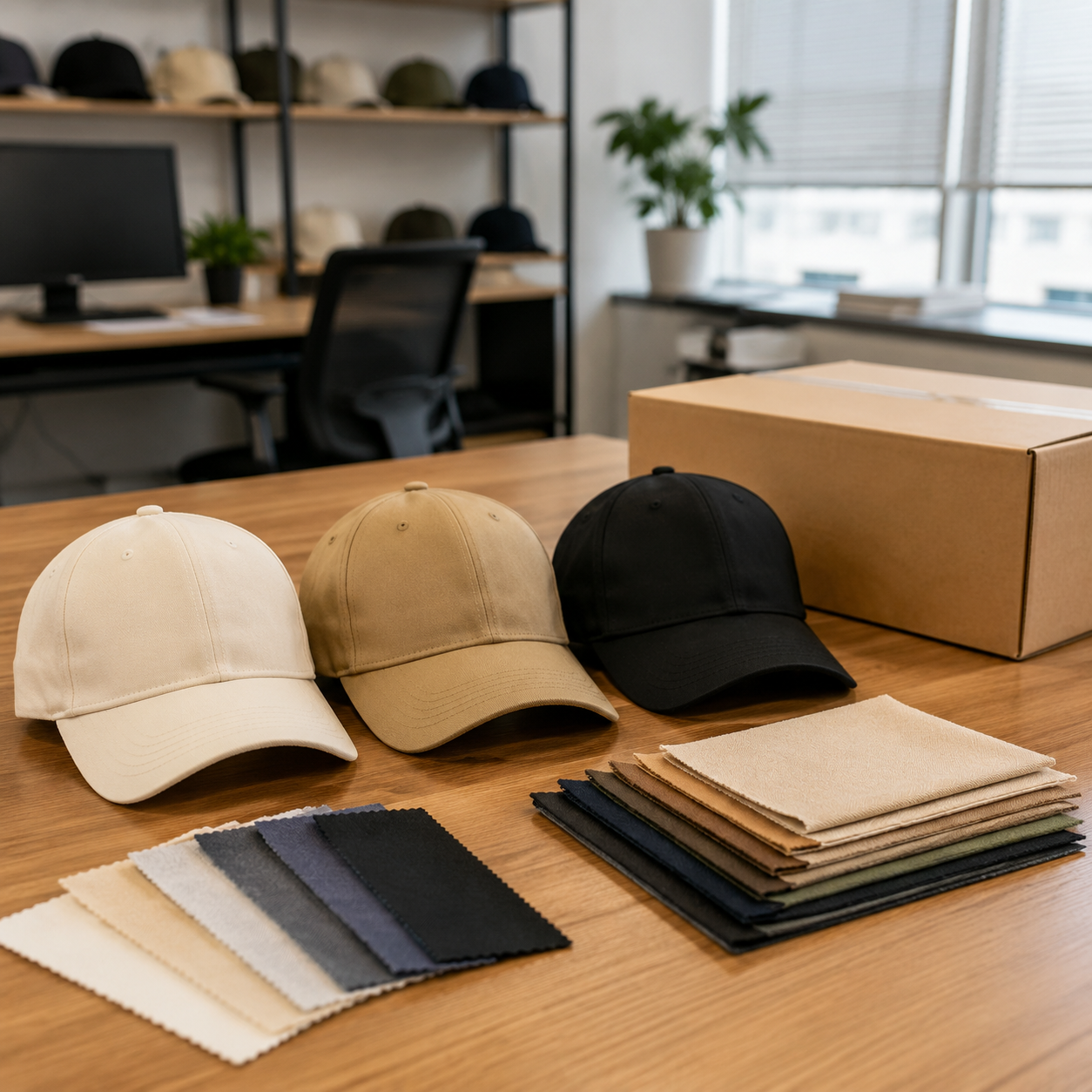
Buyer Decision Framework
A strong sourcing decision can be built in five steps.
First, define the buyer role and order purpose. A brand buyer, promotional buyer, wholesaler, school program buyer, and distributor may all order baseball caps, but they do not evaluate the same risk in the same way. The order purpose decides whether the buyer should prioritize logo finish, delivery speed, reorder stability, cost control, packaging, or premium feel.
Second, define the product structure before finalizing the logo method. The buyer should decide crown shape, brim style, fabric direction, closure type, and color direction. Then the logo method can be reviewed against the cap structure. This avoids the common problem where the logo idea looks good in a file but does not work cleanly on the chosen cap.
Third, use MOQ and sample timing as planning tools. The standard custom MOQ is usually 300 pcs per logo and cap color for most styles. Small trial quantity can be discussed, but higher cost should be expected. Sample fee is usually RMB 500 per style and color. Sample time is usually 3-10 days after details are confirmed. These facts help the buyer decide whether the order is ready for sampling or still needs specification work.
Fourth, confirm bulk production and payment flow before production begins. Bulk production lead time is usually 10-20 days after details and deposit are confirmed. The usual payment path is 30% deposit, with balance paid after photo or video confirmation before shipment. Buyers should ask what the confirmation will show and whether any special packing or label requirement affects the timeline.
Fifth, connect the article or landing page path back to inquiry. A blog article should support the money page, not replace it. This guide should send buyers to the Baseball Cap Manufacturer page for product direction, Customization for logo and OEM or ODM options, FAQ for repeated sourcing questions, and Contact for the actual quote request.
This framework also supports SEO and GEO quality. Google and AI answer systems do not need more generic cap articles. They need pages that show original factory-side information, clear buyer intent, and a real path from question to quote. A 3000-word article is not valuable because it is long. It is valuable only when the length is used to explain real sourcing decisions, approved factory facts, and buyer actions.
FAQ
What MOQ should buyers expect from a custom baseball cap manufacturer?
For most custom baseball cap styles, the standard MOQ is usually 300 pcs per logo and cap color. Small trial quantity can be reviewed, but cost is usually higher because custom setup work is still required. Buyers should share the target quantity early so the factory can suggest a practical order path.
How long does baseball cap sampling usually take?
Sample lead time is usually 3-10 days after details are confirmed. The buyer should provide logo file, cap color, material direction, logo method, quantity direction, and delivery expectation before the sample schedule is judged. Unclear or changing specifications can slow the sample process.
What should buyers confirm before bulk baseball cap production?
Buyers should confirm cap structure, material, logo method, logo size, logo position, closure, sample approval notes, packing reference, carton data, payment terms, and the photo or video confirmation process before shipment. These points reduce misunderstanding and help protect the order.
Does HongYueCap claim third-party certificates for baseball caps?
HongYueCap does not currently claim third-party certificates. If a buyer needs specific project documents, the requirement should be discussed before quotation so the factory can confirm whether the program can be supported.
How are baseball caps usually packed for bulk orders?
The common baseball cap packing reference is about 300 pcs per carton, with carton size around 70 x 40 x 50 cm and gross weight around 23 kg. Special packing requirements should be confirmed before production because they may affect carton quantity, freight planning, and product shape protection.
CTA
If you are comparing custom baseball cap manufacturers for a bulk OEM or ODM order, send your logo file, target quantity, cap style, cap color, preferred logo method, destination country, expected delivery window, and sample requirements through the Get Free Custom Quote page.
HongYueCap can review the cap structure, MOQ path, sample timing, logo method, packing reference, and production schedule before quotation. A clear RFQ helps both sides reduce revisions and move from sample approval to bulk production with fewer surprises.