
Baseball Cap Decoration Methods for Wholesale Buyers
“We ordered 500 embroidered caps and the logo looked great on the sample — but on bulk delivery, half the designs were distorted, stitches were pulling through the front panel, and the fine text was completely illegible. The supplier said ‘that’s normal for this fabric.’ We lost a corporate client.”
— Wholesale buyer, Atlanta promotional products distributor
If you’ve ever received a shipment where the decoration didn’t match the approved sample, you already know: choosing the right baseball cap decoration method is not just about aesthetics. It determines your defect rate, your per-unit cost, your minimum order flexibility, and whether your client reorders or walks away.
This guide compares the three dominant baseball cap decoration methods wholesale buyers rely on — DTF (Direct-to-Film) printing, embroidery, and patch application — across the dimensions that actually impact your bottom line: artwork compatibility, cost at different quantities, durability after washing, and what panel types each method works on. By the end, you’ll know exactly which method to specify for your next order, and what to put in your QC checklist so you never receive a surprise batch of unsellable caps again.
1. DTF Printing on Baseball Caps: When Full-Color Detail Matters More Than Texture
DTF — Direct-to-Film — is the newest of the three methods and has rapidly become the go-to solution for buyers who need photographic detail, gradients, or small text on caps. Unlike traditional screen printing which requires separate screens for each color, DTF prints the entire design onto a PET film, applies a hot-melt adhesive powder, and then heat-presses the film onto the cap fabric in a single transfer.
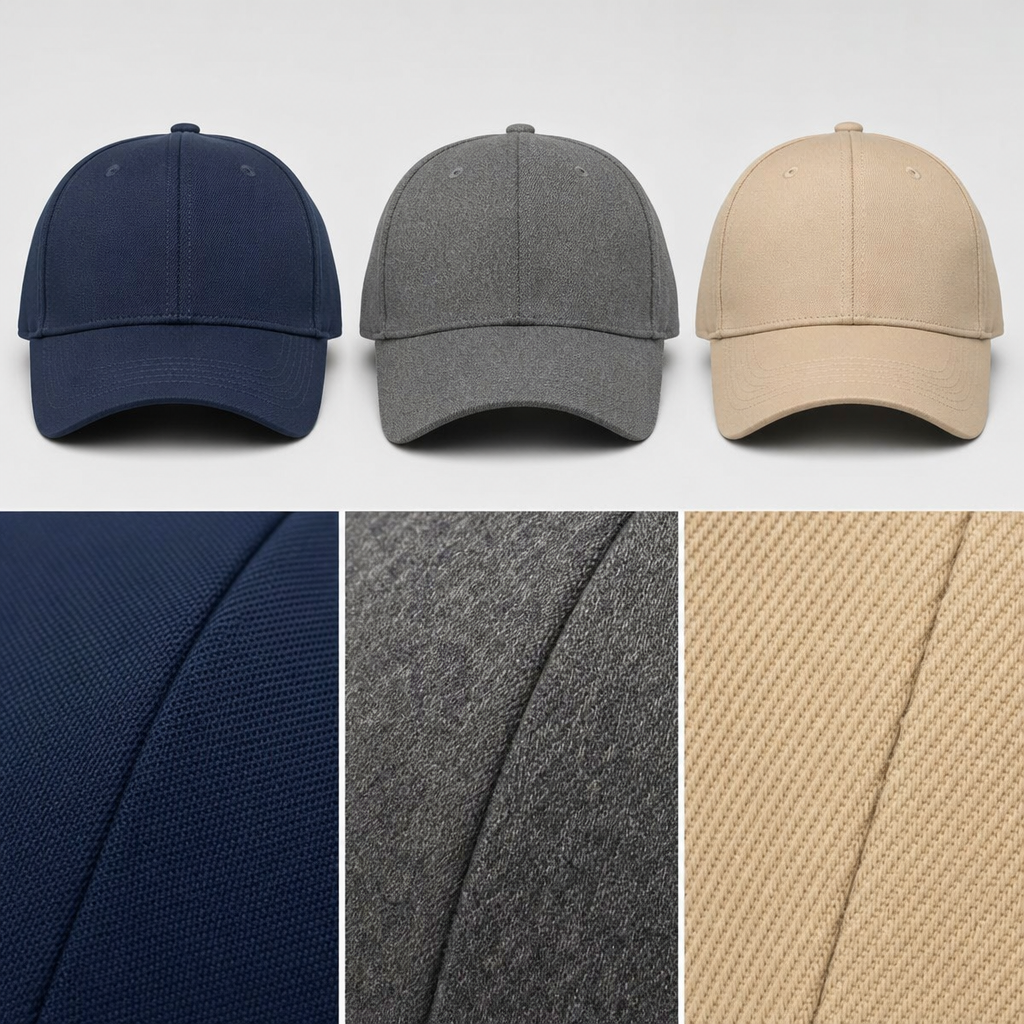
The critical advantage for wholesale buyers is color fidelity at any quantity. Because DTF doesn’t require screen setup costs, the per-unit price stays nearly flat from 50 pieces to 5,000 — there’s no color separation charge, no screen burning, no minimum color count premium. A buyer ordering 100 caps with a 6-color gradient logo pays roughly the same per-unit price as someone ordering 1,000. This makes DTF the most accessible method for startup brands, test orders, and seasonal limited drops where minimum order quantities (MOQ) are a dealbreaker.
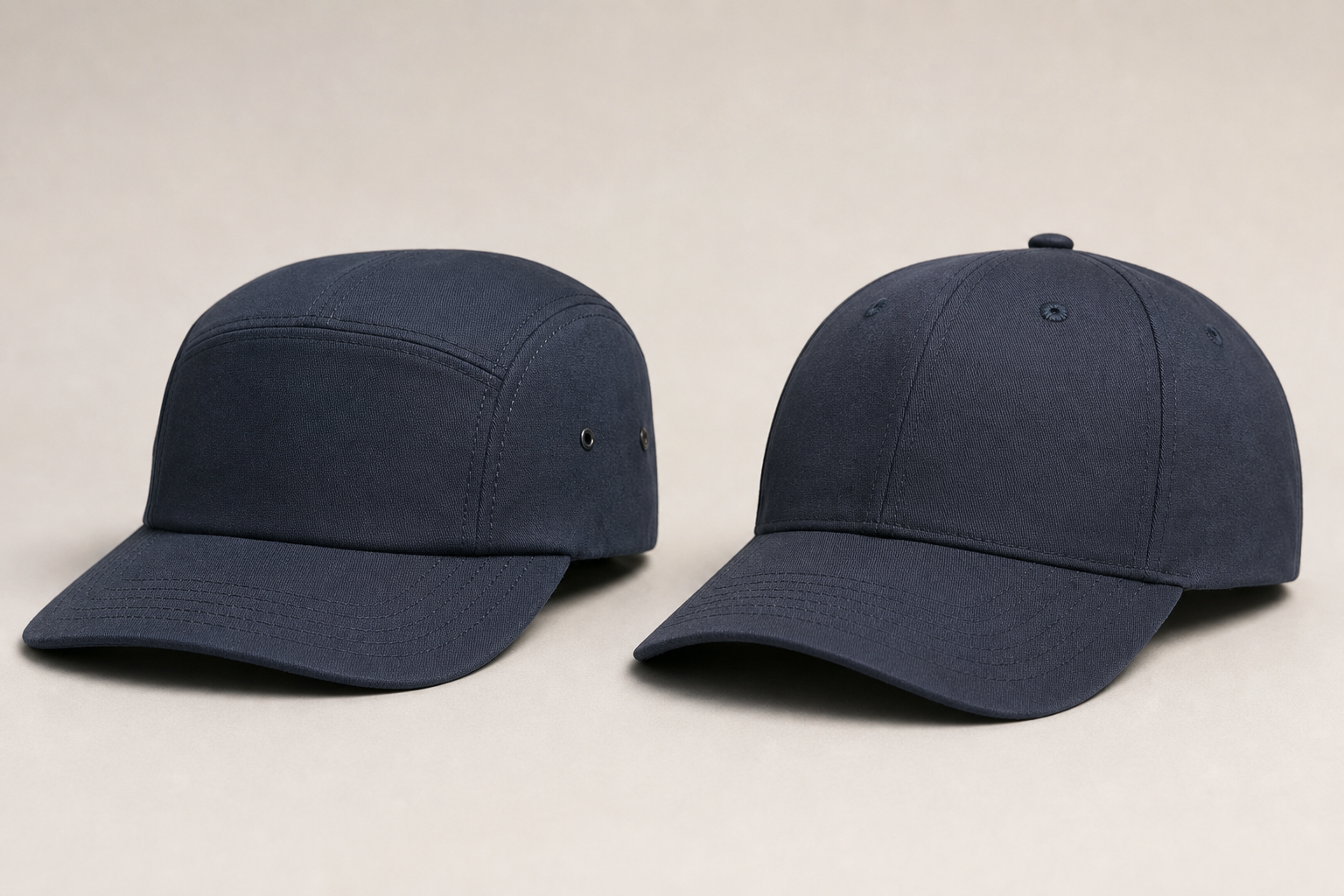
But DTF has structural limitations that every wholesale buyer should understand before committing to a production run. DTF transfers sit on top of the fabric rather than penetrating the fibers like embroidery — this means the transfer has a hand-feel texture, and on structured fronts with a center seam (like traditional 6-panel baseball caps), the seam can create a ridge that interrupts print adhesion. DTF works best on 5-panel caps with flat, seamless front panels, where the smooth surface allows uniform heat press contact. On curved 6-panel fronts, the center seam creates a pressure gap during pressing that can cause edge lifting after repeated wear.
Durability expectation: DTF transfers typically survive 40–60 industrial wash cycles before showing edge degradation. For promotional giveaways or one-season retail, this is more than sufficient. For workwear caps expected to survive daily machine washing for years, embroidery or patches will outlast DTF. The wash-down process also matters — DTF transfers can develop micro-cracking if washed in hot water (above 60°C), so if your end customer is a construction crew or outdoor labor force, specify cold-wash care instructions on the hangtag.
QC checklist for DTF caps:
- Press a test transfer on the actual production fabric — not a swatch from a different bolt
- Check edge adhesion at the center seam area (6-panel) or perimeter (5-panel)
- Wash-test 3 random samples from the production line before approving bulk shipment
- Inspect for color shift: DTF colors can appear 5–10% lighter on dark polyester than on cotton
- Verify that the transfer doesn’t create a “plastic patch” feel that cheapens perceived quality
2. Embroidery on Baseball Caps: Why Structured Cotton Panels Are Non-Negotiable
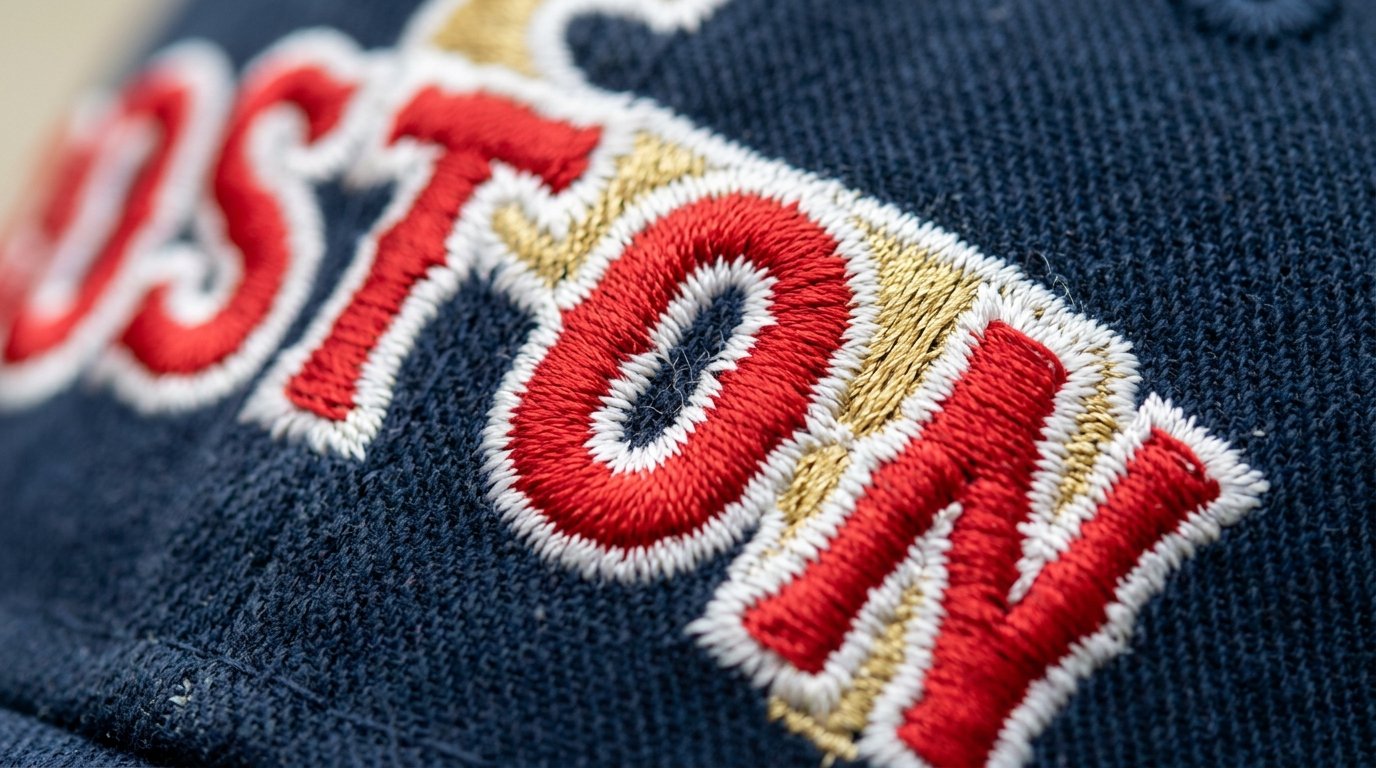
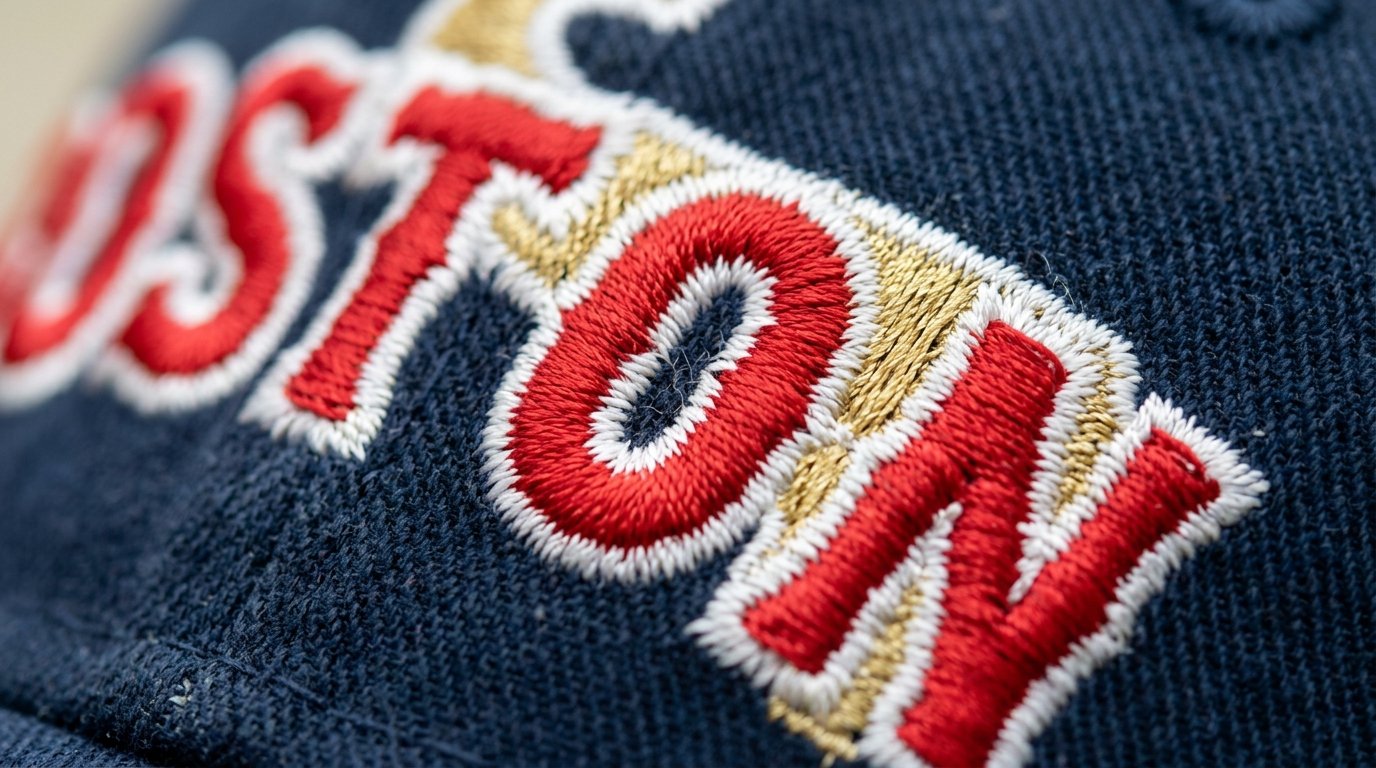
Embroidery remains the perceived premium standard for baseball cap decoration — it’s what Fortune 500 companies choose for corporate merch, what sports leagues use for on-field caps, and what luxury streetwear brands rely on to communicate quality. But embroidery is also the method most likely to fail in production if the buyer doesn’t understand how fabric, panel structure, and digitization interact.
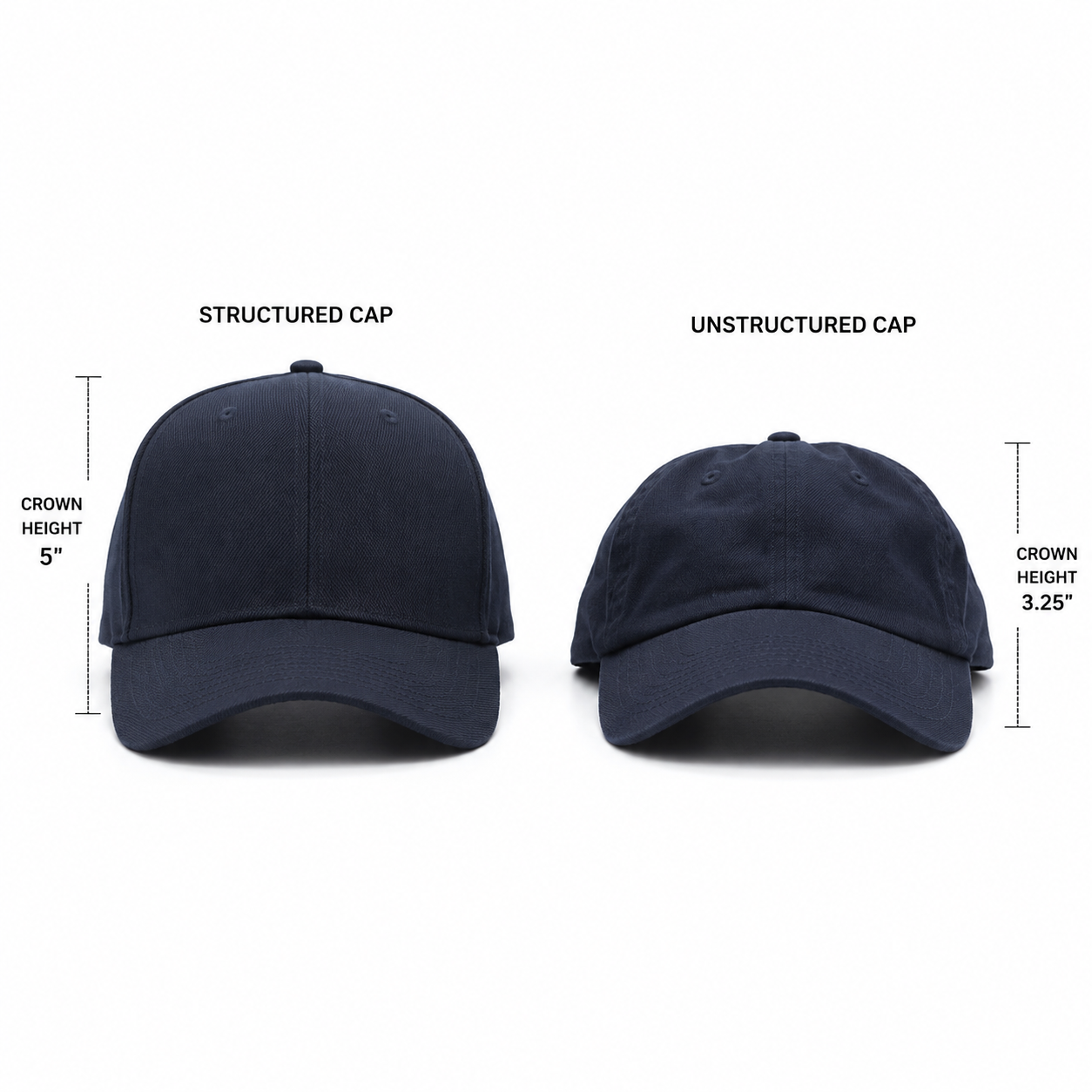
The fundamental rule of cap embroidery: the front panel must be structured. Embroidery needles punch through fabric at high speed — typically 600–850 stitches per minute — and an unstructured (soft-crown) cap will pucker, shift, or collapse under needle pressure, causing distortion in the design. Structured panels with a fused buckram backing provide the rigid substrate the embroidery frame needs to maintain tension. This is why 6-panel structured caps dominate the embroidery market: the center seam actually helps stabilize the fabric during stitching, and the buckram backing prevents the needle from pulling the fabric into the machine throat plate.
Digitization is where most wholesale buyers lose money. Embroidery machines don’t read JPEG or PNG files — they read stitch files (.DST, .PES, .EXP) that define every needle penetration point, thread color change, and trim command. The conversion from artwork to stitch file is called digitization, and a poorly digitized design will have visible issues immediately: pull compensation errors where the design looks stretched on one axis, underlay stitching gaps that cause the top thread to sink into the fabric pile, density problems where too many stitches per square inch cause fabric perforation (the “postage stamp” effect where you can tear the design out along the stitch line).
A professional digitizer charges $15–$50 per design depending on stitch count and complexity, and this is not a corner worth cutting. Buyers should request a sew-out sample on the actual cap fabric — not on a flat hooped piece of twill — because cap embroidery is embroidered on a curved cap frame, and the curvature affects stitch tension. A design that looks perfect on a flat sample can show puckering or gapping when embroidered on a 3D curved surface.
Thread material matters for margin: Polyester embroidery thread costs roughly $3–$5 per 5,000-meter cone and provides excellent colorfastness and tensile strength — it’s the industry default for promotional and mid-market caps. Rayon thread costs $6–$10 per cone and delivers higher sheen, making it the preferred choice for premium fashion caps where “luster” is a selling point. The difference on a 5,000-stitch logo is about $0.02 per cap in thread cost, but the visual difference at retail is significant enough that many buyers upgrade to rayon for their premium SKU. Metallic threads (used for high-visibility sports logos) cost 3–5× more and require slower machine speeds to prevent thread breakage, adding approximately $0.15–$0.30 per cap in combined material and labor.
QC checklist for embroidered caps:
- Request sew-out sample on the actual curved cap — not flat fabric
- Check stitch density: too dense = fabric perforation; too sparse = loose threads
- Inspect for thread trims: loose thread tails are the #1 embroidery quality complaint
- Test colorfastness: rub a white cloth on the embroidery under friction; check for dye transfer
- Verify backing material: tear-away backing is standard for caps; cut-away is for knits and stretch fabrics
- Check logo registration across 10 random samples — embroidery frame misalignment causes drift
3. Patch Decoration on Baseball Caps: The Durability-First Option for Workwear and Outdoor Brands
Patch decoration occupies a unique position in the baseball cap decoration ecosystem: it’s simultaneously the most durable method and the one with the highest perceived casual appeal. A woven or embroidered patch sewn or heat-sealed onto a cap can survive industrial washing, UV exposure, and physical abrasion that would destroy DTF transfers and fray embroidery thread. For workwear brands, outdoor gear companies, and uniform programs where caps are expected to last 2–3 years of daily use, patches are often the only decoration method that meets durability specifications.
There are three distinct patch types that wholesale buyers should differentiate:
Woven patches use thin polyester threads woven together on a jacquard loom, achieving extremely fine detail — 50–100 threads per inch is typical — making them ideal for small text, intricate logos, and designs with fine lines. Woven patches have zero pile height, meaning they sit nearly flush on the cap surface. They’re the most common choice for outdoor and tactical brands because they don’t trap dirt, mud, or moisture in raised thread loops.
Embroidered patches are stitched onto a fabric backing (usually twill or felt) using the same embroidery process described above, then cut to shape and attached to the cap. They offer a classic textured look with raised thread loops that catch light and create depth. The trade-off: embroidered patches are thicker (1.5–2.5mm including backing) and the raised threads can snag on equipment straps, backpack mesh, or Velcro. For military, law enforcement, or construction applications, the snagging risk rules out embroidered patches in favor of woven.
PVC (rubber) patches are molded from soft PVC compound and offer near-indestructible durability. They’re fully waterproof, colorfast under extreme UV, and can be cleaned with solvents. The downside: PVC patches are heavy (5–10g per patch vs 2–4g for woven), can’t reproduce photographic gradients (they’re limited to solid color zones), and there are growing environmental concerns about PVC production in markets with strict sustainability requirements like the EU and California.
Attachment method is a secondary decision that impacts cost and flexibility. Sew-on attachment adds approximately $0.30–$0.50 per cap in labor but is permanent and machine-washable. Heat-seal (iron-on) backing costs less in labor ($0.10–$0.20 per cap) but can delaminate after 20–30 wash cycles, especially on synthetic fabrics where the adhesive doesn’t bond as well as on cotton. For promotional caps expected to last one season, heat-seal is cost-efficient. For uniform programs, sew-on is mandatory. Some buyers choose a hybrid: heat-seal for initial positioning then a single bar-tack stitch at each corner for permanence — this adds about $0.40 per cap but guarantees neither delamination nor edge curling.
QC checklist for patch caps:
- Specify attachment method in the PO — don’t let the factory default to heat-seal
- Pull-test 5 random patches: apply 5 lbs of lateral force; patch should not lift at edges
- Check merrow border (woven patches): loose border stitching = patch unravels in wash
- For PVC patches, verify RoHS compliance if shipping to EU markets
- Wash-test with the actual end-user wash protocol — industrial laundry is harsher than home machines
4. Head-to-Head Comparison: DTF vs Embroidery vs Patch for Wholesale Buyers
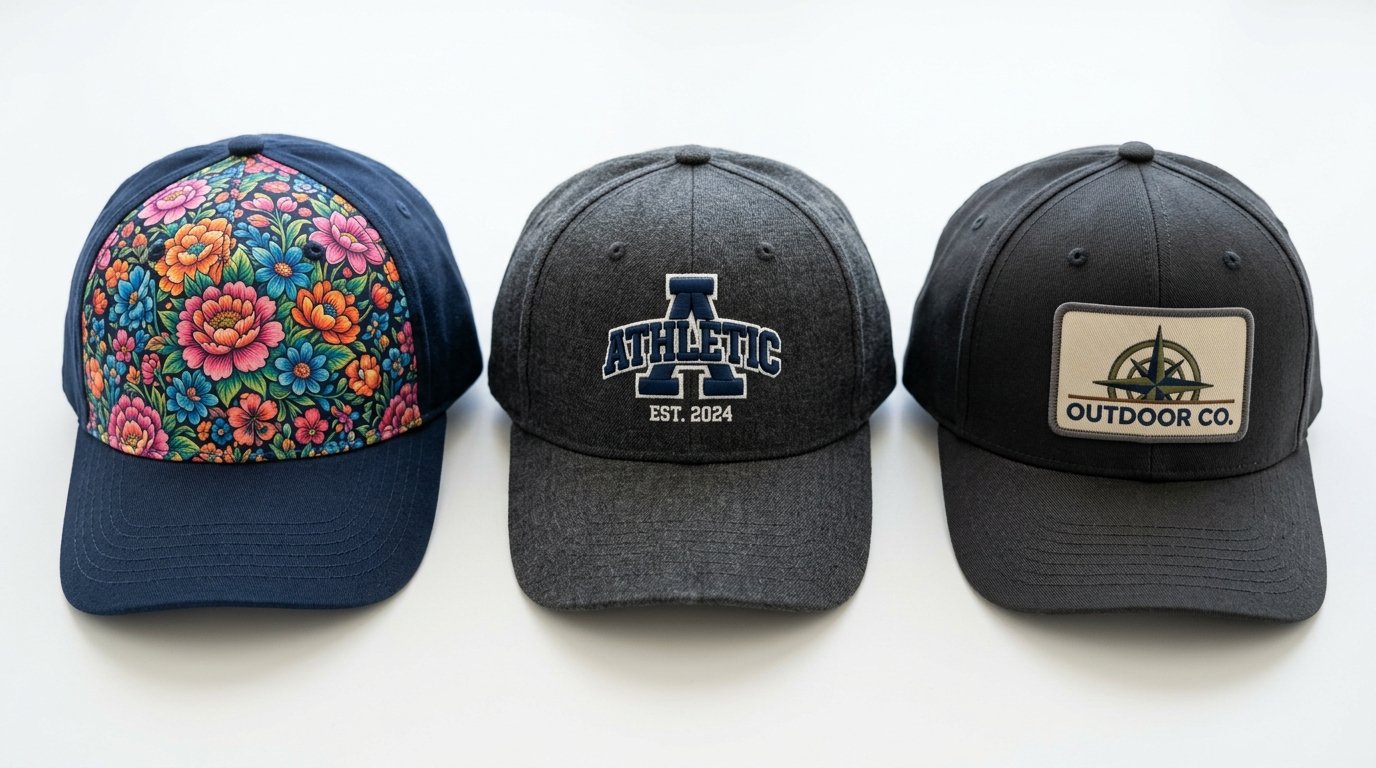
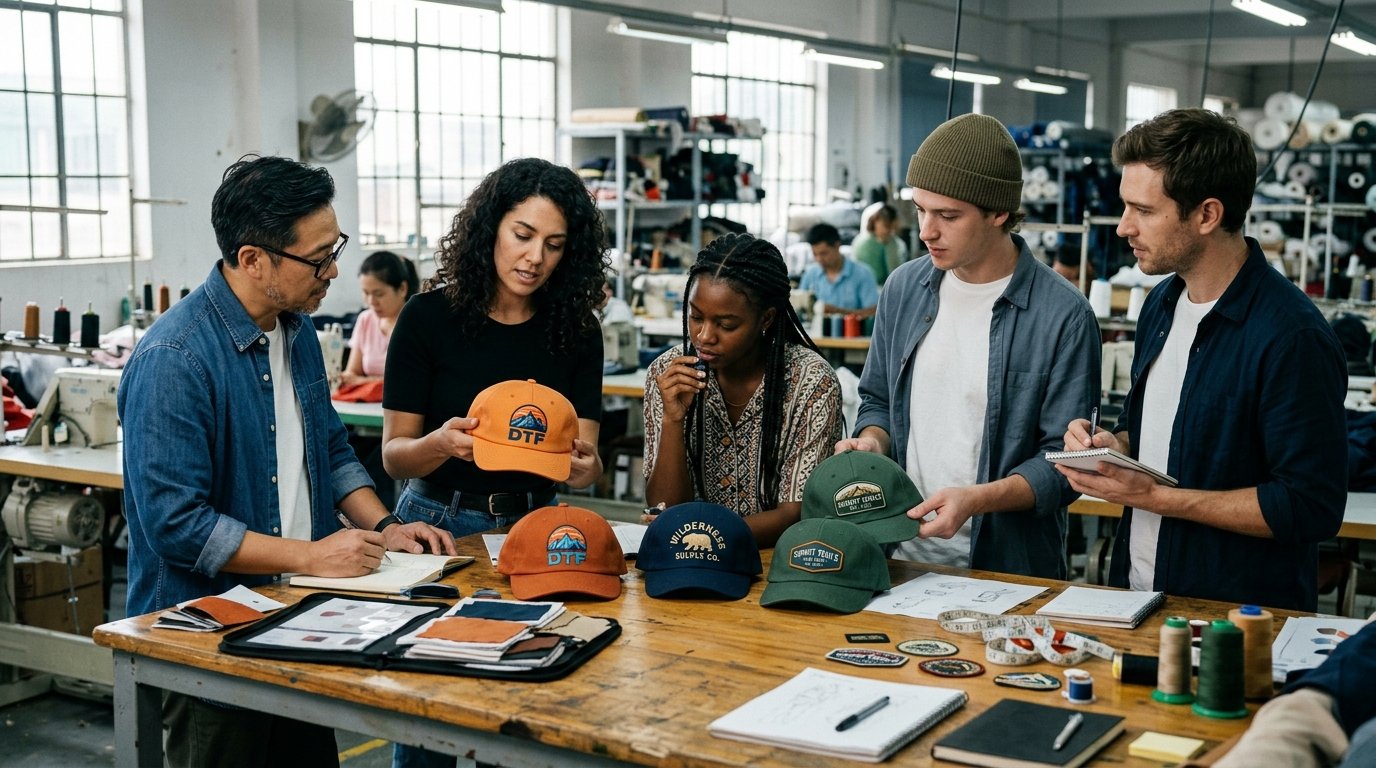
on baseball caps
Now that we’ve covered each method independently, let’s put them side by side across the four dimensions that wholesale buyers care about most: cost, durability, design flexibility, and MOQ accessibility.
| Factor | DTF Printing | Embroidery | Woven Patch |
|---|---|---|---|
| Per-unit cost (500 pcs) | $0.50–$1.20 | $0.80–$2.50 | $1.00–$3.00 (incl. attachment) |
| Setup / digitization cost | $0–$10 (film printing) | $15–$50 (digitizing) | $30–$80 (patch mold/loom setup) |
| Color capability | Full CMYK + white underbase | Solid thread colors (6–12 max practical) | Solid thread colors (woven) or PVC zones |
| Fine detail / small text | Excellent (≥4pt text legible) | Poor below 6mm letter height | Good (woven) / Poor (PVC) |
| Wash durability (cycles) | 40–60 cycles | 100+ cycles (poly thread) | 100+ cycles (sewn on) |
| Best panel type | 5-panel flat front (no center seam) | 6-panel structured (buckram backing) | Any structured panel |
| MOQ accessibility | 25–50 pcs (no setup barrier) | 50–100 pcs (digitizing cost spread) | 100–250 pcs (patch mold minimum) |
| Perceived quality | Mid-tier (modern/casual) | Premium (corporate/traditional) | Rugged/premium (outdoor/workwear) |
| UV / outdoor durability | Poor (fades in 6–12 months sun) | Good (polyester thread UV-resistant) | Excellent (woven poly) / Good (PVC yellows) |
| Lead time adder | +0–2 days | +3–7 days (digitizing + sew-out) | +5–14 days (patch production) |
| Best use case | Photographic logos, gradients, small runs, seasonal drops | Corporate branding, sports teams, premium retail | Workwear, outdoor gear, uniform programs, military |
How to read this table for your business: If you’re a startup streetwear brand ordering 100 caps with a photographic logo, DTF is the obvious choice — zero setup cost, full-color fidelity, and $0.50–$1.20 per unit keeps your landed cost below $5 per cap. If you’re a promotional products distributor ordering 5,000 caps for a Fortune 500 corporate event, embroidery communicates the quality your client expects and the $15–$50 digitizing fee spreads to less than $0.01 per cap. If you’re outfitting a construction company’s field crews who will wear the same cap in sun, rain, and washing machines for two years, woven patches sewn onto structured caps are the only option that won’t generate warranty claims.
The most expensive mistake we see wholesale buyers make is choosing the method based on the sample, not the production reality. A DTF sample looks vibrant under office lighting; 500 DTF caps washed 30 times by end-users look different. An embroidered sample with 15 thread colors looks premium; production embroidery with 15 thread changes per cap adds $1.50 in machine time and creates 15 points of potential thread break failure. Always choose based on the end-user’s wash-and-wear cycle, not the conference-room first impression.
5. Artwork File Specifications: What to Send Your Supplier to Avoid Production Delays
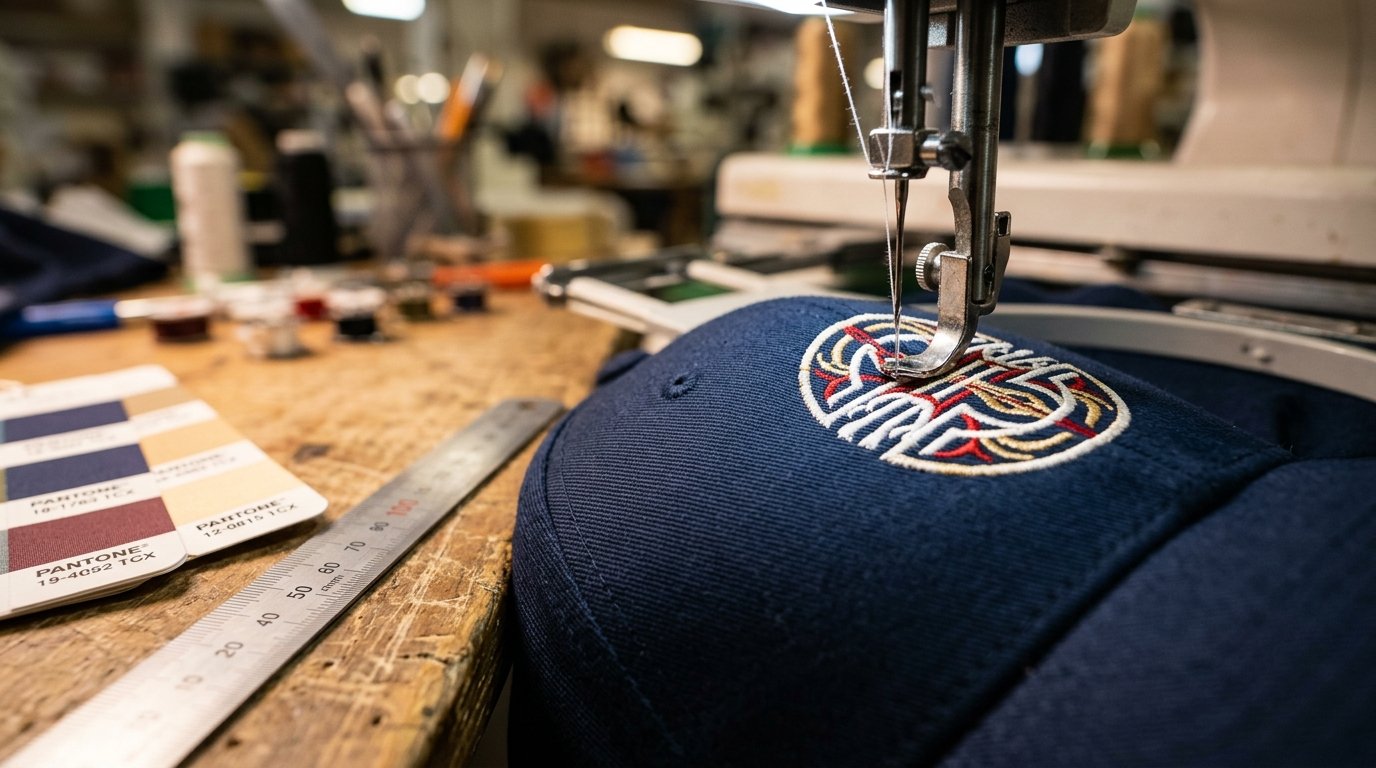
One of the most common causes of production delays — and disputes — is artwork files that arrive in the wrong format for the chosen decoration method. Each method requires fundamentally different file types, and sending a JPEG when the factory needs a vector file adds 3–5 days of back-and-forth while the buyer scrambles to get the correct asset from their client’s graphic designer.
For DTF printing: The factory needs a 300 DPI PNG or PSD file with transparent background at actual print size. If your logo is 3 inches wide on the cap, the file should be 900 pixels wide (3 × 300). CMYK color mode is standard, but some DTF printers handle RGB natively — confirm with your supplier. White in the design must be specified as a spot color channel or a separate white layer; the DTF process prints a white underbase before the color layer to ensure opacity on dark fabrics. If you don’t provide a white channel, the factory will auto-generate one, which often results in white halos around fine edges. Critical: halftones and gradients under 10% density may not transfer cleanly — test a gradient print before committing to a full production run with photographic fade effects.
For embroidery: The factory needs a vector file (AI, EPS, or CDR) at actual size, with all text converted to outlines and all colors specified as Pantone (PMS) codes. The vector file is then imported into digitizing software (Wilcom, Pulse, Tajima DG/ML) where the digitizer manually maps stitch types — satin stitch for borders, tatami fill for large areas, running stitch for fine detail — and assigns thread colors from the Madeira or Robison-Anton thread chart. The buyer should receive and approve the digitized sew-out sample before bulk production begins. The most common embroidery artwork error: submitting a design with text smaller than 6mm in height. At that size, even a single-needle running stitch can’t maintain legibility on textured cap fabric. Request the digitizer to flag all text below 8mm and suggest enlarging or removing it.
For patches: Woven patch production requires a vector file with flat color zones — gradients and photographic elements cannot be woven. The factory will reduce the design to a thread count map (50, 75, or 100 threads per inch), and fine lines thinner than 0.5mm may not render. Embroidered patches accept the same file specs as direct embroidery. PVC patches require a vector file with clearly separated color zones and a minimum wall thickness of 0.8mm between color zones; thinner walls cause color bleed during the injection molding process.
Universal artwork rule for all three methods: Always request a pre-production proof on the actual cap fabric. A digital mockup on screen shows colors differently than thread or transfer on textured twill. A paper printout of the embroidery design shows stitch angles but not how those stitches interact with the cap’s curved surface. The $20–$50 for a physical proof is the cheapest insurance against a $2,000–$5,000 production run of unsellable caps.
6. How Panel Structure Determines Which Decoration Method Works
We’ve mentioned panel structure throughout this guide, but let’s make it explicit: the cap’s panel construction is the single biggest determinant of which decoration method will succeed or fail. Too many wholesale buyers select the decoration method first and then discover their chosen cap style can’t support it — forcing last-minute spec changes, rush fees, or compromised quality.
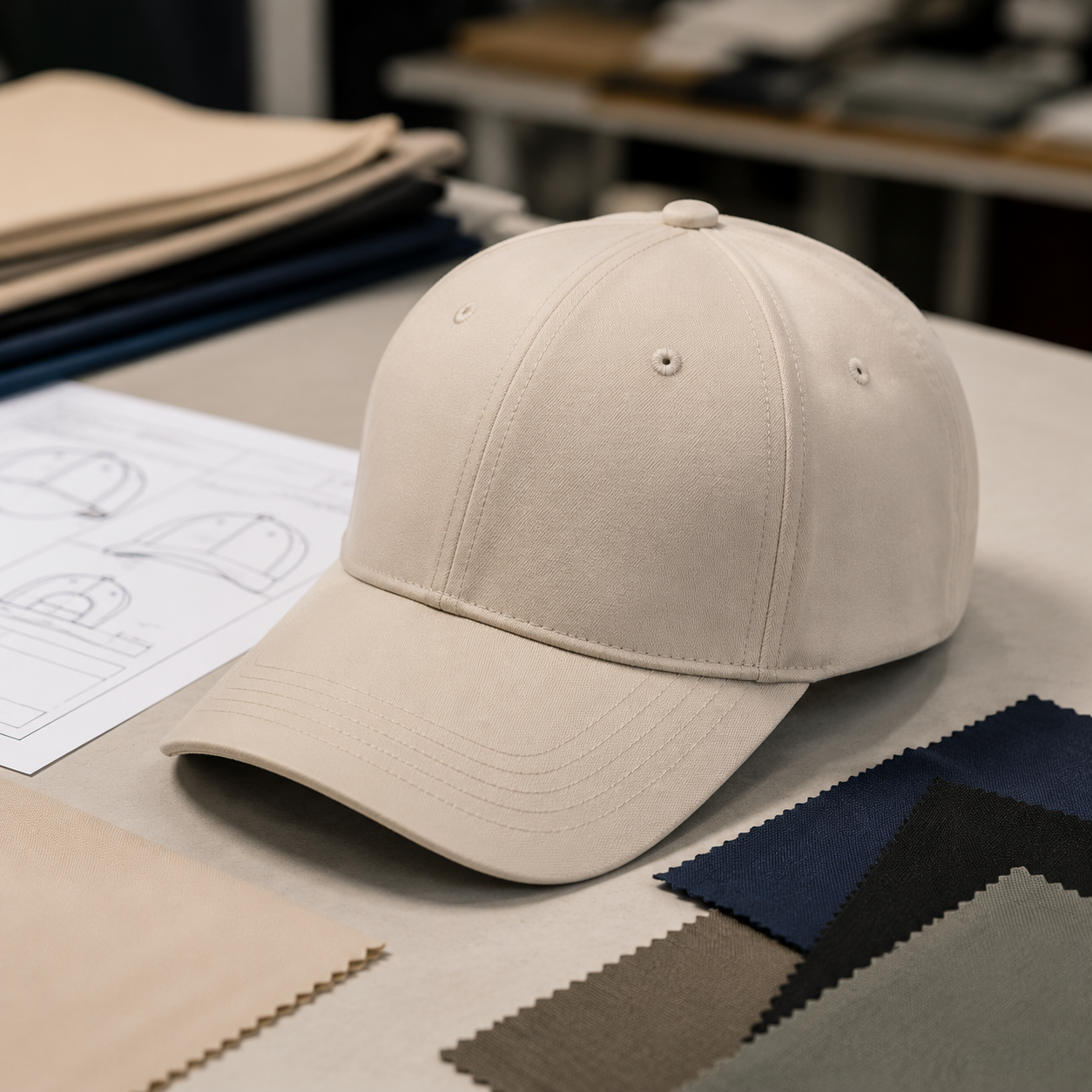
6-Panel Structured Caps (Traditional Baseball Cap): The center front seam is the defining feature. For embroidery, this seam is actually beneficial — it provides a natural center registration line and the structured buckram backing holds the fabric stable under needle pressure. For DTF, the center seam is problematic because it creates a ridge that the heat press can’t fully compress, leading to incomplete transfer adhesion along the seam line. For patches, the seam is neutral — patches are attached above the fabric surface, so the seam underneath doesn’t affect adhesion, though the patch must be positioned to avoid crossing the seam line (which creates an uneven surface for sew-on attachment).
5-Panel Caps (Flat Front, often unstructured): The seamless front panel is ideal for DTF — the flat, uninterrupted surface allows uniform heat and pressure distribution across the entire design area, resulting in clean edge-to-edge adhesion with no seam ridge artifacts. For embroidery, the lack of structure is the problem: 5-panel caps are often soft-crown (no buckram), and embroidery on unstructured fabric requires additional stabilizer backing layers that add cost and can create a stiff, uncomfortable front panel. Patches work well on 5-panel caps regardless of structure, since they’re surface-applied.
Trucker Caps (foam front, mesh back): The foam front panel introduces unique decoration challenges. DTF transfers can melt the foam if the heat press temperature exceeds the foam’s heat tolerance (typically 150–160°C). Embroidery is possible but requires a topping film (water-soluble stabilizer) to prevent stitches from sinking into the foam, which adds labor. Patches are the safest and most common decoration method for trucker caps — sew-on patches avoid heat entirely and the mesh back provides ventilation that complements the rugged patch aesthetic.
The practical rule for wholesale buyers: Start by choosing the cap style your end customer wants, then select the decoration method that works on that panel type. Don’t fall in love with a full-color DTF gradient design and then try to force it onto a 6-panel structured cap with a center seam — you’ll either get a subpar result or spend extra on seam-flattening pre-treatment that may or may not work consistently across a bulk production run.
For guidance on panel types for wholesale buyers, see our 6-panel vs 5-panel baseball cap comparison and our logo placement guide which covers how panel structure affects decoration positioning.
7. Cost Breakdown by Order Quantity: 100 vs 500 vs 5,000 Pieces
A decoration method that’s economical at 5,000 pieces can be prohibitive at 100 pieces — and vice versa. Here’s how the numbers actually break down at three common order quantities that wholesale buyers encounter:
| Quantity | DTF (total decoration cost) | Embroidery (total decoration cost) | Woven Patch (total decoration cost) |
|---|---|---|---|
| 100 pcs | $50–$120 ($0.50–$1.20/ea, no setup) | $95–$300 ($15–$50 digitizing + $0.80–$2.50/ea) | $130–$380 ($30–$80 setup + $1.00–$3.00/ea) |
| 500 pcs | $250–$600 ($0.50–$1.20/ea, no setup) | $415–$1,300 ($15–$50 digitizing + $0.80–$2.50/ea) | $530–$1,580 ($30–$80 setup + $1.00–$3.00/ea) |
| 5,000 pcs | $2,500–$6,000 ($0.50–$1.20/ea) | $4,015–$12,550 ($0.80–$2.50/ea + negligible digitizing/ea) | $5,030–$15,080 ($1.00–$3.00/ea + negligible setup/ea) |
The setup cost cliff: Notice that DTF’s total cost scales linearly — 5,000 caps cost exactly 50× what 100 caps cost, because there’s no setup to amortize. Embroidery and patches, however, have a fixed setup cost (digitizing or mold fee) that becomes negligible at 500+ units. At 100 pieces, the embroidered cap costs nearly double the DTF cap because the $15–$50 digitizing fee represents $0.15–$0.50 per cap. At 5,000 pieces, that same fee contributes less than $0.01 per cap, and the per-unit embroidery labor cost ($0.80–$2.50) dominates.
Hidden costs to budget for:
- Thread changes (embroidery): Each additional thread color adds approximately $0.10 per cap in machine stop/change time. A 3-color logo costs less than a 12-color logo — not because of thread cost ($0.02 difference), but because of machine time.
- Seam treatment (DTF): On 6-panel caps, factories may charge $0.05–$0.15 per cap for seam-flattening pre-treatment before DTF application. This isn’t always disclosed in the initial quote — ask explicitly.
- Patch attachment (patches): If the factory quotes patch production cost but not attachment, clarify. Sew-on attachment at $0.30–$0.50 per cap can double the landed patch cost at small quantities.
- Re-digitizing (embroidery): If the sew-out sample reveals digitizing errors, re-digitizing costs $15–$50 again. Budget for one round of revision in your timeline and cost estimate.
For a detailed breakdown of baseball cap pricing and what drives wholesale costs, refer to our baseball cap pricing transparency guide and our MOQ guide for wholesale baseball caps.
8. The Buyer’s Decision Matrix: 5 Questions to Answer Before Placing Your Order
You’ve now read 2,000+ words comparing DTF, embroidery, and patch decoration across cost, durability, artwork, and panel compatibility. Here’s how to distill all of that into an actionable decision for your specific order:
- What is the end-user’s wash-and-wear cycle? If the cap will be washed weekly in industrial machines (uniforms, workwear) → woven patch, sewn on. If it’s a one-season promotional item washed 5–10 times → DTF is fine. If it’s a premium retail cap worn carefully and spot-cleaned → embroidery communicates quality.
- How complex is your artwork? Photographic gradients, small text below 6mm, or more than 8 colors → DTF. Bold logo with 2–4 solid colors → embroidery delivers premium feel. Rugged brand mark with 1–3 colors → patch reinforces brand identity.
- What’s your order quantity? Under 200 pcs → DTF, because setup costs for embroidery/patches significantly inflate per-unit cost. 200–1,000 pcs → any method works economically; choose based on quality perception. Over 1,000 pcs → embroidery becomes the value leader when quality perception matters; DTF remains the value leader when color complexity matters.
- What cap style are you decorating? 6-panel structured → embroidery or patch. 5-panel flat front → DTF. Trucker cap → patch. This is not negotiable — forcing the wrong decoration onto the wrong panel structure produces defects, not compromises.
- What market are you selling into? EU markets with strict chemical regulations → avoid PVC patches; choose woven poly patches or embroidery. California Proposition 65 compliance → ask for phthalate-free certification on any PVC components. Corporate procurement with supplier diversity requirements → embroidery is the most universally accepted specification across vendor pools.
Also see: Hat Factory China Vetting Checklist: 10-Point Quality Audit for Wholesale Buyers
For most wholesale buyers, the answer is hybrid: Order your premium SKU with embroidery on structured 6-panel caps, your value SKU with DTF on 5-panel caps, and your workwear/duty SKU with woven patches. This covers all three market segments — corporate/premium, promotional/seasonal, and workwear/durability — without overpaying for decoration on SKUs where the end-user doesn’t value it.
Additional Reading for Wholesale Buyers
- 7 Baseball Cap Quality Red Flags That Cost Wholesale Buyers Thousands — includes decoration defect patterns to watch for in QC inspection
- Custom Baseball Cap Manufacturer Guide 2026 — how to evaluate factories across decoration capabilities
- Baseball Cap Logo Placement for Wholesale Buyers — companion guide covering positioning, size, and registration
- Baseball Cap Wholesale Category — browse all baseball cap resources
External References
- Printful Custom Hat Decoration Methods — comparison of DTG, embroidery, and patch from a leading print-on-demand provider
- Impressions Magazine — decorated apparel industry publication covering cap decoration technology and trends
- Specialty Graphic Imaging Association (SGIA) — industry standards for garment decoration including heat transfer and embroidery specifications
Ready to place your order? Contact our wholesale team with your artwork file, target quantity, and preferred cap style. We’ll recommend the optimal decoration method based on your specific requirements and provide a pre-production proof before any bulk order ships. Request a quote today — response within 24 hours for Wholesale Buyers.
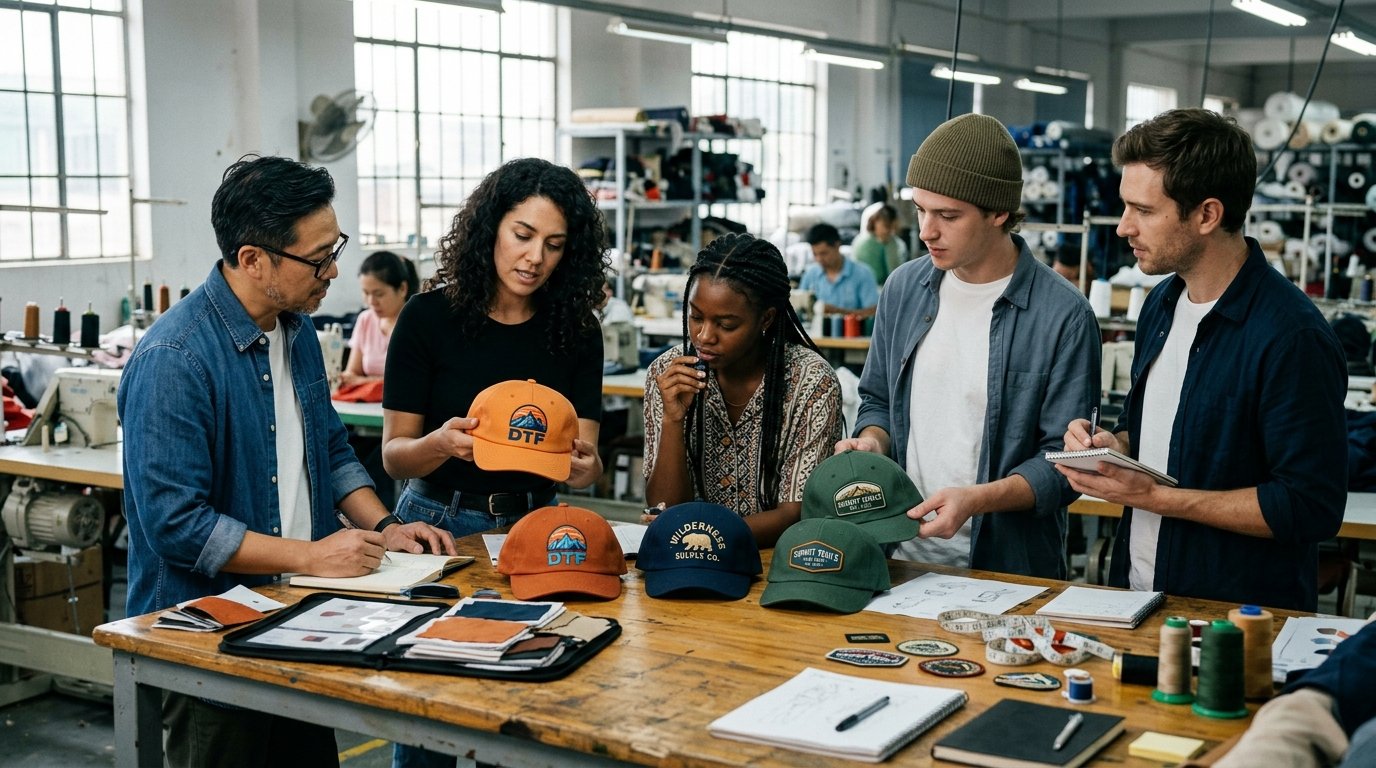
Related: For artwork specs and placement standards, see our baseball cap logo placement wholesale guide with pre-production approval workflow.
Written by the Hongyuecap Product Team — 10+ years in B2B custom headwear manufacturing. Last updated: May 03, 2026.