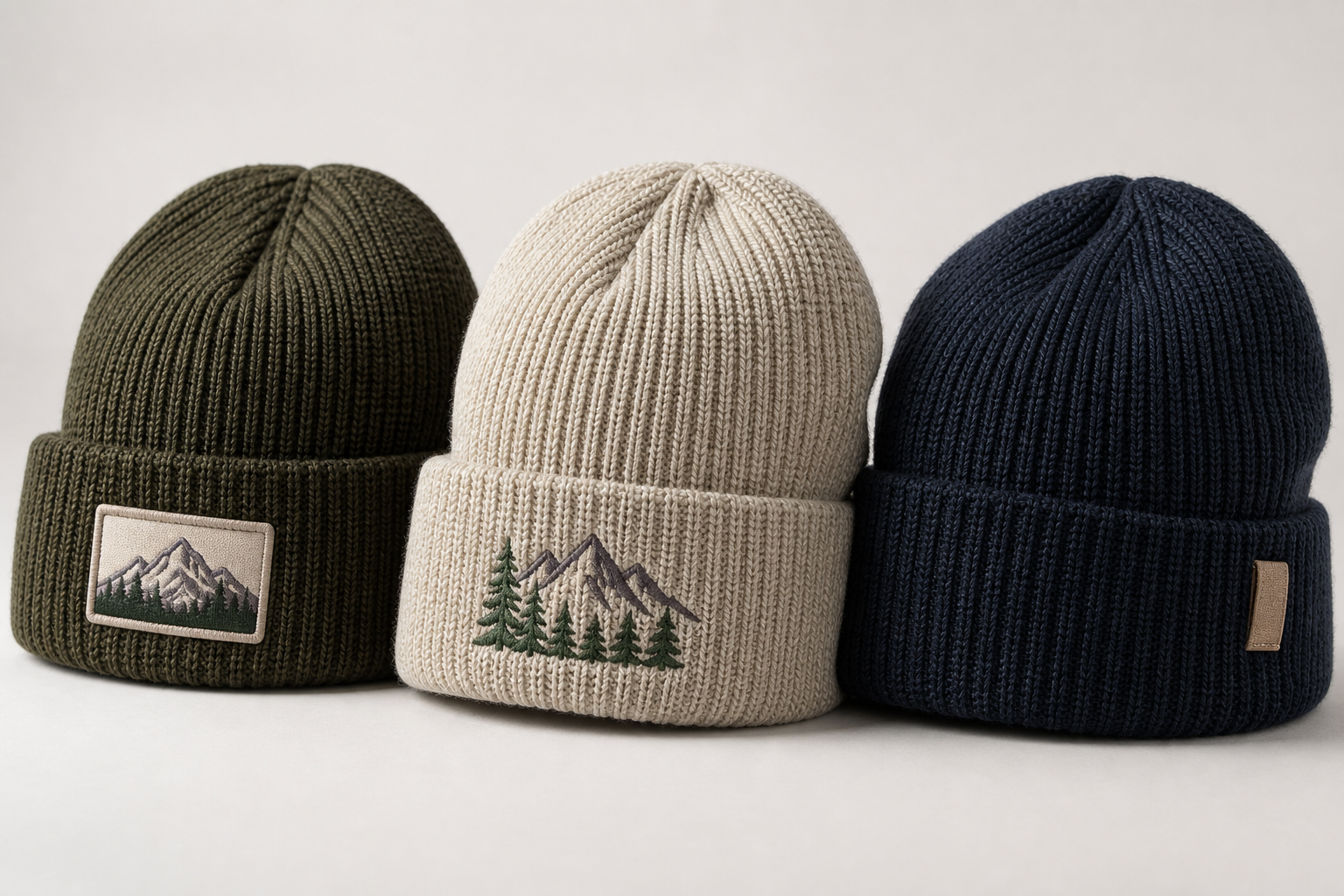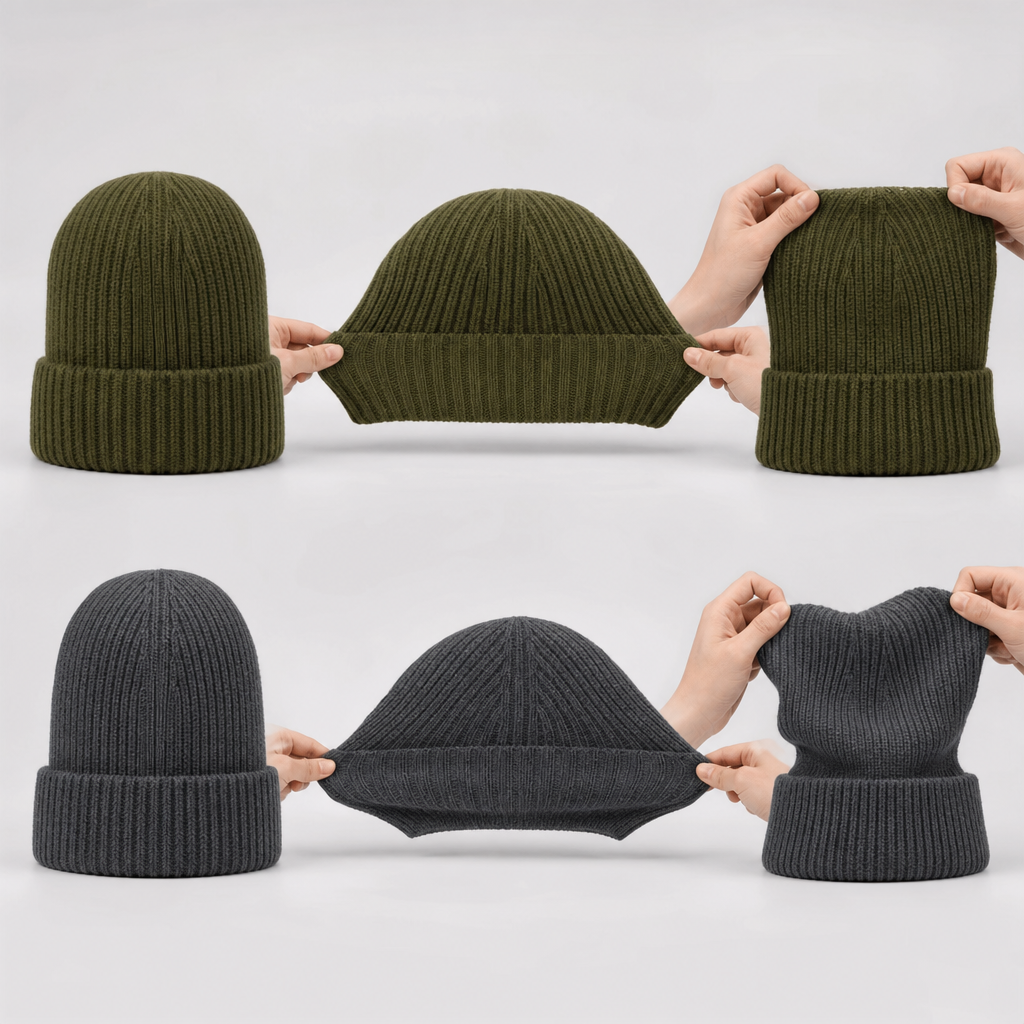

Pain Point: You shipped 3,000 beanies to your client, and within two weeks of wear they’re covered in unsightly fuzz balls. The customer is demanding a refund, and you never specified pilling resistance in your purchase order. Understanding knitted beanie pilling resistance wholesale standards and testing methods prevents this expensive mistake.
1. What Is Pilling and Why It’s the #1 Knitted Beanie Quality Complaint
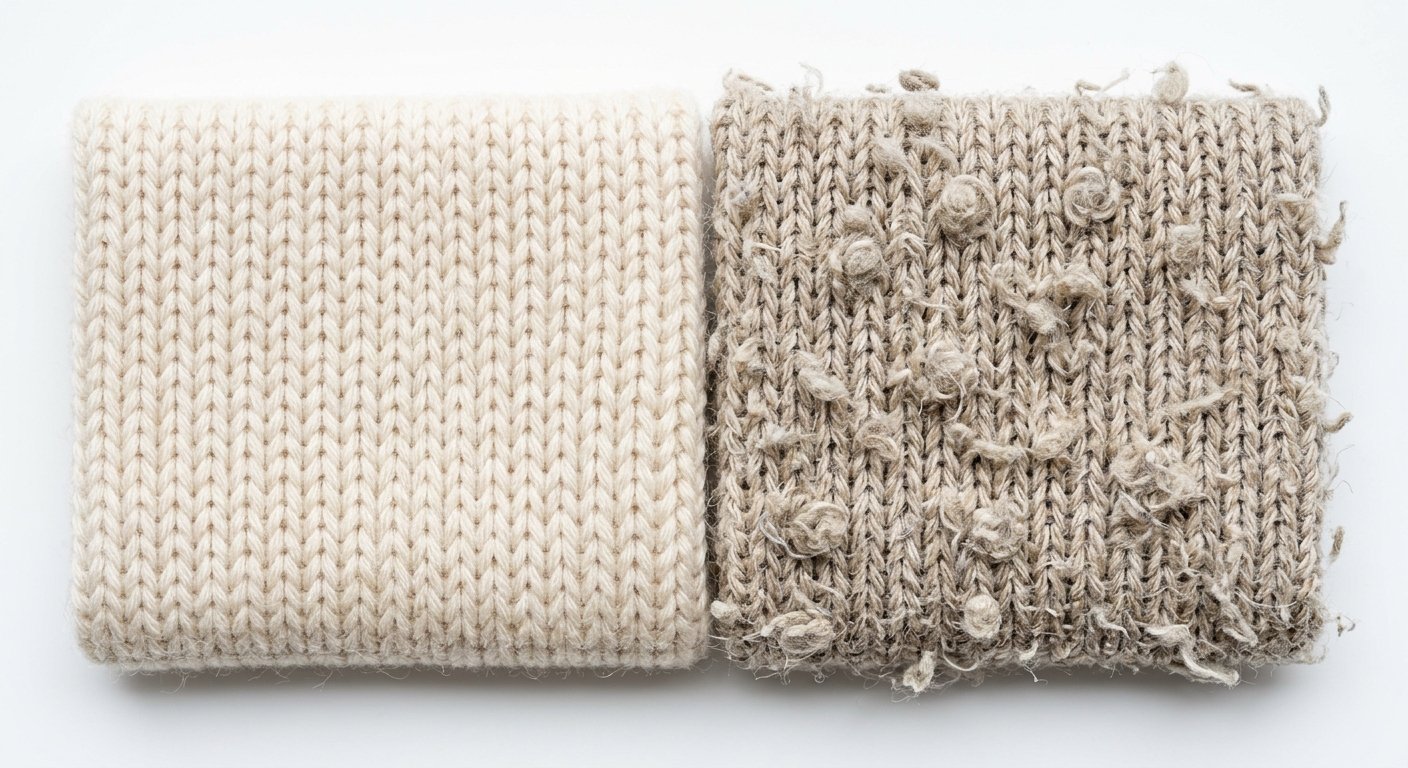
Direct answer: Pilling is the formation of small, tangled fiber balls on the surface of knitted fabric caused by abrasion during wear. It’s the most common quality complaint for knitted beanies — affecting brand perception, retail return rates, and wholesale buyer satisfaction. Pilling is predictable based on fiber type, yarn twist, and knit structure.
The pilling process occurs in four stages:
- Fuzz Formation: Surface fibers are loosened from the yarn by friction (putting on/removing the beanie, rubbing against clothing, washing).
- Entanglement: Loose fibers tangle together, forming small balls (pills) anchored to the fabric by a few remaining fibers.
- Growth: Pills accumulate more loose fibers, growing larger and more visible.
- Wear-Off: Eventually, the anchoring fibers break and the pill falls off — but for low-quality yarns, this can take weeks of wear.
The visual impact of pilling on knitted beanie pilling resistance wholesale quality is disproportionate: a single 2mm pill on a dark-colored beanie is visible from 3 feet away. After just 5-10 wear cycles, a low-quality beanie can develop 50-100+ visible pills, making a $25 retail product look like a $5 discount bin item.
Related: Knitted Beanie Wholesale Sourcing Guide
2. Fiber Type and Pilling: The Single Biggest Predictor
Direct answer: Fiber type is the single strongest predictor of beanie pilling. Natural fibers (especially long-staple wool) pill significantly less than short-staple synthetics. The fiber’s staple length (individual fiber length), strength, and crimp all influence pilling tendency.
| Fiber Type | Pilling Tendency | Pill Shedding | Cost/Beanie | Recommendation |
|---|---|---|---|---|
| Fine Merino Wool (19-22 micron) | Very Low | Moderate | $1.50-2.50 | ⭐ Best anti-pill |
| Lambswool | Low | Good (sheds quickly) | $1.00-1.80 | ⭐ Very good |
| Acrylic-Wool Blend (50/50) | Low-Moderate | Moderate | $0.60-1.00 | ⭐ Good value |
| High-Bulk Acrylic (anti-pill grade) | Moderate | Slow | $0.30-0.50 | ✅ Acceptable |
| Standard Acrylic | High | Very Slow | $0.20-0.35 | ⚠️ Budget only |
| Cotton | Moderate-High | Good (sheds fast) | $0.40-0.60 | ⚠️ Short fiber issues |
| Recycled Polyester (short staple) | Very High | Very Slow | $0.25-0.45 | ❌ Avoid for beanies |
Why Merino wool wins on pilling: Merino fibers are longer (65-100mm staple length vs. 25-50mm for standard acrylic), finer (19-22 microns vs. 30-40 microns for acrylic), and have natural crimp that keeps fibers locked in the yarn structure. The longer staple length means fewer fiber ends are exposed on the yarn surface — and it’s the fiber ends that tangle into pills.
Hongyuecap’s recommendation for wholesale knitted beanies: Use anti-pill high-bulk acrylic as the minimum quality tier. For mid-market orders, an acrylic-wool blend (50/50 or 70/30) provides an excellent balance of pilling resistance, warmth, and cost. For premium/outdoor beanies, 100% Merino (19-22 micron) is the gold standard.
3. Yarn Construction: Twist, Ply, and Anti-Pill Treatments
Direct answer: Even the best fiber can pill if the yarn is poorly constructed. Higher yarn twist (TPI), multi-ply construction, and anti-pill chemical treatments all significantly reduce pilling — independent of fiber type.
Yarn Twist (TPI — Twists Per Inch): Higher twist firmly locks fibers into the yarn structure, reducing the number of loose fiber ends available to form pills. For knitted beanies: 8-12 TPI is optimal for anti-pill performance; 4-6 TPI (typical of budget yarns) allows excessive fiber migration and rapid pilling. An increase from 6 to 10 TPI can reduce pilling by 30-50% with the same fiber type.
Ply Construction: Multi-ply yarns (2-ply, 3-ply) are significantly more pill-resistant than single-ply yarns. The twisting of individual plies plus the final ply twist creates a double-locking effect on fibers. Hongyuecap’s standard beanie yarn specification is 2/28Nm (2-ply, 28 metric count) high-bulk acrylic — tested to Grade 4 on the Martindale pilling scale (5,000 cycles).
Anti-Pill Chemical Treatments: For acrylic and polyester yarns, anti-pill treatments are available that modify the fiber surface to reduce friction and fiber migration. These treatments can improve pilling grade by 1-1.5 levels (e.g., from Grade 2 to Grade 3-4 on the Martindale scale). The treatment is applied during yarn manufacturing and is permanent (not a coating that washes off). Cost: approximately $0.02-0.05 per beanie.
Explore knitted beanie options at Hongyuecap
4. Pilling Testing Standards: Martindale, ICI, and Random Tumble
Direct answer: Three standardized test methods quantify pilling resistance: the Martindale method (ISO 12945-2, most common for knitwear), the ICI Pilling Box method (ISO 12945-1), and the Random Tumble method (ASTM D3512, common in US). For wholesale beanie orders, specifying “Martindale Grade 4 minimum at 5,000 cycles” is the industry best practice.
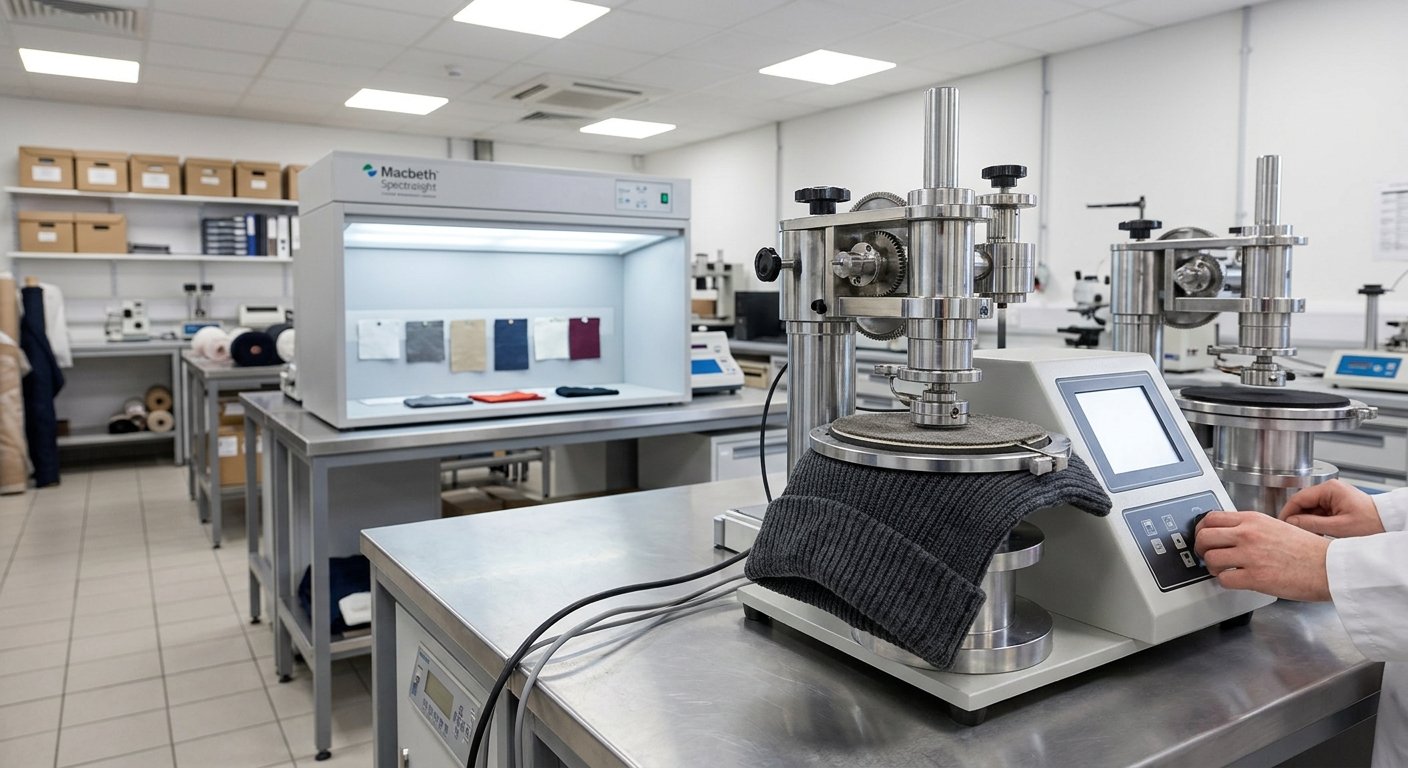
Martindale Method (ISO 12945-2): A fabric sample is rubbed against the same fabric in a Lissajous figure (figure-8) motion under controlled pressure. After a specified number of cycles (typically 2,000 or 5,000), the sample is compared against visual rating standards.
Grading Scale (1-5):
- Grade 5: No pilling — surface unchanged (virtually unattainable for knitwear)
- Grade 4: Slight surface fuzzing / partially formed pills (excellent for wholesale beanies)
- Grade 3: Moderate pilling — pills of varying size and density (acceptable for budget products)
- Grade 2: Severe pilling — dense pill coverage (unacceptable for any retail product)
- Grade 1: Very severe pilling — surface completely covered (fail)
Specification for wholesale knitted beanies: Hongyuecap defaults to ISO 12945-2 Martindale, Grade 4 minimum at 5,000 cycles for all beanie fabric. For premium orders (Merino, cashmere blends), we test to 7,000 cycles Grade 4. For budget orders, we accept Grade 3-4 at 2,000 cycles as the minimum viable quality level.
Testing Cost and Timeline: SGS/Intertek Martindale pilling test: $100-150 per fabric sample, 5-7 business days turnaround. Hongyuecap includes pilling test reports as part of the QC documentation for orders over 2,000 units.
5. Prevention: Pilling-Resistant Beanie Specification for Wholesale Buyers
Direct answer: A pilling-resistant beanie specification should include: fiber type and grade, yarn twist (TPI), ply construction, anti-pill treatment (yes/no), Martindale pilling grade requirement, and after-wash testing protocol. This 6-point specification eliminates ambiguity and gives you grounds for rejection if the delivered product doesn’t meet spec.
The 6-Point Anti-Pill Specification Template:
- Fiber: E.g., “100% Anti-pill high-bulk acrylic” or “70% Merino wool (19-21 micron) / 30% Nylon”
- Yarn Count & Twist: E.g., “2/28Nm, 10 TPI” (higher TPI = less pilling)
- Ply: “2-ply minimum” (single-ply yarns pill significantly more)
- Anti-Pill Treatment: “Anti-pill grade acrylic with modified cross-section” or specify if untreated
- Pilling Test Standard & Target: “ISO 12945-2 Martindale, Grade 4 minimum at 5,000 cycles”
- After-Wash Requirement: “Maintain Grade 3-4 minimum after 5 machine wash cycles (40°C, gentle)”
Hongyuecap’s standard anti-pill beanie specifications by market tier:
| Market Tier | Fiber | Grade Target | Cost/Unit |
|---|---|---|---|
| Budget/Promo | Anti-pill acrylic, 2/28Nm | Grade 3-4 @ 2,000 cycles | $0.30-0.50 |
| Mid-Market | Acrylic-Wool (70/30), 2/32Nm | Grade 4 @ 5,000 cycles | $0.60-1.00 |
| Premium | Merino (19-21 micron), 2/48Nm | Grade 4 @ 7,000 cycles | $1.50-2.50 |
| Luxury | Cashmere-Merino (30/70) | Grade 4 @ 5,000 cycles | $3.00-5.00 |
By including this 6-point specification in every wholesale beanie purchase order, you eliminate the #1 cause of post-delivery quality disputes. Hongyuecap provides a pilling test report from SGS or Intertek with every order over 2,000 units — giving you documented proof that your beanies meet the specified pilling resistance grade.
External References: ISO 12945-2 Martindale Pilling Test | Wikipedia: Textile Pilling | Woolmark Quality Certification
Frequently Asked Questions
Can you guarantee anti-pill performance for bulk beanie orders?
Hongyuecap provides anti-pill guarantees with standardized ISO 12945-2 testing documentation. Our quality team tests every production batch and provides 3rd-party lab reports for wholesale orders above 1,000 pieces.
Frequently Asked Questions
Can pilling be completely eliminated?
No — all knitted fabrics will pill to some degree with sufficient wear. The goal is to minimize pilling to a level where it’s not noticeable during the product’s expected lifecycle. A Grade 4 beanie will show minimal pilling after 50+ wear cycles — beyond the typical consumer’s usage before the beanie is replaced or retired.
How do I test pilling on a sample before approving a bulk order?
Request a pre-production sample from Hongyuecap. Perform a DIY abrasion test: rub the fabric vigorously against itself 50 times between your palms. Examine the surface under a bright light. If visible pills form after 50 rubs, the fabric will pill severely after 50 wears. For a more rigorous test, wash the sample 3 times and compare to the unwashed sample. If pilling increases significantly after washing, the yarn quality is inadequate.
Does darker color affect pilling visibility?
Yes — pilling is significantly more visible on dark colors (black, navy, charcoal) because pills catch light differently than the smooth fabric surface, creating a contrast effect. On light colors (white, cream, pastels), pills are much less visible. This is important for wholesale buyers: if you’re ordering dark-colored beanies, specify Grade 4 minimum pilling resistance. For light colors, Grade 3-4 may be visually acceptable.
CTA: Ready to source pilling-resistant knitted beanies with verified Martindale test reports? Contact Hongyuecap for yarn samples, pilling test reports, and a free quotation with full anti-pill specifications for your target market tier.
Written by the Hongyuecap Product Team — 10+ years in B2B custom headwear manufacturing. Last updated: May 03, 2026.
Related Resources for Wholesale Buyers: