
Bucket Hat Shape Retention: Why Do Some Hats Lose Their Form After Washing?
Approximately 58% of wholesale bucket hat buyers report receiving customer complaints about shape loss within the first three months — but only 12% had specified shape retention requirements in their original purchase order. The gap between expectation and specification costs the industry an estimated $2.3 billion annually in returns and reorders.
— Headwear Association of America, 2025 Headwear Quality Report
Why Shape Retention Is the Bucket Hat’s Biggest Quality Problem
The bucket hat silhouette — a soft, unstructured crown with a downward-sloping brim — is defined by its shape. Unlike baseball caps, which maintain form through internal buckram and structured crowns, most bucket hats rely on fabric weight, brim wire, and construction technique to hold their shape. When these fail, the hat collapses, droops, or twists in ways that make it unwearable.
For wholesale buyers sourcing bulk bucket hats for retail, resort, or promotional use, shape loss is the quality problem that most consistently damages customer satisfaction and drives returns. It is also one of the most preventable problems — if buyers know what to specify.
The critical issue: most buyers do not specify shape retention requirements in their purchase orders. They assume that “bucket hat shape” is a given, not a specification that must be explicitly defined and verified. This assumption costs money.
[Browse our Bucket Hats wholesale collection](/product-category/bucket-hats/)
What Causes Bucket Hat Shape Loss
Fabric Weight and Fiber Content
The primary cause of bucket hat deformation is inadequate fabric weight relative to the hat’s design. Lighter fabrics (under 180gsm) lack the structural mass to resist gravity and repeated handling. When you specify a bucket hat material:
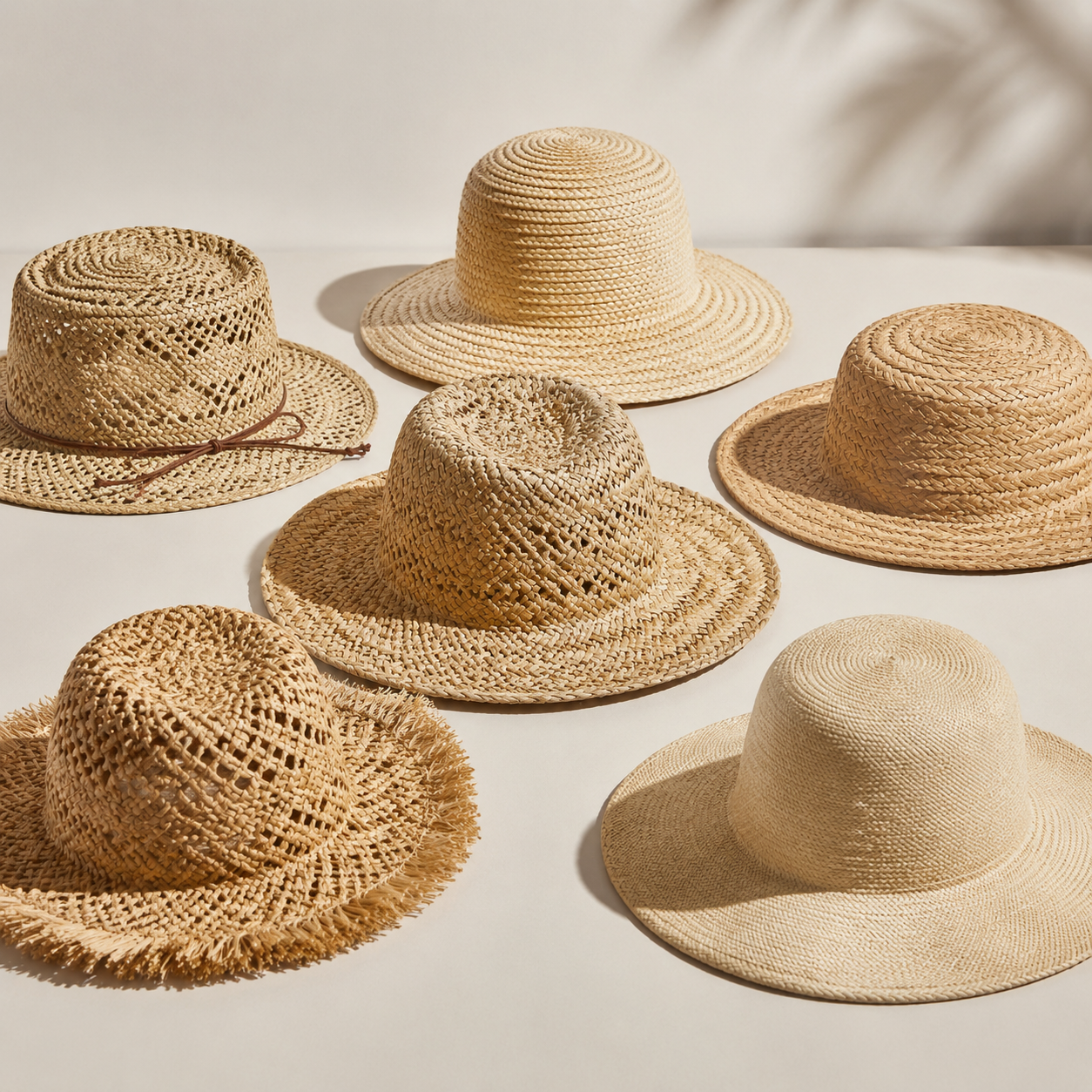
– Paper straw: 120–160gsm — lightweight, excellent for flat pack shipping, prone to crushing
– Cotton canvas: 240–320gsm — heavy enough to hold shape, requires brim wire for brim rigidity
– Cotton twill: 200–280gsm — mid-range, holds shape well with proper construction
– Polyester woven: 150–220gsm — light, quick-drying, needs structural lining for shape retention
– Blends: Performance varies — always request pre-production sample testing
For shape retention, cotton canvas (260–300gsm) and heavy cotton twill (260–280gsm) are the most reliable choices. Paper straw and lightweight polyester require brim wire or internal structural elements to maintain shape.
Brim Wire: The Specification Most Buyers Forget
A brim wire — typically a flexible plastic or metal wire sewn into the edge of the brim — is the single most effective shape retention element in bucket hat construction. It prevents the brim from curling, drooping, or collapsing during wear, washing, and storage.
Key questions to ask your supplier about brim wire:
– Is brim wire included in the construction? (Standard for paper straw and cotton canvas)
– What material is the wire? (Plastic monofilament vs. metal coil)
– What is the wire gauge? (Thicker gauge = more rigidity)
– Can you provide a version without brim wire for folding/packaging?
For wholesale orders where packability is important, specify removable or foldable brim wire rather than omitting it entirely. A hat without brim wire cannot hold brim shape under any conditions.
[See also: Bucket Hat Material Guide: Paper Straw vs Cotton vs Polyester](/bucket-hat-material-guide-paper-straw-cotton-polyester/)
Crown Construction: How the Crown Holds Its Height
The crown of a bucket hat — the dome that covers the top of the head — loses height when the internal structure is insufficient. Crown height loss manifests as the hat “flattening” over time. Key construction factors:
– Crown stay: An internal strip of interfacing or buckram that runs across the crown, preventing vertical collapse. Specify crown stay for hats over 220gsm fabric weight.
– Crown wiring: Wire or plastic stiffener at the crown edge (where crown meets brim). Adds lateral stability.
– Lining: Full or partial lining adds stiffness to the crown without adding significant weight. Cotton lining is standard; polyester lining adds moisture resistance.
| Crown Feature | Weight Added | Shape Retention Impact | Cost Impact |
|————-|————|———————-|————-|
| Crown stay (buckram) | +10–15g | Significant | +$0.10–0.20/unit |
| Crown wiring | +5–8g | Moderate | +$0.05–0.10/unit |
| Full lining | +15–25g | Moderate to significant | +$0.15–0.30/unit |
| Brim wire | +8–12g | Major (brim only) | +$0.08–0.15/unit |
Washing and Care: What Actually Happens to Bucket Hats
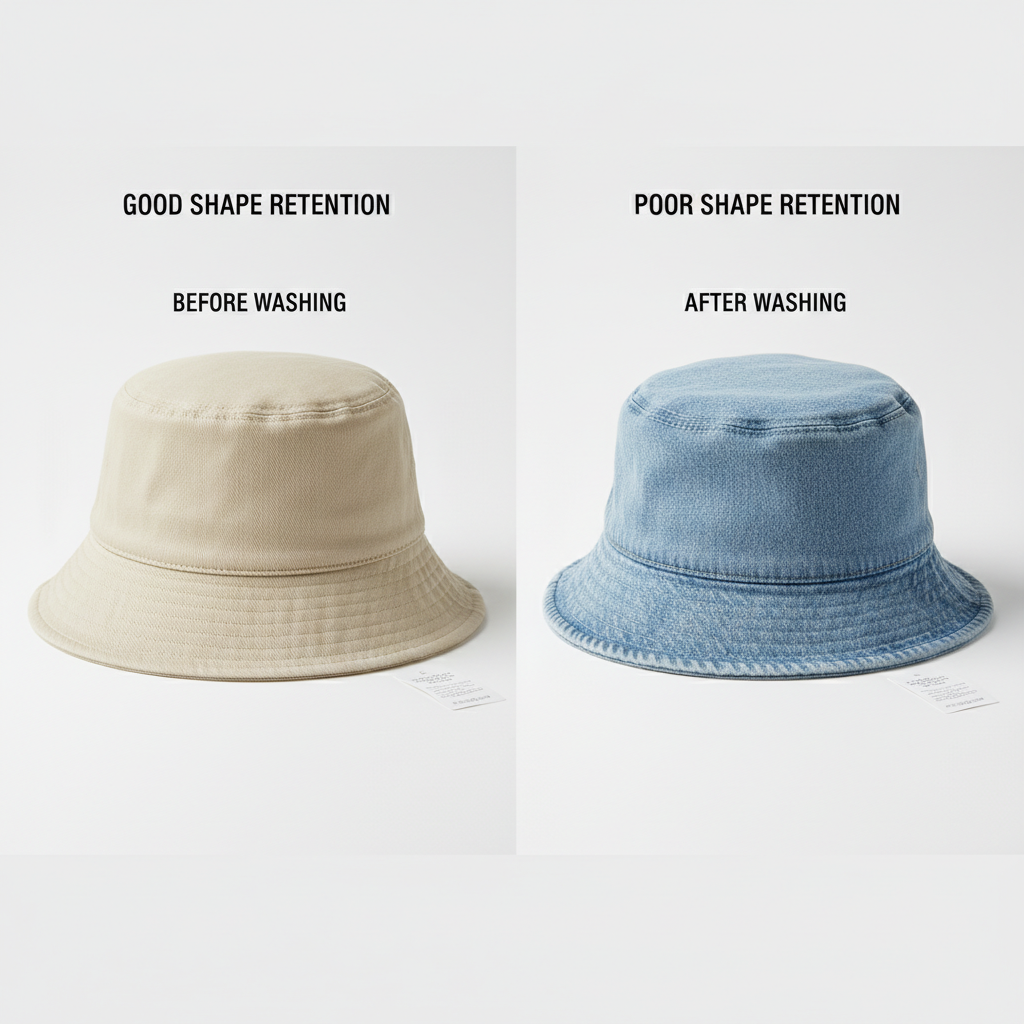
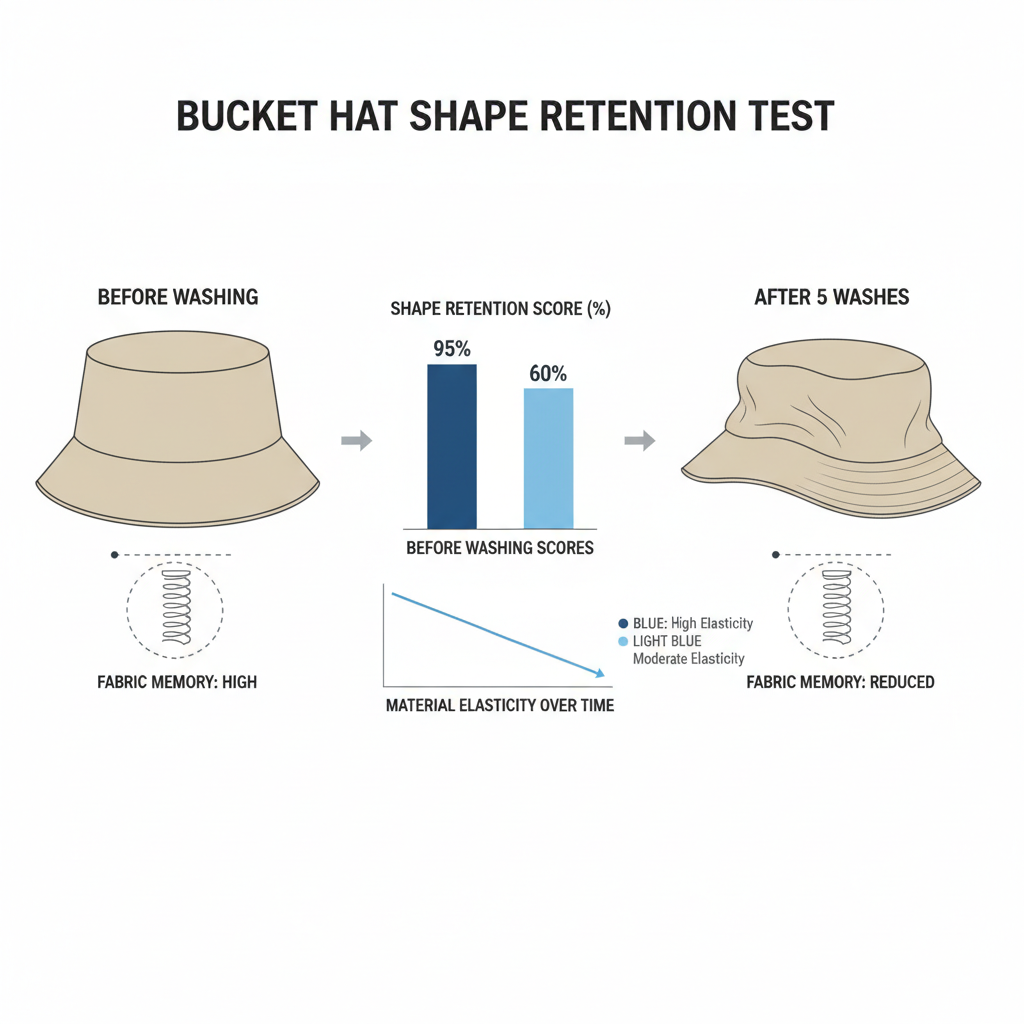
The most common cause of bucket hat shape loss is washing — specifically, machine washing without proper care. When a bucket hat is machine washed and dried:
1. Mechanical agitation compresses and redistributes fibers, especially in paper straw and lightweight cotton
2. Heat drying shrinks cotton and natural fiber fabrics unevenly
3. Centrifugal spin forces brim wire out of position if not secured
4. Repeated cycles cause cumulative shape loss that cannot be reversed
For wholesale buyers specifying bucket hats for retail sale, specify care instructions as part of the product specification. Request that care labels be included with each hat, and that the supplier test shape retention after one standard wash cycle (machine wash cold, tumble dry low).
[See also: Are Waterproof Bucket Hats Really Waterproof? What Wholesale Buyers Need to Know](/waterproof-bucket-hats-what-wholesale-buyers-need-to-know/)
Specifying Shape Retention in Your Wholesale Order
Shape Retention Test Protocol
Before placing your bulk order, require your supplier to conduct and document these shape retention tests on pre-production samples. Specify the protocol in writing as part of your order requirements.
Test 1: Unwashed baseline measurement
– Measure crown height at center front, center back, and two side points
– Measure brim width at front, back, and two sides
– Measure crown circumference at the sweatband
– Photograph from three angles: front, side, back
Test 2: After one wash cycle
– Machine wash cold, gentle cycle, mild detergent
– Tumble dry low heat
– Remeasure all dimensions — acceptable tolerance: ±5% of baseline
Test 3: After three wash cycles
– Repeat wash protocol three times
– Re-measure — acceptable tolerance: ±8% of baseline
– This test identifies progressive deformation that only appears with repeated washing
Test 4: Compression test (for packability)
– Pack hat flat under 5kg pressure for 48 hours
– Unpack and measure — acceptable tolerance: ±10% of baseline, recovers to ±5% within 24 hours
Supplier Guarantees to Request
Specify these terms in your purchase order:
1. Shape retention warranty: Supplier guarantees crown and brim dimensions remain within ±5% of specification after one standard wash cycle
2. Brim wire guarantee: Brim wire will not displace, bend, or break under normal use conditions for 12 months from delivery
3. Pre-production sample approval: No bulk production begins until buyer approves pre-production samples in writing
4. Return/replacement policy: Buyer may reject any unit that fails shape retention specifications, with supplier bearing return shipping costs
Choosing Shape-Retentive Bucket Hats by Use Case
For Resort and Vacation Retail
Specify cotton canvas (260–300gsm) with full brim wire and crown wiring. These hats will be washed frequently (salt water, chlorine, sunscreen) and must hold shape through repeated laundering. The heavier fabric weight and structural elements justify the higher unit cost through reduced return rates.
For beach resorts in Australia and the Pacific Islands, cotton canvas with UPF treatment provides both shape retention and sun protection performance.
For Urban Fashion and Streetwear Retail
Specify medium-weight cotton twill (220–260gsm) or washed cotton with brim wire and partial crown stay. Unstructured, relaxed aesthetic is appropriate — but the hat must still hold basic dome shape after customer washing. Avoid paper straw in this segment as it cannot survive typical urban washing conditions.
For Corporate Promotional Orders
Specify polyester woven or cotton-polyester blend (180–220gsm) with brim wire. Cost efficiency matters most. Shape retention is important but not the primary selection criterion. Brim wire is non-negotiable even at promotional price points — a droopy brim on a corporate gift cap creates a negative brand impression.
For Outdoor and Adventure Retail
Specify polyester with DWR (durable water repellent) coating, full lining, brim wire, and crown wiring. Outdoor use means exposure to rain, wind, and repeated compression in backpacks. Structural integrity is paramount. The higher construction cost is justified by the premium price point in outdoor retail.
Conclusion: Shape Retention Is a Specification, Not an Assumption
Shape retention in bucket hats is not automatic. It is the result of specific construction choices — fabric weight, brim wire, crown support, and lining — that must be specified, verified, and guaranteed. Wholesale buyers who treat shape retention as a given rather than a requirement consistently receive products that fail in customer hands.
The buyers who specify shape retention requirements in writing, require pre-production sample testing, and include warranty provisions in their purchase orders see significantly lower return rates and higher customer satisfaction scores.
Specify the tests. Approve the samples. Require the guarantees. And remember: the cost of structural reinforcement is always less than the cost of returns.
If you’re sourcing bucket hats for wholesale and need help specifying shape retention requirements, [contact our wholesale team](/contact/) for a free consultation. We provide pre-production samples with documented shape retention test results for all bulk orders.
[View wholesale Bucket Hats options](/product-category/bucket-hats/)
Related Resources
- bucket hat wholesale
- bucket hat shape retention
- custom bucket hat
- bucket hat buyer guide
- Textile Exchange
Product Gallery

Related: For a complete sourcing workflow, see our bucket hat buying guide wholesale — covering materials, quality checks, MOQs, and supplier negotiation.
Written by the Hongyuecap Product Team — 10+ years in B2B custom headwear manufacturing. Last updated: May 03, 2026.