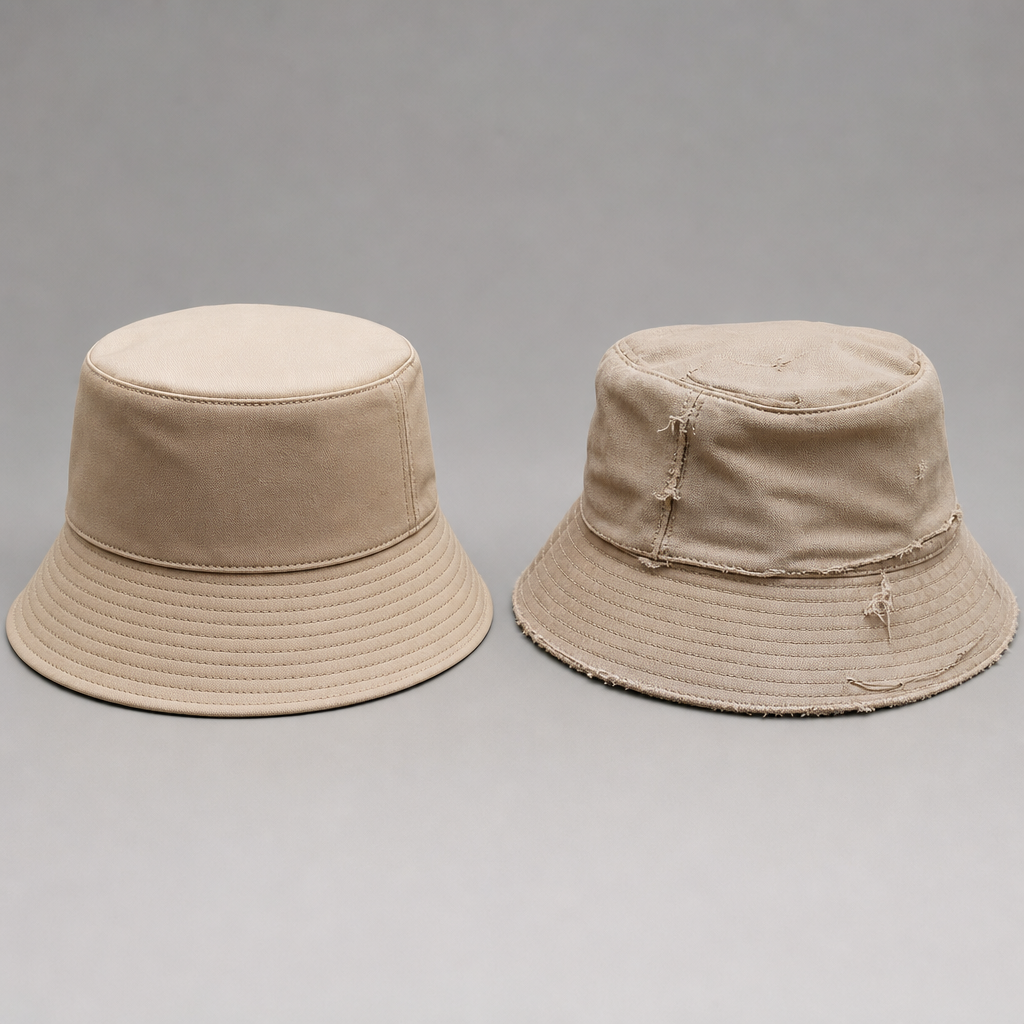
Baseball cap crown collapse is one of those defects buyers often notice too late. The sample photo looks fine. The front logo looks centered. The quote is acceptable. Then the decorated sample arrives with a soft front panel, the top line looks tired, or the bulk shipment comes out of the carton with visible shape drift. At that point, the problem is no longer cosmetic. It affects retail presentation, team image, and whether the buyer can approve the shipment without rework.
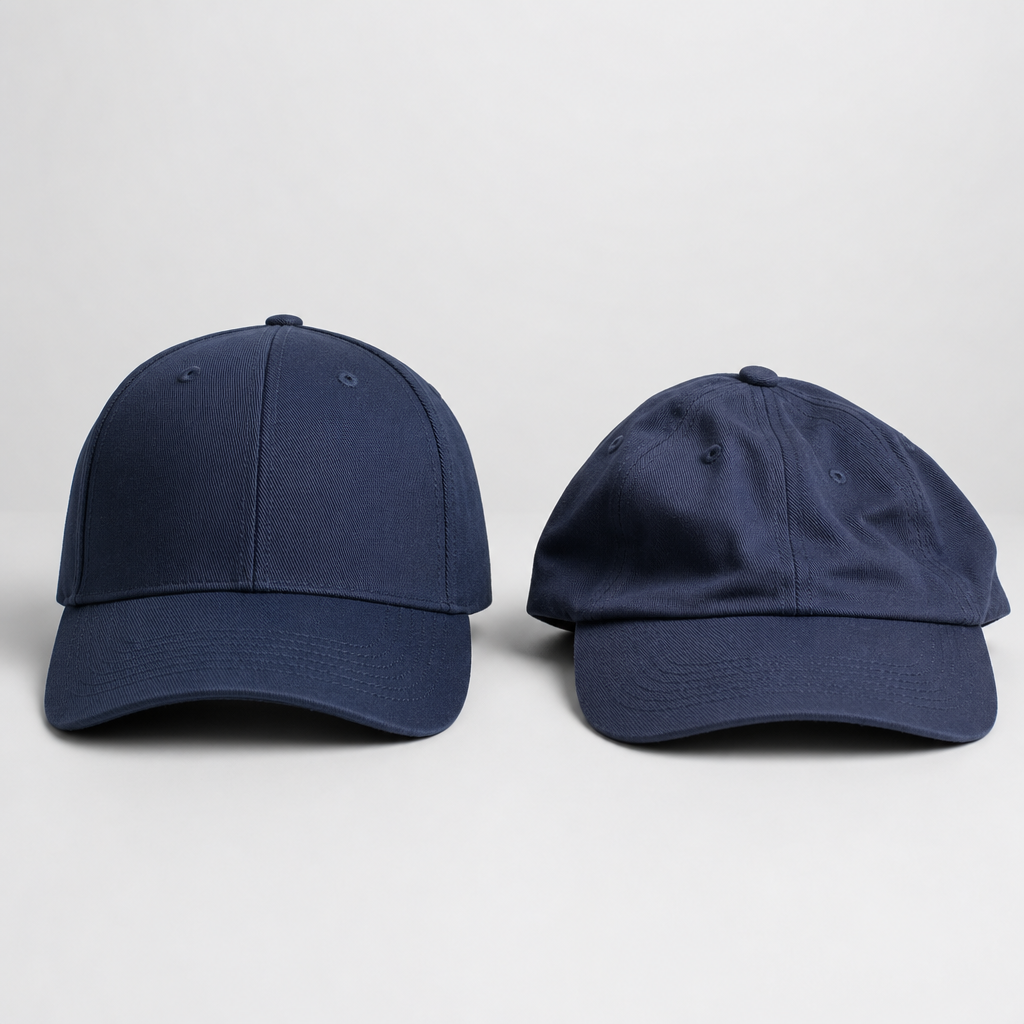
For wholesale buyers, crown collapse is usually not a random factory mistake. It comes from a chain of small decisions: weak front-panel support, the wrong fabric for the logo load, embroidery that pulls the panel inward, inconsistent sample control, and packing pressure that crushes the front shape during transit. If you want a cap to hold a clean branded silhouette, you need to control the crown before production starts, not after goods arrive.
If you are still comparing suppliers, start with this related guide on structured baseball cap supplier selection. If the supplier is already chosen, this article focuses on the inspection side of the decision.
Main Buyer Problem
The main buyer problem is simple: a baseball cap can pass a quick visual review and still fail where it matters. Crown collapse often appears after decoration, after packing, or after caps sit in storage. The result is a front panel that looks soft, dented, twisted, or uneven. On a branded cap, that also makes the logo look cheaper and less accurate.
The root cause is that many purchase orders define color, logo, quantity, and closure, but do not define crown structure. Buyers may say they want a "structured cap" without locking the front-panel support, panel tension, embroidery density limit, carton arrangement, or sample approval standard. That leaves too much interpretation to the production side.
The buyer action is to treat crown shape as a measurable spec, not a style adjective. The cap spec sheet should define whether the front panel is structured, what level of stiffness is expected, how the logo will be applied, and what the supplier must show in the approved sample. If those points stay vague, the odds of baseball cap crown collapse go up fast.
Material / Construction Risk
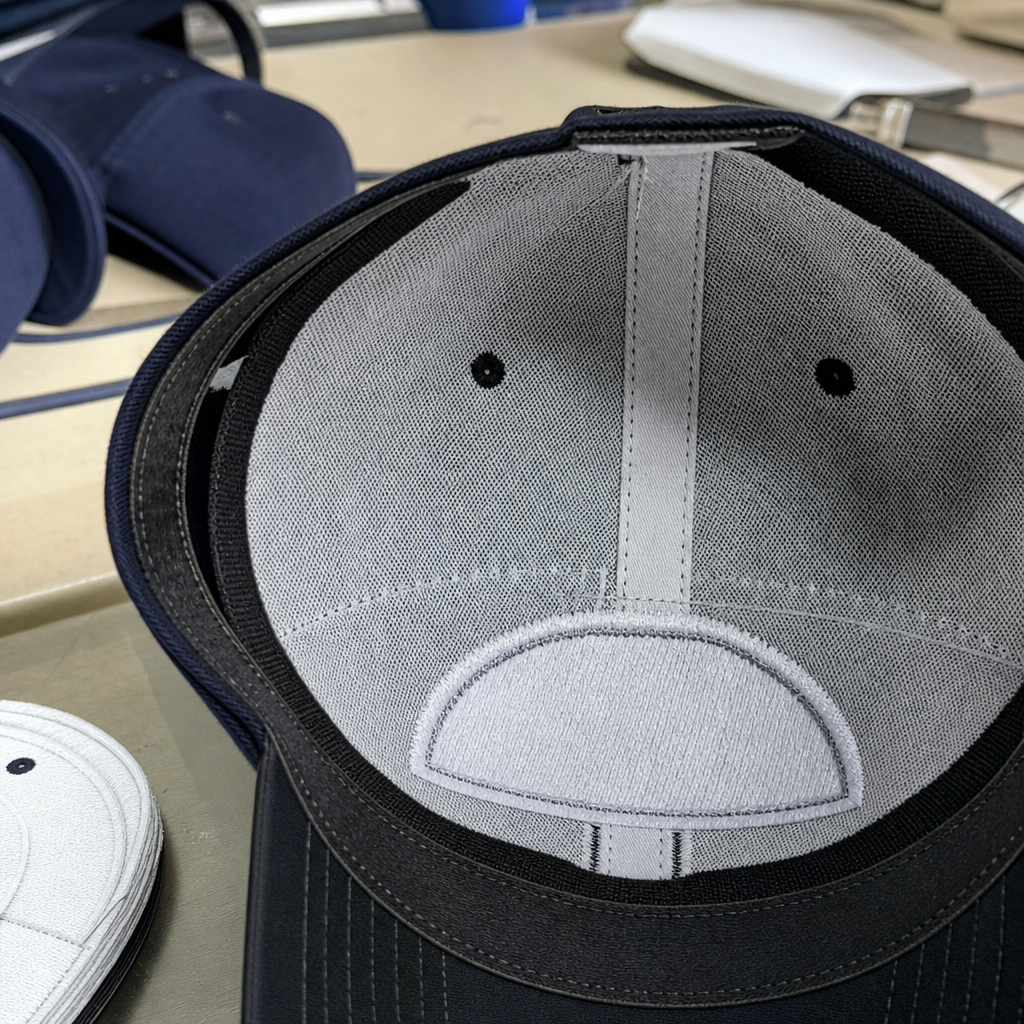
Most crown-collapse problems begin with construction, not with final packing. Structured caps usually rely on a stiffener behind the front panel, often called buckram or fused backing. Melco's cap embroidery guidance also notes that structured caps use fused buckram or heavy backing at the front panel, and that cap construction changes how decoration behaves on the sewing plane. That matters for buyers because the same logo can behave differently on two caps that look similar from the outside.
The first risk is a mismatch between fabric and structure. A light cotton twill, washed cotton, brushed fabric, or soft recycled blend can work well for comfort, but if the front panel support is too light for the logo size, the crown may dip inward after embroidery. A heavy fill-stitch logo on a soft front panel is a common reason for deformation.
The second risk is poor panel geometry. Even with acceptable buckram, the front panel can still collapse if the cut shape is inconsistent, the seam line is off, or the panel is not tensioned correctly during sewing. Buyers should pay attention to:
- front panel symmetry
- crown height consistency
- top button alignment
- center-front seam behavior, where applicable
- visible panel waviness after decoration
The third risk is decoration load. Embroidery looks strong in a mockup, but dense stitching adds weight and pull. If the logo has heavy fill, thick underlay, or too much height in a small area, the panel can pull inward or develop a crease. That is why a seam and stitching QC check should be paired with a crown-shape check, not treated as a separate issue.
Supplier / MOQ / Sampling Risk
Sampling is where buyers either prevent the defect or accidentally approve it. A supplier may send a top sample that looks clean because it was packed carefully, decorated slowly, and checked by a senior operator. Bulk goods can drift if the production line uses a different front-panel batch, faster embroidery settings, or tighter packing pressure.
The first buyer rule is this: approve the same construction you plan to buy. Do not approve an undecorated sample if the final cap will carry a large front logo. Do not approve a soft stock body if the bulk order will use a stiffer cap. And do not approve a cap shape from hand-carried sampling if the bulk shipment will travel compressed in export cartons.
The second buyer rule is to compare decorated sample, golden sample, and random production pulls. Ask the supplier to keep one approved reference sample on the line. Then require a few random decorated pieces from bulk production, not only a hero sample from the top of the pile.
The third buyer rule is to connect crown stability with MOQ and cost decisions. When buyers push for the absolute lowest price, the first compromises often happen in front-panel support, sweatband grade, decoration time, and packing density. Low MOQ is possible on many wholesale baseball cap programs, but low MOQ should not mean soft specs.
QC Checklist
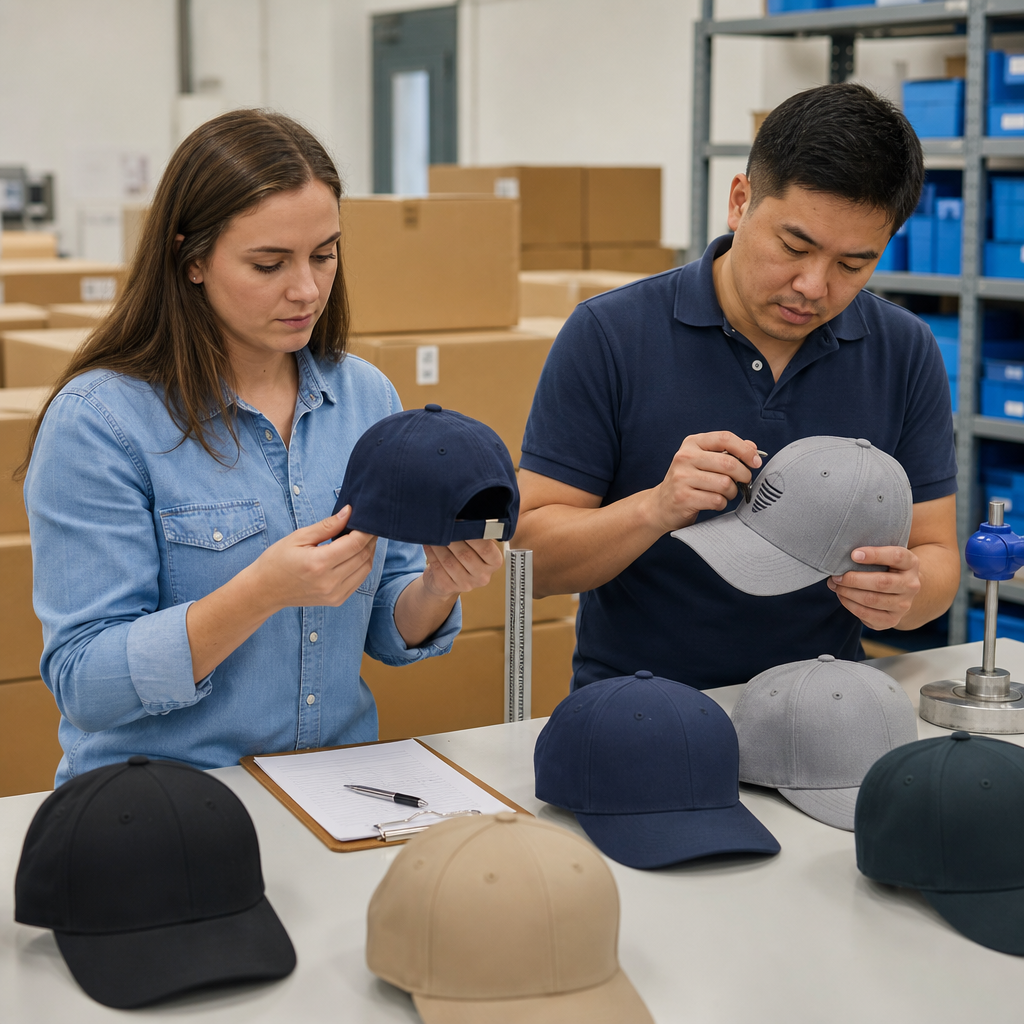
- Compare the front crown against the approved sample under normal lighting and side angle, not only front view.
- Press the front panel lightly by hand to check whether support feels stable or inconsistent between pieces.
- Inspect the inside front panel for backing consistency, attachment smoothness, and obvious wrinkling.
- Check whether embroidery has pulled the panel inward, especially around dense fill areas.
- Confirm the crown line remains balanced after caps are removed from inner packing.
- Inspect random pieces from the middle and bottom of cartons for pressure-related deformation.
- Compare multiple caps on a flat table to spot height drift, twist, or top-button offset.
- Reject any cap where crown collapse changes the perceived logo position or makes the front look fatigued.
Arrival inspection matters just as much as in-line inspection. A cap can leave the line in good condition and still fail after long transit if the front crown is unsupported or the cartons are overpacked. Buyers sourcing professional custom baseball caps should ask how caps are nested, whether fillers are used, and whether moisture or compression risk is expected during shipping.
Buyer Decision Framework
Use this framework before you approve the order:
1. Define the crown type. State clearly whether the cap must keep a firm front shape or whether a softer look is acceptable.
2. Match logo load to panel support. Large front embroidery, 3D work, or dense fills need more control than a small side logo.
3. Approve a decorated sample. The sample must include the real fabric, real structure, and real logo method.
4. Set a packing rule. Tell the supplier how many caps may be nested, whether inner support is required, and what carton pressure is acceptable.
5. Verify random bulk pieces. Require photos or video of random cartons, not only best-case pieces.
For 2026 promo and branded-merch work, this matters more because retail-inspired cap styling keeps raising buyer expectations. PPAI's 2026 coverage shows stronger emphasis on elevated everyday wear and more expressive headwear styling. That means buyers are less tolerant of cheap-looking shape loss, especially when the cap is part of a brand program rather than a throwaway giveaway.
Shipping does not create every crown defect, but it reveals weak construction fast. The usual transit triggers are:
- caps nested too tightly
- cartons stacked with too much top pressure
- humid storage softening the front support
- no shape filler or inner support where the cap design needs it
- long transit with repeated compression and rebound
If your destination market includes long ocean freight, hot warehouses, or multiple distribution handoffs, write the packing instruction into the PO. Buyers often spend time negotiating cents on unit price and ignore the carton rule that protects the visible product shape.
A good sample is not just stiffer. It is balanced. The front crown stands clean without bulging. The logo area stays smooth. The side profile holds its line. The top does not lean. The cap recovers after light hand pressure.
A bad sample often shows one or more of these signs:
- front panel caves in after decoration
- center area looks pulled or puckered
- left and right panel heights do not match
- cap looks acceptable from the front but weak from the side
- crown softens after one packing and unpacking cycle
One useful buyer move is to ask the supplier to photograph the cap from front, side, and top, then repeat after standard export packing. That comparison often reveals whether the shape is genuinely stable or only photographed well.
Request a quote or sample review after sharing your logo, target quantity, destination country, delivery date, and material preference.
Related internal resources: Structured Baseball Cap Supplier Custom Bulk Orders, Baseball Cap Stitching Seam Quality Spi Strength Testing Wholesale Buyers 2, Professional Custom Baseball Caps The Ultimate Sourcing Guide For 2026, Baseball Cap Wholesale Low Moq For Wholesale Buyers, 联系.
Reference sources: melco.com, ppai.org.
常见问题解答
What causes baseball cap crown collapse?
The most common causes are weak front-panel support, soft or mismatched fabric, heavy embroidery pull, poor panel geometry, and packing pressure during storage or shipping.
Can embroidery cause baseball cap crown collapse?
Yes. Dense front embroidery can pull the panel inward if the backing, structure, and stitch settings are not matched to the cap construction.
What is buckram in a baseball cap?
Buckram is a stiff support material used behind the front panel of many structured caps. It helps the crown keep shape and makes the front panel more stable for decoration.
How should buyers inspect a structured baseball cap sample?
Inspect the cap from front, side, and top view, check the inside backing, compare multiple pieces if possible, and review the decorated sample after packing and unpacking.
How should caps be packed to reduce crown collapse?
Caps should be nested carefully, protected from excessive top pressure, and packed with a carton method that matches the cap structure and shipping distance.
CTA
If you are seeing baseball cap crown collapse in sampling or bulk orders, send HongyueCap your cap style, fabric, logo size, quantity, packing expectation, destination country, and target ship date. We can suggest front-panel structure, sample checks, and packing controls before you approve production.