Bucket Hat Fabric GSM Weight Selection: Density, Thickness & Material Specs for Wholesale Buyers
Find quality bucket hat fabrics for your wholesale orders. Compare GSM weights, material density, and thickness specifications to select the best fabric for your product line.
Choosing the wrong fabric weight for bucket hats leads to two expensive problems: hats that are too floppy to hold their shape, or hats that are too heavy for your target market. Fabric weight — measured in GSM (grams per square meter) or oz/yd² — directly affects a bucket hat’s drape, structure, breathability, and manufacturing cost. Here is exactly how to specify GSM for bulk bucket hat orders.
Why Fabric GSM Matters for Bucket Hat Quality
Problem: Bucket hats made from fabric that is too light (under 150 GSM) collapse at the crown and brim — they look cheap and fail to protect from sun. Fabric that is too heavy (over 300 GSM) creates stiff, uncomfortable hats that buyers reject for warm-weather use.
Root Cause: Many factories select fabric by “hand feel” rather than measured GSM. Two fabrics that feel similar can differ by 30–50 GSM — enough to change drape and structure entirely. Without a written GSM tolerance in the tech pack, the fabric mill sends whatever is in stock.
Buyer Action: Specify target GSM with a ± tolerance (e.g., 200 GSM ± 10 GSM) in the fabric spec sheet. Require a fabric weight test report on the bulk greige fabric — before cutting begins.
GSM Ranges for Common Bucket Hat Fabrics
Different fabric types work best at specific GSM ranges for bucket hats:
| Fabric Type | Ideal GSM Range | Oz/yd² Equivalent | Best Application | 形状保持 |
|---|---|---|---|---|
| Cotton canvas / twill | 180–240 GSM | 5.3–7.1 oz | Everyday apparel bucket hats | Good to Excellent |
| Cotton poplin / broadcloth | 120–160 GSM | 3.5–4.7 oz | Lightweight summer bucket hats | Fair (needs interfacing) |
| Polyester microfiber | 140–180 GSM | 4.1–5.3 oz | Outdoor / sports bucket hats | 良好 |
| Nylon ripstop | 130–170 GSM | 3.8–5.0 oz | Packable / travel bucket hats | Moderate (needs stiffening) |
| 牛仔布 | 280–340 GSM | 8.3–10.0 oz | Heavy apparel / winter bucket hats | 优秀 |
| Cotton-polyester blend | 160–220 GSM | 4.7–6.5 oz | Balanced quality / cost bucket hats | Good to Excellent |
| Recycled PET / polyester | 170–210 GSM | 5.0–6.2 oz | Sustainable / eco bucket hats | 良好 |
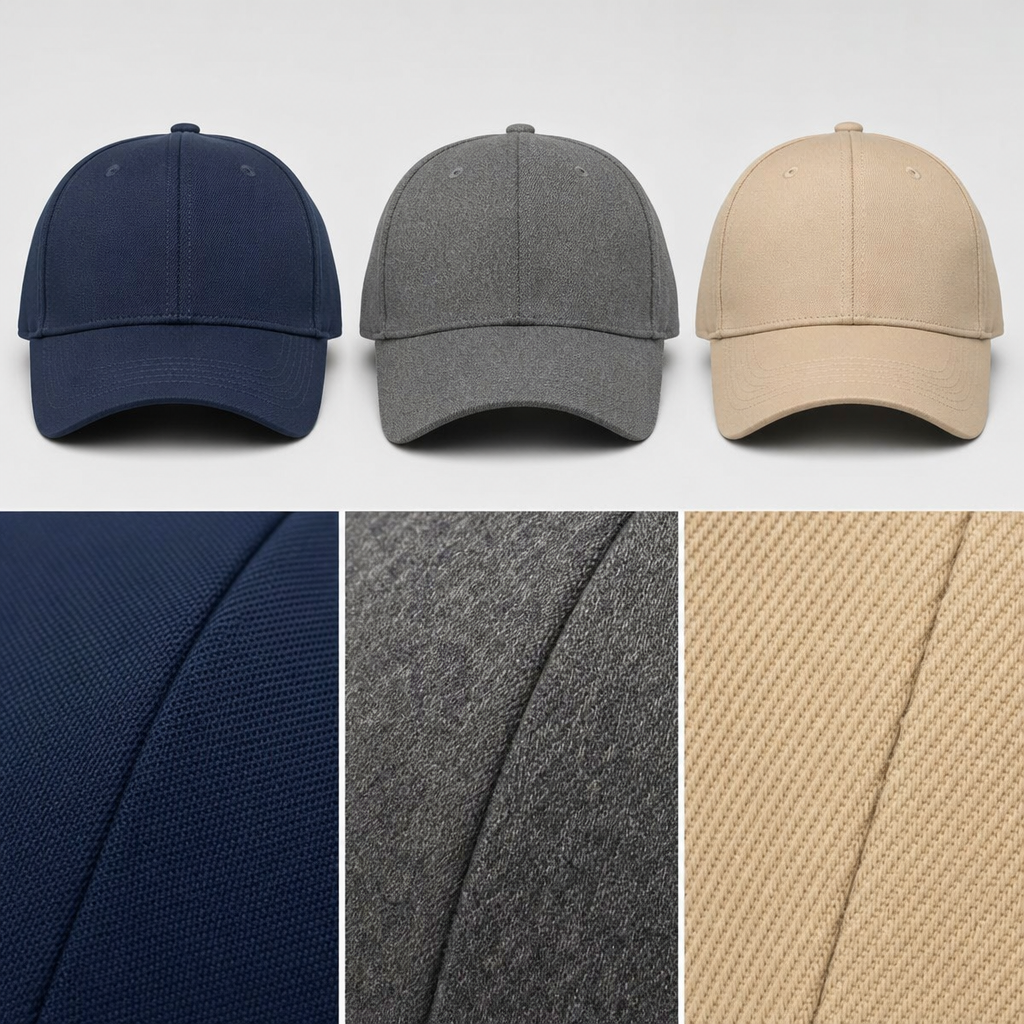
General rule: For a bucket hat that holds its brim shape without collapsing and feels comfortable for all-day wear, target 180–220 GSM. This is the sweet spot for apparel bucket hats in cotton twill, canvas, or cotton-polyester blends.
GSM Tolerance: Why ±10 GSM Is Not Enough
Problem: Buyers specify “200 GSM” but receive fabric that measures 175–210 GSM across different dye lots. The hats look and feel inconsistent between production batches.
Root cause: Fabric weight varies due to yarn tension differences during weaving, dye absorption rates (darker colors add 5–10 GSM), and finishing shrinkage. A ±10 GSM tolerance is too tight for most woven fabrics — mills routinely produce ±15 GSM variation.
Buyer Action: Specify a realistic tolerance of ±15 GSM for woven fabrics and ±10 GSM for knits. Require that the mill pre-shrinks the fabric before GSM measurement. Accept GSM on the high side of spec — fabric that is 5 GSM heavier than target is better than 5 GSM lighter.
专业建议 If your bucket hat needs structure at a lower GSM, specify fusible interfacing or a buckram lining in the brim. A 160 GSM fabric with a medium-weight fusible interfacing performs like 220 GSM without the extra weight.
How GSM Affects Bucket Hat Brim Stiffness and Drape
The brim is the most GSM-sensitive part of a bucket hat. A brim made from 140 GSM fabric without interfacing will droop within an hour of wear. Here is the relationship between GSM and brim behavior:
- Under 150 GSM: Brim requires stiff interfacing or a wire edge to hold shape. Without it, the brim flops and looks unstructured. Suitable only for reversible or packable bucket hats.
- 150–180 GSM: Brim holds shape with medium-weight interfacing. Suitable for apparel bucket hats with moderate brim width (up to 6 cm).
- 180–240 GSM: Brim holds shape with light or no interfacing. Ideal for standard apparel and outdoor bucket hats with brim width up to 8 cm.
- 240+ GSM: Brim is naturally stiff. No interfacing needed. Suitable for wide brims (8+ cm) and structured bucket hats.
QC check: Hold the bucket hat by one side of the brim. If the brim droops more than 30 degrees from horizontal, the fabric is too light or lacks sufficient interfacing for your target brim width.
Fabric Weight vs Cost: GSM Budget Planning
Fabric weight directly affects the cost per hat. Heavier fabrics require more raw material and may need stronger sewing equipment. Estimated cost impact:
| GSM Range | Relative Fabric Cost | Typical Use | Target Retail Price |
|---|---|---|---|
| 120–160 GSM | Base | Budget / promotional bucket hats | $5–10 |
| 160–200 GSM | +15%–25% | Mid-range apparel bucket hats | $10–20 |
| 200–240 GSM | +25%–40% | Premium structured hats | $20–35 |
| 240–340 GSM | +40%–80% | Heavyweight / denim bucket hats | $30–50+ |
For most wholesale orders targeting $15–25 retail, the 180–220 GSM range offers the best balance of shape retention, comfort, and cost.
Bucket Hat Fabric Weight QC Checklist
Use this 8-point checklist for bucket hat fabric weight approval:
- Fabric GSM confirmed on mill test report — measured before cutting, after pre-shrinking.
- GSM tolerance: ±15 GSM for woven fabrics, ±10 GSM for knits. Reject fabric outside tolerance.
- Fabric weight consistency across all dye lots — measurement from 3+ sample swatches.
- Brim droop test: hold by one side — droop must be under 30 degrees from horizontal.
- Crown structure: hat should hold its shape when placed upside down without collapsing.
- For lightweight fabrics under 160 GSM: interfacing or buckram lining confirmed in brim.
- Weight-to-application match: verify GSM is appropriate for the hat’s target climate and use.
- Cross-color GSM consistency — different colors of the same fabric should be within 10 GSM of each other.
常见问题解答
What is the best GSM for a standard cotton bucket hat?
180–220 GSM (5.3–6.5 oz/yd²) for standard cotton twill or canvas bucket hats. This range provides good brim shape retention without adding unnecessary weight or cost.
Can I use lightweight fabric for bucket hats?
Yes, for packable or travel bucket hats, 130–160 GSM works well — but you must add fusible interfacing or a wire edge to the brim. Without reinforcement, lightweight fabric will not hold shape.
How do I measure fabric GSM without a lab?
Use a circular fabric cutter (100 cm² die) and a precision scale. Cut a sample, weigh it in grams, and multiply by 100 to get GSM. Most fabric suppliers can provide a GSM test report on request — include this requirement in your pre-production checklist.
Specify the Right Fabric Weight for Your Next Bucket Hat Order
Fabric GSM is one of the easiest specs to get right — and one of the most commonly overlooked. Add target GSM with tolerance to your fabric spec sheet, test it on pre-production samples, and verify across colors.
Ready to order bucket hats with verified fabric quality? Browse our bucket hat wholesale collection 或 send your fabric spec sheet for a free production feasibility check.
Check our guide on Wide Brim Bucket Hats for more wholesale specs.
Check our guide on Bucket Hat Linings for more wholesale specs.
Comparing Natural vs Synthetic Bucket Hat Fabrics
The choice between natural and synthetic fabrics affects bucket hat performance and cost. Cotton offers breathability, comfort, and natural feel but may shrink after washing. Polyester provides durability, moisture-wicking properties, and shape retention. Cotton-polyester blends combine the best properties of both materials. Nylon offers excellent durability and water resistance for outdoor use. Linen provides lightweight breathability for warm weather. Each fabric type has different GSM ranges that affect hat structure and feel. Consider the end use of your bucket hats when selecting fabric composition.

Written by the Hongyuecap Product Team — 10+ years in B2B custom headwear manufacturing. Last updated: May 23, 2026.