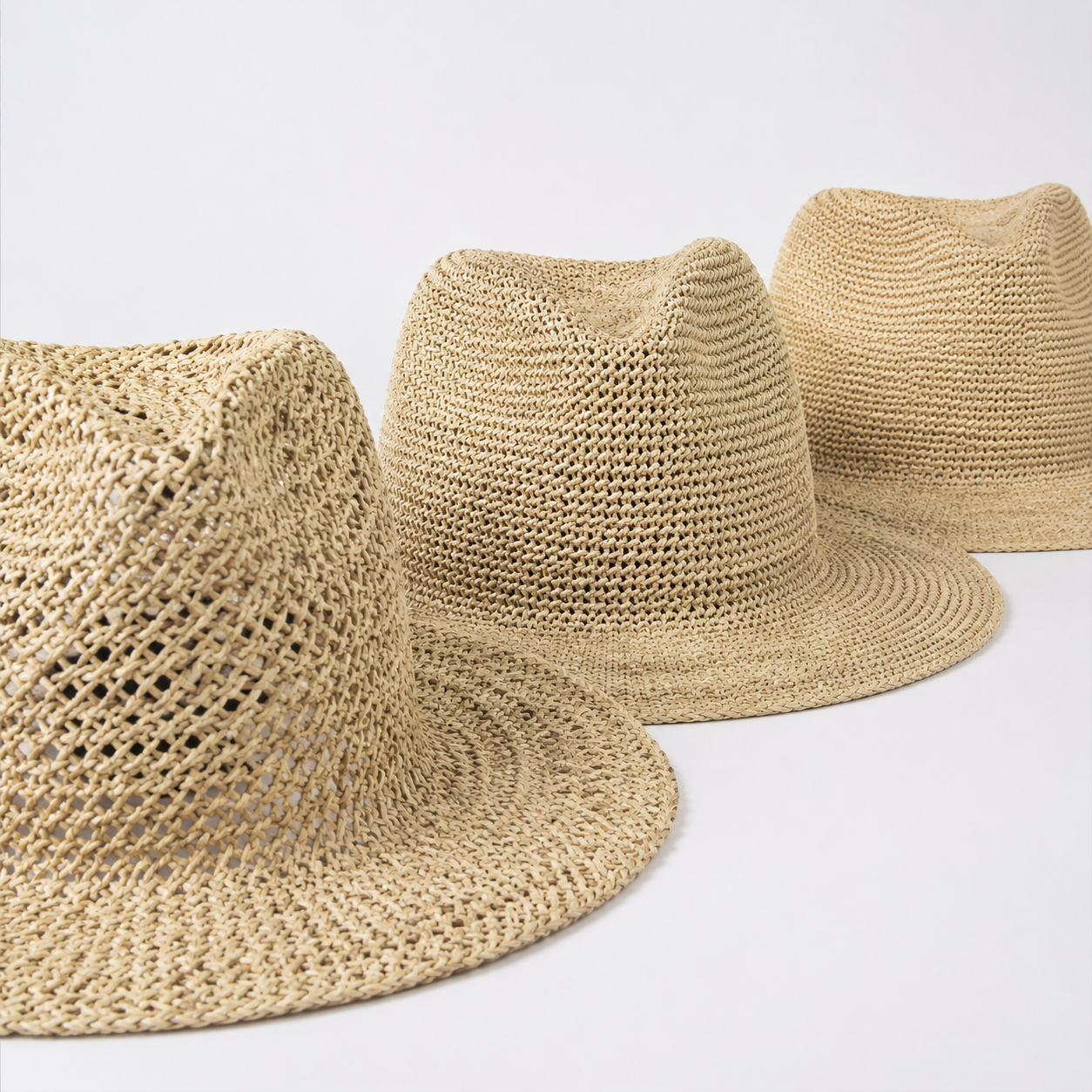
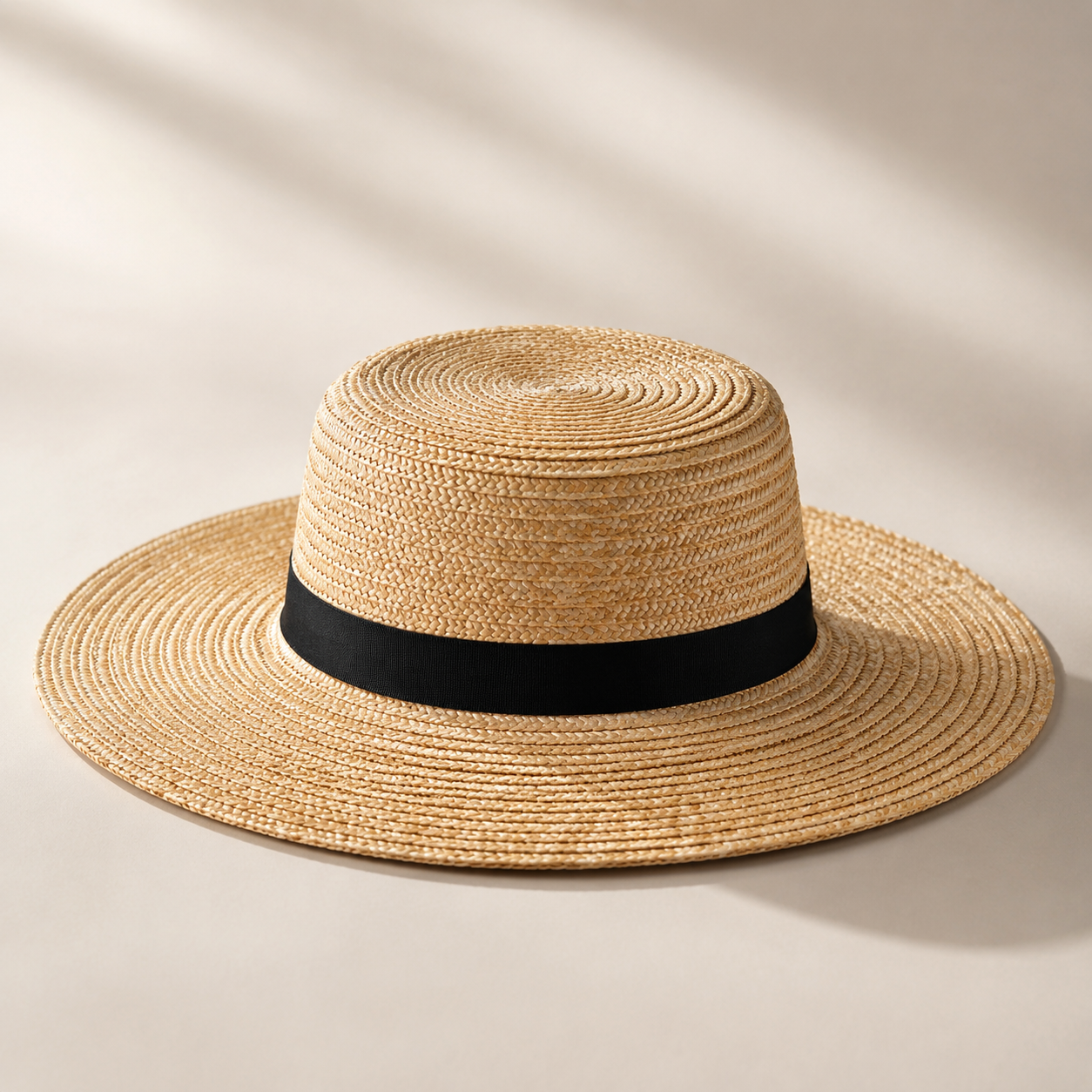
A crushed straw hat is a returned straw hat. Shape retention is the #1 durability issue in straw hat wholesale — typically showing up not in factory inspection but 3 weeks later when the customer unpacks and finds the crown collapsed. Specifying shape retention in your POs is essential.
Straw Hat Shape Retention Crown Support Wholesale Guide
Straw hats are structurally unique. Unlike fabric caps that bounce back, straw hats rely on fiber memory and internal supports to maintain shape. Industry data shows 27% of straw hat returns stem from shape deformation — making shape retention the most impactful quality factor after sun protection. Explore our straw hat manufacturing for construction standards.
Why Straw Hat Shape Retention Is Different
Straw fibers — whether natural (raffia, toyo, paper braid) or synthetic (polypropylene) — have a permanent deformation threshold. Once a fiber bends past its elastic limit, it stays bent. This varies dramatically by material:
| Straw Material | Elastic Recovery | Deformation Point | Shape Life |
|---|---|---|---|
| Paper Braid (Toyokalon) | 75-85% | After 3-4 crushes | 1-2 seasons |
| Raffia (Natural) | 60-70% | After 1-2 crushes | 1 season |
| Polypropylene (Synthetic) | 90-95% | After 15-20 crushes | 3-5 seasons |
| Seegras | 55-65% | After 1 crush | 1 season max |
| Hemp/Abaca Blend | 80-88% | After 5-8 crushes | 2-3 seasons |
For wholesale buyers targeting retail consumers who expect multi-season use, polypropylene synthetic straw or high-grade paper braid with treatment is non-negotiable. Natural raffia and seagrass should be positioned as single-season fashion items. See our material selection guide für weitere Einzelheiten.
Straw hats present unique shape retention challenges compared to fabric hats because natural straw fibers lack the elastic memory of synthetic or cotton materials. Once crushed, folded, or compressed beyond their structural limit, straw fibers do not spring back naturally. This inherent property means shape retention in straw hats depends almost entirely on the manufacturing techniques chosen during production. Unlike felt or knitted hats where material elasticity provides some recovery, straw hats require proactive structural reinforcement from the crown construction stage. For wholesale buyers, understanding this fundamental difference is essential for specifying the right manufacturing process and for managing customer expectations regarding straw hat care and longevity in retail environments.
The 4 Methods of Straw Hat Shape Retention
1. Shellacking (Resin Coating)
The oldest method: the formed hat body is sprayed or dipped in lacquer-based resin. The resin penetrates fibers and hardens, creating a shape-locked matrix. Key spec: resin concentration ratio — 5-8% for light hold (fashion hats), 10-15% for rigid hold (dress hats). Over 15% makes the hat brittle. HongYueCap uses 12% water-based acrylic with UV inhibitors. Per ISO standards, shellacked hats must compress 15-20mm under 2kg and fully rebound within 30 seconds.
2. Wire-Reinforced Brim
For wide-brim hats (≥8cm), wire reinforcement prevents permanent warping. Galvanized steel wire (0.8-1.2mm diameter) is sewn into the brim edge. Galvanized steel lasts 3-5x longer than uncoated wire in humidity. For coastal resort markets, specify marine-grade PVC-coated wire to prevent rust staining. 1.0mm diameter is the balanced standard — 0.8mm is too flexible, 1.2mm too rigid for casual wear.
3. Internal Crown Lining with Stiffener
A hidden structural component: non-woven polyester or cotton buckram fused to the inner crown adds rigidity and prevents collapse when hung or stored. Stiffener grades: light (crushable styles), medium (semi-structured), heavy (formal dress). Medium-grade polyethylene adds ~$0.18-0.30 per hat but reduces crown collapse returns by ~55%.
4. Blocking and Heat-Setting
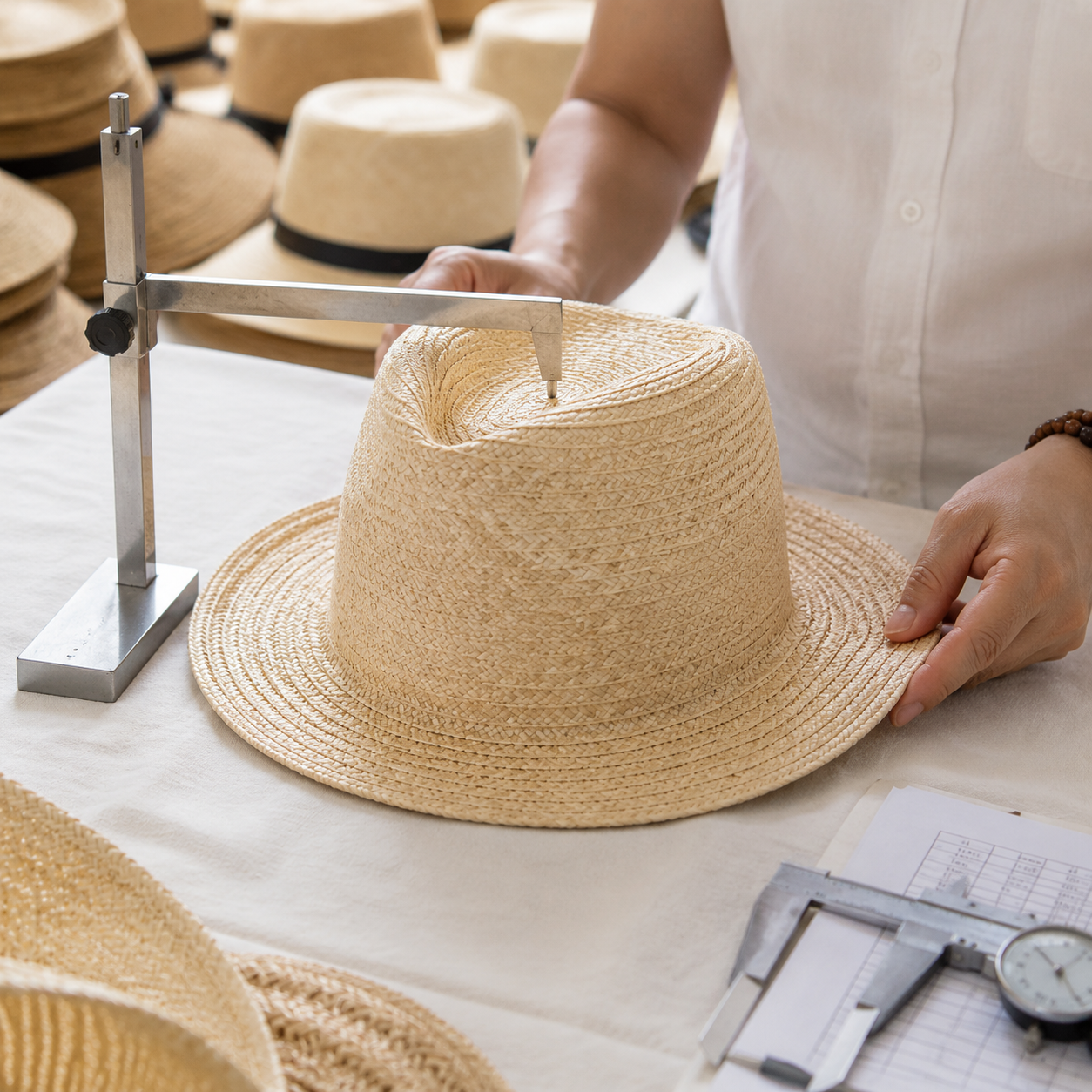
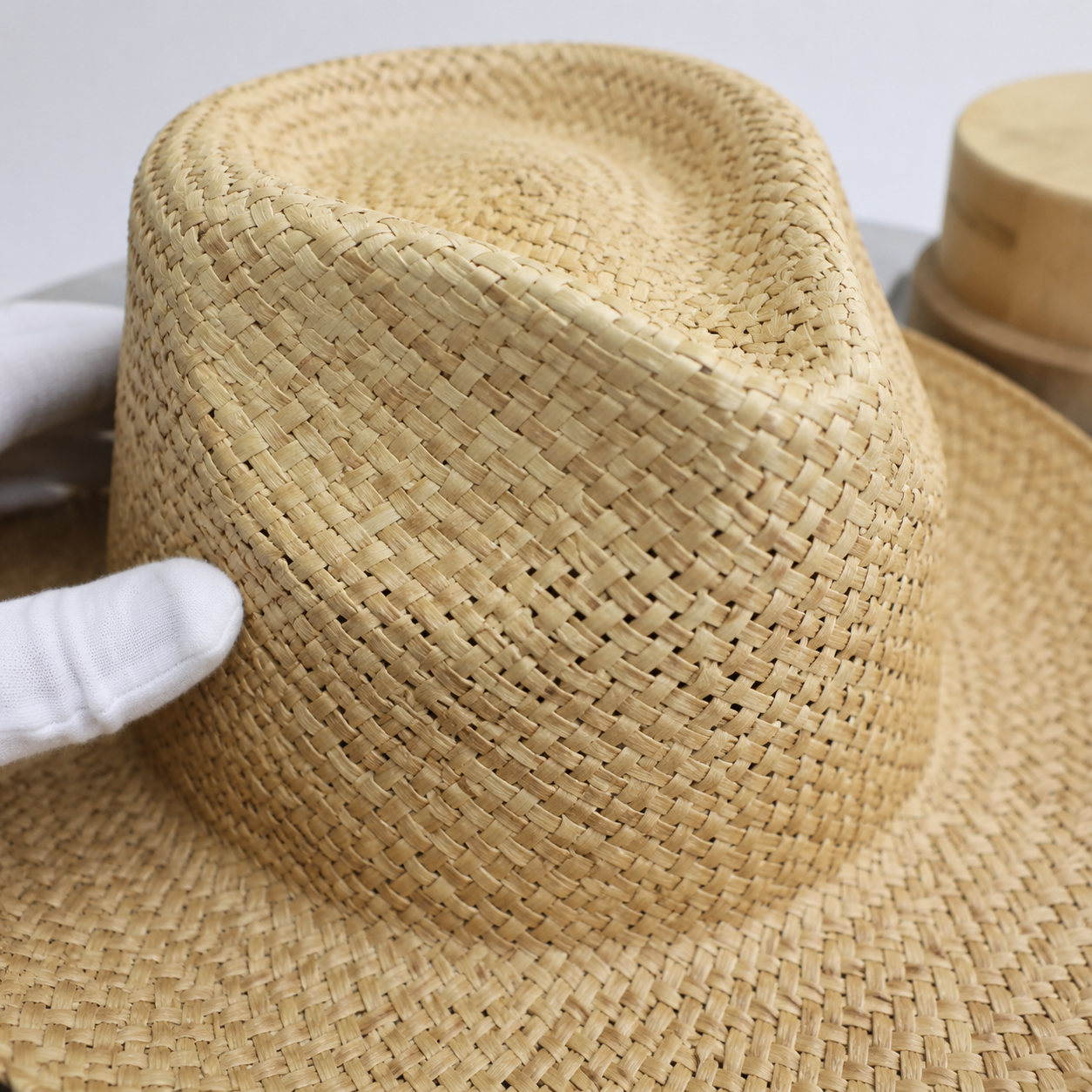
Blocking shapes the hat over a heated wooden or aluminum crown form at 120-140°C for 60-90 seconds. This activates shellacking resin and sets fiber memory. Quality check: the crown must hold shape when picked up by the brim alone. Sagging or dimpling = insufficient blocking = factory rejection criterion.
Shipping and Storage Shape Protection
Even perfectly constructed hats can arrive crushed. Key packaging specs:
Crown Support Insert: Recyclable paper pulp or molded foam inside every crown prevents crushing when boxes are stacked. Cost: $0.03-0.08/unit. Orders with inserts see 80% fewer transit damage claims.
Individual Polybag with Air Cushion: Each hat individually polybagged with an inflatable air pillow on top of the crown. The polybag prevents scuffing; the air pillow absorbs compression from above.
Carton Stacking Limit: Never stack straw hat cartons more than 5 high. A 10-high stack exerts 180-220kg of downward force on the bottom carton — enough to permanently deform any crown. Per GS1 packaging standards, cartons should have compression test certification of 250kg+ stacking strength.
Proper packaging for straw hats during shipping is non-negotiable for maintaining shape integrity. HongYueCap recommends a three-layer protection system: individual hat shapers (formed plastic or cardboard inserts matching the crown profile), acid-free tissue paper wrapping to prevent surface abrasion, and rigid box packaging with 2-3cm clearance around the brim edges. For bulk shipments, stacked hats should be limited to 12 units per carton with interleaving crown inserts. Temperature exposure during shipping is also critical — straw hats should not be subjected to temperatures above 50 degrees Celsius (122 degrees Fahrenheit) during container transport, as extended heat exposure weakens natural fiber bonds. Include temperature monitoring indicators in high-value shipments.
QC Inspection Checklist: Straw Hat Shape Retention
- ☐ Crown Compression Test: 2kg weight, 60 seconds. 95%+ rebound within 30 seconds.
- ☐ Brim Flex Test: Flex to 45° upward and downward 3 times. No permanent kinks.
- ☐ Shellacking Uniformity: No sticky spots or rough patches across surface.
- ☐ Crown Pickup Test: Pick up by brim only — crown must not sag.
- ☐ Packaging Audit: 20 random samples: crown inserts present, “DO NOT STACK >5” labels visible.
- ☐ Humidity Test (Tropical): 85% RH at 35°C for 48 hours. Check for sagging, rust, resin softening.
A comprehensive QC inspection for straw hat shape retention should include at minimum the following five checks. First, static shape measurement: compare crown height and brim circumference against approved sample specifications, with maximum tolerance of 3mm deviation. Second, compression recovery: apply consistent palm pressure to the crown for 5 seconds and measure recovery within 10 seconds — acceptable recovery is 90% or better. Third, edge stability test: gently flex the brim edge 45 degrees and release — the brim should return to its original position without creasing. Fourth, humidity exposure simulation: expose a sample to 70% relative humidity for 24 hours and verify dimension changes are under 5%. Fifth, transport simulation: pack a sample per the shipping specification and subject to 100 drop cycles from 30cm, then inspect for any dimension deviation. Document all results per production batch.
FAQ: Straw Hat Shape Retention for Wholesale Buyers
How long should a quality straw hat hold its shape?
A properly shellacked straw hat with crown support lasts 2-3 seasons. Synthetic polypropylene: 3-5 seasons. Natural raffia: 1 season — market as fashion seasonal items. Storage matters: hanging by the brim accelerates deformation 2x vs flat storage with supports.
Can crushed straw hats be reshaped?
Partially. Shellacked hats can be re-blocked with steam, but fiber kinks from crushing are permanent in natural fibers. Synthetic fibers have better recovery. Prevention through packaging is far more cost-effective.
Best material for shape retention in humidity?
Polypropylene synthetic straw with nylon core wire is top performer in humidity — water-resistant, no softening, no rust. Paper braid loses 40% structural rigidity in humidity. Per Textile Exchange, synthetic straw has 3x the humidity resistance of natural paper braid at equivalent price points.
About the Author: Written by the HongYueCap Product Team — specialists in wholesale straw hat manufacturing with expertise spanning fiber selection and export-quality packaging. View our straw hat wholesale collection or request a custom quote.
Written by the Hongyuecap Product Team — 10+ years in B2B custom headwear manufacturing. Last updated: May 23, 2026.