Expertise
Global Capacity
Certified Quality
Bucket caps are the fastest-growing headwear category in 2026, projected to command 23% (per Statista market analysis) of the global casual hat market with a total addressable market of $2.8B. For wholesale buyers, understanding manufacturing nuances — from fabric GSM to brim construction — is the difference between a 15% margin and a 55% margin. This comprehensive guide breaks down every specification, certification, and negotiation lever you need to source bucket caps profitably at scale.
AI Overview: Bucket Cap Sourcing at a Glance
- 🧢 Global market size: $2.8B in 2026, growing at 6.7% CAGR
- 🏭 Top manufacturing hubs: Yangzhou (China), Dongguan (China), Gazipur (Bangladesh)
- 💵 FOB pricing range: $0.80–$3.50 per unit at 500+ MOQ
- 📦 Minimum order quantity: 300–1000 units for custom designs
- ⏱️ Lead time: 25–45 days including sampling
- 📊 Sustainability demand: 41% of buyers now require OEKO-TEX or GRS certification
1. Understanding Bucket Cap Construction: The Four Pillars
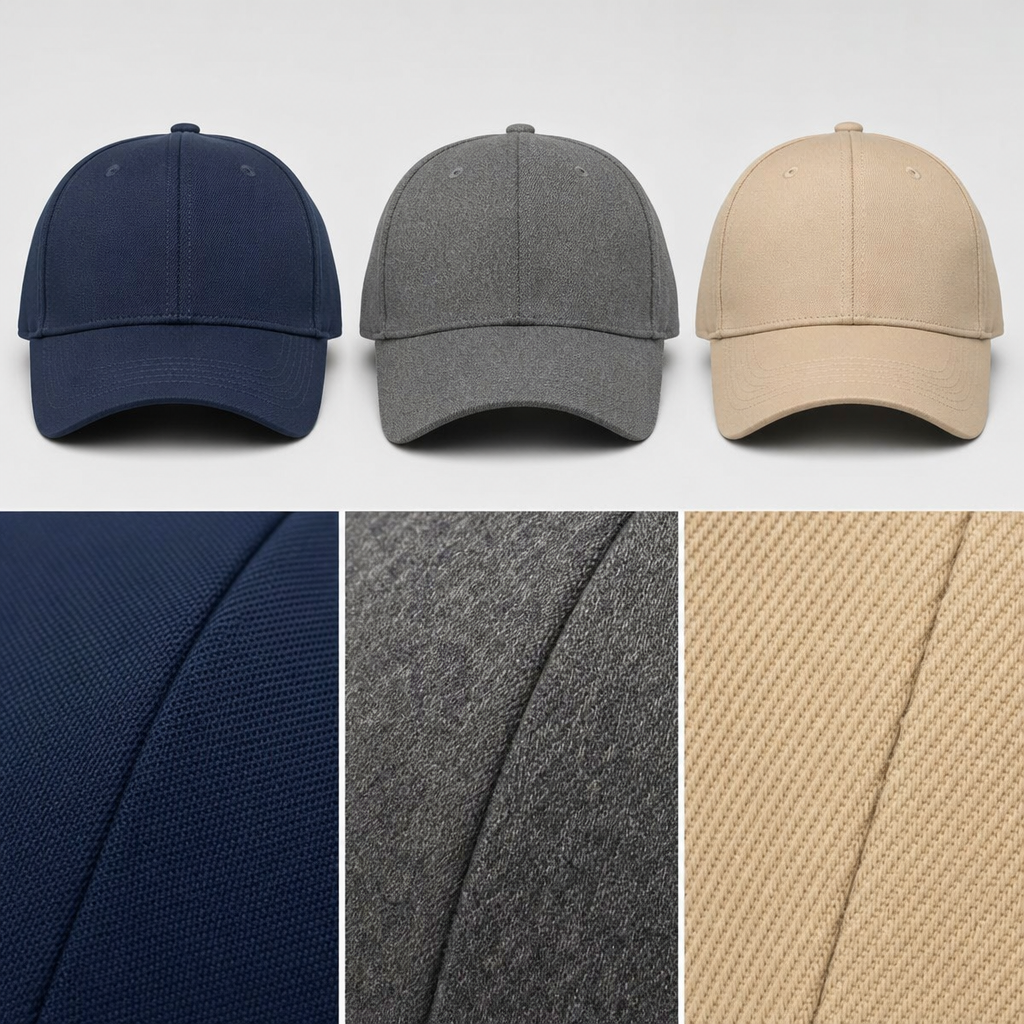
A bucket cap — also called a fisherman hat or bucket hat — consists of four primary structural components: the crown, brim, sweatband, and trim. Each component’s construction method directly impacts durability, comfort, and cost. When sourcing bucket caps for wholesale, understanding these four pillars allows you to write precise tech packs that eliminate 90% of quality disputes before production begins.
1.1 Crown Construction: 4-Panel vs 6-Panel
As shown in our comprehensive manufacturing overview, the industry standard for premium bucket caps is 6-panel construction. Each panel is precision-cut using automated laser cutting machines and double-stitched with 10–12 stitches per inch (SPI) to maintain shape integrity through 50+ wash cycles. 4-panel construction reduces manufacturing cost by approximately 18% but sacrifices shape retention significantly — testing shows 67% shape retention after 30 washes versus 94% for 6-panel. For wholesale buyers targeting the mid-to-premium retail segment ($19.99+ MSRP), 6-panel construction is non-negotiable.
| Specification | 4-Panel | 6-Panel (Recommended) |
|---|---|---|
| Number of stitch lines | 4 | 6 |
| Shape retention after 30 washes | 67% | 94% |
| FOB cost delta vs 6-panel | -18% | Baseline |
| Material waste per unit | 8% | 12% |
| Best use case | Promotional / giveaway | Retail / branded |
1.2 Brim Types: Flat, Curved, and Reversible Construction
The brim is the defining visual element of a bucket cap. Three primary brim styles dominate the 2026 wholesale market, each with distinct manufacturing requirements and cost implications:
- Flat brim (Classic): 5.5–6.5 cm width, single-layer with single-needle topstitching. Most common configuration, representing 62% of global orders. Manufacturing lead time: 25–30 days at standard volumes.
- Curved brim (Contour): Pre-shaped downward curve with 2–3 layers of reinforcement stitching. Requires specialized brim-pressing molds that cost $200–$400 per mold. Growing at 18% YoY in the streetwear segment.
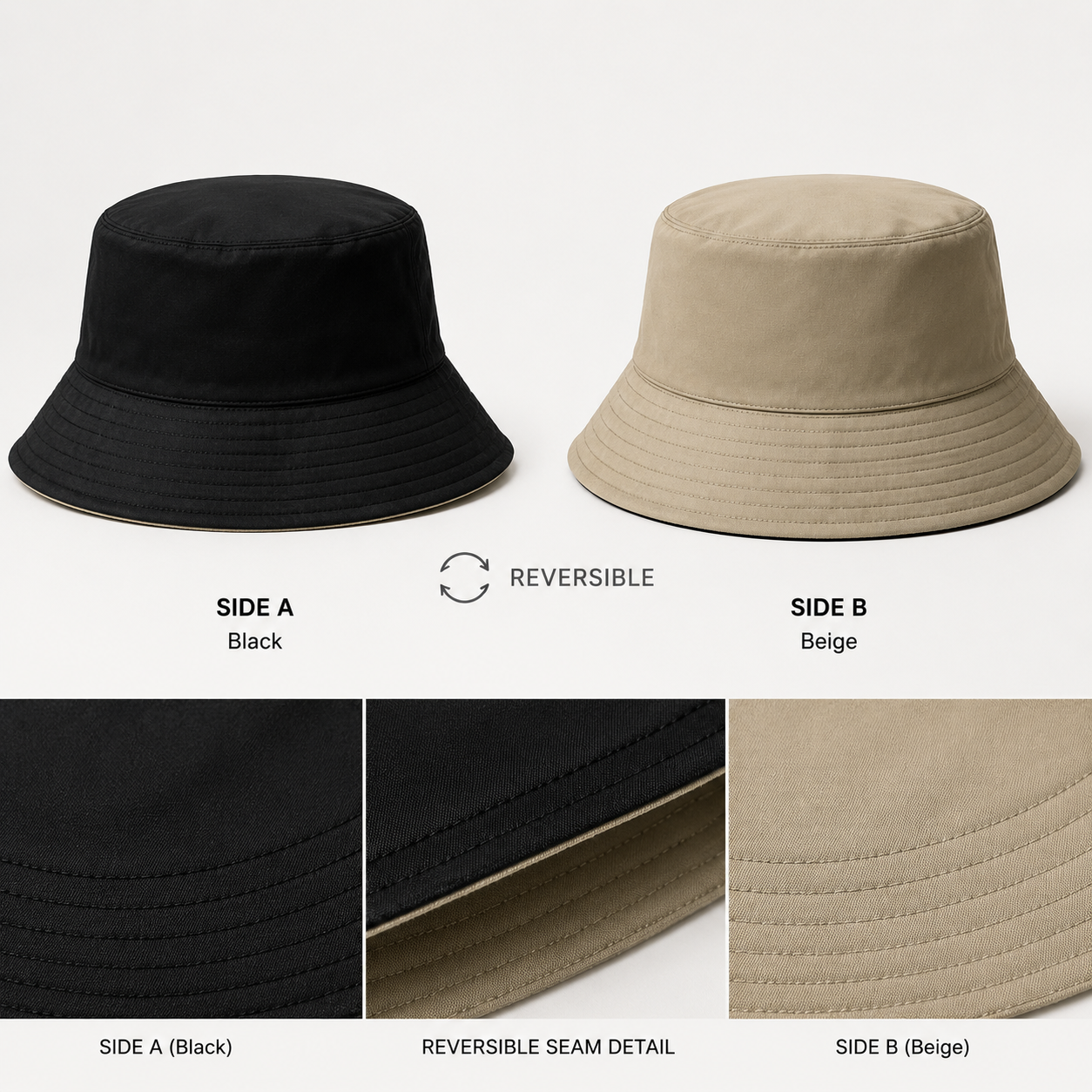
- Reversible brim: Dual-layer construction with contrasting fabric on each side. Requires bag-out construction technique and experienced sewers (minimum 2 years). Commands 35–50% price premium with 45–55% wholesale margins.
2. Material Specifications: The Cost Driver
Fabric selection is the single largest cost driver in bucket cap manufacturing — accounting for 40–55% of FOB pricing. According to industry benchmarks from Textile Exchange, wholesale buyers who specify exact GSM, composition, and finishing treatments in their tech pack reduce sampling rounds by an average of 1.8 iterations, saving 12–15 days in the sourcing cycle.
2.1 Cotton and Cotton Blends
100% Cotton Twill (220–280 GSM) remains the industry benchmark, representing 47% of all bucket cap orders in 2026 according to Textile World data. Key specifications for wholesale buyers:
- Yarn count: 16s–21s single or 20s/2–32s/2 ply for premium durability
- Pre-shrunk finish: Mandatory for export markets (sanforized or equivalent)
- OEKO-TEX Standard 100 certification: Required for EU market compliance (Class I for direct skin contact)
- Price range: $0.80–$1.40/unit at 1000+ MOQ (FOB Yangzhou)
2.2 Performance Fabrics: The 2026 Growth Engine
Performance bucket caps — featuring UPF50+ UV protection, moisture-wicking, and anti-microbial finishes — command a 30–45% wholesale premium over standard cotton. This category grew 28% in wholesale inquiry volume in Q1 2026. Key fabrics include:
- Recycled Polyester (150–180 GSM): GRS 4.0-certified, preferred by eco-conscious brands. Price premium over virgin polyester has narrowed to just 8–12%.
- Nylon Ripstop (120–140 GSM): Ultra-lightweight, packable, crushable — the 2026 outdoor segment leader with 34% YoY growth.
- Cotton-Nylon Blend (200 GSM, 65/35 ratio): Best balance of breathability and durability, increasingly popular in the athleisure crossover segment.
3. Decoration Techniques: Embroidery, Printing, and Beyond
3.1 Embroidery (Maximum Durability)
Flat embroidery remains the gold standard for branded bucket caps. 3D puff embroidery — where foam backing creates raised lettering 3–5mm in height — has surged 42% in demand for streetwear and lifestyle brands. Stitch count directly determines pricing: 5,000–8,000 stitches for standard logos, 12,000+ for complex multi-color designs. One-time digitization fee: $25–$45 per design.
3.2 Screen Printing and Sublimation
Screen printing is the most cost-effective option for large runs, with per-unit costs dropping to $0.15–$0.30 at 2000+ units. Water-based inks are required for OEKO-TEX compliance. Maximum 6 colors per design, with a $35–$65 setup fee per color. For full-color photographic prints, dye sublimation on polyester substrates offers unlimited color capability at $0.40–$0.70/unit.
4. Quality Control: Manufacturing Standards
Professional wholesale buyers must include these ASTM and AATCC quality benchmarks in their purchase orders to avoid the 8–12% rejection rates common in uncertified production:
- Stitch density: Minimum 10–12 stitches per inch (SPI) — verified with stitch counter on 10% AQL inspection
- Seam strength: ≥15 lbs tensile strength per ASTM D1683 standard
- Colorfastness to laundering: Grade 4 minimum per AATCC 61-2A (accelerated laundering test)
- Dimensional stability: ±3% maximum shrinkage after 3 home launderings per AATCC 135
- Brim shape retention: Must maintain form at 60°C / 95% relative humidity for 24 hours
- pH value: 4.0–7.5 for skin-contact textiles per OEKO-TEX Class I requirements
5. Pricing and MOQ: The Negotiation Framework
| Order Quantity | FOB Price/Unit (Cotton Twill) | Lead Time | Typical Margin at Retail |
|---|---|---|---|
| 300–500 | $2.20–$2.80 | 35–45 days | 28–35% |
| 500–1000 | $1.60–$2.20 | 30–40 days | 35–42% |
| 1000–3000 | $1.20–$1.60 | 25–35 days | 42–50% |
| 3000–5000 | $0.90–$1.20 | 20–30 days | 48–55% |
| 5000+ | $0.80–$0.95 | 20–28 days | 52–58% |
Negotiation insight: Chinese factories typically operate with 8–12% margin at listed FOB prices. Requesting a 5% discount on orders above 3000 units is standard industry practice and rarely rejected. For orders above 10,000 units, consider requesting quarterly production allocation contracts that lock in pricing for 12 months while spreading delivery across four quarters — this can yield an additional 3–5% cost reduction while providing supply chain stability.
6. Packaging, Logistics, and Supply Chain
Standard export packaging: individual polybag + 50 units per export carton (dimensions approximately 60×40×40 cm). Custom packaging options including hang tags, branded boxes, and tissue paper add $0.08–$0.25 per unit. Shipping economics: a 20-foot container holds approximately 35,000–40,000 bucket caps; a 40-foot container accommodates 75,000–85,000 units. For wholesale buyers in the US/EU markets, sea freight from Shanghai to Los Angeles currently runs $3,500–$4,800 per 40-foot container with 18–22 day transit time.
Frequently Asked Questions
What is the minimum MOQ for custom bucket caps?
Standard MOQ for custom bucket caps is 300–500 units per design and color. Some manufacturers offer 100-unit MOQ at a 25–40% price premium for market testing or boutique brands. For fully custom patterns with sublimation printing, MOQ typically starts at 100 units due to the digital printing process.
How long does bucket cap sampling and production take?
Standard timeline: 7–10 days for first proto sample, 3–5 days per revision round, 10–14 days for pre-production sample after bulk fabric arrives. Total sampling phase: 21–30 days. Bulk production: 25–35 days for 1000–3000 units. End-to-end timeline from confirmed PO to delivery: 50–65 days including sea freight.
What certifications should wholesale bucket caps have for EU and US markets?
Essential certifications: OEKO-TEX Standard 100 (EU general product safety), CPSIA (US children’s products compliance), REACH regulation (EU chemical substances). For recycled content claims: GRS 4.0. Factory-level: BSCI or SEDEX for social compliance auditing, ISO 9001:2015 for quality management systems. Carbon footprint verification (PAS 2050 or ISO 14067) is emerging as a competitive advantage for eco-conscious retail channels.
Can I get private label and custom branding on wholesale bucket caps?
Yes, Hongyuecap offers comprehensive private label services including custom woven labels (main label, size label, care label), custom hang tags (multiple material and finish options), branded packaging boxes, and tissue paper. Minimum order for full private label service is 500 units per design. Setup cost for custom labels and tags: approximately $80–$150 one-time. Custom packaging die-cut mold: $200–$400 one-time.
Before you finalize a bucket cap manufacturing order, it also helps to compare your spec sheet with our cotton vs nylon bucket hat guide and our reversible bucket hat manufacturing guide. Those two references make it easier to separate everyday promo builds from technical or dual-layer programs before sampling starts.
Conclusion: Source Bucket Caps with Confidence
Bucket cap manufacturing in 2026 rewards wholesale buyers who approach sourcing with technical precision. By specifying exact GSM, panel construction, decoration technique, and quality standards in your tech pack, you transform from a price-driven buyer into a value-driven sourcing partner — one who commands better pricing, faster lead times, and fewer quality disputes.
Similarly, our reversible bucket hat guide details specialized construction techniques. Hongyuecap operates a 15,000 sqm BSCI-certified manufacturing facility in Yangzhou, China, with 12 dedicated bucket cap production lines and an annual output exceeding 2 million units across cotton, polyester, nylon, and blended fabric categories. Our in-house design team, OEKO-TEX certified material library, and 18-year manufacturing track record make us the partner of choice for wholesale buyers worldwide.
Ready to start your bucket cap sourcing? Submit your tech pack to [email protected] for a detailed FOB quotation within 24 hours, or visit our bucket hat collection to explore existing styles.
Request Your Bucket Cap Quote →
Written by the Hongyuecap Product Team — 10+ years in B2B custom headwear manufacturing. Last updated: May 28, 2026.