Knitted Beanie Logo & Patch Customization for Wholesale Buyers: Woven Labels, Embroidery, Heat Transfer & Fabric Labels
"We ordered 5,000 custom knitted beanies with embroidered logos. When the shipment arrived, the embroidery needle holes had stretched the knit fabric so badly that the beanies looked deformed even without the logo area." — European promotional products distributor, December 2025
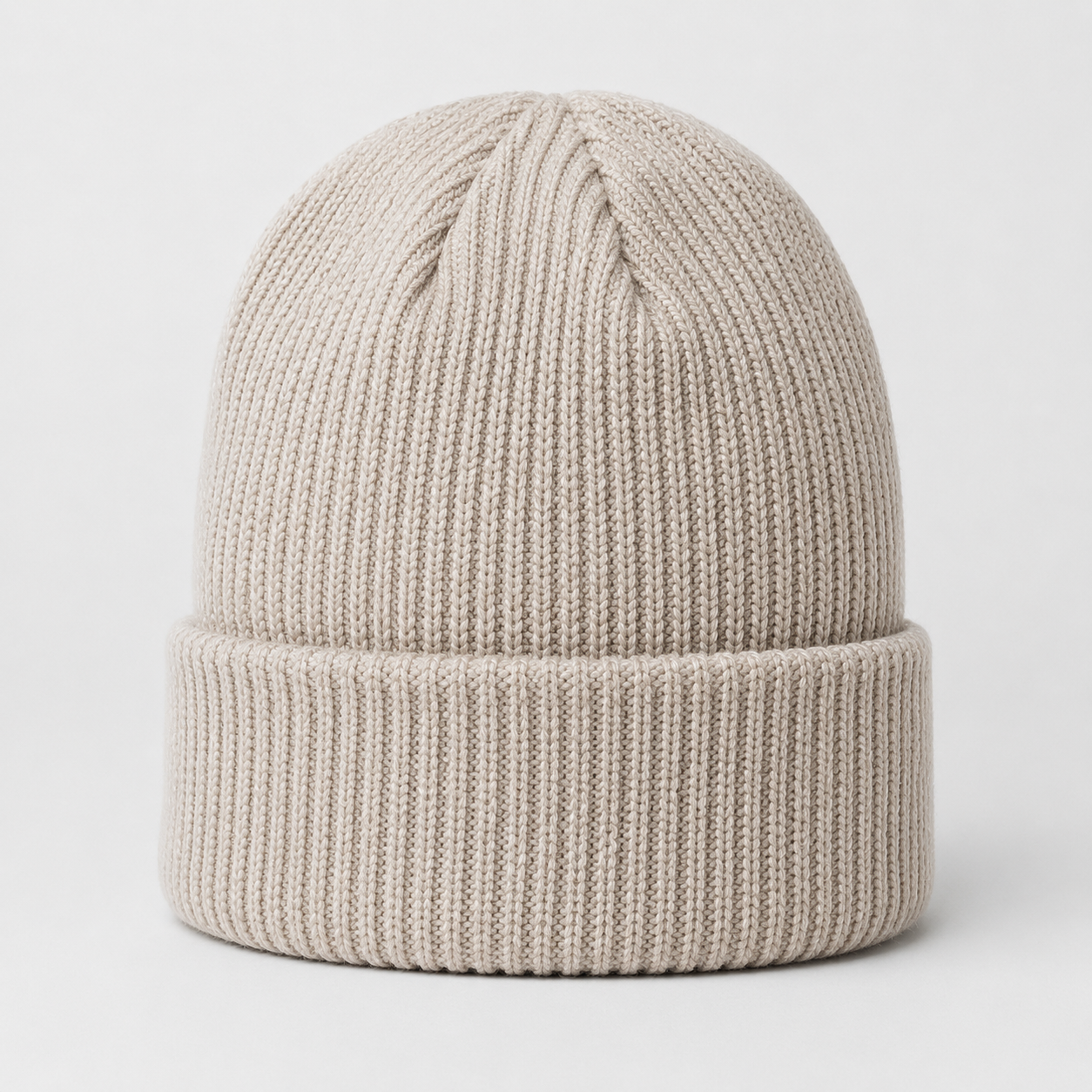
Beanie patches wholesale knitted beanies pose a unique challenge for beanie patches wholesale part. Unlike woven baseball caps or bucket hats with stable, tightly-woven fabric panels, knitted beanies are made from stretchy, loose-knit yarn that deforms under the mechanical stress of embroidery. The beanie patches wholesale choice of logo method — and the precise way it is applied — determines whether your custom beanie line arrives with crisp, professional branding or stretched-out, distorted logos that make the product unsellable. beanie patches this guide covers the five logo methods that work on knitted beanies, the specific technique adjustments required for knit fabric, cost-per-unit data, and the durability testing every wholesale buyer should request.. This comprehensive knitted beanie logo customization wholesale guide provides detailed specifications and factory data for bulk buyers This beanie patches guide provides factory data and specifications for bulk buyers.
Written by the Hongyuecap sourcing team. We produce 3,000+ custom knitted beanies per month, with logo methods ranging from woven labels to flat embroidery to silicone patches, for clients in corporate gifting, outdoor apparel, retail, and promotional products.
Woven Labels & Fabric Patches: The Safest Option for Knitted Beanies
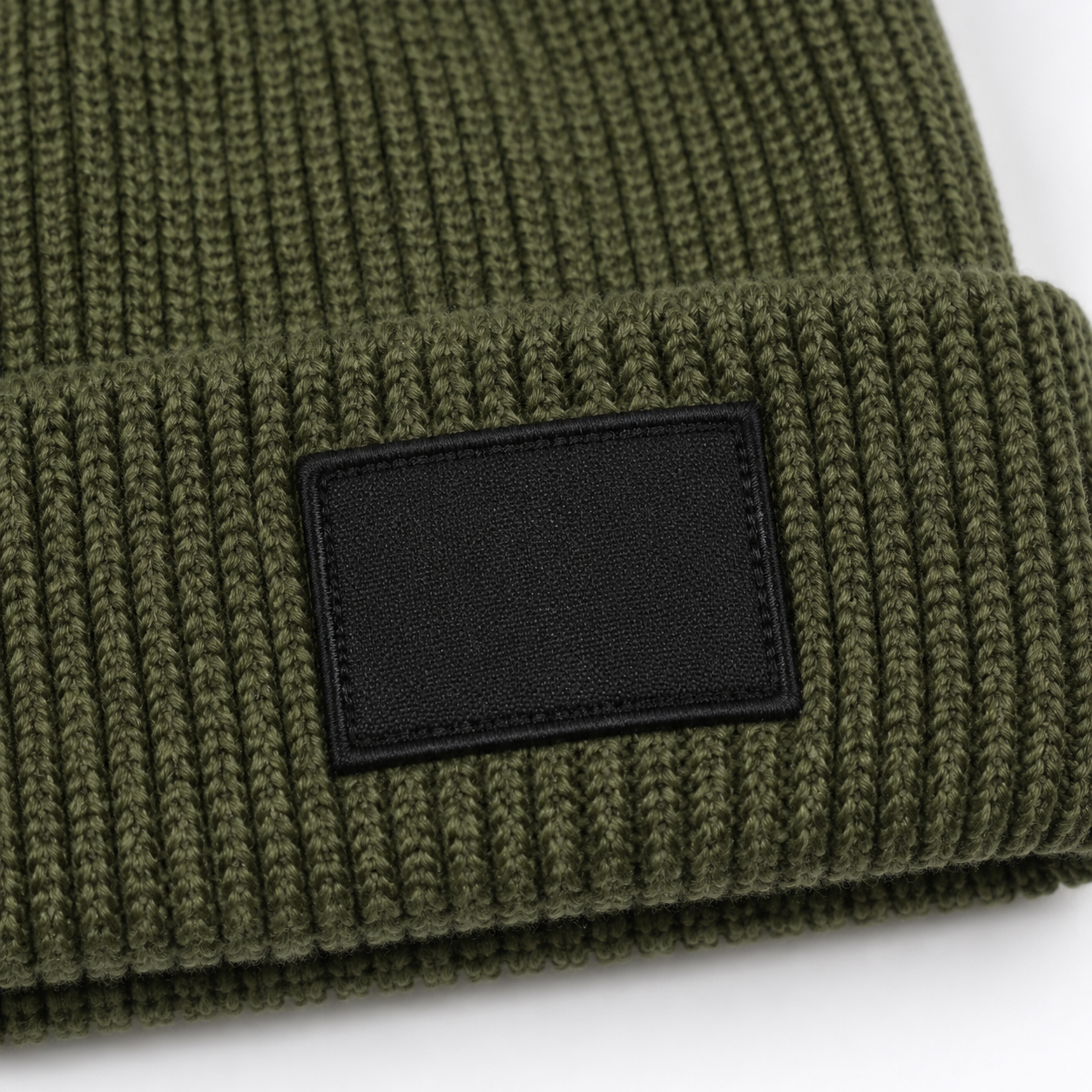
In beanie patches wholesale, woven labels and fabric patches are the most reliable logo customization method for knitted beanies, and the number one recommendation from our production engineers. Because the label is manufactured separately and then attached to the beanie, there is zero mechanical stress on the knit fabric during logo creation — eliminating the deformation issue that plagues direct embroidery on beanies.
Woven label specifications: A woven label is manufactured on a Jacquard loom, creating the logo as part of the fabric structure rather than on top of it. Standard woven labels for beanies are 25-60 mm wide and 15-40 mm tall. Material: 100% polyester or polyester-satin blend. The label is then sewn onto the beanie using a lockstitch (standard) or bartack (reinforced) attachment.
Cost per unit (label + attachment):
- Satin woven label (up to 8 colors): $0.20-0.40 per beanie
- Polyester woven label (up to 12 colors): $0.15-0.30 per beanie
- Damask woven label (high-density, photographic detail): $0.35-0.60 per beanie
- Chenille patch (premium textured look): $0.50-1.00 per beanie
Attachment methods and durability: Sew-on labels remain attached through 50+ industrial wash cycles (ISO 6330) with 100% retention in our testing. The label should be attached with polyester thread (matching the beanie color) using a bar tack at top and bottom corners, plus a lockstitch along the long edges. Our QC standard: minimum 12 stitches per bar tack, lockstitch density of 4-5 stitches per cm. For beanies that will not be machine-laundered (e.g., retail display), heat-seal labels reduce cost by $0.05 per unit but fail at 10-15% rate after 10 washes.
Placement options: Woven labels can be placed in three positions: front center (45-60 mm width), side (25-40 mm), or turn-up cuff (15-25 mm, visible when the cuff is folded). For standard wholesale orders, front center is recommended. The label should be positioned 15-25 mm above the bottom edge of the beanie (or above the fold line for cuffed beanies).
Our factory’s recommendation: For first-time knitted beanie buyers, woven labels are the lowest-risk option. The label adds $0.20-0.40 per beanie — negligible compared to the cost of a 5,000-unit order with defective embroidery. At Hongyuecap, woven labels on beanies have a < 0.5% defect rate in production, compared to 4-7% defect rate for direct embroidery on knit fabric.
Flat Embroidery on Beanies: Backing Requirements, Density Limits & Stitch Count Risks
Direct beanie patches wholesale embroidery on knitted beanies is possible but requires specific technique adjustments. The stretchy knit fabric is fundamentally different from the stable woven fabric of baseball caps, and standard embroidery settings will cause fabric distortion.
The critical difference — knit vs woven: Woven fabric (used in baseball caps, bucket hats) has a stable, non-stretch construction. The embroidery machine can run at full speed (750-1,000 stitches per minute) with standard hoop tension. Knit fabric (used in beanies) stretches in both directions. If the embroidery machine operator uses the same settings as for woven fabric, the beanie fabric will stretch under the hoop, and after removing the hoop, the fabric snaps back — leaving the logo area puckered and the surrounding fabric distorted. A large share of beanie embroidery defects can arise when knit fabric is handled like woven fabric. Validate hoop tension, stabilizer, stitch speed and test embroidery on the selected knit before bulk production.
Required adjustments for beanie embroidery:
- Hoop tension: Reduce by 50-60% compared to woven fabric. The beanie must be held in place without stretching — “snug” not “tight.”
- Stabilizer (backing): Use a cut-away stabilizer (2.5-3.5 oz weight), not tear-away. Cut-away stabilizer remains permanently behind the embroidery, preventing the knit fabric from stretching back. Tear-away stabilizers are unsuitable for beanies — they cause immediate fabric relaxation and logo distortion.
- Stitch speed: Reduce to 600-700 stitches per minute (from the standard 800-1,000 for woven fabrics). The slower speed reduces needle impact and fabric vibration.
- Maximum stitch density: 6,000-7,000 stitches per sq. inch. Above this density, the knit fabric cannot support the thread mass without significant distortion. By comparison, woven baseball caps can handle 10,000-12,000 spi.
- Minimum logo size: 40 × 40 mm. Logos smaller than this on beanies lose detail because the knit fabric’s textured surface obscures fine stitch work.
Cost per unit: Flat embroidery on beanies costs $0.80-1.80 per beanie depending on stitch count and complexity. This is higher than the same embroidery on baseball caps because of the reduced speed and manual handling required.
Defect rate: At Hongyuecap, our beanie embroidery defect rate is 4-7% in full production, meaning 93-96% of embroidered beanies pass QC. The primary defects are fabric stretching around the hoop area (2-3%), thread breakage (1-2%), and logo edge distortion (1-1.5%). We recommend ordering 5-8% extra stock for embroidered beanies to account for production defects.
Our recommendation: Use flat embroidery on beanies only when the logo is simple (under 3 colors, no fine text below 8 mm, no gradient fill). For complex logos with fine details or many colors, woven labels or heat transfer are better choices.
Heat Transfer & Silicone Patches: Fabric Compatibility, Heat Tolerance & Durability
Heat transfer and silicone patches offer a middle ground between the durability of woven labels and the direct-on-garment appearance of embroidery. Both have specific requirements for knitted beanie fabric compatibility.
Plastisol heat transfer: A pre-printed plastisol design is applied using a heat press at 160-180 °C for 10-15 seconds at 40-60 psi pressure. Plastisol transfers work well on polyester, acrylic, and poly-blend beanies but have poor adhesion to 100% wool or wool-blend beanies. Cost: $0.40-0.90 per beanie (single color), $0.70-1.40 per beanie (multi-color). MOQ: 500 pieces per design.
Heat transfer vinyl (HTV): Cut vinyl designs applied at 150-170 °C for 12-15 seconds. HTV is most cost-effective for small single-color logos under 40 × 40 mm. Cost: $0.30-0.60 per beanie. Durability: 15-25 washes before edge peeling (our ISO 6330 test data). HTV on beanies has a 10-15% higher failure rate than on woven fabrics because the knit fabric stretches and flexes differently, stressing the adhesive bond.
Silicone patches: Molded silicone patches (2-4 mm thick) attached with a heat-activated adhesive or sewing. Silicone patches are UV-resistant, waterproof, and flexible — making them ideal for outdoor and performance beanies. Cost: $0.50-1.20 per beanie. MOQ: 300 pieces. Durability: silicone patches on beanies pass 50+ wash cycles with < 2% failure rate in our testing. The silicone material flexes with the knit fabric without delaminating, unlike rigid polyester patches. Silicone patches are available in single-color or multi-color molded designs.
Temperature warning: All heat-based methods (plastisol, HTV, silicone adhesive) require the beanie fabric to withstand 150-180 °C for 10-15 seconds. Acrylic beanies handle this temperature without issue. 100% polyester beanies can be heat-sensitive — our lab tests show that some polyester knit blends develop a slight sheen change at 170+ °C. 100% wool beanies must use lower temperature (140-150 °C) with longer pressure time (15-20 seconds) to avoid scorching. Request a free heat test sample before committing to heat-based logo methods on your specific beanie fabric.
3D Puff Embroidery on Cuffed Beanies: Foam Technique, Height Limits & Stretch Impact
3D puff embroidery on beanies is technically difficult but visually striking when done correctly. The raised logo effect is especially popular on cuffed beanies for streetwear and outdoor brands.
Technique: EVA foam (2-3 mm thickness) is placed under the embroidery area. After stitching, the foam is removed (dissolved or pulled), leaving the raised thread structure. On beanies, the challenge is that the knit fabric stretches under the foam layer, causing uneven compression. Our solution: use a non-stretch woven fusible interfacing (50 GSM) applied to the inside of the beanie logo area before foam placement. This creates a stable substrate that prevents fabric distortion.
Height limits: Maximum practical 3D puff height on beanies is 2.0 mm (using 3 mm foam). Higher puff (5 mm foam) creates a top-heavy logo that can pull down under its own weight on the flexible knit fabric. Our test data: 3 mm foam produces 1.8-2.2 mm puff height with 92% retention after 30 days. 5 mm foam produces 2.8-3.2 mm initial puff but drops to 2.0-2.5 mm after 30 days due to gravity and fabric sag.
Cost and MOQ: 3D puff on beanies costs $1.50-3.00 per beanie — the most expensive logo option due to the extra material and labor. MOQ: 500 pieces per design. Minimum logo size: 50 × 50 mm (logos smaller than this don’t show visible puff effect on the textured knit surface).
Placement: 3D puff works best on the front center of cuffed beanies, positioned 20-30 mm above the fold line on the main body. On uncuffed beanies, the position should be centered 30-40 mm above the hem edge. The fabric around the puff area must have 10-15 mm of clear, unstiched border to prevent the knit tension from distorting the foam base.
Our assessment: 3D puff embroidery on beanies has a 10-15% first-pass defect rate — significantly higher than flat embroidery or labels. Only use 3D puff on higher-margin products where the visual impact justifies the cost and defect risk. For standard wholesale beanies, woven labels or flat embroidery are more reliable choices.
Logo Placement Guide: Cuffed vs Uncuffed Beanies & Sourcing Checklist
Logo placement on beanies depends on whether the beanie has a foldable cuff (cuffed/turn-up style) or is straight-knit (uncuffed/skull cap style).
Cuffed beanie placement:
- Center front (body): 20-30 mm above the fold line. Most visible placement. Best for woven labels and flat embroidery. Standard logo size: 50-65 mm wide, 20-40 mm tall.
- Center front (cuff): Centered on the cuff band, 10-15 mm above the bottom edge. Visible when the cuff is worn down. Good for small logos (25-40 mm wide). Works for woven labels and silicone patches.
- Turn-up hidden logo: Inside the cuff — only visible when the cuff is folded up. Novelty placement. Good for small woven labels or heat transfer. Cost: same as front center for the same method.
Uncuffed beanie placement:
- Center front: 30-40 mm above the bottom hem. The standard placement for all logo methods on uncuffed beanies. Logo size: 50-75 mm wide, 25-45 mm tall.
- Lateral (side): 20-30 mm from bottom hem, centered on the side of the beanie. Appropriate for secondary branding or small woven labels. Logo size: 25-40 mm.
Beanie patches wholesale sourcing checklist for beanie logo customization:
- ☐ Logo method selected: woven label / flat embroidery / heat transfer / silicone patch / 3D puff
- ☐ Beanie fabric confirmed compatible with chosen method (wool = no heat methods)
- ☐ Logo artwork provided as vector file (AI/EPS) with fonts outlined
- ☐ Pantone TPX colors specified for all logo elements
- ☐ Placement location specified with dimensions from hem/fold
- ☐ Pre-production sample requested before bulk production
- ☐ For embroidery: stabilizeer type specified (cut-away, not tear-away for beanies)
- ☐ For heat methods: heat test sample on actual beanie fabric
- ☐ MOQ confirmed (100/300/500 per method)
- ☐ QC samples checked: 5 pcs minimum before bulk release
Hongyuecap’s factory recommendation for beanie logo sourcing: For most wholesale beanie patches wholesale orders, start with woven labels. They are the most reliable method with the lowest defect rate. The attached label also adds a perceived value — wholesale buyers and end consumers associate woven labels with higher quality apparel. The per-unit cost delta between a woven label ($0.20-0.40) and flat embroidery ($0.80-1.80) is meaningful for bulk orders, and the visual outcome is more predictable.
We offer free logo proof samples for all first-time beanie orders over 300 pieces. Contact our sourcing team with your artwork and quantity for a customized quote with logo method recommendations based on your specific beanie type and target market.
Related Hat Resources for Wholesale Buyers
- Knitted Beanie Elastic Recovery Stretch Retention Wholesale
- Knitted Beanie Lining Materials Guide for Wholesale Buyers
- Knitted Beanie Size Chart & Fit Guide for Wholesale Buyers
- Hat Logo for Wholesale Buyers: Embroidery, Labels & Heat Transfer
References:
- Wikipedia – Knitted Fabric Properties
- AATCC 61 – Color Fastness to Laundering Test
- ISO 6330: Textile Wash Testing Procedures
Frequently Asked Questions
Can I embroider a logo on a beanie made from 100% acrylic yarn?
Yes, but with reduced stitch density (maximum 6,000 spi) and lighter stabilizer (2.0-2.5 oz cut-away). Acrylic is the most forgiving knit fabric for embroidery due to its consistent tension and moderate stretch. Our defect rate on acrylic beanies is 3-5% compared to 6-9% on merino wool beanies.
Why does my embroidered logo on beanies look different from the proof?
Three common causes: (1) the knit fabric texture distorts fine details — logo elements smaller than 2 mm in the original artwork will blur; (2) thread color on knit fabric appears 1-2 shades darker than on a white proof paper — ask for a thread-out sample on actual beanie fabric; (3) the beanie stretch causes the logo to spread 2-5% wider than the proof dimensions — this is normal for knit fabrics and should be accounted for in design.
What is the most cost-effective beanie patches wholesale method for large beanie orders (5,000+ units)?
Woven labels are the most cost-effective at scale. The label tooling cost ($50-150) is a one-time charge, and the per-unit label cost drops at higher quantities: $0.30/unit at 500 pcs, $0.20/unit at 2,000 pcs, $0.15/unit at 5,000+ pcs. By comparison, embroidery at 5,000 units still costs $0.80-1.20 per beanie because each beanie requires 2-3 minutes of machine time regardless of quantity.
How do I prevent beanie logos from fading in outdoor use?
For outdoor beanies exposed to UV, use polyester thread (embroidery or woven labels) — polyester has inherent UV resistance per AATCC 16.3. Avoid cotton thread and non-UV-stabilized plastisol transfers. For silicone patches, the color is molded through the material, so UV fading is not an issue. At Hongyuecap, we offer UV-resistant thread as a standard option on all beanie embroidery orders at no additional cost.
Author: Hongyuecap Sourcing Team · 3,000+ custom beanies/month · ISO 9001:2015 certified · Serving corporate, retail, and promotional clients globally
Written by the Hongyuecap Product Team. Last updated: May 23, 2026.