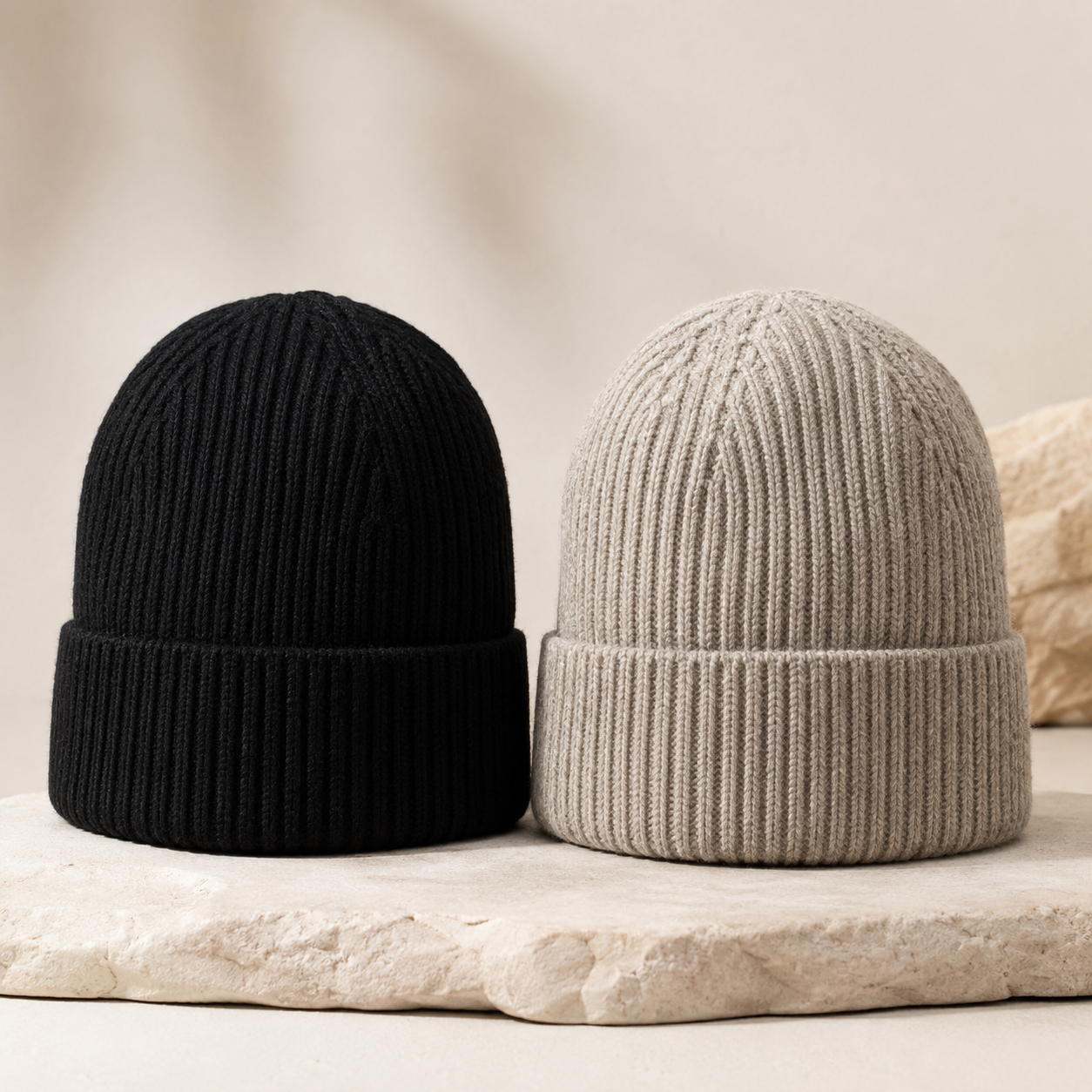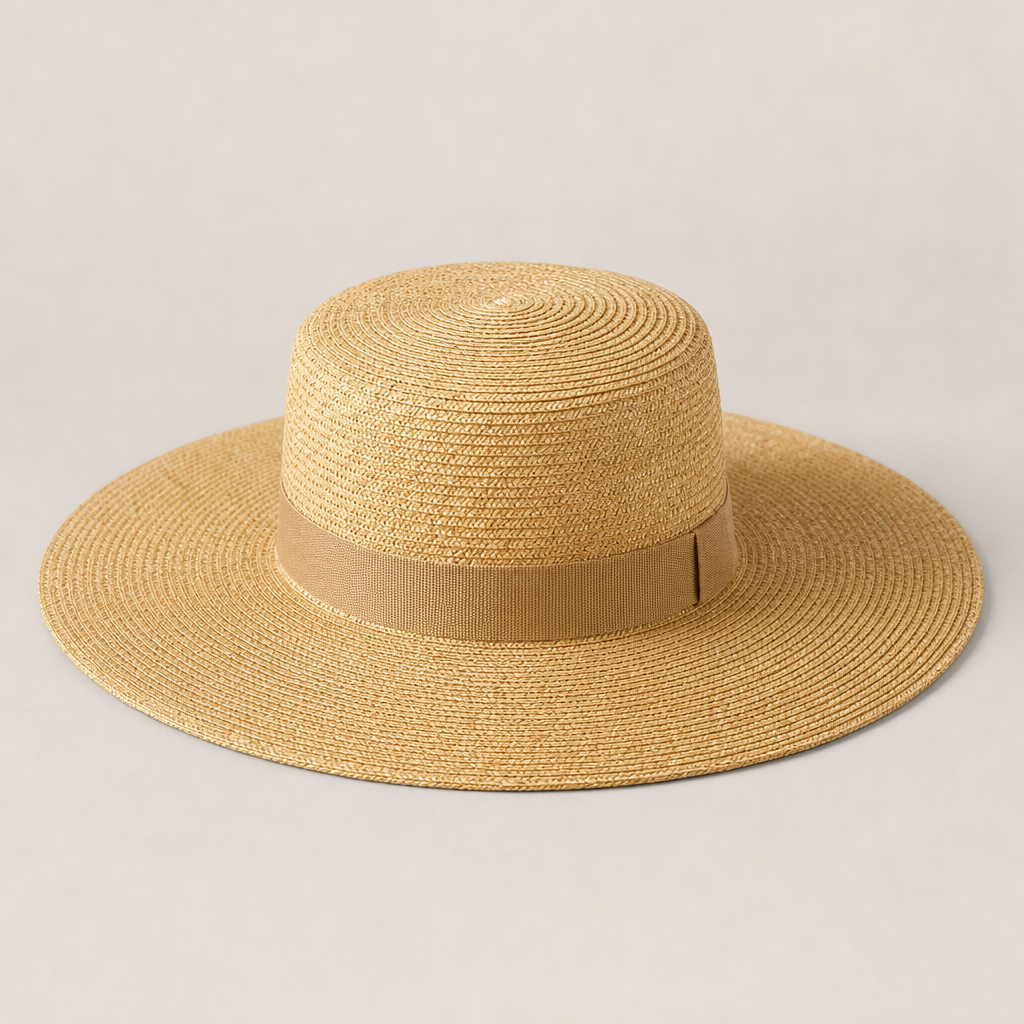
Acrylic vs wool beanies for private label winter orders is not a styling debate. It is a purchasing decision that affects landed cost, sell-through, complaint rate, and whether the product actually fits the retail promise on the hangtag. A buyer can like the first sample in hand and still approve the wrong yarn for the real program if the decision is based only on softness or color.
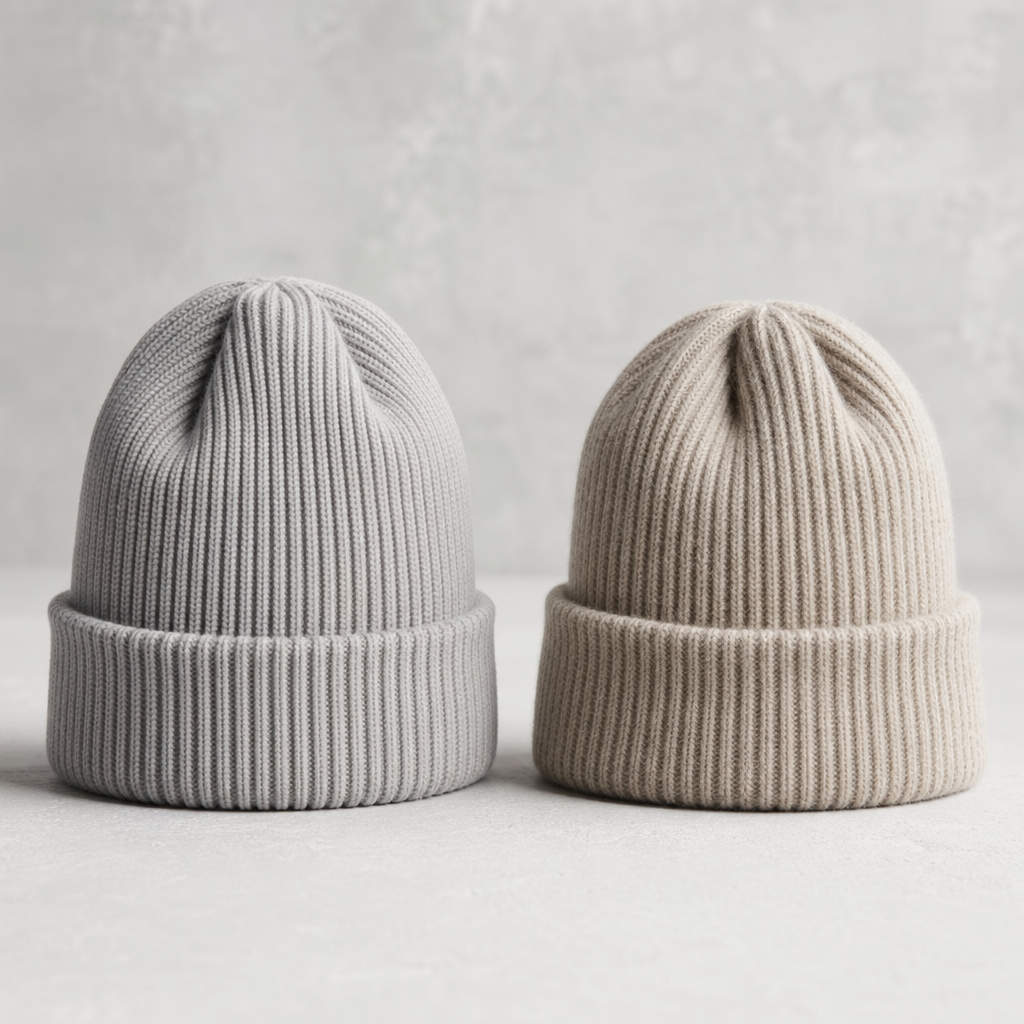
That is where many winter orders go sideways. Acrylic usually gives a friendlier price, faster sourcing flexibility, and easier color matching. Wool usually offers a stronger warmth story, a more premium handfeel, and better brand positioning for colder markets. But neither fiber wins in every channel. The right choice depends on your target price band, care expectation, logo method, destination climate, and how much return risk your brand can absorb.
If your team is still setting the sampling calendar, keep this related guide on custom beanie sample planning before winter open while reading. If the order is already moving, this article will help you compare acrylic and wool from a private-label buyer's point of view instead of a generic consumer point of view.
Main Buyer Problem
For most private-label winter programs, the main buyer problem is not "which yarn is warmer?" It is "which yarn gives us the safest match between retail price, customer expectation, and production control?" Acrylic and wool each solve part of that equation, but buyers run into trouble when they expect one material to handle every market and every logo plan.
Acrylic often works well for value-focused promotions, school merchandise, employee kits, and fast-volume winter programs. It is usually easier to source in stable colors, easier to control across larger quantities, and more forgiving when the target retail price is tight. The tradeoff is that cheap acrylic can pill early, feel less breathable, and weaken a premium-quality story if the end customer expects a softer natural-fiber experience.
Wool usually supports a stronger premium position. It can help with warmth perception, natural-fiber storytelling, and specialty retail channels where customers are willing to pay more for fiber content. The tradeoff is that wool programs often require more care in yarn sourcing, cost planning, shrink control, and itch-risk evaluation. If the wool blend is chosen badly, the product may feel too scratchy for gift, lifestyle, or commuter use.
The root cause is that many purchase orders still define color, logo, quantity, and packaging before they define the real performance target. Buyers should start by deciding what the beanie must do in market: hold margin at volume, support a premium winter story, survive repeated wear, accept a patch cleanly, or minimize post-sale care complaints. Once that is clear, the yarn choice becomes much easier to defend.
Material / Construction Risk
The material risk is not just fiber type. It is how the yarn behaves after knitting, decoration, handling, and cleaning. Acrylic and wool can both look acceptable in a flat sample photo, but they fail for different reasons in real programs.
Acrylic risk usually appears in pilling, static feel, heat sensitivity, and lower perceived premium value. On low-cost programs, acrylic yarn can also hide uneven yarn quality until the sample is stretched or worn repeatedly. If the rib structure is too loose or the yarn quality is inconsistent, the beanie may lose shape faster than the buyer expected. This is why an order should be reviewed alongside a dedicated beanie yarn materials guide for B2B buyers instead of relying on a supplier's generic yarn label.
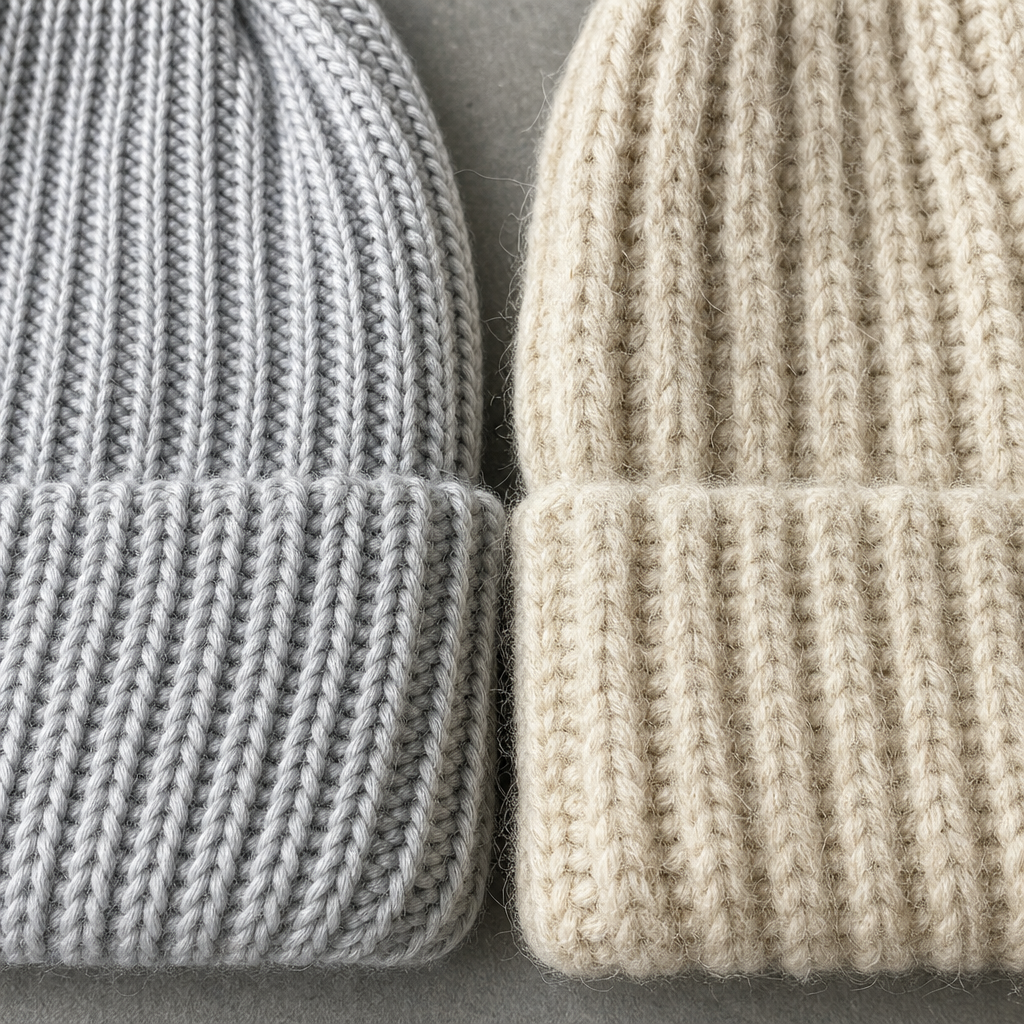
Wool risk usually appears in itch complaints, shrink behavior, color-lot variation, and care sensitivity. Wool is often a better story for warmth and perceived quality, but buyers should not treat "wool" as one performance class. Blend ratio, yarn count, finishing, and knit density all change the result. If the brand wants a wool-based beanie, the sample has to prove comfort as much as warmth.
Construction changes the outcome for both fibers. Rib gauge, cuff height, double-layer construction, lining choice, and patch method all matter. A woven patch can stiffen the cuff area. Heavy embroidery can reduce stretch. A looser knit structure can make acrylic look bulkier and wool look less tidy. Buyers should compare yarn choice and construction together, not one after the other.
The buyer action is straightforward: test the actual yarn in the actual knit structure with the actual logo method. That is much more reliable than approving yarn cards separately from the sample body.
Supplier / MOQ / Sampling Risk
Supplier and sampling risk is where many acrylic-vs-wool decisions become expensive. Wool programs usually have tighter MOQ pressure, more sensitivity around yarn booking, and less room for last-minute spec changes. Acrylic programs are often more flexible, but that flexibility can hide weaker yarn sourcing discipline if the factory is chasing the lowest possible cost.
MOQ should be discussed early. Buyers sourcing knitted beanie wholesale MOQ and sourcing guidance already know that small custom runs often force material compromise. Wool or wool-rich blends may require higher yarn commitment, while acrylic can be easier to place at moderate quantity. That does not automatically make acrylic the safer choice, but it does affect the quote structure and the sampling path.
Sampling should cover more than color and logo placement. The sample must answer:
- Does the cuff recover after repeated stretch?
- Does the patch or embroidery distort the knit?
- Is the wool version too scratchy for the intended buyer?
- Does the acrylic version feel too basic for the target retail price?
- Does the chosen yarn keep a clean silhouette after packing and unpacking?
Lead time matters too. If the winter launch month is fixed, buyers should avoid late fiber changes after sample approval. A wool direction that still needs yarn substitution approval can easily delay the whole line. A private-label program should also confirm whether the supplier controls knitting, linking, finishing, and packing in a stable process. If not, compare the order against this knitted beanie manufacturing process overview before approving bulk production.
The buyer action is to lock yarn, knit structure, decoration method, and care expectation in one approval round instead of approving them one by one.
QC Checklist
- Compare acrylic and wool samples side by side under the same light instead of approving each sample in isolation.
- Stretch the opening and cuff several times to check elastic recovery and shape retention.
- Rub the surface lightly to spot early pilling or fuzz build-up, especially on lower-cost acrylic.
- Touch the inside face against sensitive skin zones to screen for likely itch complaints on wool-rich programs.
- Confirm logo method does not over-stiffen the cuff or distort the rib structure.
- Check whether yarn color appears stable across sample panels and folded cuff areas.
- Review care-label wording against actual yarn behavior before promising easy-care performance.
- Inspect packing recovery after the sample has been folded or bagged, not only in perfect display condition.
Buyer Decision Framework
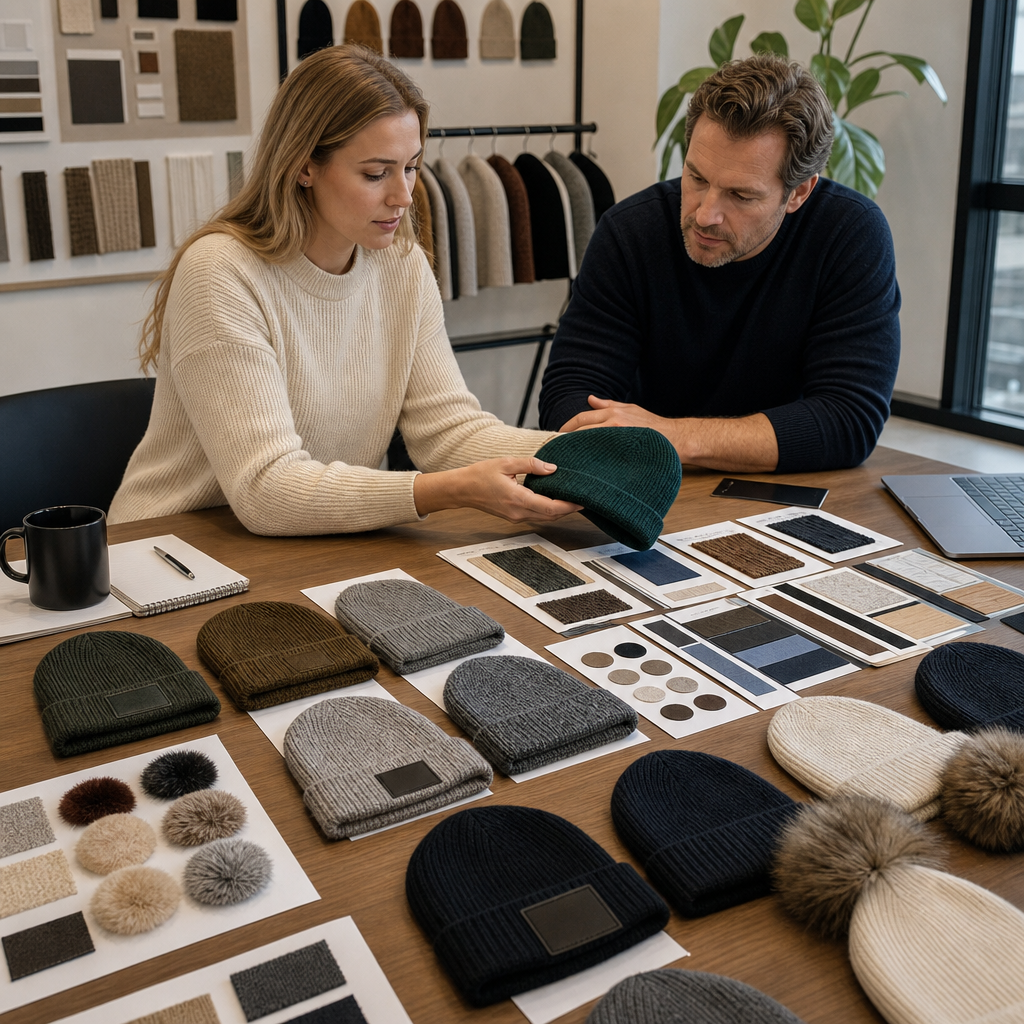
Use this decision framework before you lock the PO:
1. Start with the sales channel. If the order is for high-volume promotions, employee kits, or price-sensitive retail, acrylic may be the better base. If the order needs a premium winter story or specialty-store positioning, wool or a controlled wool blend may be worth the extra complexity.
2. Match yarn to decoration. If the beanie needs a heavy woven patch, embroidery, or a dense fold label, test how each material handles that added stiffness. A beautiful yarn choice can still fail when the logo method ruins comfort or stretch.
3. Define the complaint you can least afford. Some buyers fear pilling more than anything else. Others fear itch complaints, care confusion, or shrink returns. Make the yarn choice around the most expensive failure mode.
4. Set the sampling rule. Approve one decorated golden sample, one handling test sample, and one packing-recovery check if the order is meaningful. That extra step is far cheaper than discovering the wrong fiber after bulk knitting.
5. Write the care claim conservatively. Do not promise easy-care, non-itch, or premium warmth benefits unless the sample proves them. Buyers should align any natural-fiber or comfort claims with recognized sourcing and safety references such as the Responsible Wool Standard en OEKO-TEX Standard 100 where relevant.
In practice, acrylic wins when the program needs stable cost, easier MOQ handling, and faster roll-out. Wool wins when the brand needs a better warmth story, a stronger premium feel, and a more elevated winter positioning. Many private-label buyers also land in the middle with a wool blend because it reduces pure-wool risk without sliding all the way into budget acrylic territory.
If your product page mix is still evolving, use the live knitted beanie category path as a structural check: the article should help the buyer move from material choice to a real quote path, not just consume another general education page.
The `Supplier / MOQ / Sampling Risk` section must explicitly cover MOQ, sampling, supplier control, and lead-time risk.
FAQ
Are acrylic or wool beanies better for private label winter orders?
Acrylic is usually better for price-sensitive, volume-led winter programs. Wool is usually better for premium positioning and stronger warmth perception. The better choice depends on your target price, complaint tolerance, logo method, and care expectation.
What MOQ is normal for wool beanies compared with acrylic beanies?
Wool programs often come with less sourcing flexibility because yarn booking matters more, so the effective MOQ can feel tighter even when the factory quote looks similar. Acrylic programs are often easier to place at moderate quantities, but buyers should still confirm yarn consistency and decoration fit.
Do acrylic beanies pill more than wool beanies?
Acrylic can pill faster, especially in lower-cost yarn grades or loose knit structures. Wool can also fuzz, but the complaint pattern is different. Buyers should test real samples with repeated rub and stretch checks instead of assuming the fiber name tells the whole story.
Which material is better for embroidered or patched private label beanies?
Neither material is automatically better. The right choice depends on cuff thickness, rib density, logo weight, and how much stretch the finished beanie needs to keep. Buyers should test decoration on the final knit sample, not on a generic blank.
CTA
If you are comparing acrylic vs wool beanies for private label winter orders, send HongyueCap your specs, logo file, target quantity, destination country, delivery date, sample requirements, and quote target through our Kontakbladsy. We can recommend a yarn direction, sampling plan, and QC focus before you commit the bulk order.