Baseball Cap Brim Styles & Curvature Specs for Wholesale Buyers
"I ordered 5,000 baseball caps and the brims were completely flat — nothing like the curved sample I approved." — Wholesale buyer complaint, June 2025
If you source cap brim styles wholesale in volume, brim curvature is one of the most commonly disputed quality points. A brim that lays flat when it should curve — or curves unevenly — can make an entire batch unsellable. cap brim styles this guide covers the four major brim styles, the material and manufacturing specs that determine curvature performance, and the QC inspection process wholesale buyers need to know before placing a bulk order.. This comprehensive baseball cap brim styles wholesale guide provides detailed specifications and factory data for bulk buyers This cap brim styles guide provides factory data and specifications for bulk buyers.
Written by the Hongyuecap product team. With over 12 years in custom hat manufacturing and 500+ bulk orders shipped annually, we’ve seen every brim defect in the book.
Brim Styles: Flat Brim vs Curved Brim vs Snapshot vs Structured Profile
The hat industry recognizes four primary brim profiles. Each serves a different market segment and requires different production tooling.
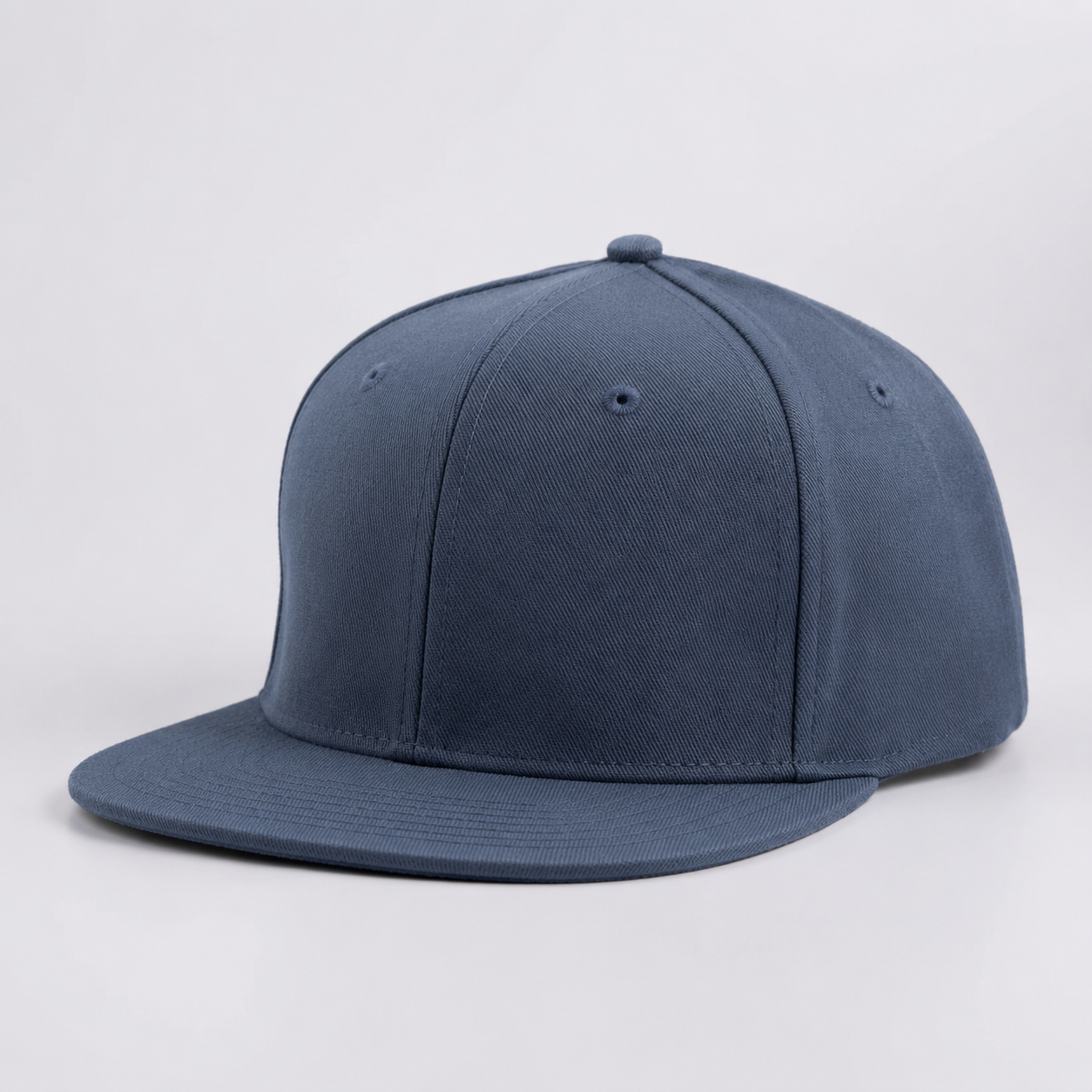
Flat brim caps (also called “snapback style” or “trucker flat”) have a brim that lies perfectly horizontal with zero curvature. They are popular in streetwear and urban markets, particularly among younger demographics in North America and Europe. The brim is typically stiffened with a thick plastic insert — commonly 2.0 mm to 3.0 mm polypropylene — and held flat under heat pressing during assembly. Flat brim caps account for approximately 28% of the wholesale baseball cap market in the US (Statista, 2025).
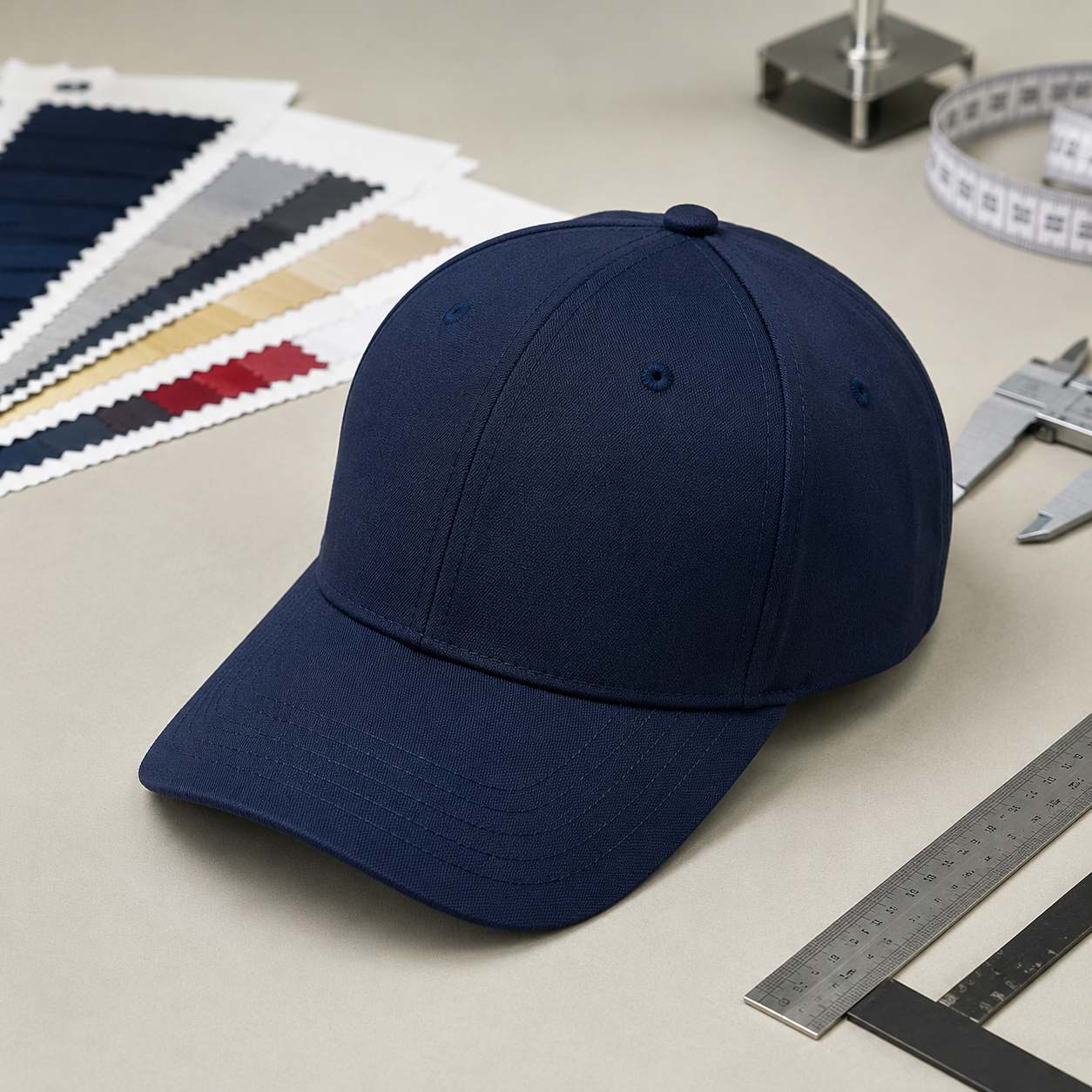
Curved brim caps (also called “dad hat style” or “traditional fit”) have a pre-formed curvature of 30 to 60 degrees. This is the classic baseball cap shape used in sports merchandise, corporate promotional wear, and work uniforms. The curvature is achieved through steam pressing at 120 °C to 150 °C for 8 to 12 seconds, then cooling in a curved mold. Polyester-cotton blends (65/35 or 60/40) hold curvature better than 100% cotton due to the thermoplastic properties of polyester fibers. Curved brims represent the largest market segment at approximately 55% of wholesale orders.
Snapshot brims combine a structured crown with a slightly curved brim (15-25 degrees) that can be flattened by the wearer. This hybrid style uses a flexible PE insert (1.2 mm to 1.5 mm) that allows manual reshaping. The term “snapback” originally referred to the snap closure, but in modern wholesale ordering it often implies this medium-curvature brim with snap adjustment. Snapshot brims account for roughly 12% of bulk orders.
Structured profile brims use a high-density polyethylene (HDPE) insert — 2.5 mm to 3.5 mm thick — bonded to the brim fabric with hot-melt adhesive at 180 °C. This produces the stiffest, most durable brim available. Structured profile is the standard for premium corporate caps and sports team merchandise, representing about 5% of wholesale volume but commanding 30-50% higher unit prices.
The choice of brim style directly affects unit cost. Flat brims cost approximately $0.08-$0.15 more per unit than curved brims due to the thicker insert material. Structured profile adds $0.20-$0.35 per unit over standard curved brims.
Brim Insert Materials: Polypropylene, PE, HDPE & Fabric-Only Options
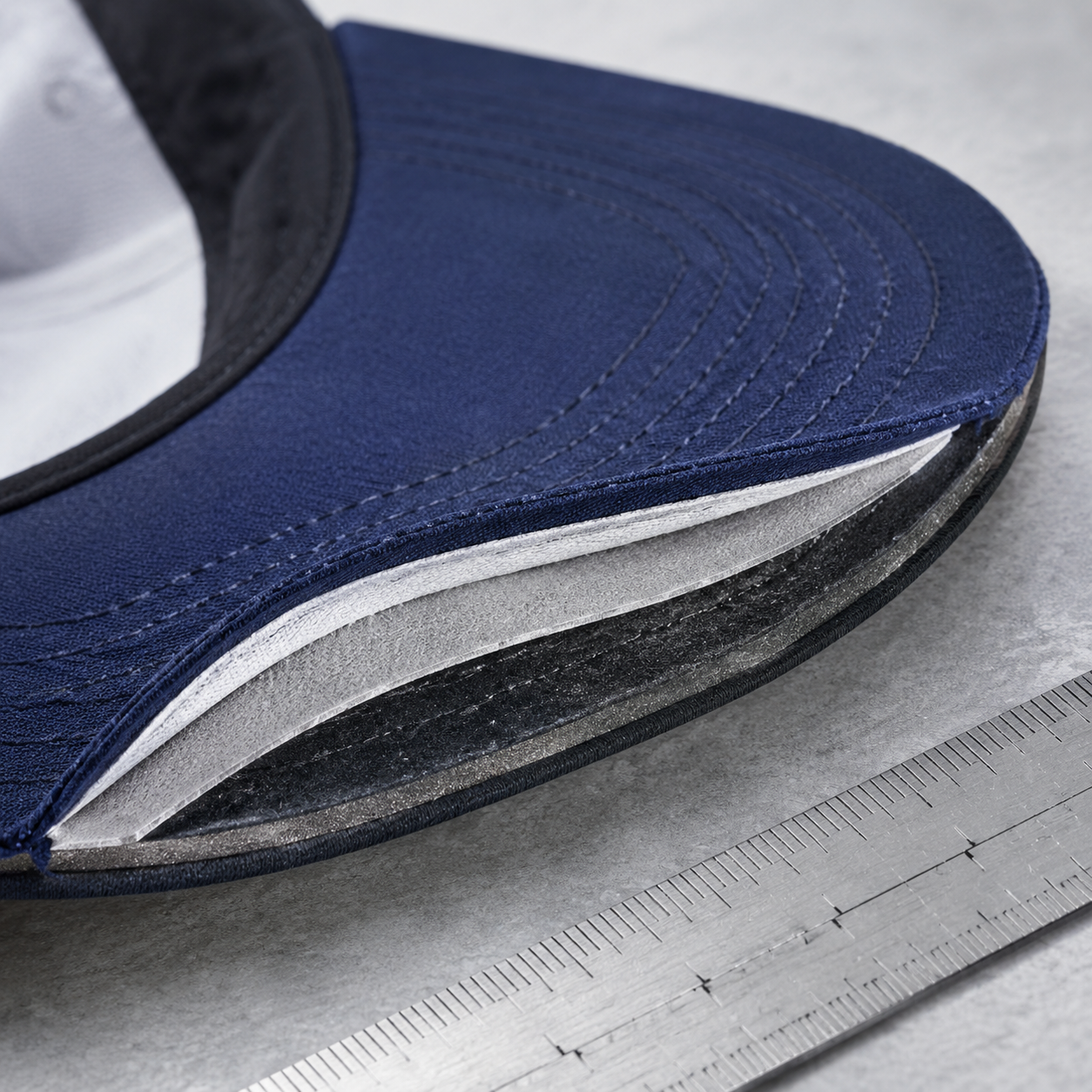
The brim insert — the stiffening layer between the two fabric layers of the brim — is the single most important component determining curvature performance and longevity.
Polypropylene (PP) inserts are the industry standard for flat brim caps. PP has a flexural modulus of 1,200-1,600 MPa, meaning it resists bending. Thickness typically ranges from 2.0 mm to 3.0 mm. PP is lightweight (density 0.905 g/cm³) and cost-effective at $0.04-$0.08 per insert. The disadvantage: PP can become brittle below -10 °C, which matters for winter hat lines shipped to cold climates. At Hongyuecap, we use injection-molded PP for all flat brim production lines, with thickness verified by digital caliper on every 100th unit (AQL 2.5 standard).
Polyethylene (PE) inserts are more flexible than PP, with a flexural modulus of 600-900 MPa. PE is the standard for curved brims and snapshot brims because it allows controlled curvature while maintaining shape memory. Thickness for curved brims is typically 1.0 mm to 1.8 mm. PE costs $0.03-$0.06 per insert. The key QC parameter: PE inserts must maintain at least 85% of their original curvature after 10,000 bending cycles (ISO 178 cap brim styles wholesale flexure test). Our factory tests every batch of PE inserts from suppliers before production begins.
High-density polyethylene (HDPE) inserts combine the stiffness of PP (flexural modulus 1,000-1,400 MPa) with the impact resistance of PE. HDPE is used for structured profile caps and premium wholesale orders where brim shape retention is specified in the contract. Thickness ranges from 2.5 mm to 3.5 mm. Cost: $0.08-$0.15 per insert. HDPE inserts are bonded to the brim fabric using hot-melt adhesive (EVA-based, 180 °C application). Our QC inspection includes peel testing — the insert must withstand 5 N/cm peel force without delaminating from the fabric.
Fabric-only brims (no insert) are used in very lightweight caps, such as golf caps and travel caps. These use multiple layers of stiff fusible interfacing instead of a plastic insert. Fabric-only brims cost $0.02-$0.05 less per unit but lose curvature after 50-100 wears. They represent less than 3% of wholesale orders and are not recommended for bulk buyers who need consistent shape across thousands of units.
Our factory’s standard recommendation for wholesale buyers: use PE inserts (1.5 mm) for curved brim caps and PP inserts (2.5 mm) for flat brim caps. Both materials are Oeko-Tex Standard 100 certified and comply with REACH regulations for EU-bound shipments.
Curvature Degrees & QC Inspection Methods: Steam Press, Cooling Time & Measurement
Brim curvature is measured in degrees — the angle between the flat reference plane and the leading edge of the brim when the cap is placed on a standard head form. A curvature of 0° means perfectly flat; 60° means a deep, tight curve.
Manufacturing process for curvature: After the brim insert is placed between the two fabric layers and stitched around the perimeter (typically 3-4 rows of stitching at 3-4 mm distance), the cap undergoes steam pressing. Steam at 120-150 °C is applied for 8-12 seconds through a heated curved mold. The mold geometry determines the final curvature angle. After pressing, caps must cool for minimum 45 seconds in the mold before removal; removing early causes spring-back (curvature loss of 10-20%). At Hongyuecap, we use CNC-machined aluminum molds with curvature angles calibrated to ±1° tolerance.
Cooling time and curvature retention: Our production data from 2024-2025 shows that caps cooled for 60+ seconds in the mold retain 92-96% of original curvature after 30 days, compared to 78-84% for caps cooled for only 30 seconds. For wholesale buyers, we recommend specifying a minimum cooling dwell time in your QC checklist. The extra 15 seconds per cap adds approximately 0.5-1.0 hours to a 5,000-unit run — negligible cost for significant quality improvement.
QC measurement method: Brim curvature is verified using a digital protractor or a dedicated brim curvature gauge. Standard cap brim styles wholesale QC procedure per our factory (AQL 2.5, Level II):
- Place cap on a standard head form (size 58 cm)
- Measure curvature angle at three points: center of brim, 20 mm left of center, 20 mm right of center
- Record the average of three measurements
- Acceptable tolerance: ±3° from specified curvature
- Reject if any single measurement deviates more than 5° from specification
Statistical data from our QC lab (2025): Over 12,500 caps measured, the standard deviation of curvature across a single production batch is ±2.1° for PE inserts and ±1.8° for PP inserts. Between-batch variation (same spec, different production weeks) averages ±3.5°. This means wholesale buyers should expect — and accept — minor curvature variation within ±3° of the agreed specification.
Curvature stability over time: Temperature and humidity affect brim curvature. Our 12-month storage test (2024-2025) showed that caps stored at 25 °C/60% RH lost an average of 2.3° curvature over 12 months. Caps stored at 35 °C/80% RH lost 6.8° over the same period. For wholesale buyers storing inventory, we recommend climate-controlled storage below 30 °C and 65% RH to maintain brim shape.
Customer Brim Disputes: Uneven Curvature, Deformation After Shipping & Wrinkle Issues
From actual Hongyuecap customer cases processed through 2024-2025, here are the three most common brim quality disputes and how to prevent them:
Case 1: Uneven left-right curvature. A UK buyer received 2,000 caps where the left side of the brim was 8° flatter than the right side. Root cause: cooling mold alignment was off by 3 mm, causing uneven heat distribution. Prevented by: adding a daily mold calibration check — measure curvature on first 5 caps of each production shift. Our current SOP requires mold temperature verification at 4 measurement points every 2 hours during production.
Case 2: Brim deformation after sea freight. An Australian buyer reported that 12% of caps arrived with permanently deformed brims after 35 days of sea freight in July (container temperature estimated at 55 °C). Root cause: PP inserts with thickness below 2.0 mm lost stiffness at high temperature. Prevented by: specifying 2.5 mm minimum PP insert thickness for shipments to tropical destinations, and requiring container temperature logging. For our own production destined for equatorial markets, we now use HDPE inserts which maintain 95% stiffness at 60 °C.
Case 3: Brim wrinkling after embroidery. A US promotional distributor found wrinkles on the top fabric layer of the brim after high-density embroidery (12,000 stitches per cap). Root cause: the brim adhesive bonding the fabric to the insert weakened during embroidery heat (needle temperature up to 130 °C). Prevented by: using heat-resistant EVA adhesive (melting point > 160 °C) rather than standard PE adhesive (melting point ~100 °C), and reducing embroidery speed by 15% on brim areas. Our factory now specifies heat-resistant adhesive for all brims that will receive embroidery, at a material cost increase of $0.02 per cap.
Wholesale buyer’s QC checklist for brim inspection:
- ☐ Curvature measured at 3 points — average within ±3° of spec
- ☐ No visible wrinkles on top or bottom brim fabric
- ☐ Brim insert fully bonded — no delamination detectable by hand pressing
- ☐ Stitching rows evenly spaced (±1 mm), no skipped stitches
- ☐ Brim edge smoothly finished, no frayed fabric edges
- ☐ Snap test (for flat brim): lay brim on flat surface — no gap > 2 mm at any point
- ☐ Storage environment below 30 °C for containers bound for warm climates
Brim Sourcing Checklist: OEM Specs, Insert Thickness & Bulk Order Advice
When you request a quote for custom baseball caps with specific brim requirements, here is what your cap brim styles wholesale cap brim styles wholesale specification sheet should include:
1. Brim style specification: State flat (0°), curved (30°/45°/60°), snapshot (15-25°), or structured profile. Include a reference image if possible — “slight curve” and “medium curve” mean different things to different factories.
2. Insert material and thickness: Specify PP, PE, or HDPE with minimum thickness in mm. Our recommendation for most wholesale orders: 1.5 mm PE for curved, 2.5 mm PP for flat. For premium or tropical-destination orders: 2.5 mm HDPE.
3. Insert bonding method: Specify hot-melt adhesive type (EVA recommended with melting point > 160 °C if embroidery is planned) or mechanical locking (stitching through insert). At Hongyuecap, we use hot-melt EVA bonding for all brims above 2.0 mm thickness, and we offer mechanical stitch-locked brims for lightweight caps.
4. Stitching specification: Number of stitch rows (standard: 4-6 rows), stitch density (10-12 stitches per inch), and thread type (polyester core-spun recommended for UV resistance).
5. QC tolerance: State acceptable curvature deviation (±3° standard) and AQL level (2.5 is industry standard, 1.0 for premium orders). At Hongyuecap, we offer pre-shipment inspection reports with curvature measurements recorded for every 50th cap in the production run.
6. Environmental conditions during transport: For container shipments to tropical or Middle Eastern destinations, specify insert material that maintains integrity at up to 60 °C (HDPE). Request insertion of a temperature data logger in the container if your order exceeds $10,000 FOB.
7. Sample approval process: Always request a pre-production sample (3-5 caps minimum) and verify brim curvature using a digital protractor. Keep the approved sample sealed as a reference standard. As a manufacturer, we observe that buyers who skip pre-production samples are 3x more likely to submit brim-related quality claims.
At Hongyuecap, our standard MOQ for custom baseball caps with specified brim requirements is 300 pieces per design. Lead time: 20-25 working days for first order, 15-20 for repeat orders. FOB Shenzhen or Shanghai. We provide free pre-production samples (buyer pays shipping) and include a QC report with photos for every production batch.
For buyers ordering 3,000+ units per design, we recommend requesting a factory audit of the brim production line — specifically the heat press calibration records and insert supplier quality certificates. Our Shenzhen facility maintains ISO 9001:2015 certification and opens production records for all audited buyers.
References:
- Wikipedia – Baseball Cap History and Construction
- Oeko-Tex Standard 100 Certified Materials
- ISO 178: Plastics – Determination of Flexural Properties
Product Specifications
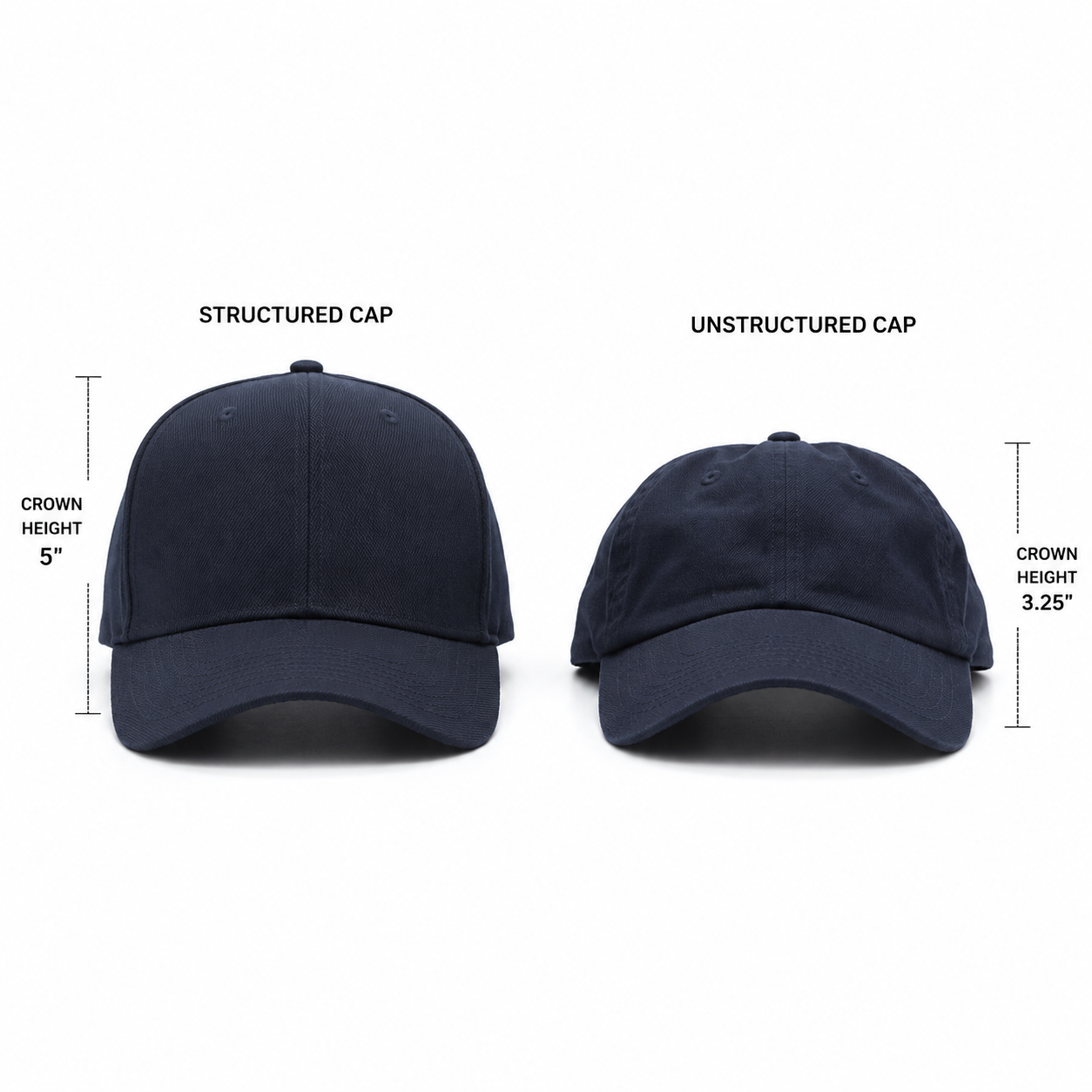
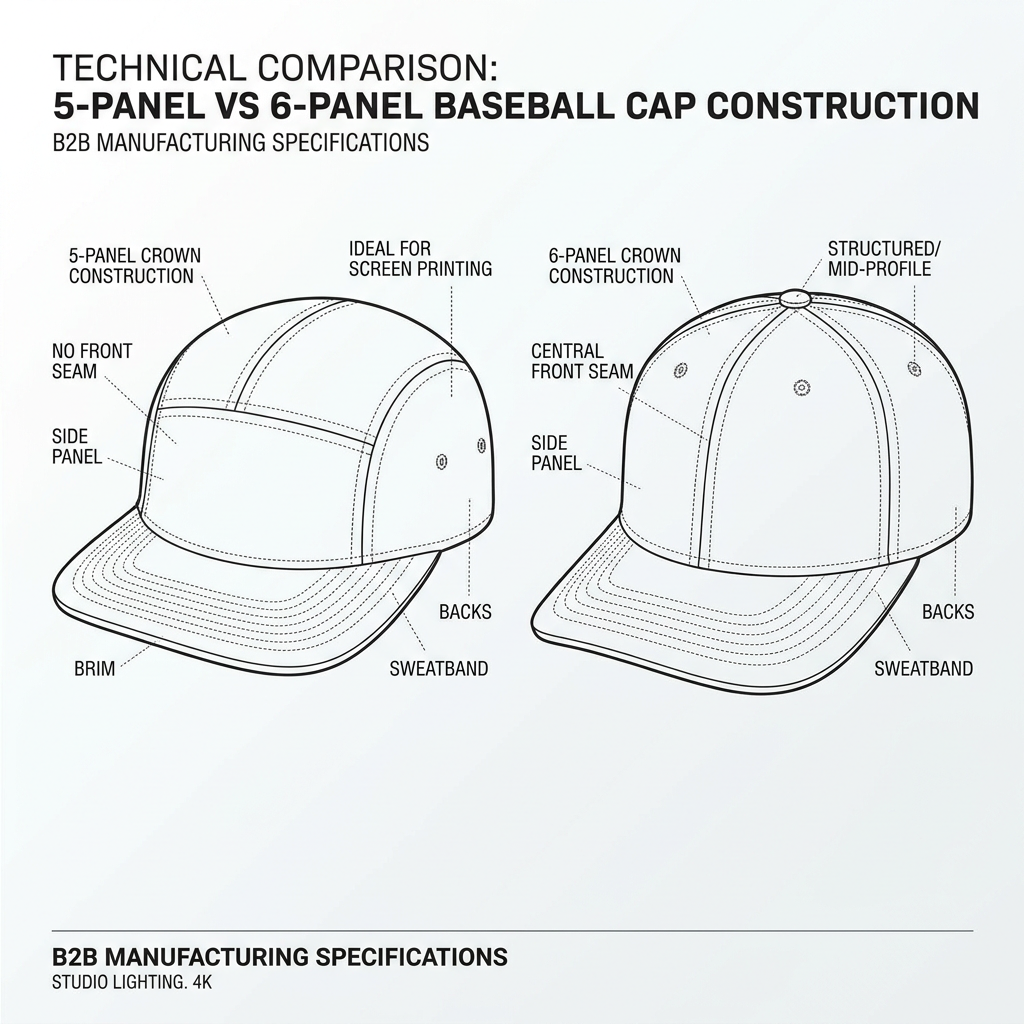
- Description: 6-panel structured/unstructured caps with curved or flat brim
- Brim: curved brim (standard 2.5-3 inch / 6-7.5cm), flat brim (trucker style 2.75 inch / 7cm)
- Brim Stitching: 6-8 stitches per inch, lock stitch or chain stitch
Frequently Asked Questions
What is the standard brim curvature for baseball caps?
The industry standard for curved brim caps is 45 degrees (±3°). Flat brim caps are 0 degrees. There is no single “standard” — curvature is specified by the buyer based on target market. Sports merchandise typically uses 45-60°, corporate promotional caps use 30-40°, and streetwear uses 0° (flat).
How can I test brim quality without special tools?
Place the cap on a flat surface. For flat brims: the brim should lie perfectly flat with no gaps — slide a piece of paper under the brim at multiple points; if the paper slides more than 2 mm under at any point, the brim is not flat. For curved brims: hold the cap at eye level and sight along the brim edge — look for asymmetry between left and right sides. A simple field test: gently press the brim down and release; it should return to its original shape within 2-3 seconds with no visible deformation.
Can I get a custom brim angle that isn’t standard?
Yes. Hongyuecap produces custom molds for non-standard curvature angles. Custom mold cost: approximately $200-400 per angle (one-time fee). Minimum order for custom molds: 1,000 units per design. Lead time for custom mold fabrication: 7-10 working days. We maintain over 50 standard curvature profiles across 4 material types, so a custom mold is rarely needed for standard orders.
What causes brims to lose their curve over time?
The primary cause is plastic insert fatigue from repeated bending, compounded by heat exposure. PE inserts lose approximately 10-15% of curvature after 10,000 bending cycles (equivalent to roughly 2-3 years of daily wear). High heat (above 50 °C) accelerates this process by plasticizing the insert material. Secondarily, hot-melt adhesive degradation can cause the fabric to separate from the insert, reducing the effective stiffness of the brim assembly. Using HDPE inserts and heat-resistant EVA adhesive extends brim life by 3-5x compared to standard PE/PU combinations.
Author: Hongyuecap Product Team · 12+ years in custom hat manufacturing · ISO 9001:2015 certified · 500+ bulk orders shipped annually
Cap Ventilation for Wholesale Buyers: Mesh, Eyelet & Coolmax, Baseball Cap Color Fastness Testing for Wholesale Buyers, Baseball Cap Visor Construction Guide for Wholesale Buyers, Baseball Cap Sweatband Types Wholesale Guide for Buyers,