
Straw Hat Sourcing Guide: 8 Types & Material Factors for Wholesale Buyers (2026)
Straw hats remain one of the strongest seasonal products in summer headwear, but the category is often misunderstood. Buyers use the word “straw” broadly, while materials, weave quality, stiffness, and packability vary enormously. In 2026, successful sourcing depends on understanding those differences before pricing the line.
Many retail problems in straw hats come from one wrong assumption: that all natural-looking hats perform the same. They do not. Material truth matters.
Types of Straw Hats and Why the Material Matters
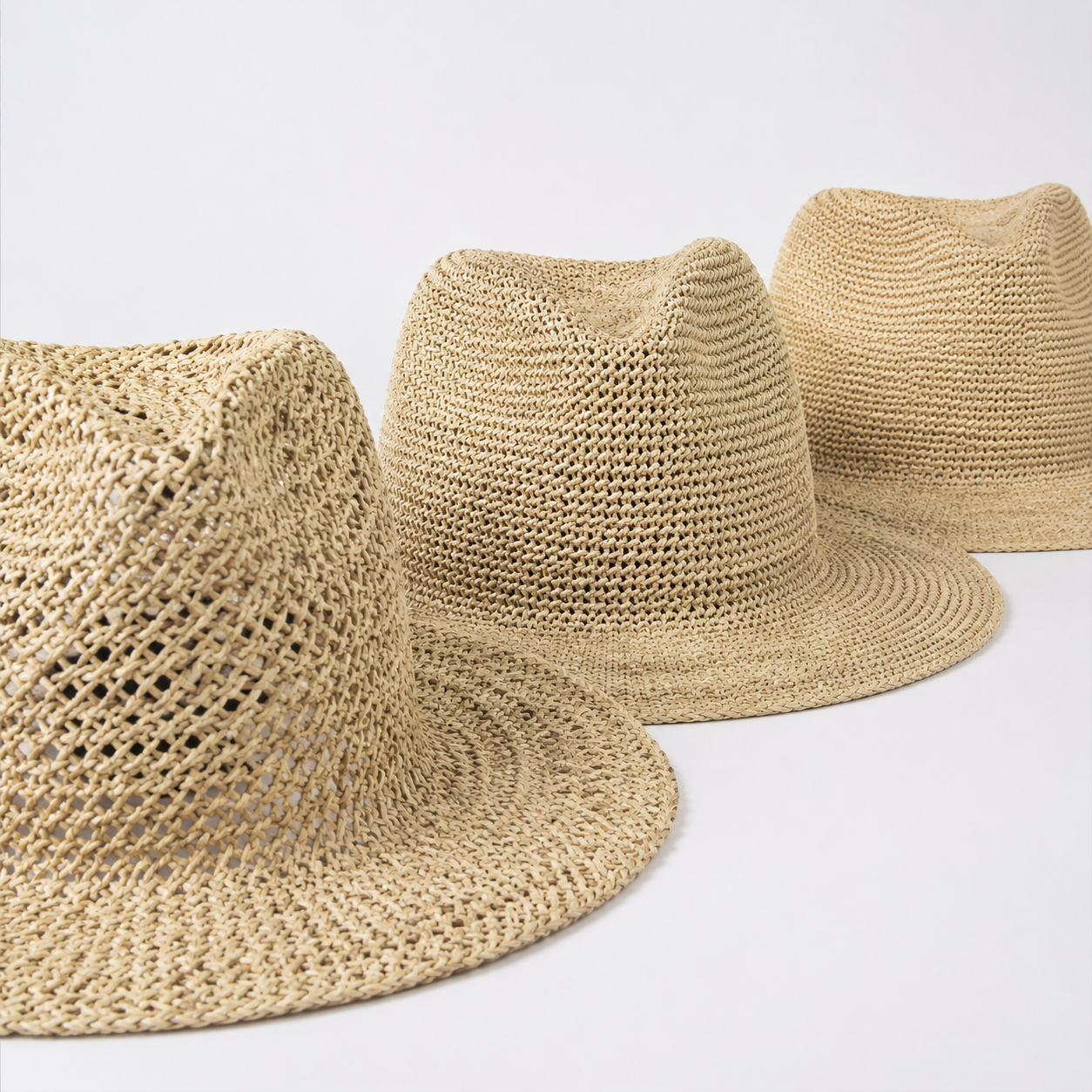
“Straw hat” is a category term, not a single material. Some hats are woven from natural fibers such as raffia, seagrass, or toquilla palm, while others rely on paper fiber or synthetic alternatives made to imitate natural straw. Each option carries different implications for texture, durability, moisture response, and perceived value.
- Panama / toquilla palm: Premium handfeel, refined weave, stronger luxury positioning.
- Seagrass: Durable and more practical for broad wholesale use.
- Toyo / paper fiber: Smooth appearance, lighter weight, consistent factory output.
- Raffia: Soft texture and natural character, popular in fashion-led assortments.
- Wheat straw or mixed fibers: Lower-cost options with simpler market positioning.
This matters because your product story, target retail price, and customer care instructions all depend on the material. A buyer expecting artisan value from a paper-fiber hat will be disappointed, even if the hat looks good at first glance.
Customer Pain Points in Straw Hats
One of the biggest complaints is brim instability. A hat that looks balanced in studio photos may sag or distort in humidity, transport, or normal wear. That is especially common when the weave and stiffener are not properly matched.
Another common complaint is discomfort. Rough internal finishing, poor sweatband selection, and weak crown shape can turn a visually attractive straw hat into a product that customers wear once and abandon.
- Brims that lose shape in heat or humidity
- Scratchy interiors from poor lining and finishing
- Low travel resilience when the hat cannot be packed safely
- Sweat staining on light color interiors
- Weak size coverage with too few grading options
These pain points are not minor. In summer accessories, comfort and structure are often the difference between a one-time impulse sale and repeat category demand.
2026 Straw Hat Trends
The 2026 market is being shaped by a combination of natural aesthetics and practical upgrades. Retailers still want the visual softness and warm-weather association of straw hats, but customers are increasingly asking about fiber origin, sun protection, travel use, and finish quality.
- Sustainable natural fibers with a clearer sourcing story
- Structured wide-brim silhouettes for resort, travel, and content-led retail
- Color variation including natural, black, sand, and muted seasonal tones
- Custom hat bands to differentiate otherwise classic bodies
- Packable straw constructions for e-commerce and travel channels
- Improved interior comfort through better sweatbands and lining touches
This trend mix creates a strong opportunity for retailers who want premium-looking summer product without overcommitting to fragile fashion inventory.
Care and Longevity: What Customers Need to Know
Retailers often overlook how important care communication is in this category. Straw hats can fail quickly if users assume they behave like cotton or synthetic caps. Water exposure, heavy pressure, and poor storage all shorten product life.
- Avoid prolonged rain and saturation where possible.
- Store flat or in a shape-supporting container.
- Clean gently with a damp cloth rather than soaking.
- Keep away from extreme heat sources such as car dashboards.
- Use a suitable protector spray only if compatible with the fiber.
Simple care messaging can reduce returns and improve customer satisfaction with almost no added cost.
B2B Sourcing Checklist for Straw Hats
A straw hat should never be sourced on appearance alone. Buyers should evaluate break resistance, brim memory, humidity tolerance, inner band comfort, packing method, and the truthfulness of the material description. These details directly influence review quality and margin retention.
Before placing the order, confirm: packable straw hats for travel retail how buyers test crush resistance shape recovery and shelf ready presentation Strohhüte mit breiter Krempe für den Sonnenverkauf
- How the material is described on hangtags and online copy.
- Whether the brim holds under the target climate conditions.
- Whether the hat can be shipped nested, flat-packed, or needs rigid protection.
- Whether the inner band supports extended summer wear.
- Whether the style needs a dress, resort, beach, or everyday positioning.
Siehe unseren Leitfaden über Strohhüte im Großhandel für Boutiquen für weitere Einzelheiten.
If you’re comparing options for a summer collection, it helps to align your straw assortment with adjacent styles and route serious buyers to your sourcing inquiry process before peak season compresses timelines.
Written by the Hongyuecap Product Team — 10+ years in B2B custom headwear manufacturing. Last updated: May 03, 2026.