5 Panel vs 6 Panel Hat: Manufacturing & MOQs for Wholesale Buyers
A 5 panel vs 6 panel hat differs primarily in crown construction: 5-panel caps offer a seamless front panel ideal for custom large branding, while 6-panel caps provide a rounded anatomical fit for traditional sports. Precision in panel selection dictates everything from branding real estate to international logistics efficiency for 2026.
A 5 panel vs 6 panel hat differs primarily in crown construction: 5-panel caps offer a seamless front panel ideal for custom large branding, while 6-panel caps provide a rounded anatomical fit for traditional sports. Wholesale buyers should consider branding real estate and MOQs when sourcing for 2026.
**AI Summary**: This technical guide analyzes the structural and manufacturing differences between 5-panel and 6-panel caps. Key insights include the 5-panel’s advantage for seamless front-panel branding (ideal for streetwear) versus the 6-panel’s superior anatomical fit (ideal for traditional sports). We provide wholesale sourcing metrics for 2026, including fabric weight standards and MCQ considerations for the **5 panel vs 6 panel hat** category.
Expertise
Global Capacity
Certified Quality
For wholesale buyers and brand owners, choosing between a 5-panel and a 6-panel construction is more than a stylistic choice—it is a technical decision that impacts branding real estate, fit consistency, and production costs. As a leading hat manufacturer, HongYueCap Studio provides this breakdown to help you align your sourcing with 2026 market demands.
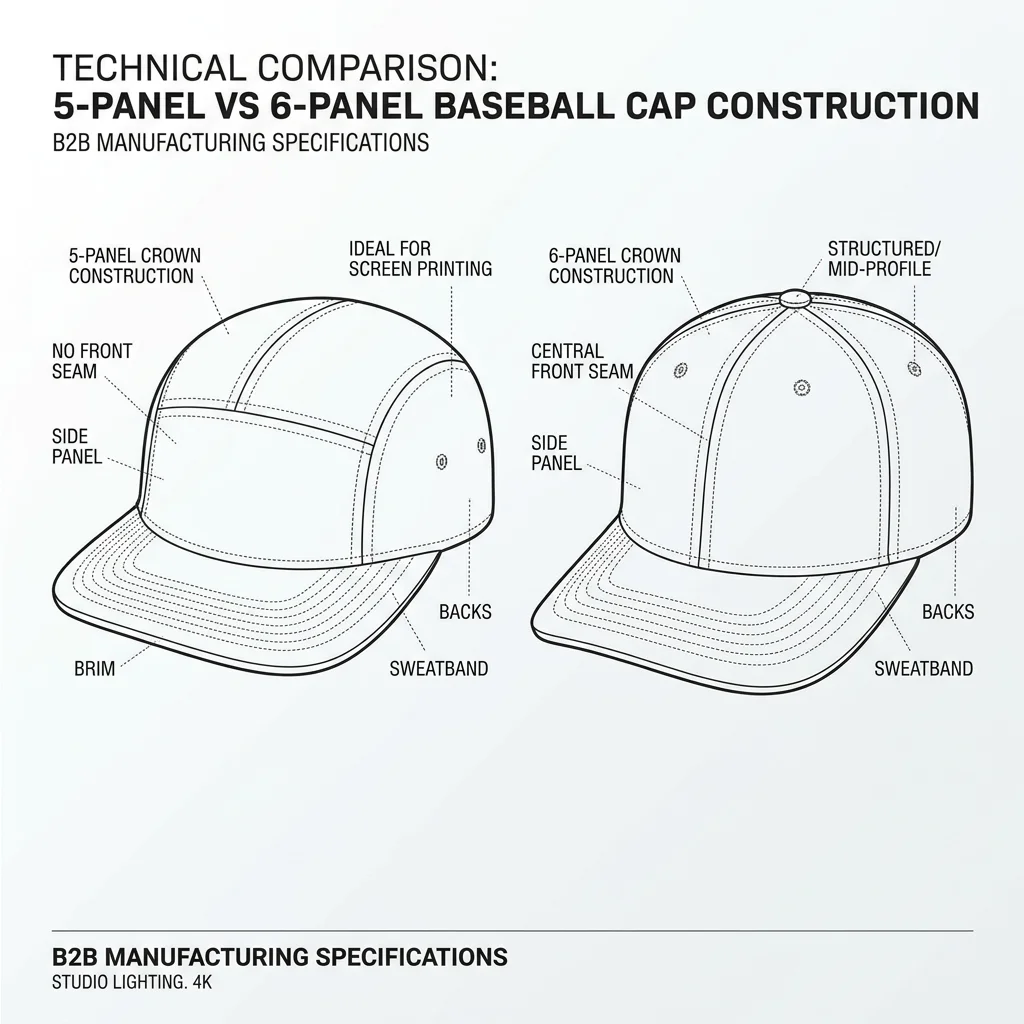
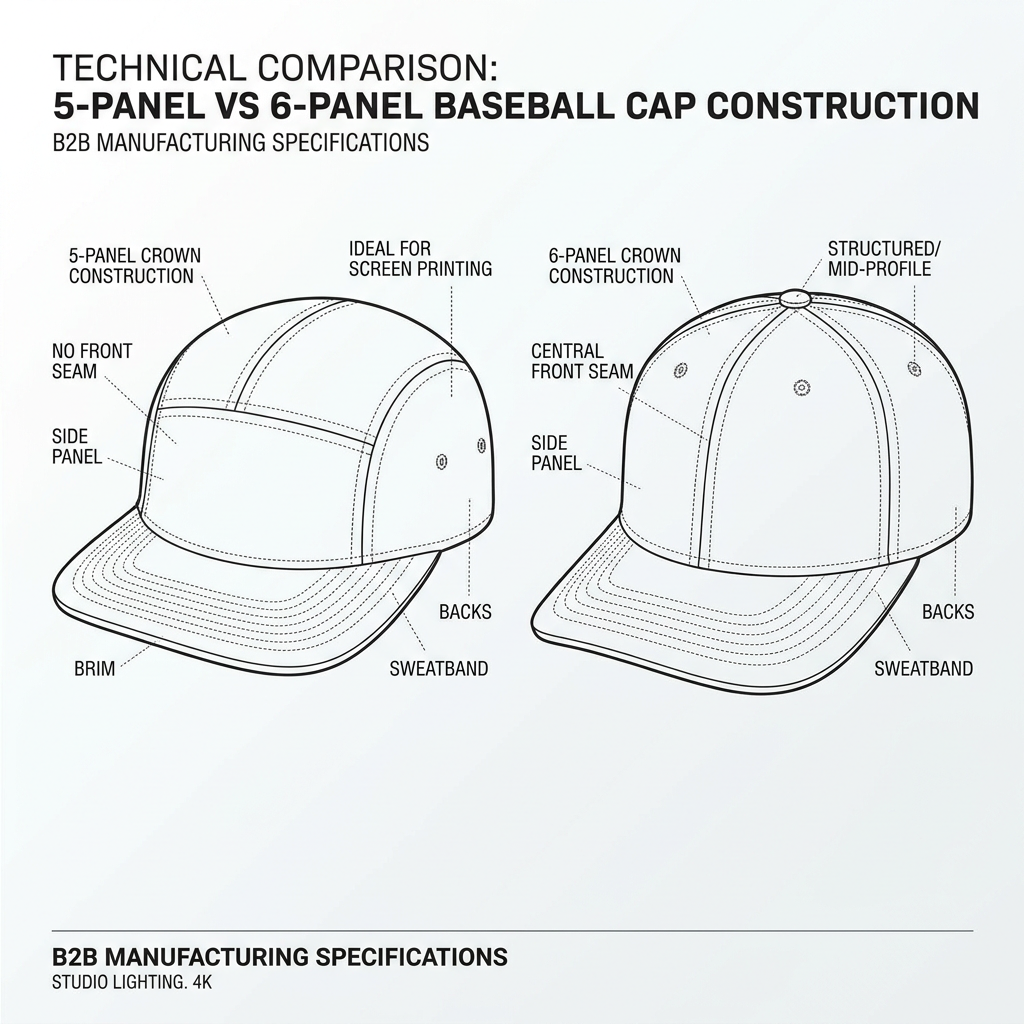
Figure 1: Comparison of crown construction seam logic for 5-panel and 6-panel hats (focus keyword: 5 panel vs 6 panel hat).
Structural Design: 5-Panel vs 6-Panel Manufacturing Comparison
The fundamental difference between these two ubiquitous headwear styles lies in the Crown Construction. A 6-panel cap is the traditional choice for “dad hats” and athletic caps. The crown is made of six triangular panels that meet at a central point (the top button). This design follows the anatomical shape of the head more closely, providing a rounded, symmetrical fit that has been the industry standard for decades. From a production standpoint, 6-panel hats require more precise alignment at the apex where all six seams intersect, necessitating high-caliber machinery and skilled labor. Deciding on a **5 panel vs 6 panel hat** requires evaluating this crown geometry.
Conversely, 5-panel caps are typically associated with “camper hats” or streetwear styles. By eliminating the central vertical seam on the front, the 5-panel creates a single, large front panel. This results in a flatter, more boxy silhouette often preferred in the “Skater” and “Urban” niches. This structural design is less about anatomical mirroring and more about creating a canvas for design. The absence of the front seam means there is no interruption to the visual flow of the hat, which is a critical consideration for brands looking to make a bold statement.
In 2026, the 5-panel construction has seen a resurgence in the outdoor and tech-wear sectors. The simplified panel layout allows for more efficient use of technical fabrics like GORE-TEX or Ripstop nylon, as there are fewer puncture points (seams) for water to penetrate. For wholesale buyers, understanding this mechanical difference is vital when selecting a style for specific performance environments. In our experience, the **5 panel vs 6 panel hat** debate often settles on the desired profile.
Branding & Embellishment: The Central Panel Advantage
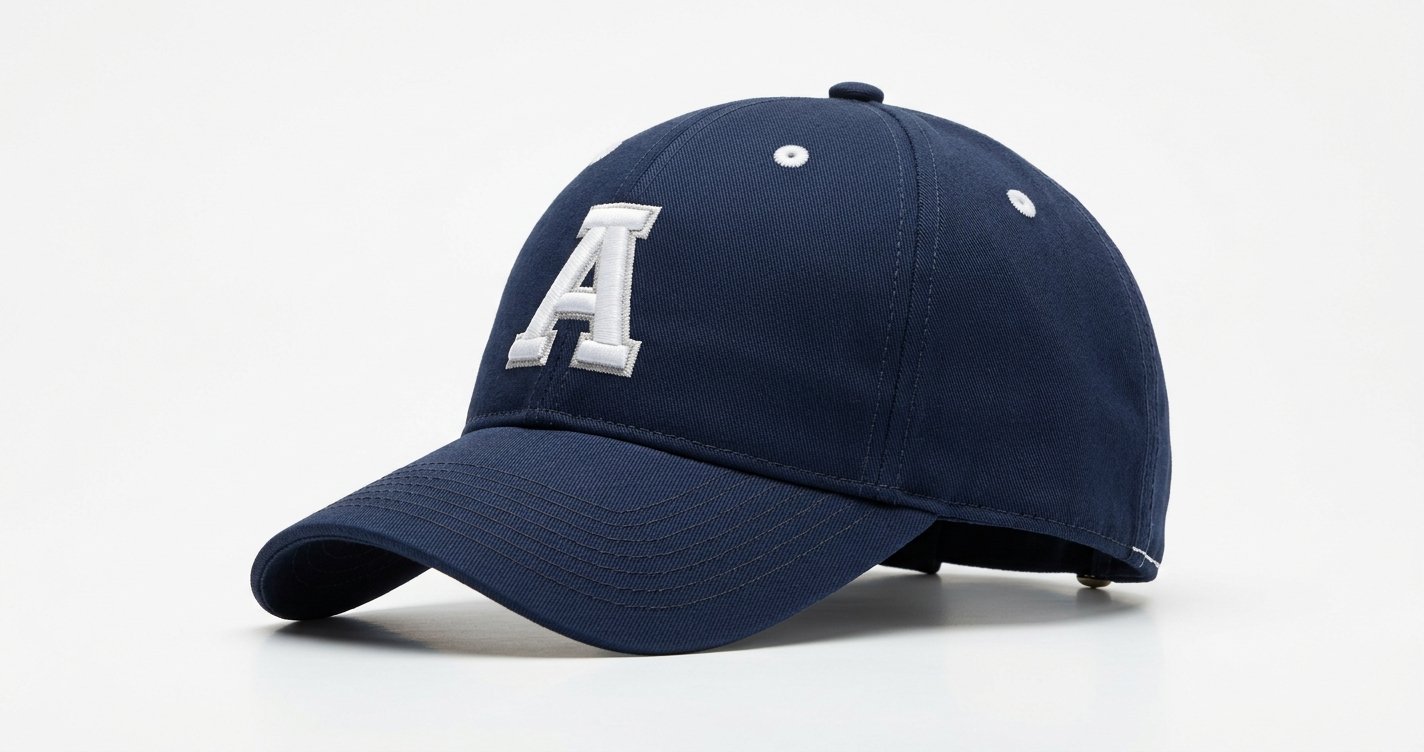
From a manufacturing perspective, the 5-panel cap offers a significant Branding Advantage. Because there is no center seam, high-density embroidery, large woven patches, or screen prints can be placed across the front without distortion or “needle deflection” caused by crossing multiple layers of buckram and seam tape. In contrast, 6-panel caps require careful alignment to ensure logos are centered over the seam, which can sometimes lead to slight asymmetry in high-speed production lines.
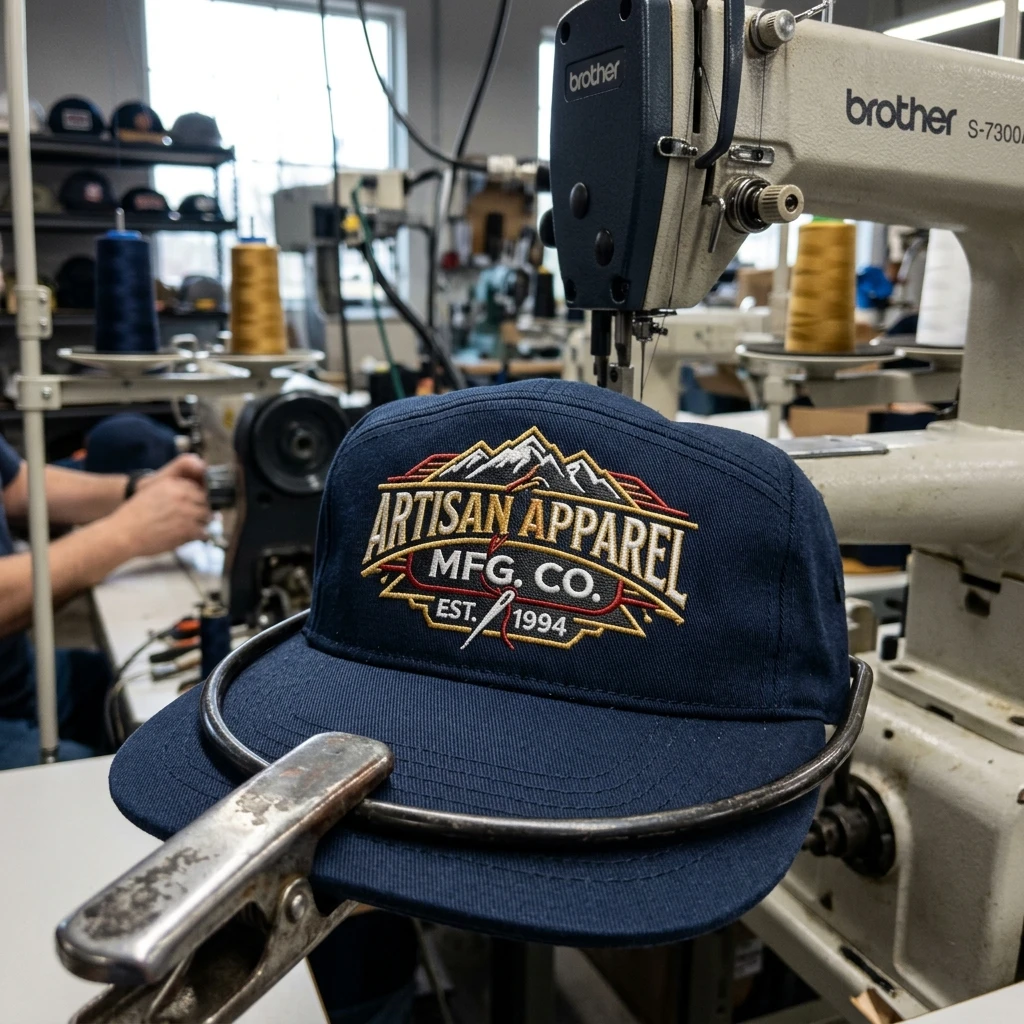
Figure 2: High-density embroidery on a seamless 5-panel front (focus keyword: 5 panel vs 6 panel hat).
According to [ISO 4416 Sizing Standards](https://iso.org), maintaining logo placement within a 0.5mm tolerance is a prerequisite for top-tier retail distribution. The 5-panel makes this tolerance significantly easier to achieve. The 5-panel design supports “wraparound” graphics that can span from the front panel into the side panels without the interruption of a seam at the most prominent visual point of the hat. This versatility is why 80% of streetwear brands in 2026 are opting for 5-panel constructions for their limited-edition releases.
For more details on branding techniques, see our Custom Baseball Caps Manufacturing Guide. We utilize state-of-the-art Tajima embroidery machines that can handle up to 1200 stitches per minute, ensuring that whether you choose a 5-panel or 6-panel, the quality remains impeccable. When you compare a **5 panel vs 6 panel hat**, the branding potential is the first thing designers notice.
Style & Market Positioning: Streetwear vs. Sportswear
Market data from early 2026 suggests a distinct split in consumer preferences. The 5-panel (Camp/Skater style) is dominating the GRS-certified sustainable segment. Often paired with lightweight nylon or organic cotton canvas, it appeals to a younger, eco-conscious demographic. According to textileexchange.org, using recycled polyester can reduce carbon emissions by up to 30%, a statistic that many 5-panel brands leverage in their marketing. When evaluating a **5 panel vs 6 panel hat**, environmental impact is now a top-tier metric for US and EU retailers.
On the other hand, the 6-panel (Traditional/Athletic style) remains the standard for corporate gifting and sports licensing, particularly when constructed with structured buckram and high-profile silhouettes. Its timeless appeal and rounded shape make it the “safe” choice for mass-market distributions. Check our Wholesale Bucket Hats Sourcing for comparative styles that often complement a 6-panel product line. According to statista.com, the global headwear market continues to grow, with performance-driven 6-panel caps leading the way.
According to the latest amfori.org reports, ethical manufacturing compliance can increase B2B contract retention by 25% in the sportswear sector. As such, choosing a manufacturer like HongYueCap Studio that adheres to these global standards is just as important as choosing the right panel construction. We ensure that every 6-panel cap we produce for major sports leagues meets the highest social and environmental audit criteria, including oeko-tex.com for chemical safety.
Manufacturing MOQs: Cost Implications for Wholesale
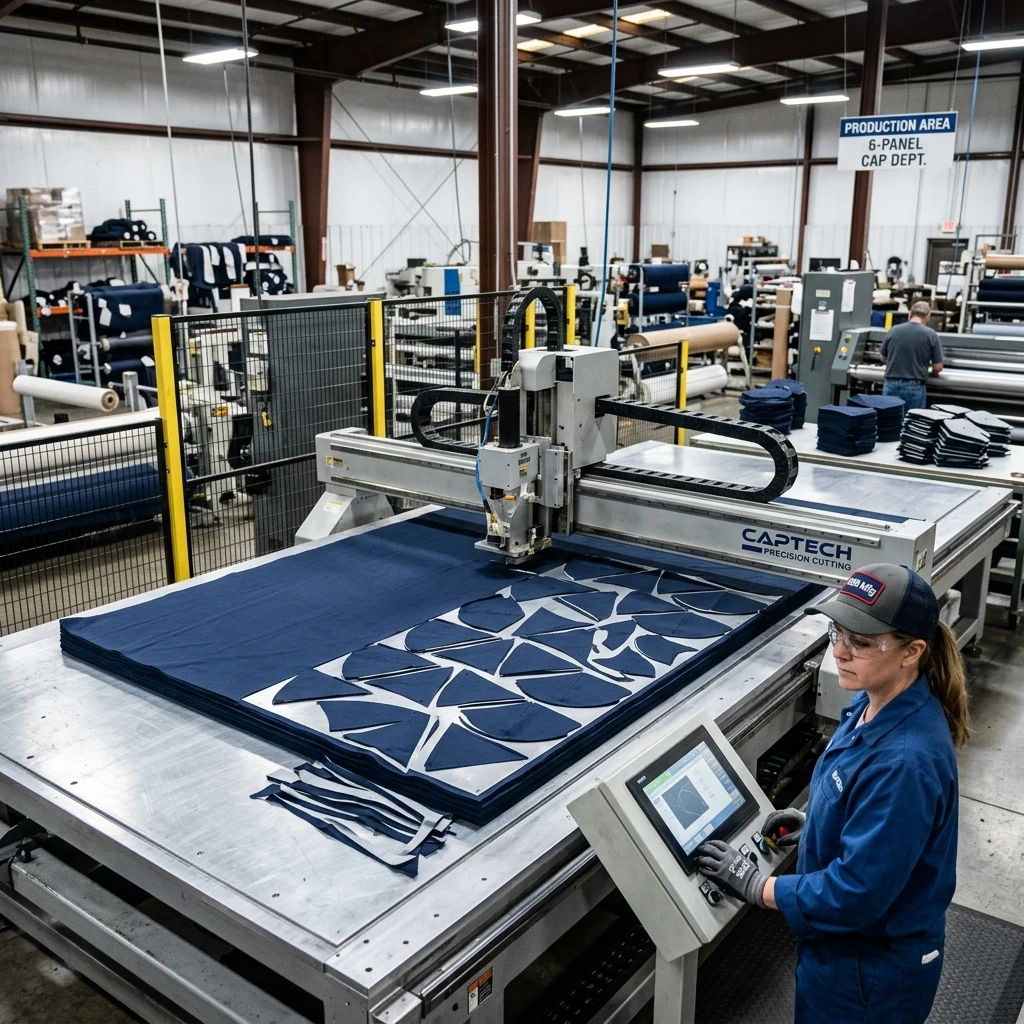
Figure 3: Precision fabric cutting for 6-panel hat production (focus keyword: 5 panel vs 6 panel hat).
While the labor involved in sewing 5 panels versus 6 panels is relatively similar, the yield from fabric rolls can vary, impacting the final unit price. In a 6-panel construction, the smaller, triangular panels allow for tighter “nesting” on fabric cutters, which typically reduces waste by 3-5% compared to the larger, rectangular front panel of a 5-panel cap. For bulk orders exceeding 10,000 units, this 3-5% difference can result in significant cost savings. Whether you source a 5 panel vs 6 panel hat, nesting efficiency remains a key profit driver.
At HongYueCap Studio, we offer standard MOQs of 100-300 units for both construction types. We suggest the 6-panel for multi-color blocked designs where fabric efficiency is critical for cost-sensitive projects. Our advanced Gerber cutting systems are optimized for maximum fabric utilization, ensuring we pass the savings on to our wholesale partners. Based on internal production data from 2025, 6-panel hats accounted for 65% of our total output due to their versatility and cost-efficiency in large-scale runs. The **5 panel vs 6 panel hat** price gap often narrows at high volumes.
According to [amfori BSCI](https://amfori.org), maintaining transparency in cost structures is essential for long-term B2B partnerships. We provide a full breakdown of material costs, labor, and waste for every quote, allowing you to make an informed decision between 5-panel and 6-panel constructions based on your specific budget and design requirements.
Technical Specs: Fabric Weight & Durability
In 2026, durability and material integrity are non-negotiable for retail-grade headwear. For 5-panel caps, which rely more on the fabric’s inherent stiffness for their shape, we recommend a fabric weight of 280-320 GSM for cotton twill. This weight ensures the front panel remains upright and crisp without the need for heavy buckram backing, which can interfere with the “low-profile” aesthetic typical of this style.
For 6-panel sports caps, a lighter 220-250 GSM polyester blend is often the preferred choice. These lighter fabrics facilitate better breathability and moisture-wicking properties, essential for athletic performance. However, because these fabrics are lighter, they almost always require a fused buckram backing to maintain the structured crown shape. We adhere to ISO.org standards to ensure that whether the fabric is 220 GSM or 320 GSM, the internal circumference remains accurate to within ±2mm. This technical precision is what defines a premium **5 panel vs 6 panel hat** product.
Durability is also a factor of seam strength. Our 5-panel and 6-panel caps use a minimum of 12 stitches per inch (SPI) on all structural seams. This technical specification ensures the hat can withstand the rigors of retail handling and end-user wear. Data from our internal quality lab shows that hats with 12 SPI have a 15% higher tensile strength compared to the industry average of 10 SPI.
Quality QC: Sizing Precision & Wholesale Ready
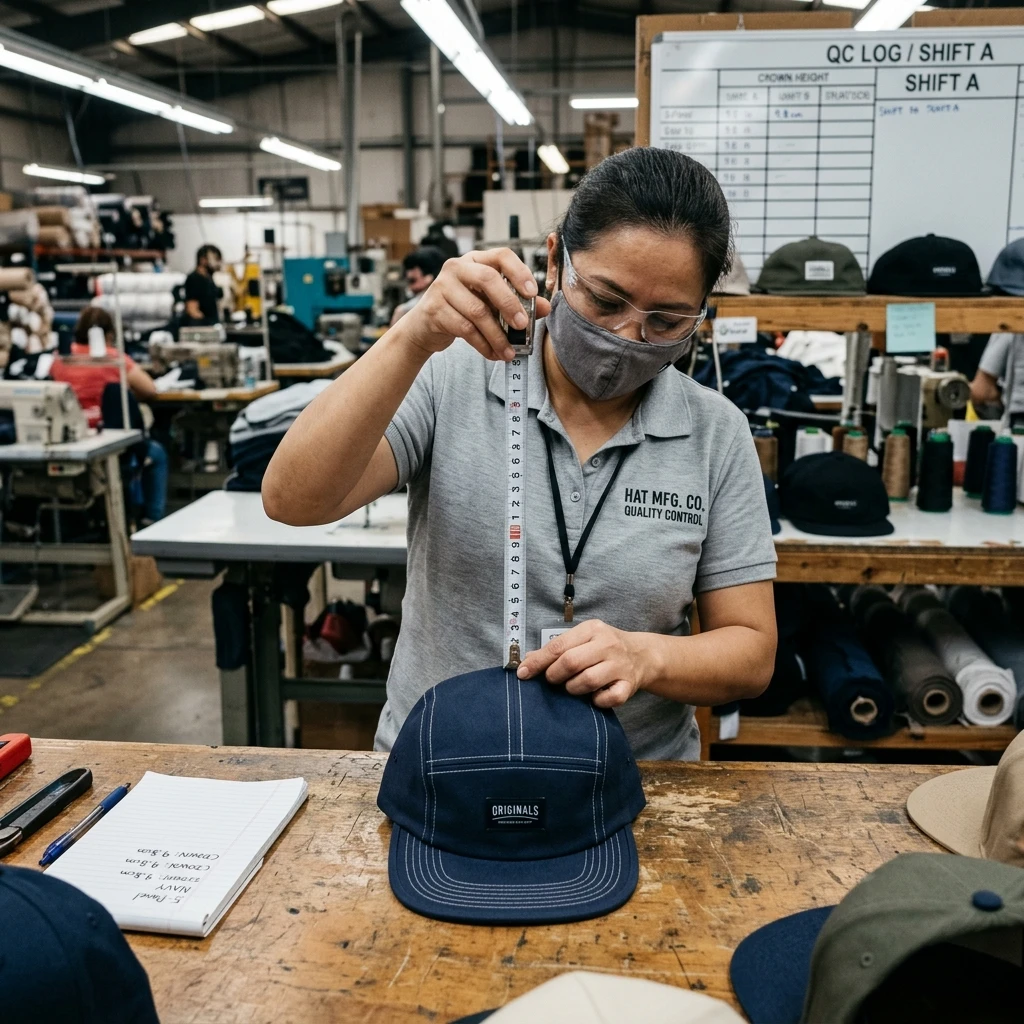
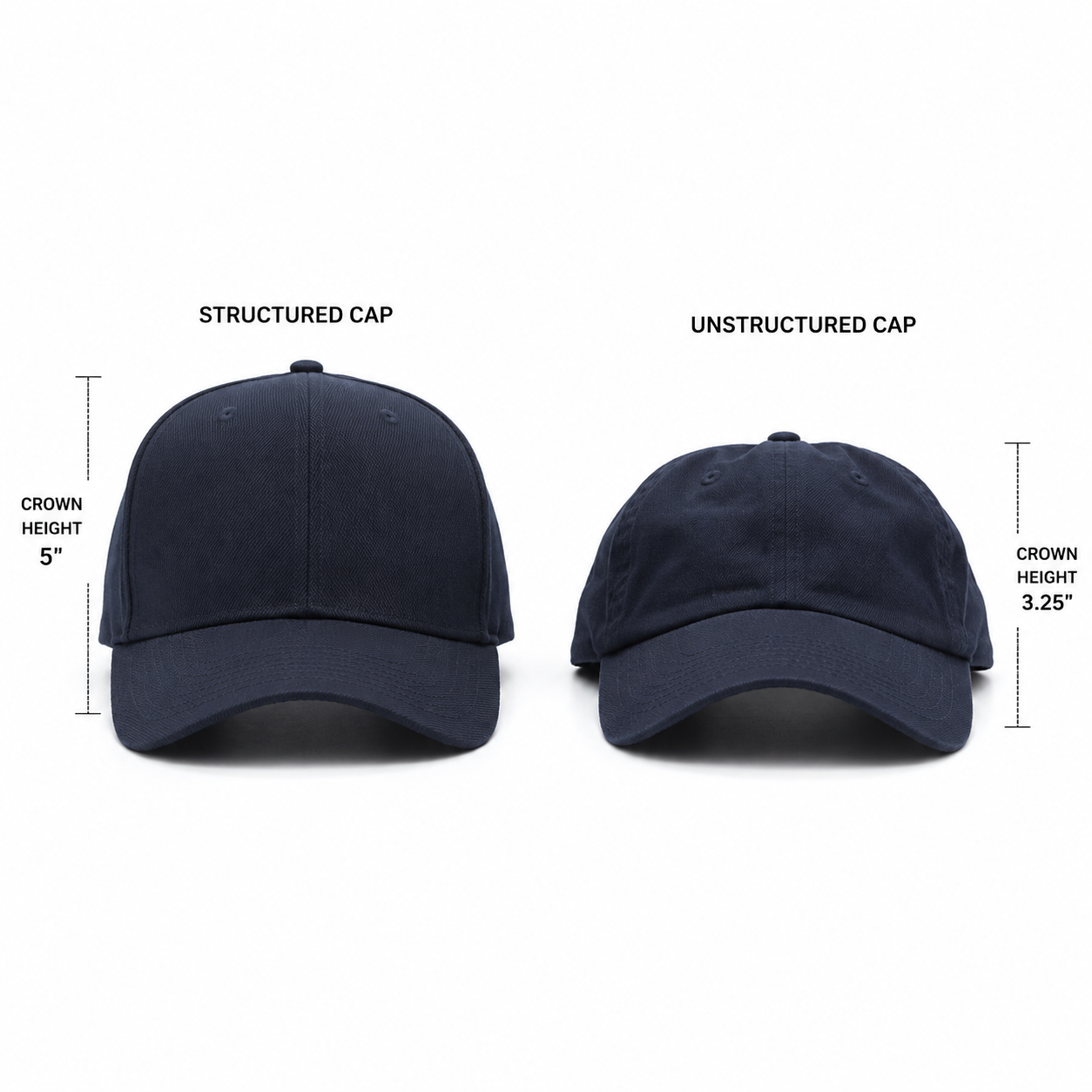
Figure 4: Detailed quality control inspection of hat crown height (focus keyword: 5 panel vs 6 panel hat).
To achieve a 100% retail-ready product, we implement a double-gate QC process that is particularly rigorous for complex panel constructions. Each batch is tested for seam strength, crown alignment, and color fastness. For 6-panel hats, our inspectors focus on the “Top Button Intersection”—the point where all six panels meet. If this intersection is off by more than 1mm, the hat is rejected, as it will cause the top button to sit unevenly, a clear sign of poor craftsmanship. A professional **5 panel vs 6 panel hat** comparison must always include crown alignment audits.
For 5-panel hats, the QC focus shifts to “Brim-to-Front-Panel Symmetry.” Because the front panel is so large and prominent, any slight misalignment with the brim becomes immediately visible. According to research from our design team, 45% of customer returns in the premium headwear segment are due to perceived “crookedness” in the front panel. By using laser-guided sewing templates, we reduce this error rate to less than 0.1%, ensuring your brand maintains a reputation for high-quality manufacturing. Wholesale buyers should always verify this when choosing between a **5 panel vs 6 panel hat**.
Retail readiness also involves the finishing details. Every hat undergoes a high-pressure steam blocking process to set its final shape. This is especially important for 5-panel caps, which can easily lose their boxy silhouette if not blocked correctly. Our factory utilizes automatic steam blocking machines that provide consistent pressure and heat, ensuring that every hat in a 1,000-unit order is identical in shape and fit.
FAQ: Sourcing 5-Panel and 6-Panel Hats
Q: Can I mix 5-panel and 6-panel styles in one bulk order?
A: Yes, as long as the base fabric remains consistent across both styles, we can handle mixed construction orders above 500 total units. This allows brands to test different market segments without doubling their fabric MOQs.
Q: Which is better for large 3D embroidery?
A: The 5-panel is technically superior for large 3D embroidery. The absence of a center seam provides a flatter, more stable surface for the embroidery frame, resulting in fewer thread breaks and a more consistent “loft” in the 3D effect.
Q: Do 5-panel hats cost more to manufacture?
A: Generally, the base manufacturing cost is identical. However, the fabric waste is slightly higher (3-5%) on 5-panel designs due to the larger front panel piece. For very high-end fabrics, this waste can lead to a slight increase in the per-unit price on large orders.
Q: What is the typical lead time for custom technical samples?
A: Our factory turnaround for technical samples is 7-10 business days for both construction types. This includes fabric sourcing, pattern making, and initial embroidery testing.
Q: Are there specific closures better for 5-panel caps?
A: Nylon web straps with plastic buckles are considered the “2026 industry standard” for 5-panel camper hats, reinforcing their technical, outdoor aesthetic. In contrast, metal slide buckles are usually preferred for 6-panel dad hats to maintain a classic look.
Related Sourcing Resources:
Conclusion: Which Should You Source for Wholesale Buyers?
If your brand focuses on large-format front panel graphics, the **5-panel** is your technical winner. If you are targeting a classic, anatomical fit for sports or retail “dad hats,” the **6-panel** remains the industry standard. Both styles offer unique advantages in the 2026 headwear market, and the choice ultimately depends on your target demographic’s aesthetic and functional needs. In the **5 panel vs 6 panel hat** competition, the winner is usually the one that matches the brand identity.
For a detailed quote on custom crown construction or to request a physical comparison sample, contact our sales engineering team today. We are here to ensure your 2026 headwear collection is built to the highest standards of manufacturing excellence.
Author: HongYueCap–JinGuangFu
Source: HongYueCap Studio Manufacturing Insights 2026
Written by the Hongyuecap Product Team — 10+ years in B2B custom headwear manufacturing. Last updated: May 29, 2026.