Baseball Cap Stitching & Seam Quality: SPI Specs and Strength Testing for Wholesale Buyers
Find quality baseball caps for your wholesale orders. This guide covers essential specifications, quality standards, and sourcing tips for wholesale buyers.
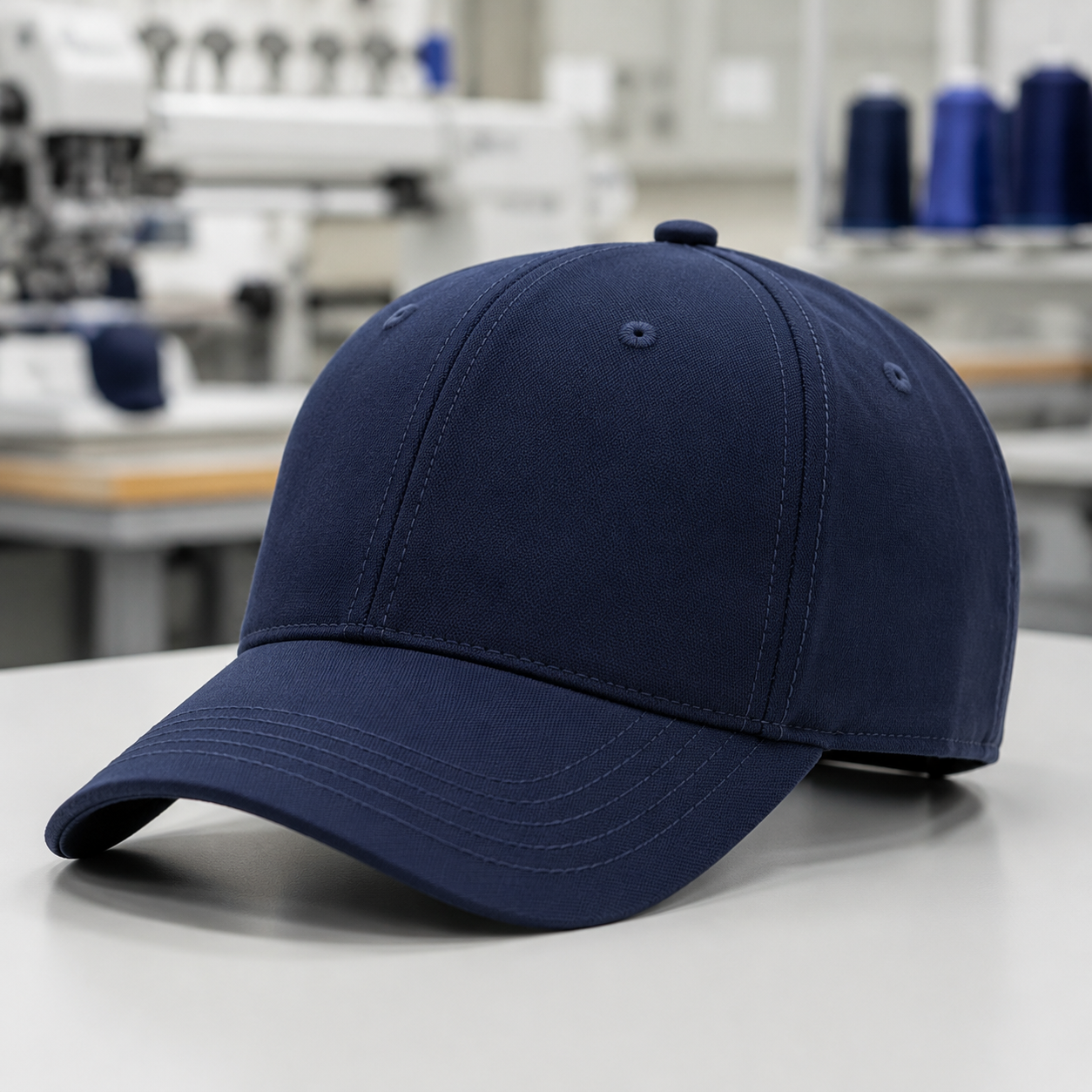
Every wholesale baseball cap order carries a hidden risk: stitching defects that won’t show up until the caps arrive. Loose threads, skipped stitches, or weak seams turn a well-negotiated deal into a costly return. For B2B buyers sourcing hundreds or thousands of caps, seam quality isn’t a minor detail — it directly affects your brand’s reputation, return rate, and per-unit cost.
Why Stitching Quality Matters for Bulk Cap Orders
Problem: Inconsistent stitching leads to seam failure during normal wear. A cap that splits at the crown seam or unravels along the brim edge can’t be sold at retail.
Root Cause: Factories use varying stitch-per-inch (SPI) settings, thread types, and needle gauges. Without a written spec, the production line defaults to the fastest output, not the strongest seam. Low-cost polyester thread degrades faster under UV and sweat exposure. A machine running at high speed may skip one stitch in ten, creating a weak point that propagates over time.
Buyer Action: Define your SPI spec in the purchase order. Require a stitch gauge report and seam strength pull test on the pre-production sample. Audit the sewing line — not just the finished cap.
Stitches Per Inch: The Minimum Spec Every Buyer Should Mandate
Stitches per inch is the single most controllable factor in cap seam quality. For baseball caps, different zones need different SPI targets:
- Crown panels (joining seams): 8–10 SPI. This carries the most structural load. Below 8 SPI, panels separate under light tension.
- Brim edge (topstitch): 7–9 SPI. Must be uniform — uneven SPI creates visible waviness on the brim edge.
- Sweatband attachment: 6–8 SPI. Higher density here prevents the sweatband from detaching after washing.
- Eyelet reinforcement: 10–12 SPI. Tight stitching prevents eyelet fraying and ventilation hole distortion.
- Closure strap / buckle: 8–10 SPI with bar-tack reinforcement at stress points.
When a factory claims “standard stitching,” verify with a stitch counter. Anything below 7 SPI on structural seams is a rejection signal for first-article inspection.
Thread Selection: Polyester vs Cotton vs Bonded Nylon
Problem: Wrong thread type causes seam failure after washing, sun exposure, or sweat absorption.
| Thread Type | Tensile Strength | UV Resistance | Wash Shrinkage | Best Use |
|---|---|---|---|---|
| Polyester (spun) | Goeie | Goeie | Laag | General cap assembly |
| Polyester (core) | Uitstekend | Uitstekend | Very low | Crown seams, brim edge |
| Katoen | Laag | Poor | Hoog | NOT recommended for caps |
| Bonded Nylon | Very high | Matig | Laag | Heavy-duty, stress points |
Buyer Action: Specify bonded polyester or core-spun polyester thread in your tech pack. Reject cotton thread — common in low-cost factories to save $0.02 per cap — which weakens after first wash.
Seam Types in Baseball Caps and Their Failure Patterns
Five seam types are used in a standard structured cap. Each has a specific failure mode you should inspect:
- Overlock (merrow) seam: Used for crown panel join. Failure: thread unraveling at the edge. Require 8–10 SPI with reinforced backstitching at start and end.
- Flat-felled seam: Crown and brim join. Failure: seam puckering when thread tension is mismatched between top and bottom thread.
- Double-needle topstitch: Brim edge, bill. Failure: gap between parallel stitch lines if needle gauge is too wide.
- Lock stitch: Sweatband, back strap. Failure: skipped stitches at curve points where fabric layers shift.
- Bar tack: Stress points (button top, strap end). Failure: insufficient stitch density — bar tack should feel dense and rigid.
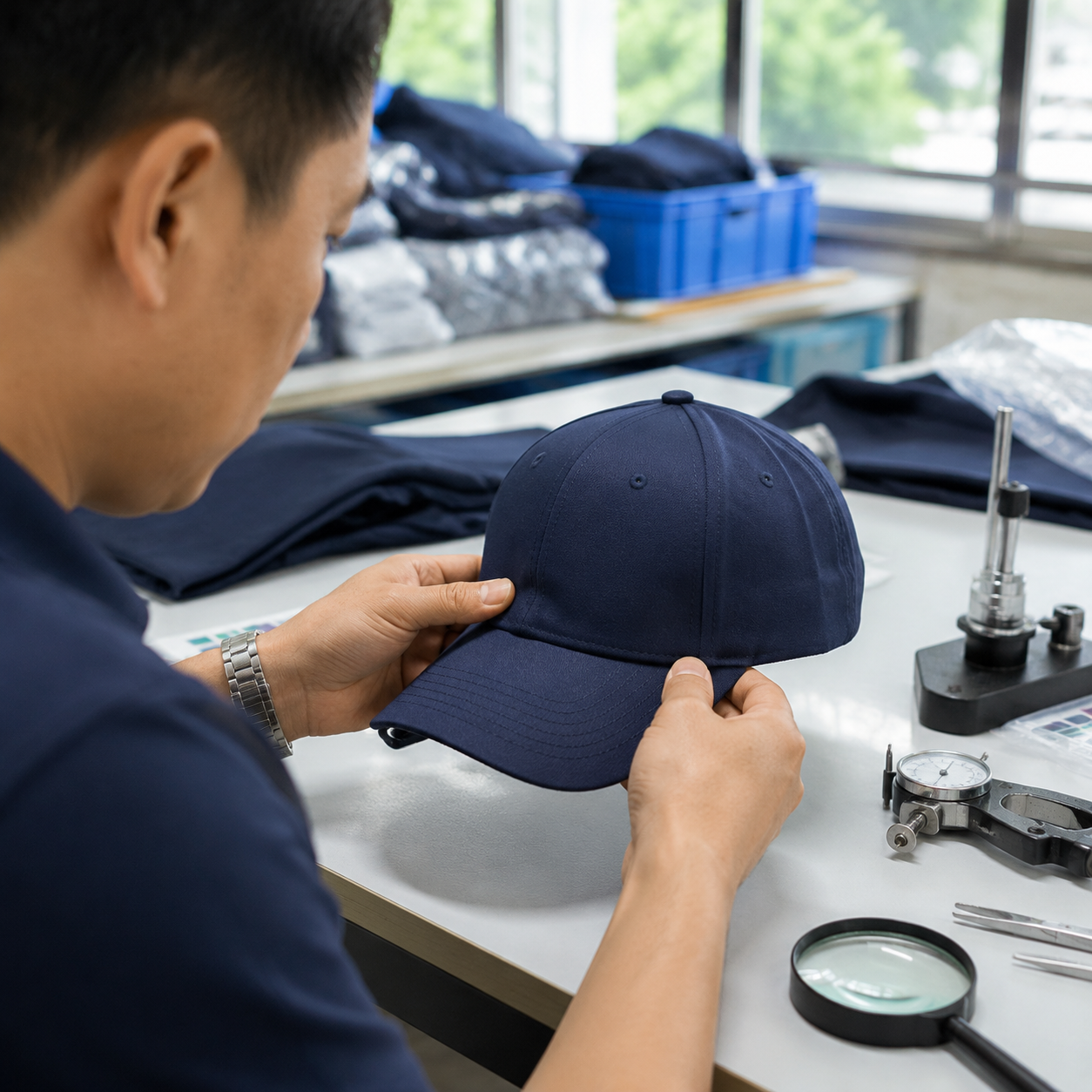
Inspect every seam type on your pre-production sample. A single skipped stitch on a crown panel seam compromises the entire cap’s structural integrity.
Baseball Cap Stitching QC Checklist
Before approving bulk production, verify each of these 8 points:
- SPI measured with a stitch counter at crown, brim edge, sweatband, and eyelet zones.
- Thread type matches the spec sheet (core-spun or bonded polyester preferred).
- No loose thread ends longer than 3 mm. Each seam must be backstitched or thread-sealed.
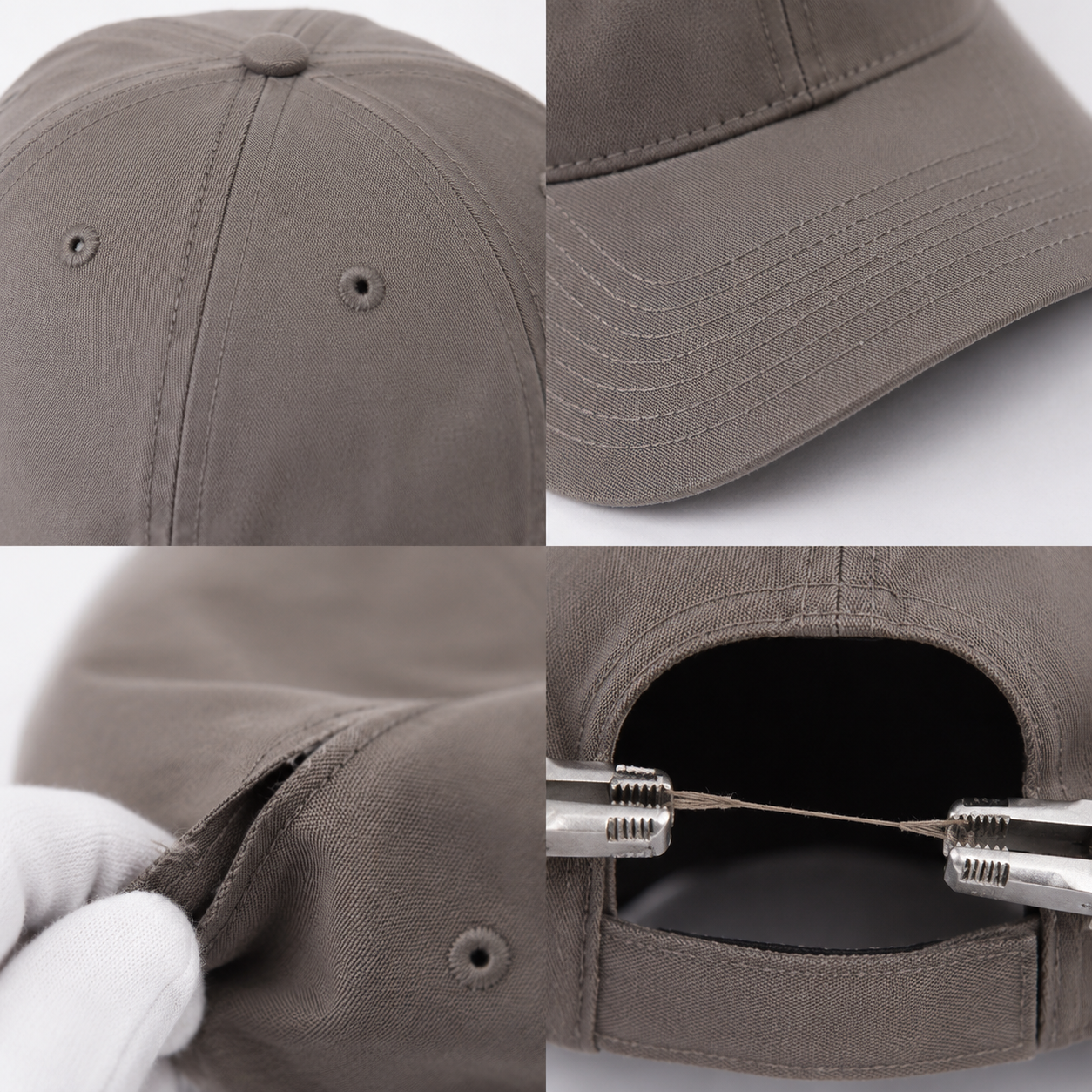
- Seam strength: perform a hand-pull test — seams should not separate when pulled gently between hands.
- Eyelets: check for fraying at the stitch border. Tight SPI prevents unraveling.
- Brim edge: run a finger along the entire edge. No waviness or skipped stitches.
- Bar tacks: must be present at button base, strap end, and each stress point.
- Consistency across size runs — check the same seam on S, M, L, XL samples.
How to Communicate Stitch Specs to Your Factory
One of the most common miscommunications between buyers and factories is how stitching quality is defined. A factory’s “quality stitching” may be your “unacceptable loose seam.” Use these three tools to close the gap:
- Tech pack stitch callouts: Include a diagram showing each seam type with required SPI, thread type, and needle size.
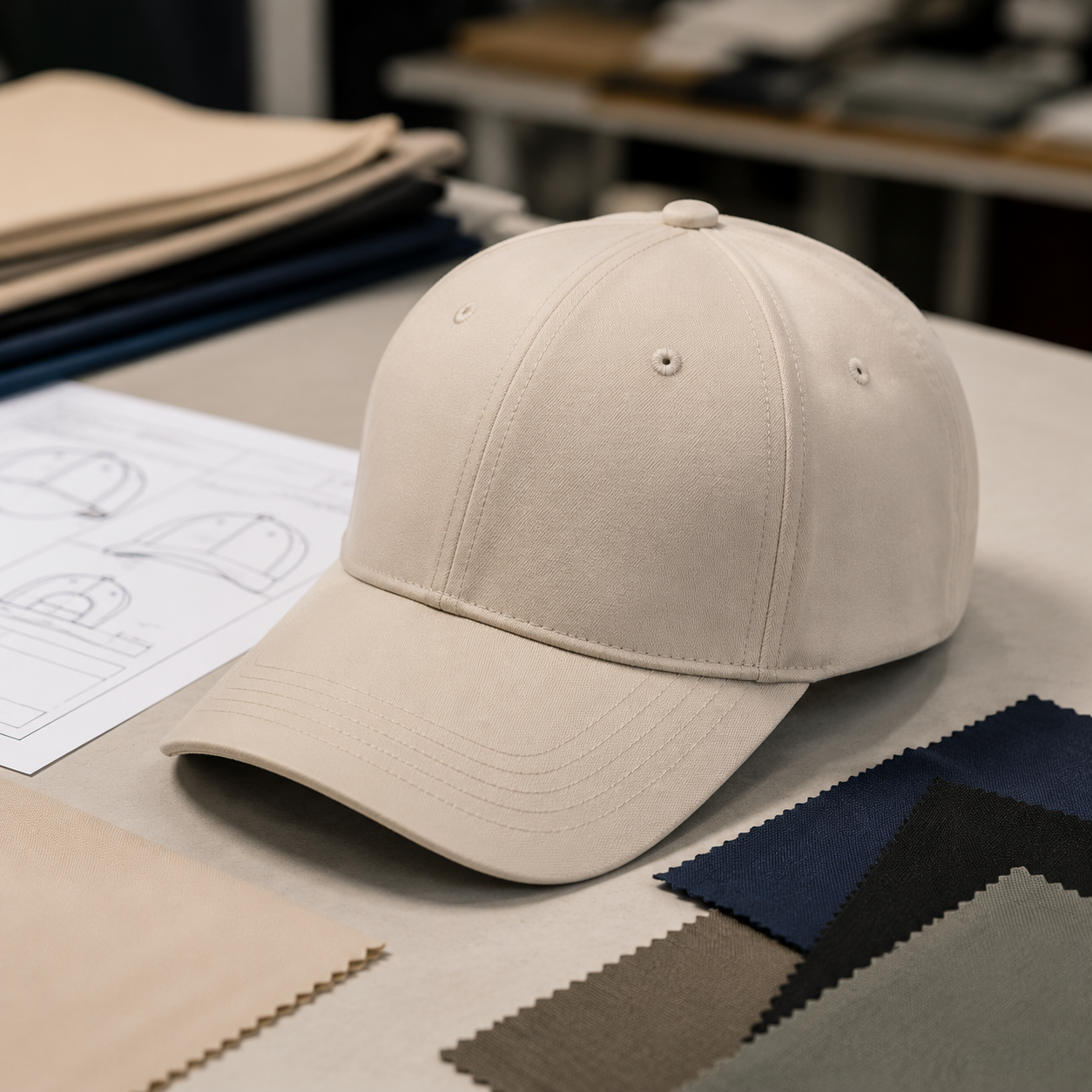
- Physical seam standard: Send a sealed sample with approved stitching as the visual reference. Factories work better from a touch-and-see standard than a PDF.
- In-line inspection during sewing: The cheapest stitch problems to fix are the ones caught within five minutes on the machine. Arrange for an inspector to spend 30 minutes on the sewing floor during first production.
FAQ
What SPI should I specify for a baseball cap?
Minimum 8 SPI on crown panel seams, 7 SPI on brim edge, and 10 SPI on eyelet reinforcement. For closure and stress points, require bar tack reinforcement at 10+ SPI density.
Is cotton thread acceptable for baseball cap production?
No. Cotton thread shrinks with moisture, degrades under UV, and has low tensile strength. Use core-spun polyester or bonded polyester for all structural seams.
How can I verify stitch quality without a lab?
Use a stitch counter (gauge) for SPI measurement. For strength, perform a hand-pull test: grip the seam on both sides and pull steadily — if you see any light through the needle holes, the SPI is too low.
Get Your Cap Specs Right Before Production
Stitching quality is one of the most commonly overlooked spec items in wholesale cap orders — and one of the most expensive to fix after production. Define your SPI targets, specify thread type, and verify on pre-production samples.
Looking for reliable baseball cap manufacturers with verified stitching quality? Browse our baseball cap wholesale catalog of contact our sourcing team for a spec review before you place your next order.
See our complete wholesale hat selection for more options.
See our complete wholesale hat selection for more options.
Seam Strength Testing Methods for Caps
Seam strength is a critical quality parameter for baseball caps. Common testing methods include the grab test and strip test as defined by ASTM standards. For cap seams, the minimum breaking strength should be at least 15-20 pounds per inch. Seam slippage should not exceed 1/8 inch under standard testing conditions. Regular seam strength testing helps wholesale buyers verify that caps meet durability expectations. Request seam strength test reports from your manufacturer for each production batch. This data provides objective quality assurance for your wholesale cap orders.
Written by the Hongyuecap Product Team — 10+ years in B2B custom headwear manufacturing. Last updated: May 23, 2026.