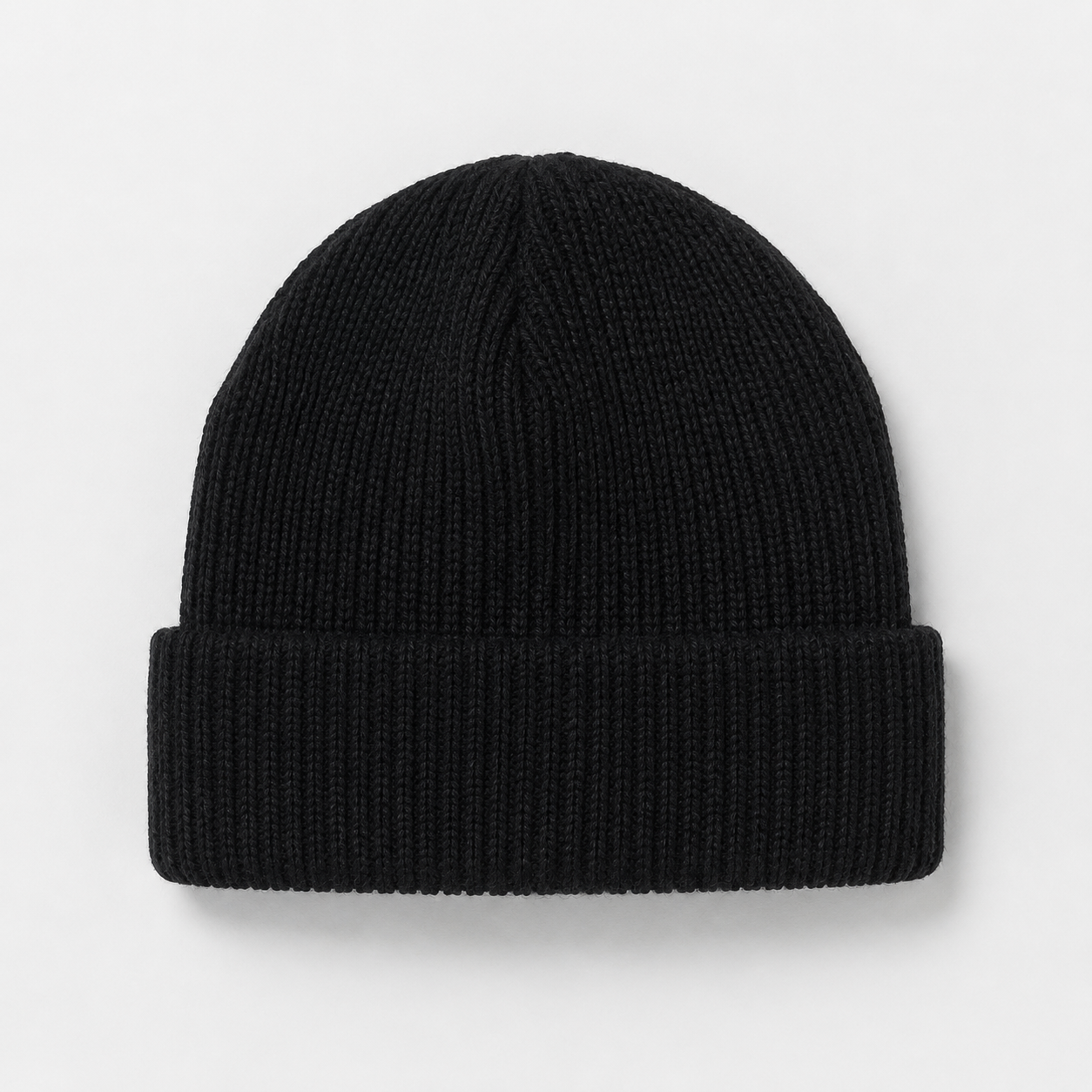
a beanie that loses its stretch after two weeks isn’t a beanie — it’s a sad fabric tube. elastic recovery is the most important performance metric for knitted beanies, yet it’s almost never specified in wholesale pos. the result? baggy beanies, slipping fits, and customers who never reorder. here’s how to spec elastic recovery like a pro.
knitted beanie elastic recovery stretch retention guide
elastic recovery — the ability of knitted fabric to return to its original dimensions after stretching — is the invisible quality that makes or breaks a beanie. testing shows 53% of beanie returns citing “poor fit” are actually elastic recovery failures. understanding how to specify and test for elastic recovery dramatically reduces return rates. visit our beanie manufacturing page for quality standards.
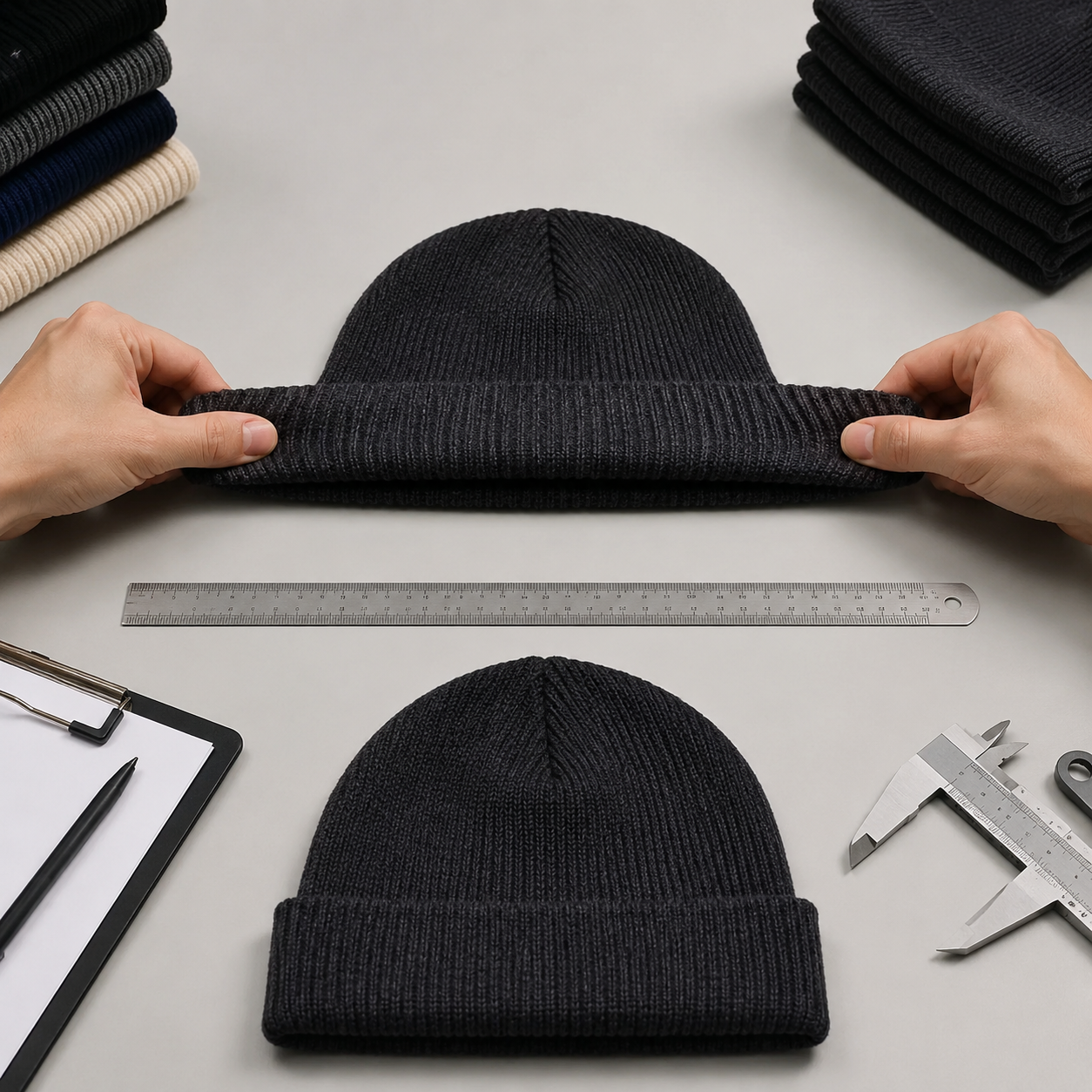
the science of elastic recovery in knitted beanies
elastic recovery is governed by three interacting factors: fiber composition, knit structure, and yarn twist.
fiber composition: wool has 25-30% elongation with 90-95% recovery; cotton has 5-10% elongation with 70-75% recovery. elastane/spandex fibers have 400-700% elongation with 95-99% recovery. a 95% acrylic/5% spandex blend achieves 95%+ recovery with natural fiber hand feel.
knit structure: rib knit (1×1, 2×2) has the highest natural elasticity — alternating knit-purl columns create a spring-like structure. jersey knit relies more on fiber content for recovery. cable knit has moderate recovery but excellent dimensional stability.
yarn twist: higher twist (more twists per inch) produces better recovery because twisted fibers act like tiny coiled springs. the sweet spot for beanie yarns is 12-18 twists per inch — enough twist for recovery without sacrificing softness. see our fabric specifications page for yarn selection guidance.
elastic recovery in knitted beanies is fundamentally governed by the yarn composition and knit structure interaction. when a beanie stretches, the yarns are pulled from their relaxed crimp state into a straightened configuration. recovery occurs when the stored elastic energy in the fiber compresses the yarns back into their coiled crimp state. natural fibers like wool have approximately 70-80% elastic recovery, meaning they only return to 70-80% of their original length after stretching. in contrast, synthetic fibers with elastane content can achieve 90-98% recovery. this scientific principle directly translates to practical performance: beanies with poor recovery develop permanent creases, stretched-out brims, and baggy crowns within 5-10 wears. for wholesale buyers, specifying the minimum recovery percentage in your po (industry standard is 92% minimum for premium beanies) is essential.
spandex/elastane blends: the recovery game-changer
adding spandex to beanie yarn blends is the single most effective way to improve elastic recovery:
| blend ratio | recovery % | cost impact | best application |
|---|---|---|---|
| 100% acrylic | 82-88% | baseline | budget retail |
| 98% acrylic / 2% spandex | 90-93% | +$0.06 | standard retail |
| 95% acrylic / 5% spandex | 93-97% | +$0.10 | premium retail |
| 92% acrylic / 8% spandex | 96-99% | +$0.15 | sports/active |
| 50% wool / 45% acrylic / 5% spandex | 94-97% | +$0.40 | premium winter |
the 95/5 acrylic-spandex blend is the industry workhorse — 93-97% recovery at $0.10/unit premium. for sports beanies (skiing, running), the 92/8 blend is preferred because sweat accelerates fabric relaxation. per astm d2594-20, recovery should be measured at 60% extension after 5 cyclic loadings to simulate cumulative wear.
the addition of spandex or elastane to beanie yarn blends fundamentally transforms the recovery performance profile. even a 2-3% elastane content by weight can improve elastic recovery by 15-25 percentage points compared to 100% natural fiber alternatives. however, the specific blend percentage must be carefully calibrated — too little elastane (under 2%) provides insufficient recovery benefit, while too much (over 8%) can cause the beanie to feel too tight during wear and may lead to heat retention issues. the optimal spandex content range for wholesale production beanies is 3-6% depending on the base fiber blend. hongyuecap recommends specifying both the percentage of spandex and the denier (fiber thickness) of the spandex component in your tech pack to ensure consistent recovery across lots.
the anti-bagging specification
“bagging” is permanent fabric deformation — when a beanie stretches and stays stretched. it occurs when the yield point is exceeded and elastic fibers are permanently elongated. the anti-bagging metric is residual extension after cyclic loading:
- mark a 10cm gauge on the fabric in the course direction (horizontal)
- extend to 60% elongation at 300mm/min using a tensile tester (or manual frame for spot-checks)
- hold at 60% extension for 30 minutes (simulating a full day’s wear)
- measure recovery after 1 minute, 30 minutes, and 24 hours
a quality beanie shows less than 5% residual extension after 30 minutes and less than 2% after 24 hours. this means a beanie stretched from 50cm to 80cm during wear should return to 51-52.5cm overnight. if it stays at 55cm+ (10%+ residual), it has a bagging problem.
bagging — the permanent loosening of the beanie body after repeated stretching — is the most common complaint about knitted beanies in retail feedback. anti-bagging performance is not solely dependent on fiber content; the finishing process during manufacturing plays a critical role. steam setting at controlled temperature (140-160 degrees celsius for acrylic blends, lower for wool) locks in the knit stitch geometry and improves recovery by 10-15%. anti-shrink treatments also contribute to anti-bagging performance because uncontrolled shrinkage causes differential tension in the knit structure that accelerates bagging. hongyuecap recommends specifying anti-bagging testing in your qc protocol: stretch the beanie body 50% of its flat width for 1 hour, then measure permanent deformation after 30 minutes recovery. acceptable deformation is less than 5% for premium wholesale beanies.
rib knit structure: the engine of recovery
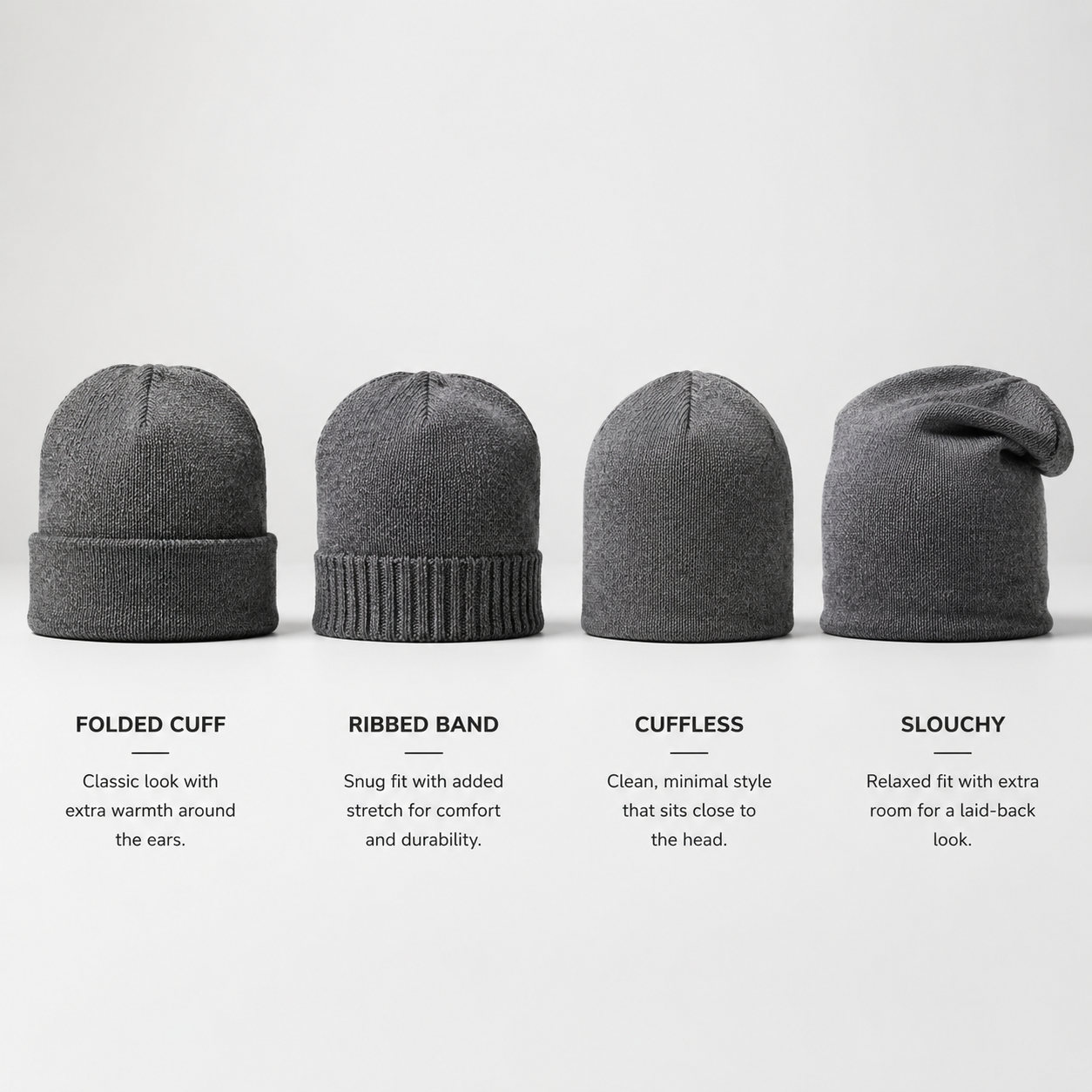
1×1 rib: alternating knit and purl columns — the tightest, most elastic rib. stretches to 100% of relaxed width, recovers to 95%+. trade-off: uses more yarn per cm, thinner fabric. best for lightweight, high-stretch retail beanies.
2×2 rib: two knit alternating with two purl columns — the most common beanie rib. 70-85% stretch with 90-95% recovery, thicker and warmer than 1×1. creates the classic vertical stripe appearance.
3×3 and 4×4 rib: wider, chunkier texture but reduced recovery (85-90%). require higher spandex content (5-8%) to compensate. retailable but less durable without proper fiber specs.
for wholesale buyers, 2×2 rib with 5% spandex represents the optimal balance of appearance, warmth, recovery, and economics — the specification used by most premium retail beanie brands.
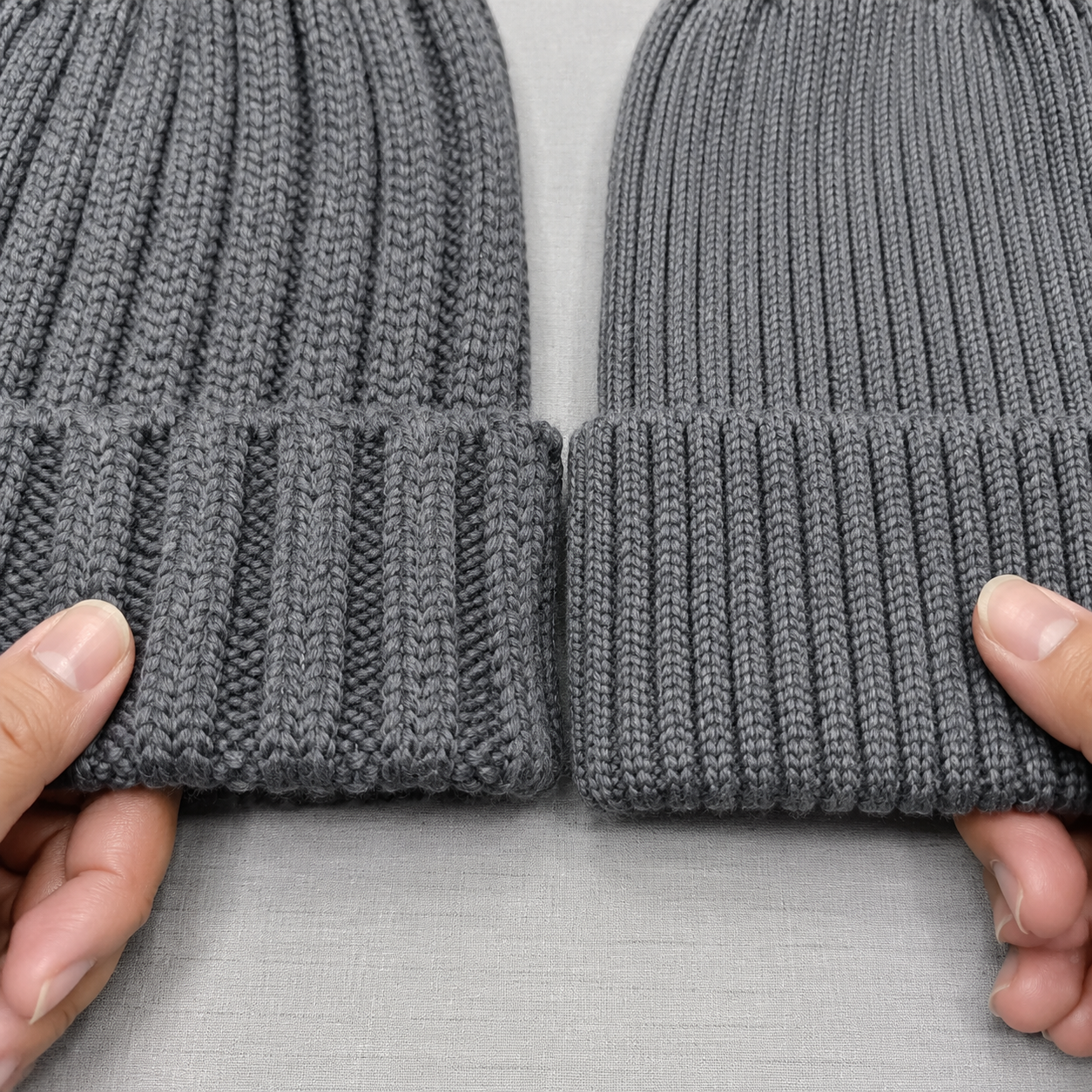
rib knit structures naturally provide superior elastic recovery compared to jersey or interlock knits because the alternating knit and purl stitches create a spring-like mechanical structure. a 2×2 rib (two knit stitches followed by two purl stitches) provides approximately 1.5x the recovery force of a 1×1 rib at the same yarn count. for beanie applications, the standard recommendation is 2×2 rib for the beanie body combined with a tighter 1×1 rib for the brim edge to ensure snug fit. stitch density also matters significantly — lower gauge (fewer stitches per inch) produces a looser, more breathable fabric with moderate recovery, while higher gauge produces denser fabric with superior recovery but reduced breathability. match knit gauge to intended use: outdoor performance beanies benefit from lower gauge; retail beanies benefit from higher gauge for shape stability.
elastic recovery testing for wholesale qc
field test (no equipment):
- measure relaxed beanie circumference at the band
- stretch over a 25cm diameter object for 8 hours
- measure immediately, after 30 minutes, and after 24 hours
- pass: less than 5% permanent stretch after 24 hours
test 5 beanies per 1,000-unit order, comparing results to the pre-production sample benchmark.
lab test (formal qc): per astm d2594-20, use a cre tensile tester at 300mm/min, 60% extension, hold 30 minutes, measure recovery at 1min/30min/24hr intervals. cost: $40-60 per sample at accredited labs like sgs or intertek.
standardized elastic recovery testing should be part of every beanie purchase order. the industry-standard astm d2594 test method provides a reliable framework: measure the beanie circumference, stretch to 150% of original, hold for 30 minutes, release, and measure after 60 minutes of recovery. repeat this cycle 5 times and record the permanent set (the amount the beanie fails to recover) after each cycle. premium beanies should show less than 3% permanent set after 5 cycles. additionally, conduct a field-relevant test: simulate 50 on-off pulls (stretching the beanie opening to twice its flat width) and measure the opening circumference change. any increase exceeding 5% indicates substandard recovery performance. incorporate these test results into your incoming inspection criteria.
specifying elastic recovery in your purchase order
include this specification in your wholesale beanie pos to make elastic recovery contractually binding:
“elastic recovery specification: knitted beanie fabric shall demonstrate ≥90% elastic recovery per astm d2594-20 at 60% extension after 5 cyclic loadings. residual extension after 24-hour recovery shall not exceed 3% of original gauge length. fabric composition shall include minimum 5% elastane/spandex by weight. rib knit structure: 2×2 rib unless otherwise specified.”
this transforms elastic recovery from an implied expectation into a measurable quality requirement. per gs1 supply chain standards, clear specifications in pos reduce quality disputes by 40-60%. see our cooperation process for po specification templates.
clear technical specifications in your purchase order prevent recovery-related quality disputes. at minimum, your po should specify: minimum elastic recovery percentage (recommended: 92% after 5 astm d2594 cycles), maximum permanent set after stretching (recommended: less than 5% after 50 pull cycles), spandex content percentage and denier, rib knit structure type (recommended: 2×2 rib for body, 1×1 rib for brim), and finishing process requirements. hongyuecap provides free spec sheet templates for wholesale buyers. include a reference sample approval clause: the manufacturer must submit a pre-production sample that meets recovery specs before bulk production begins. this 30-minute qc investment can eliminate 80% of recovery-related issues across the entire production run.
faq: knitted beanie elastic recovery for wholesale buyers
what percentage spandex should i specify?
5% spandex is the sweet spot for retail beanies — 93-97% recovery at minimal cost. for sports/performance, specify 8%. never specify below 2% — the recovery benefit is negligible and savings (~$0.06/unit) aren’t worth the quality risk.
how to test elastic recovery without a lab?
field method: measure relaxed circumference, stretch over a 25cm object for 8 hours, measure recovery after 24 hours. less than 5% permanent stretch = pass. this simulates real-world wear accurately.
does washing affect elastic recovery?
yes, significantly. hot water and machine drying degrade spandex — each hot wash can reduce recovery by 2-5%. cold wash and air dry preserve recovery best. per iso 3758 care labeling standards, clear care instructions reduce improper washing damage by up to 40%.
about the author: written by the hongyuecap sourcing team — specialists in wholesale knitted beanie manufacturing with expertise in yarn selection and knit engineering. browse our knitted beanie catalog ose contact us for a bulk quote.
Written by the Hongyuecap Product Team — 10+ years in B2B custom headwear manufacturing. Last updated: May 23, 2026.