Expertise
Global Capacity
Certified Quality
Bucket Hat Stitching & Seam Finishing Guide: Stitch Density and Defect Inspection for Wholesale Buyers
Find quality bucket hats for your wholesale orders. This guide covers essential specifications, quality standards, and sourcing tips for wholesale buyers.
Find quality bucket hats for your wholesale orders. This guide covers essential specifications, quality standards, and sourcing tips for wholesale buyers.
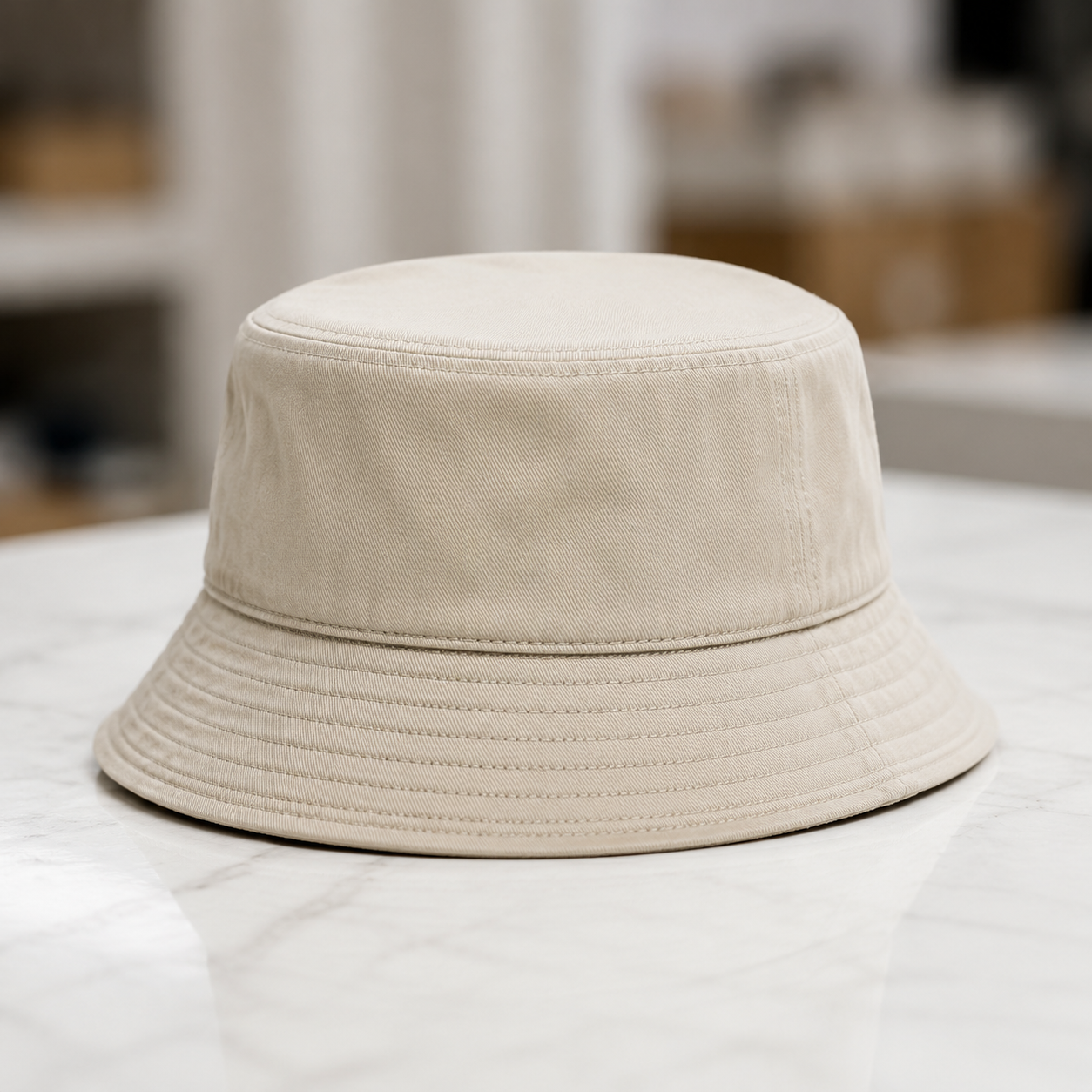
Bucket hats look simple — but their stitching tells a more complex story. Loose seam finishing, inconsistent stitch density, and thread tension problems are the top three stitching defects B2B buyers face in bucket hat bulk orders. These issues lead to returns, brand complaints, and hidden inspection costs. Here is exactly what to specify and check.
The Three Most Common Bucket Hat Stitching Defects
Problem: Stitching defects that pass a 30-second visual check still cause failure in the retail environment. Buyers report three recurring patterns:
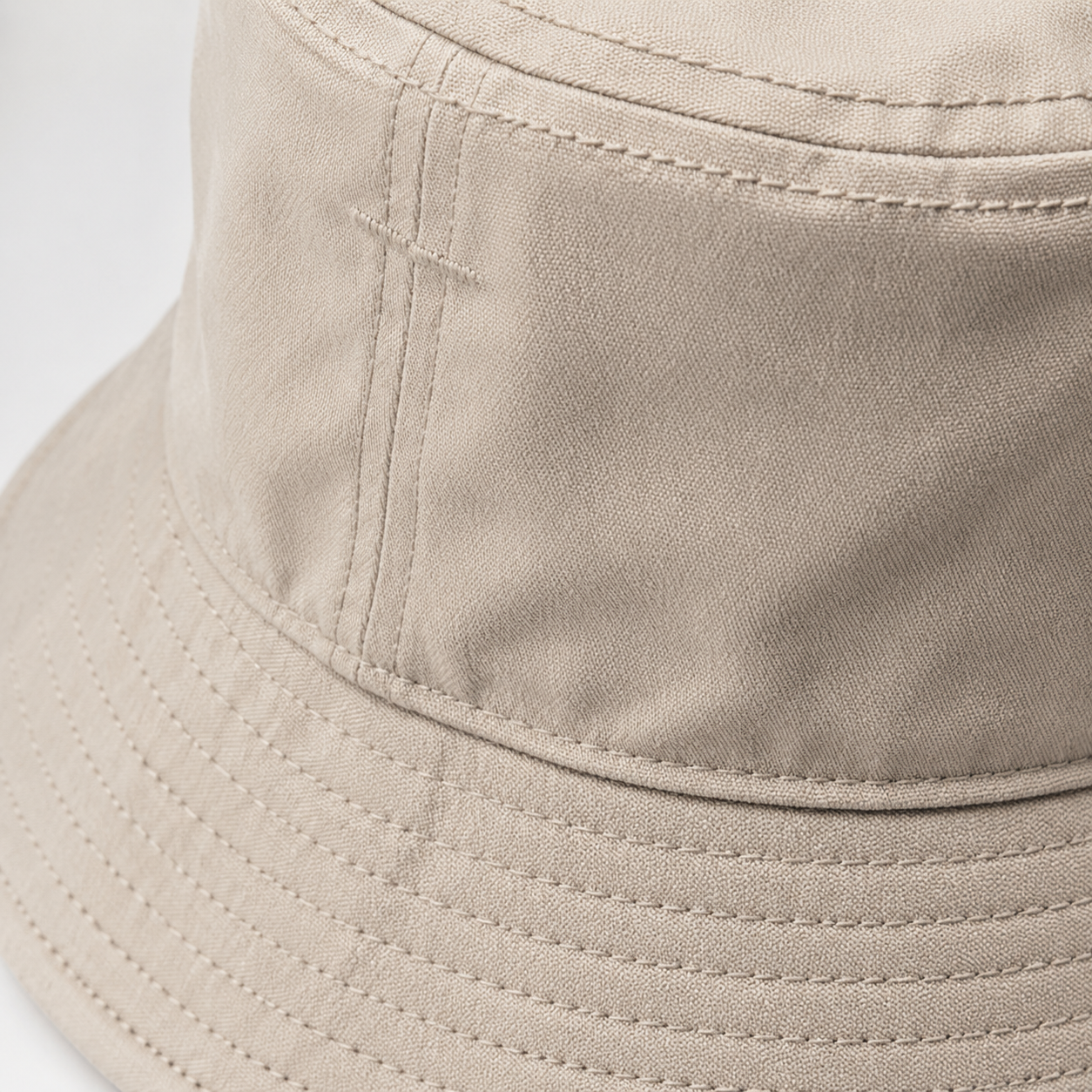
- Seam unraveling at panel joins: Overlock stitching frays when SPI is below 7 and thread tension is inconsistent. The brim panels separate after minimal handling.
- Topstitch waviness on the brim edge: When top and bottom thread tension differ, the brim edge puckers. This is purely cosmetic but unacceptable for retail branding.
- Loose thread ends and skipped stitches: Machines running at high speed skip stitches at seam intersections and curves. Factories rarely clip loose ends shorter than 5 mm without a spec.
Root Cause: The bucket hat has more curves and panel intersections than a baseball cap. Each curve point — where brim meets crown, where side panels join — is a stitch tension challenge. Most factories do not adjust machine settings between straight and curved sections.
Buyer Action: Require a curved-seam tension check on the pre-production sample. Inspect all seam intersections — not just straight runs — for skipped stitches.
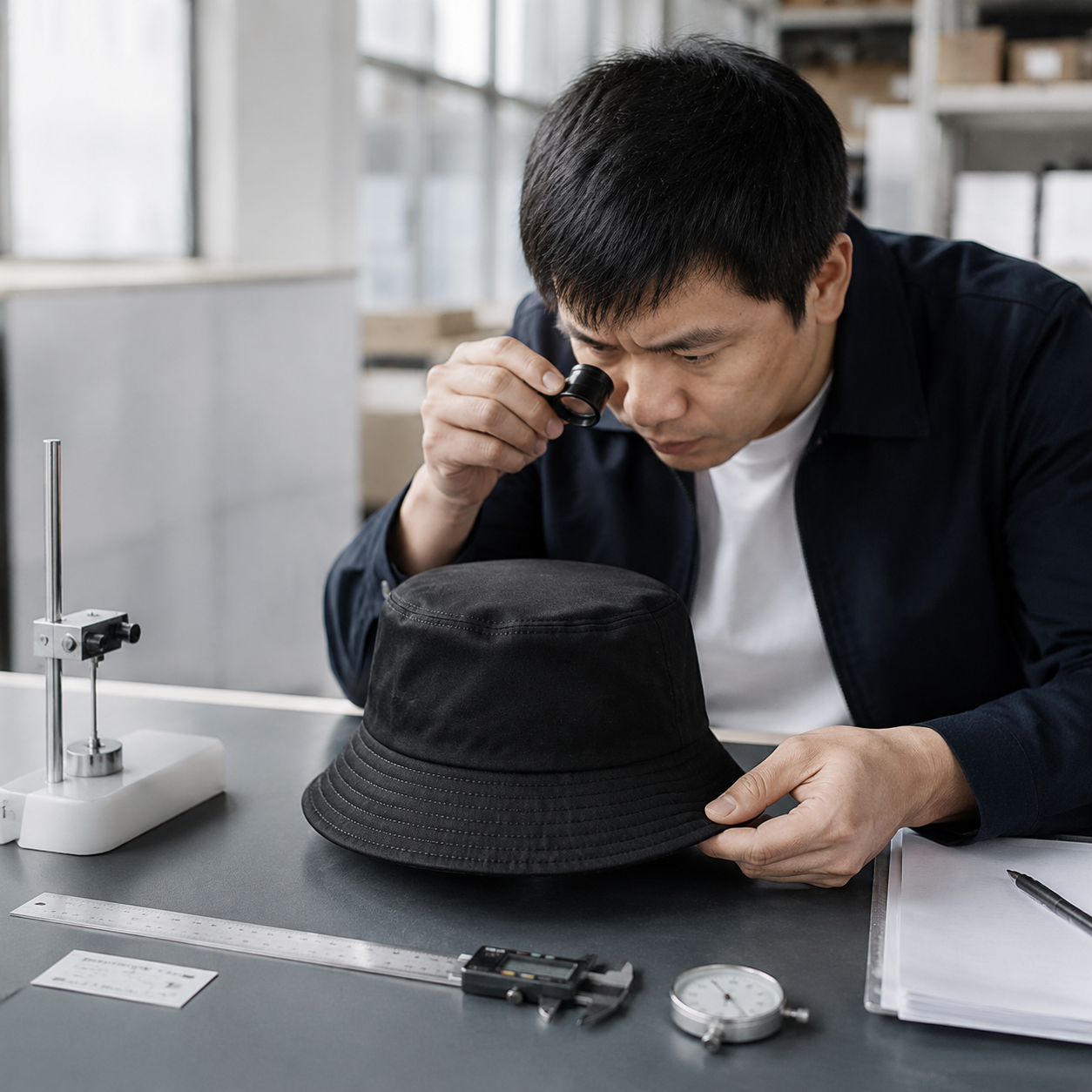
SPI Specs for Bucket Hat: What Each Zone Needs
Unlike baseball caps, bucket hats have unique stitching zones:
- Crown-to-brim join (curved seam): 8–10 SPI. This is the structural weakest point — the seam must follow the curve without puckering.
- Brim edge (topstitch): 7–9 SPI. Uniform tension required for a flat, even brim edge. Uneven stitch length is visible at 30 cm.
- Side panel to crown (vertical seam): 8–10 SPI with overlock finish. Panel gaps appear when SPI drops below 7.
- Hem at crown opening / sweatband attachment: 7–9 SPI. Double-needle stitching preferred for reinforcement.
- Tag / label attachment: 10–12 SPI microstitch. Labels detached after washing if stitched too loosely.
Note: Bucket hats made from thicker fabrics (denim, polyester blend, cotton twill) may require 1–2 fewer SPI due to needle penetration limits. Adjust the spec accordingly but never below 7 SPI on structural seams.
Thread Tension and Needle Size: The Factory Setup Check
Most stitching defects are caused by incorrect machine setup, not the operator. Two frequently overlooked parameters:
- Top thread tension vs bobbin thread tension: When these are mismatched, the stitch is either loose (visible loops on the underside) or tight (fabric puckers). The standard ratio is 1:1 — equal tension from top and bottom thread.
- Needle size relative to fabric thickness: For standard cotton/polyester bucket hats (200–300 GSM), use needle size 75/11 to 80/12. For heavy twill or denim, step up to 90/14. A needle that is too small for the fabric causes skipped stitches and thread breakage.
Buyer Action: Ask the factory for their machine setup sheet: needle size, thread type, tension settings, and SPI for each seam type. A factory that cannot document these parameters is unlikely to produce consistent stitching across a 5,000-piece order.
Thread Type and Finish for Bucket Hats
Bucket hats are often worn outdoors — at the beach, on hiking trails, by resort staff — exposing the stitching to moisture, UV, and salt.
| Thread | Moisture Resistance | UV Stability | Cost Impact per Hat | Recommendation |
|---|---|---|---|---|
| Core-spun polyester | High | High | +$0.03–0.05 | Best for outdoor bucket hats |
| Spun polyester | Mesatar | Mesatar | Base (+$0.00) | Adequate for standard use |
| Cotton-wrapped polyester | Mesatar | Mesatar | +$0.02 | Used for decorative topstitch only |
| 100% cotton | Low | Low | −$0.01 | Avoid — degrades in outdoor conditions |
If your bucket hats will be marketed as outdoor, beach, or travel accessories, specify core-spun polyester thread. The $0.04 per-hat premium is negligible compared to the return cost of seam failure.
Bucket Hat Stitching QC Checklist
Use this 8-point checklist for bucket hat pre-production sample approval:
- SPI measured at crown-to-brim join, brim edge, side panels, and hem. Minimum 8 SPI for structural seams.
- Thread type confirmed as specified — reject 100% cotton thread.
- Curved seam tension: inspect crown-to-brim join on both sides — no puckering or visible loops.
- Loose ends: no thread tail longer than 3 mm. All seams backstitched.
- Skipped stitch check: run a highlighter or pin along every seam. Any gap where the needle missed fabric = reject.
- Brim edge flatness: place the hat on a flat table. The brim edge should lay flush — no waves or lifted sections.
- Needle size and machine settings confirmed on factory setup sheet.
- Cross-size consistency: same stitching check on S, M, L — bucket hat seams scale with size.
Why Finishing Matters: Seam Sealing and Edge Binding
Raw seam edges inside a bucket hat cause fraying over time. Two finishing methods prevent this:
- Overlock (merrow) finish: Wraps the raw edge with thread. Lightweight and flexible. Best for cotton and polyester bucket hats.
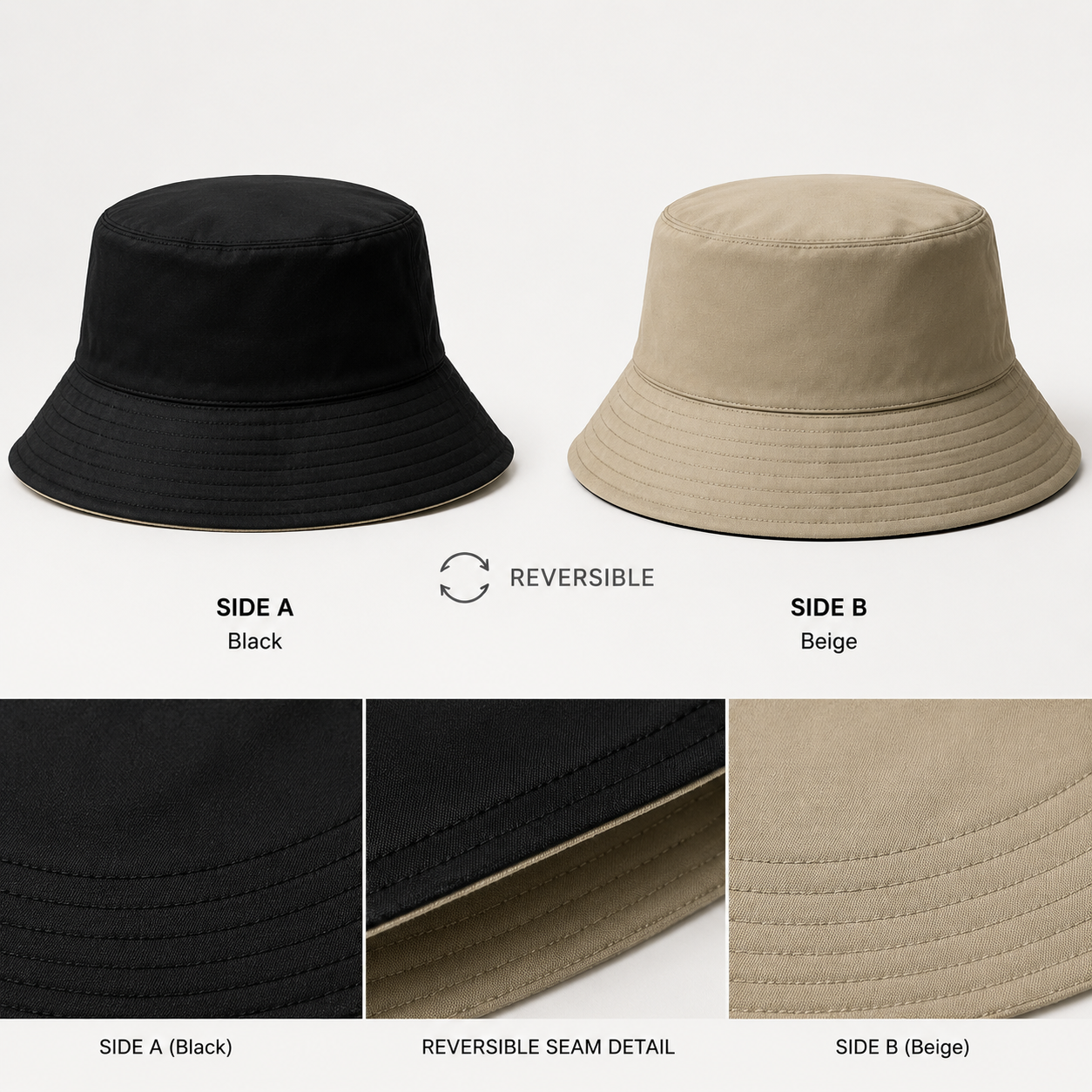
- Binding tape: A fabric strip covers the raw edge. More durable but adds weight. Best for heavy-duty or reversible bucket hats.
Specify which finish your factories should use. If you don’t specify, they will use the cheapest option — usually a single overlock pass that frays after the third wash.
FAQ
What is the minimum acceptable SPI for a bucket hat?
8 SPI on structural seams (crown-to-brim join, side panels) and 7 SPI on the brim edge topstitch. For label attachment and hem finishing, target 10–12 SPI.
How can I detect skipped stitches in a bucket hat?
Use a seam ripper tip or a pin and run it slowly along every seam. If the tip passes through without resistance at any point, a stitch was skipped. Inspect especially at curve points where panels meet.
Should I specify overlock or binding tape for seam finishing?
Overlock is sufficient for standard bucket hats. Use binding tape for outdoor/reversible hats or when the interior seam will be visible. Always specify in the tech pack — otherwise the factory defaults to the cheapest finish.
Specify Better Stitching on Your Next Bucket Hat Order
Stitching and seam finishing are the difference between a bucket hat that lasts one season and one that sells through the whole year. Add SPI targets, thread specs, and seam finishing requirements to your tech pack before production.
Ready to source bucket hats with verified stitching quality? Explore our bucket hat wholesale collection ose send your spec sheet for a free production feasibility check.
See our complete wholesale hat selection for more options.
See our complete wholesale hat selection for more options.
Defect Inspection Criteria for Bucket Hats
Establishing clear defect inspection criteria is essential for wholesale bucket hat orders. Common defects include uneven stitching, loose threads, misaligned panels, inconsistent brim curves, and fabric flaws. Establish acceptable quality limits (AQL) for each defect type. Standard AQL for headwear is typically 2.5% for major defects and 4.0% for minor defects. Conduct incoming inspection on a random sample from each production lot. Document all inspection results and communicate findings to your manufacturer. A systematic quality inspection process ensures consistent product quality across bulk orders.
Written by the Hongyuecap Product Team — 10+ years in B2B custom headwear manufacturing. Last updated: May 23, 2026.