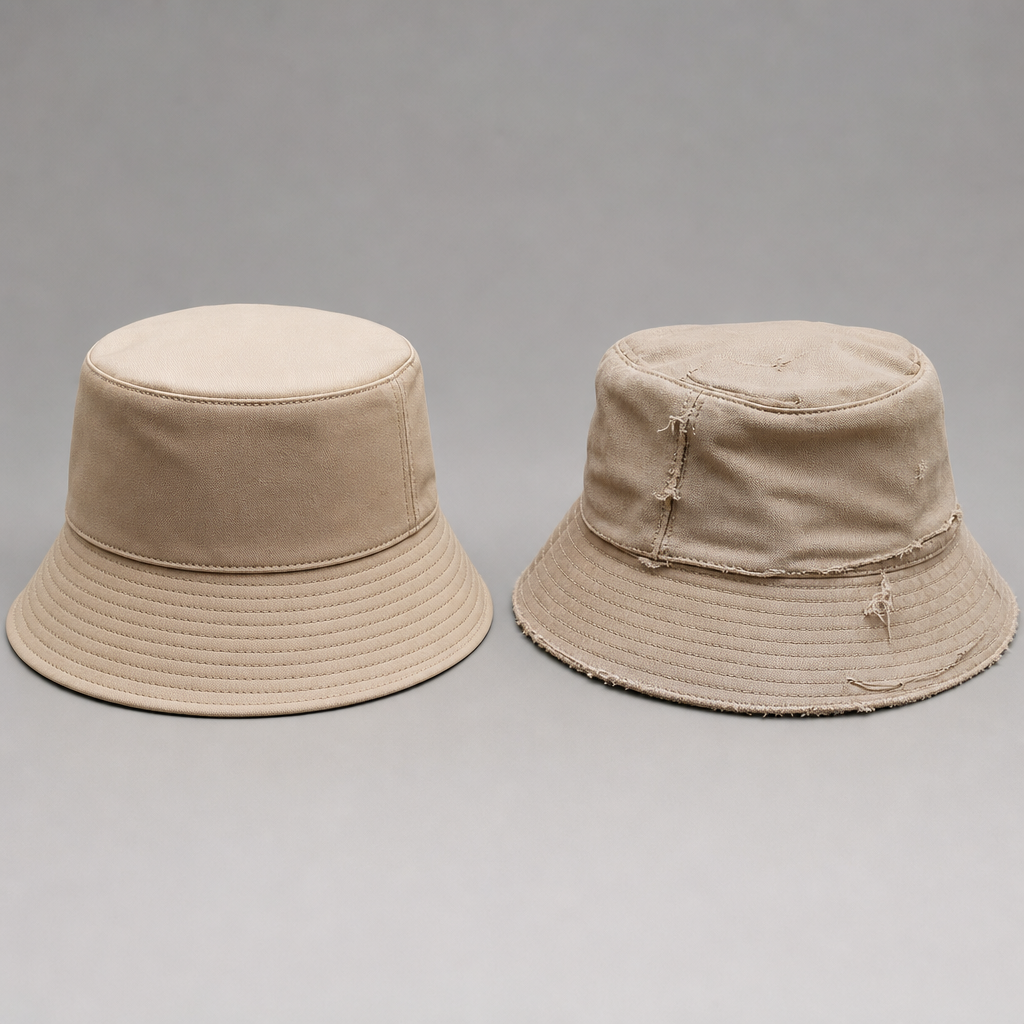
Cotton vs Nylon Bucket Hats for Wholesale Buyers: Material, MOQ & QC
> Cotton and nylon bucket hats can look equally good in a mockup, but the wrong material choice can raise decoration risk, MOQ surprises, comfort complaints, and QC failures after bulk production starts.
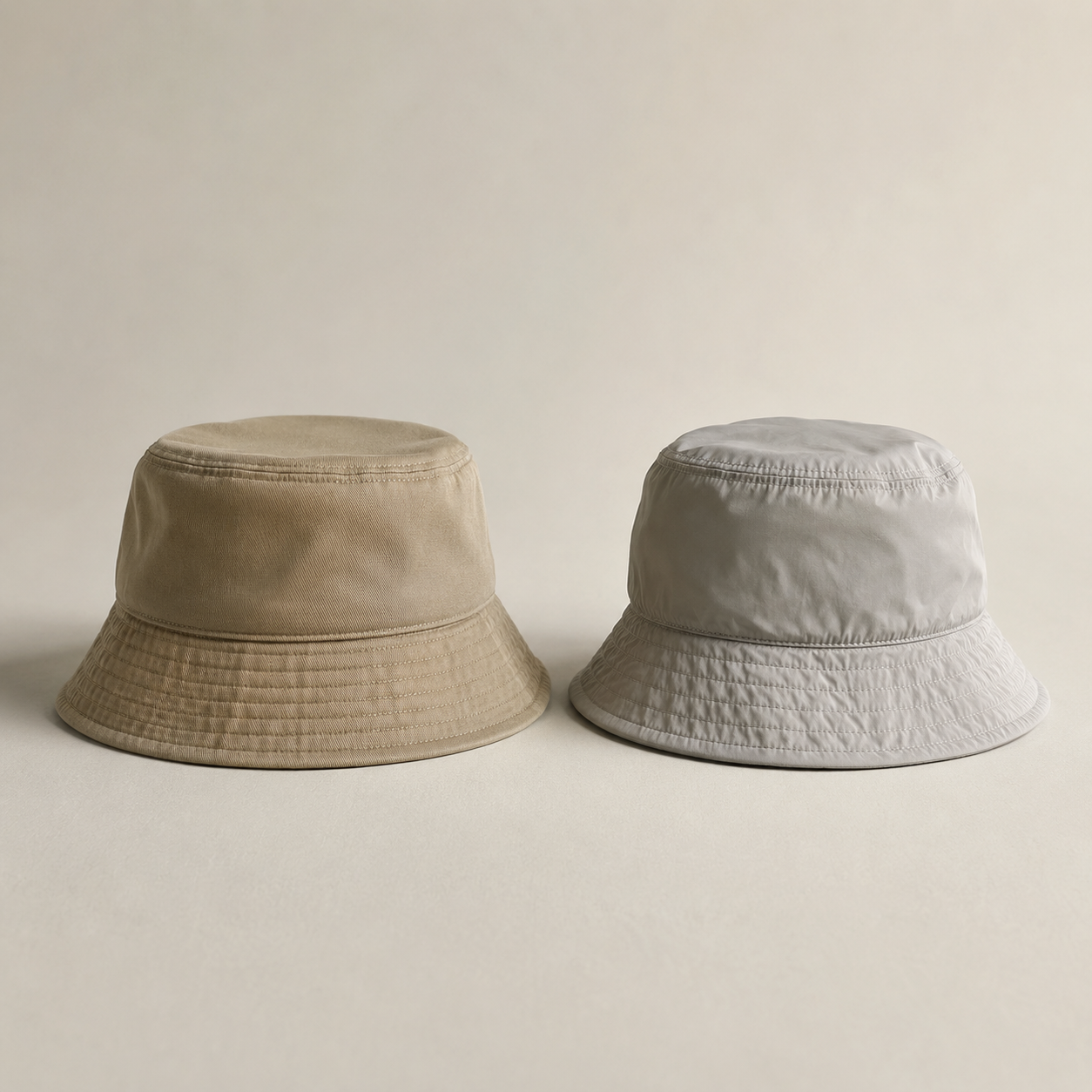
Comparing cotton vs nylon bucket hats is one of the first decisions a promotional buyer should make before requesting samples. Both materials can work for summer campaigns, but they solve different problems. Cotton gives a softer, more familiar retail look. Nylon gives a lighter, quicker-drying, more outdoor-ready feel. The wrong choice can turn a simple giveaway or retail drop into a fit, decoration, packing, or customer-comfort problem.
For B2B buyers, the practical question is not "which material is better?" It is "which material fits the event, climate, decoration method, quantity, target price, and brand image?" A corporate summer gift, a music festival merchandise run, a resort shop program, and an outdoor sponsor campaign may all use bucket hats. They should not automatically use the same fabric.
This cotton vs nylon bucket hats decision should be made before artwork approval, not after the sample arrives.
Problem: buyers often choose cotton vs nylon bucket hats by photo appearance instead of use case, decoration method, and shipping deadline. Root Cause: material behavior is rarely specified in the first inquiry, so the supplier may quote the easiest available fabric rather than the best one for the campaign. Buyer Action: confirm use scenario, MOQ, sample timing, fabric weight, decoration method, and QC checks before approving the first sample.
Main Buyer Problem for Cotton vs Nylon Bucket Hats
The main buyer problem with cotton vs nylon bucket hats is that both materials can look similar in a mockup but behave differently in real use. Cotton absorbs moisture, feels natural, and often supports embroidery well. Nylon is lighter, packs easily, dries faster, and can support outdoor positioning, but it may need more careful heat, needle, and stitch control.
The root cause is underspecified sourcing. Buyers often send only artwork, quantity, and color. The supplier then quotes the easiest available fabric, not necessarily the best one for the campaign. If the order is for a hot outdoor event, heavy cotton may feel too warm after hours of use. If the order is for a premium lifestyle brand, a thin nylon bucket hat may feel too technical or too casual unless the fabric, brim, and trim are upgraded.
The buyer action is to define use case first. Before choosing material, write down where the hat will be used and how long people will wear it. Then confirm whether it needs to resist light rain, fold into a bag, or support embroidery, patches, print, or heat transfer.
Material / Construction Risk
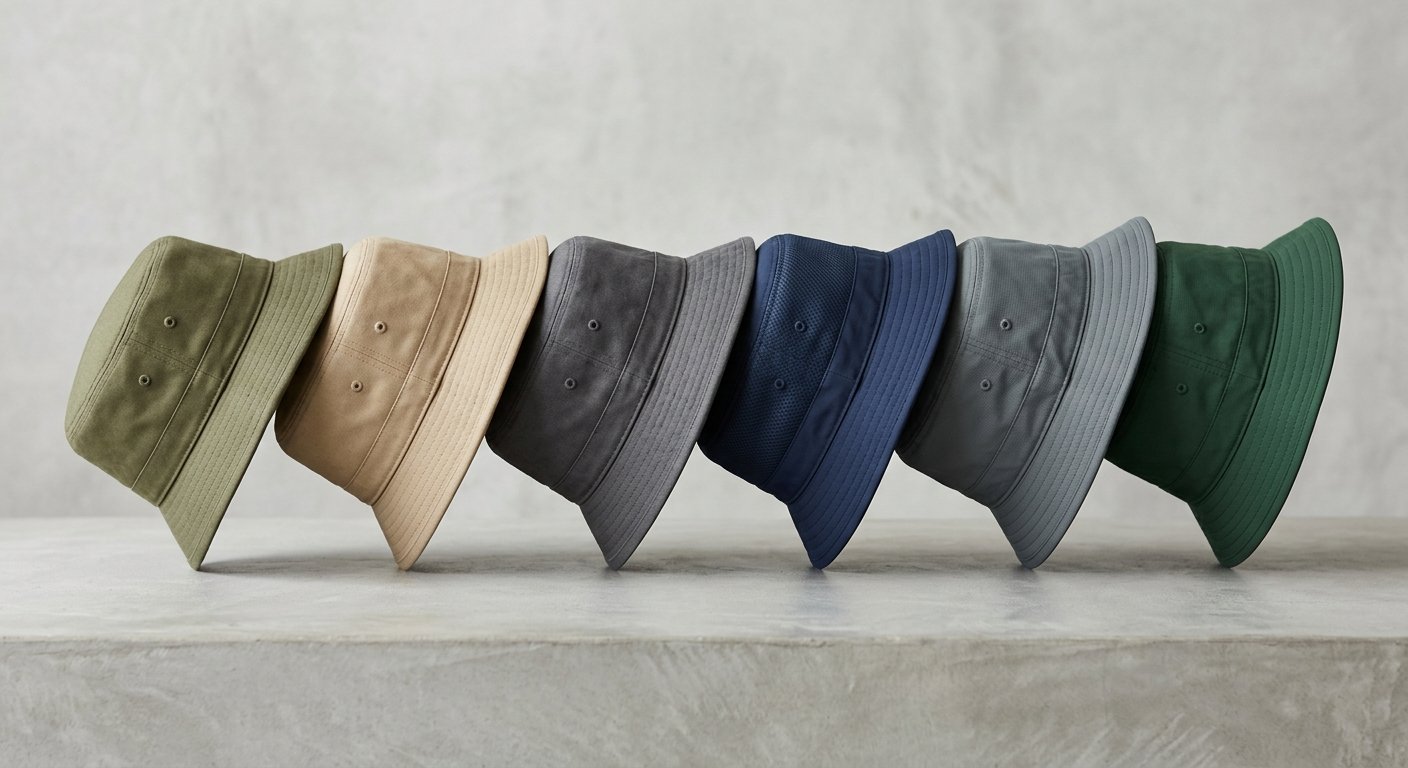
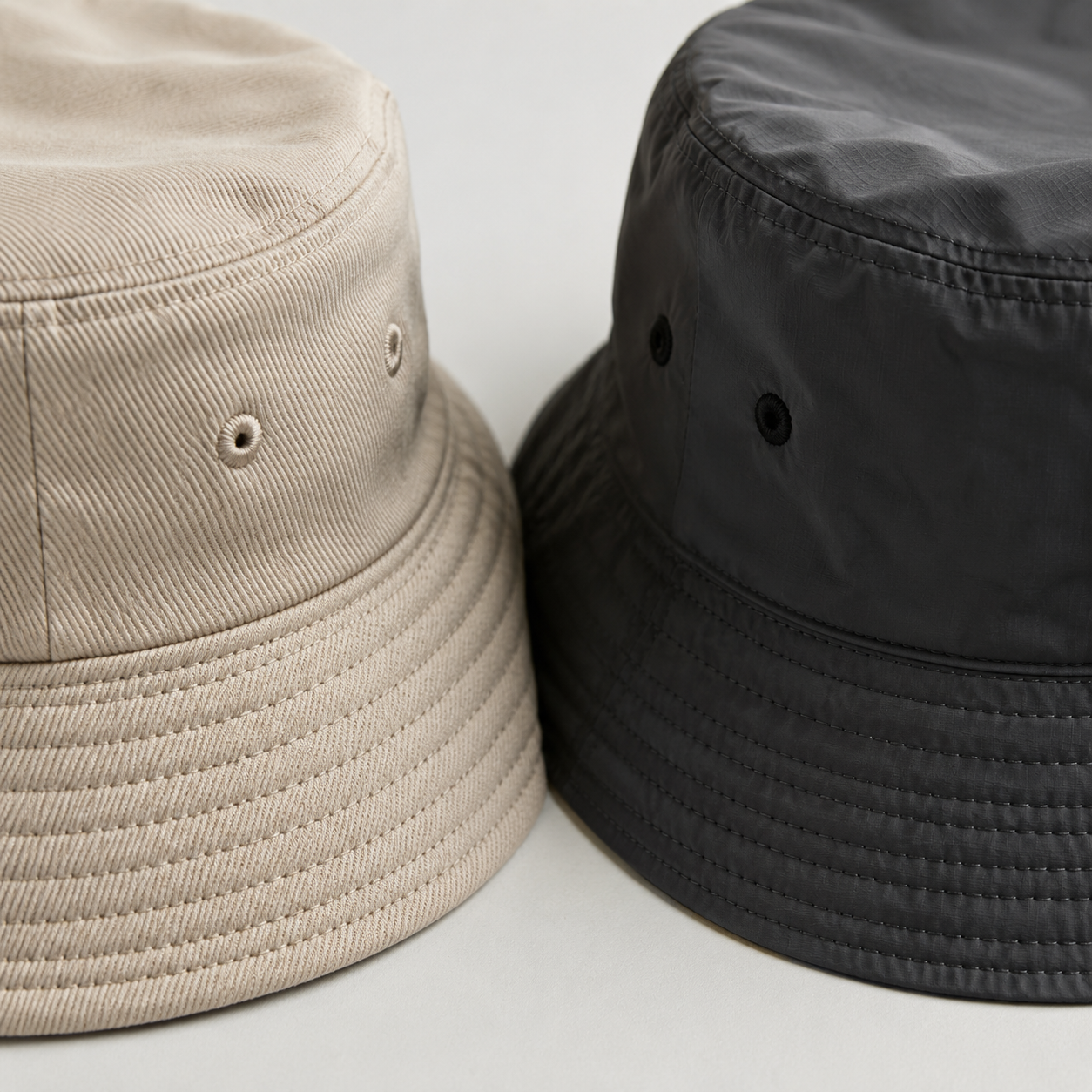
Cotton bucket hats are usually better when the buyer wants a natural hand feel, clean embroidery, and a more classic promotional or lifestyle look. Cotton twill, cotton canvas, and washed cotton can all work, but they do not behave the same. Twill feels smoother and can look more polished. Canvas feels more durable and casual. Washed cotton gives a softer, broken-in look, but color and shrinkage control need attention.
Nylon bucket hats are usually better when the buyer needs lightweight performance, packability, quick drying, or light water resistance. Nylon can be useful for outdoor events, beach programs, running clubs, hiking promotions, and travel merchandise. The risk is that thin nylon may show puckering around embroidery, heat marks from transfers, or brim instability if the construction is too light.
The construction details matter as much as the fabric. Buyers should confirm brim width, brim stitching rows, crown height, lining, and sweatband. They should also confirm eyelets, ventilation holes, and whether the hat needs an adjustable drawcord. A nylon bucket hat for outdoor use may need a different brim and sweatband than a cotton bucket hat for a retail gift box.
Cotton Bucket Hats: Best Use Cases
Cotton is the safer choice when the campaign needs a familiar, comfortable, and brand-friendly look. It works well for corporate gifts, streetwear collections, resort retail, university merchandise, lifestyle campaigns, and promotional orders where decoration quality matters.
The biggest advantage is perceived quality. A cotton bucket hat feels easy to understand for end users. It also gives suppliers more predictable results with embroidery and woven patches, especially when the fabric has enough weight and the logo is not too small or too dense.
The main risks are moisture, shrinkage, color variation, and drying speed. For summer use, buyers should ask whether the fabric is pre-shrunk, how colorfastness is controlled, and whether the finished hat can keep its shape after washing or humid storage. If the order claims safer textile performance or low-irritation materials, request actual documentation instead of a broad "eco" claim. For example, some buyers use recognized textile safety standards such as OEKO-TEX STANDARD 100 as part of supplier qualification.
Cotton is a strong fit when the buyer values:
- premium casual appearance
- embroidery or patch decoration
- soft hand feel
- retail display
- lifestyle branding
- classic summer merchandise
Nylon Bucket Hats: Best Use Cases
Nylon is the better choice when the buyer needs a light, packable, and outdoor-friendly bucket hat. It is useful for summer festivals, travel kits, activewear promotions, rain-prone events, beach giveaways, and campaigns where users may sweat, fold the hat, or carry it in a bag.
The biggest advantage is function. Nylon can dry faster than cotton, and many nylon fabrics can be treated for water resistance. It also supports a more technical look, which can fit outdoor brands, sports programs, and modern promotional merchandise.
The main risks are decoration distortion, heat sensitivity, and a less premium feel if the fabric is too thin. Embroidery on nylon needs the right backing and tension. Heat transfer may need careful temperature control. Brim stitching should be checked because lightweight fabrics can ripple if the sewing tension is not controlled.
Nylon is a strong fit when the buyer values:
- quick-dry performance
- packability
- lighter weight
- outdoor or travel positioning
- water-resistant treatment
- modern activewear styling
Supplier / MOQ / Sampling Risk
MOQ and sampling risk depend on stock fabric, color requirements, decoration method, trim, and whether the order needs custom dyeing. A stock cotton or nylon bucket hat with logo decoration is usually easier to sample than a fully custom fabric, special lining, reversible construction, or dyed-to-match color.
Buyers should not compare cotton and nylon quotes only by unit price. Ask what is included in the quote: fabric weight, brim stitching, sweatband, label, decoration, packing, sample fee, revision fee, and carton method. A low quote may exclude the details that prevent defects.
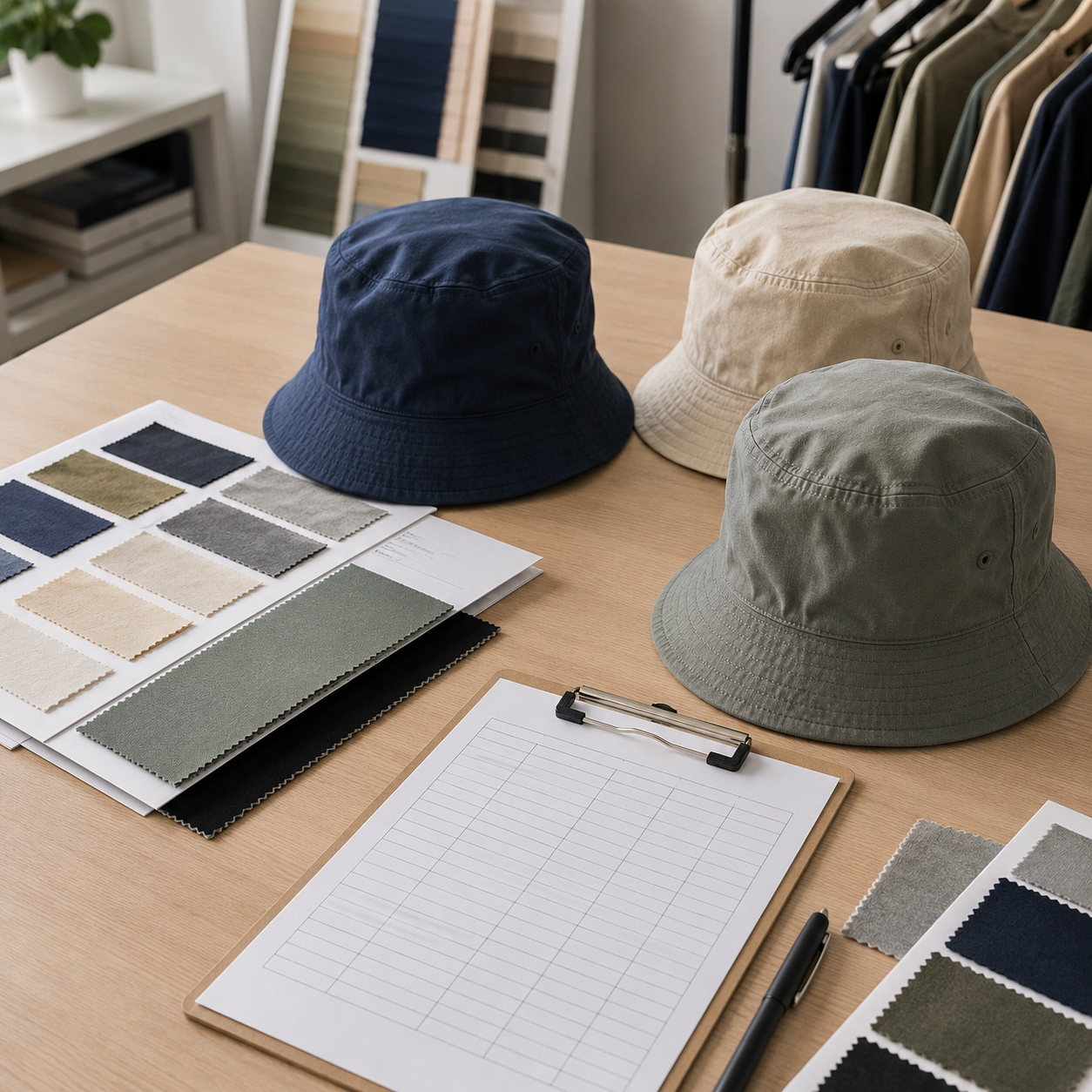
Sampling should include the exact material and decoration method. If the final order will use embroidery on nylon, do not approve only a cotton sample. If the final order will use a woven patch on cotton, ask for the patch edge, sewing alignment, and backing in the sample. For a fixed-date summer event, confirm the sample deadline and bulk lead time before artwork approval. If the order starts with 300 pcs or 500 pcs before a larger campaign, confirm whether the supplier's MOQ, sample fee, and fabric availability still match the final target price.
QC Checklist
- Fabric match: compare cotton or nylon fabric against the approved sample for color, hand feel, weight, and finish.
- Brim shape: inspect brim width, stitch rows, edge smoothness, and whether the brim droops or ripples.
- Crown fit: check crown height, panel symmetry, head opening, and size tolerance.
- Decoration: inspect embroidery tension, patch alignment, print clarity, heat-transfer marks, and inside comfort.
- Sweatband and ventilation: confirm sweatband stitching, breathable feel, and eyelet or vent-hole consistency.
- Packing: confirm hats are shaped and packed to avoid crushed crowns, bent brims, or moisture damage.
For promotional bucket hats, final inspection should compare bulk goods with the approved decorated sample. The buyer should also check random pieces across carton positions because packing pressure can affect brim shape, especially when hats are compressed to reduce shipping volume. Clean product images should document real fabric and construction details; Google's image search documentation is also useful when preparing product visuals that support SEO instead of acting as filler.
Buyer Decision Framework
Use material as a business decision, not a style preference. The best bucket hat material is the one that protects the buyer's campaign goal.
| Buyer situation | Better starting material | Why |
|---|---|---|
| Corporate summer gift | Coton | Natural feel and cleaner brand presentation |
| Outdoor festival giveaway | Nylon | Light, packable, and better for sweat or light rain |
| Resort retail program | Coton | Softer lifestyle look and easier premium styling |
| Travel or hiking campaign | Nylon | Quick-dry function and practical storage |
| Embroidered logo order | Coton | More forgiving for stitch density and backing |
| Rain-prone event | Nylon | Can support water-resistant treatment |
If the buyer still cannot choose, request two samples: one cotton and one nylon with the same logo size and brim standard. Compare the physical samples for comfort, decoration quality, folding behavior, brim stability, and perceived value. That small sample cost is usually cheaper than correcting a full promotional order after production.
FAQ
Are cotton or nylon bucket hats better for summer?
Cotton is better for a soft, classic, retail-friendly summer look. Nylon is better for lightweight, quick-dry, outdoor, or rain-prone use. The right choice depends on the campaign environment and decoration method.
Which material is better for promotional bucket hats?
Cotton is often better for corporate gifts, lifestyle branding, and embroidery. Nylon is often better for festivals, outdoor events, beach programs, travel campaigns, and packable giveaways.
Can nylon bucket hats be embroidered?
Yes, nylon bucket hats can be embroidered, but the supplier needs the right backing, needle, and tension settings. Buyers should approve a decorated nylon sample before bulk production because thin fabric can pucker.
Are cotton bucket hats breathable?
Cotton bucket hats can be breathable and comfortable, especially in lighter twill or washed cotton. For hot, humid, or sweaty use, buyers should compare cotton weight, lining, ventilation, and drying speed before approving the order.
How should buyers inspect bucket hat brim quality?
Check brim width, stitching rows, edge smoothness, symmetry, and whether the brim droops, ripples, or bends after packing. Inspect several pieces from different cartons, not only the top sample.
CTA
If you are choosing between cotton and nylon bucket hats for a summer promotional order, start from the HongYueCap homepage or review more sourcing notes on the HongYueCap blog. For category context, compare our bucket hat options et custom bucket hats, then contact HongYueCap with your event type, logo file, target quantity, delivery date, destination country, decoration method, and preferred material. We can help compare sample options and build a clear custom bucket hat spec before production.